Realism: Global Expansion, International Artists, and Legacy in Art
Discover the global presence of Realism, with a focus on artists such as Thomas Eakins, Ilya Repin, and Brazilian Almeida Júnior. Analyze the lasting legacy of Realism in modern art.
Article Index
Realism Beyond France
Although realism originated in France, it gained adherents across Europe and the United States.
American James Abbott McNeill (1834-1903) became friends with Courbet in the 1860s and painted in a realist style.
However, Whistler was a proponent of 'art for art's sake' and rejected the idea of painting as a moral or social endeavor like la Courbet.
Thomas Eakins (1844-1916) became the most prominent realist painter in the United States, incorporating photographic study into his works and revealing the character of his subjects through attentive observation.
The choice of a contemporary theme follows the realist belief that an artist should be of their time.
American realist Wilhelm Leibl (1844-1916) met Courbet and saw his work when the French painter visited Germany in 1869.
Recognizing his skills, Courbet lured him back to Paris, where Leibl achieved considerable success, also meeting Manet before returning to Munich to establish himself in his country as the first realist painter.
Ilya Repin (1844-1930) brought Russian visual art to the attention of the European public during the 19th century.
Russian novelist Leo Tolstoy wrote about the artist he portrayed, 'the life of the people much better than any other Russian artist.'
Having traveled to Paris and taken note of the emerging impressionist movement, Repin chose to continue painting in a realist vein because he felt that impressionist painting lacked the social motivations necessary for modern art.
Carl Larsson (1853-1919) - Famous Swedish painter, for his beautiful watercolors depicting family life and the interiors and surroundings of his house in the historical province of Dalecarlia, Sweden.
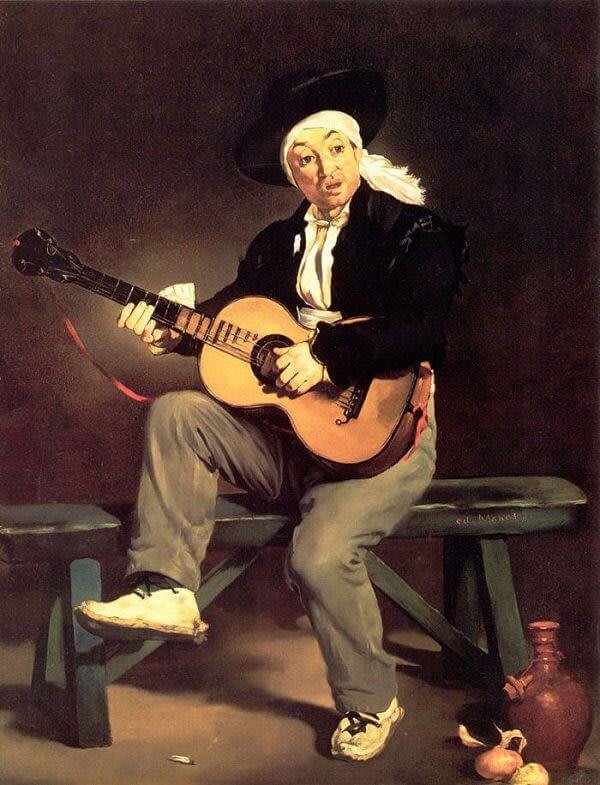
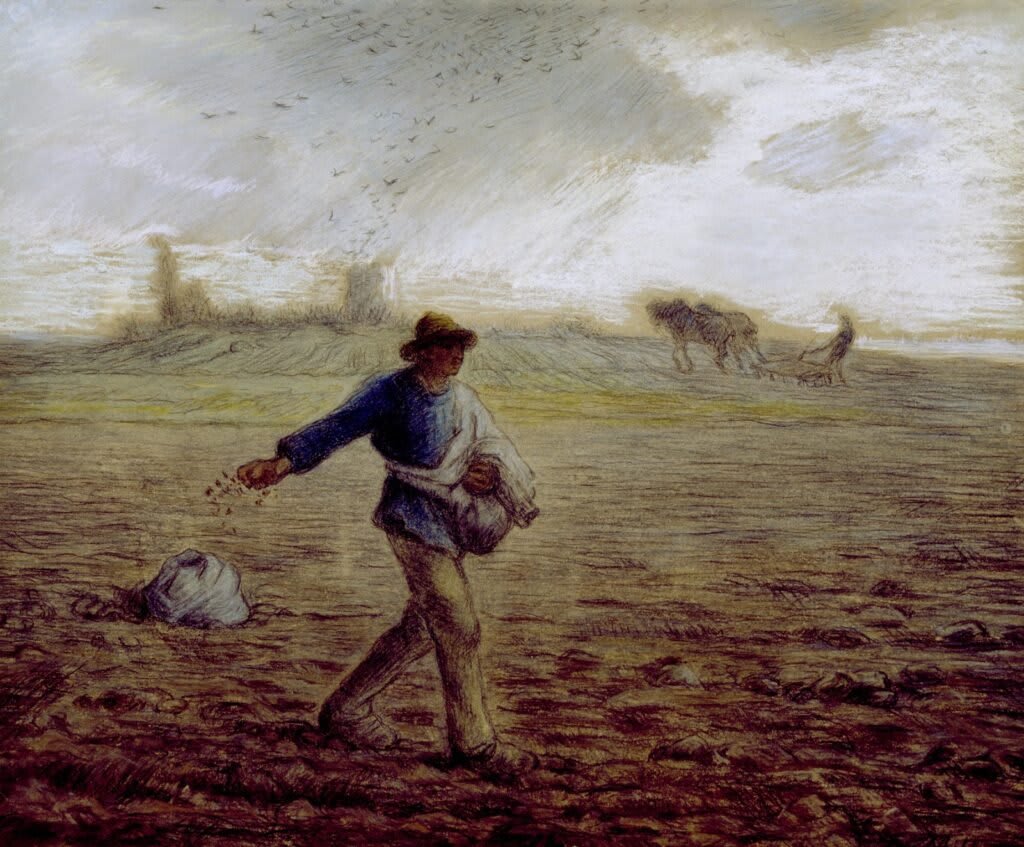
Author of works such as 'The Spaniard' (1860) and 'The Sower' (1850).
José Ferraz de Almeida Júnior (1850-1890) was a highly respected artist by all the critics, he is considered the precursor of the modernist Brazilian.
He tended to value the common man in his paintings, inserting the typical characters of his country, which contrasted with the monumentalism that had previously dominated the plastic arts in Brazil.
Undoubtedly, the artist innovated with the treatment of light in his painting, which is still commented on and appreciated today, as well as the themes he chose in his compositions, where he valued the common man, leading some critics to compare him with the realist painter Gustave Courbet, an artist that Almeida Júnior had contact with his works when he traveled to Europe.
Influences …
There was no defined group in realism, as we might conceive the subsequent impressionists as a coherent group working together: the realist movement composed of various artists creating independently in similar lines.
Although they knew each other and the artists and writers were friends who supported each other, there was no separation or dissolution of the group.
Thus, the historical and artistic reasons that led to the genesis and development of Realism continued with the emergence of other artists from all over the world for many generations.
WORKS CITED