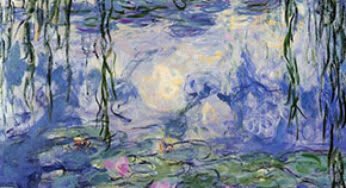
Water Lilies, by Claude Monet
Water Lilies, by Claude Monet
Article Index
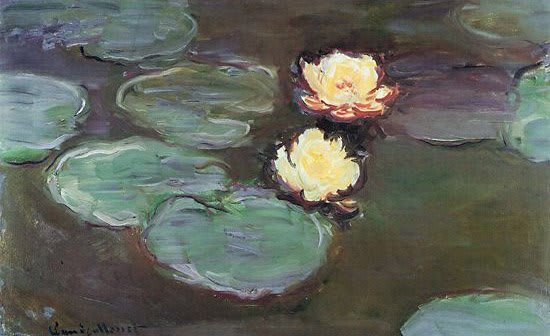
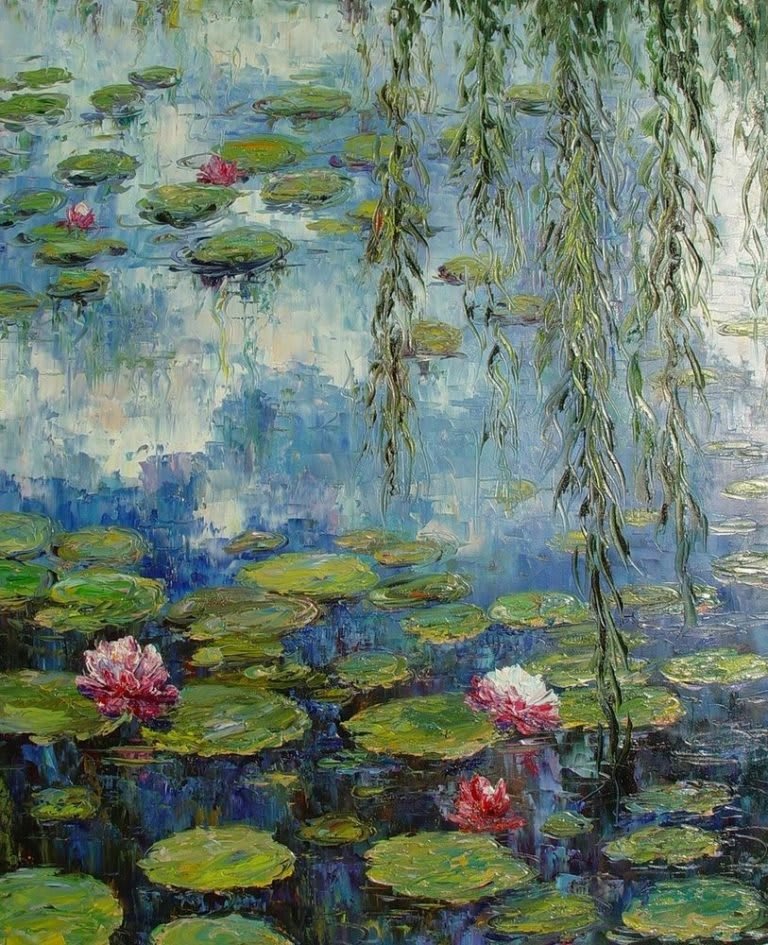
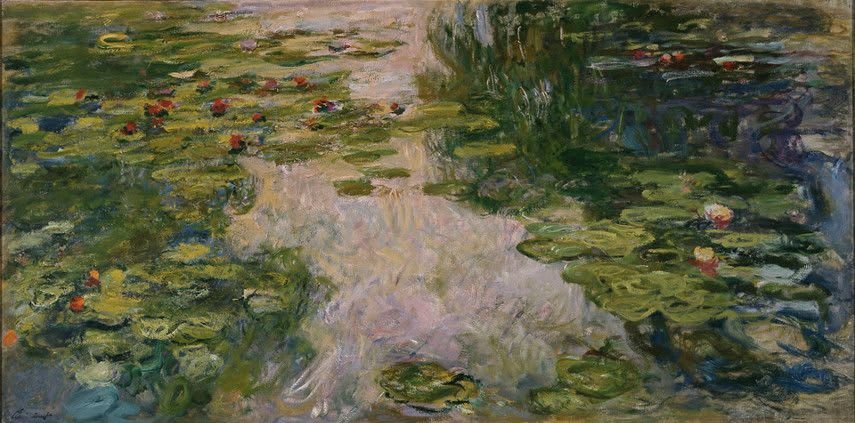
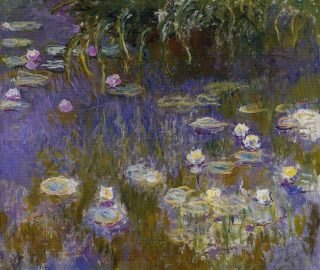
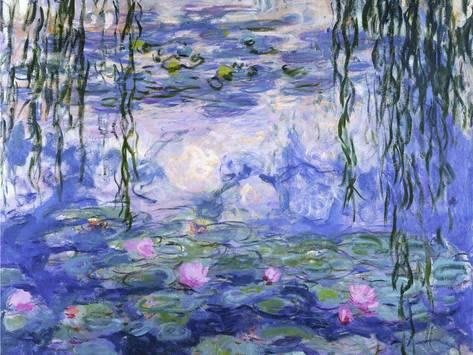
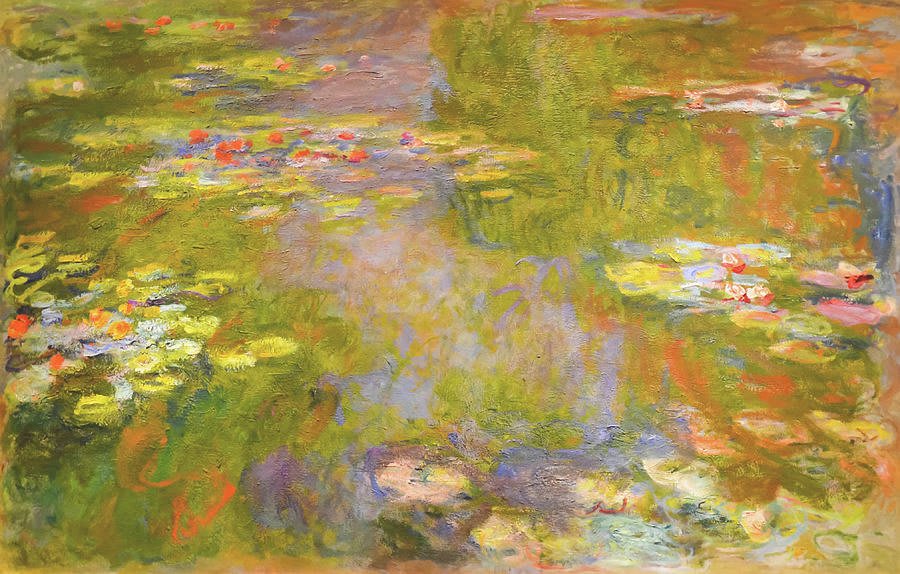
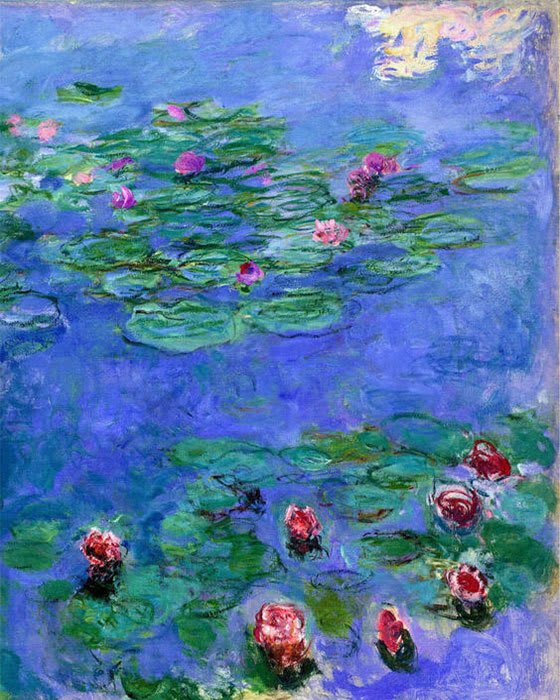
Water Lilies is a series of paintings by the French impressionist artist Claude Monet, depicting his water garden at Giverny.
Monet painted these works during the last years of his life, capturing the serene beauty and tranquil atmosphere of his pond with water lilies.
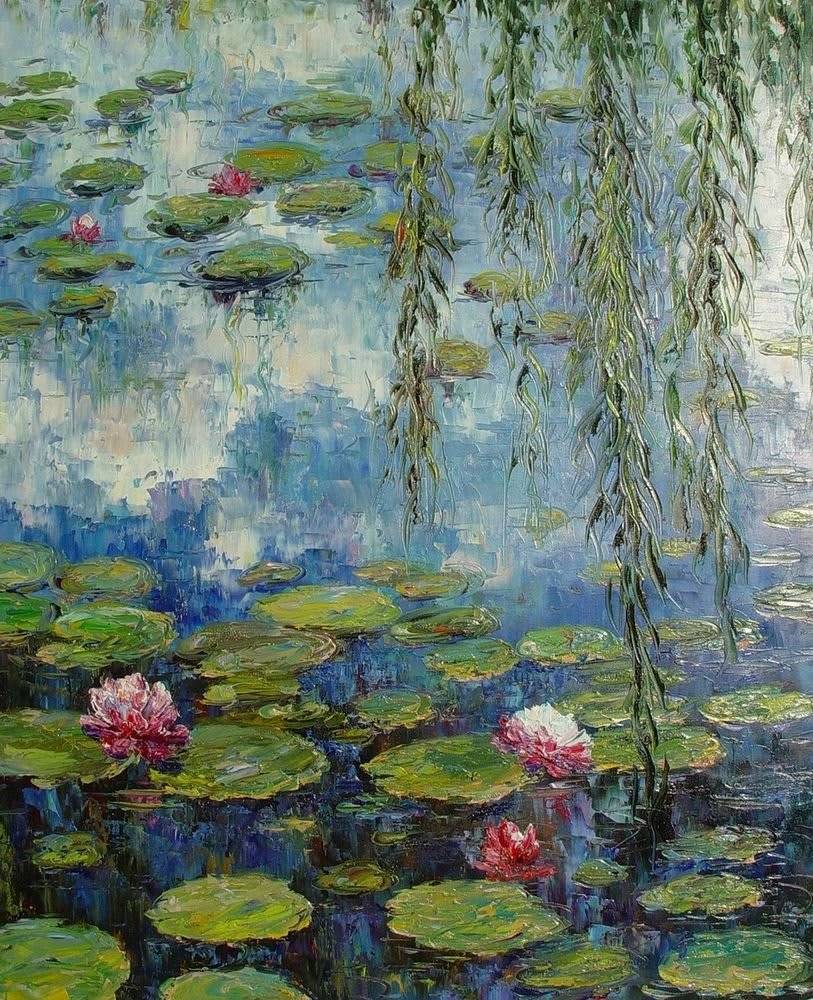
The paintings are characterized by loose brushstrokes and soft colors, creating an effect of light reflection on the water.
The works in the Water Lilies series are considered some of the most important and beautiful of Monet's career, representing not only a artistic representation of nature, but also an expression of his own search for beauty and inner peace.
Water Lilies, also known as nymphéas, became famous as the main theme of Monet's last phase of work, led by the Impressionism, an important movement that emerged from one of his paintings, Impression, Sunrise.
For a long time, the painter had planned to create a large aquatic garden with these plants.
So when he built his lush garden in Giverny, he did not hesitate to cultivate these exotic water lilies imported from Japan.
To do this, however, it was necessary to raise the temperature of the water in the tanks, building dams that provoked protests from the neighbors who were used to washing clothes in the river that ran through the property that supplied the water reserves.
Many believed that these "strange plants" could pollute or even poison the water in the area.
However, Monet, dedicated to following the evolution of them in the water, the reflection and everything that developed there, which, gradually, he froze in the form of paintings on his canvases.
The life and work of the artist developed around the lake.
Over the years, he continued to add and plant more and more water lilies.
He hired a gardener to take care of the lake specifically.
In 1895, Monet commissioned the construction of the "Japanese Bridge", made of wood, which, with its curtain of wisterias, will be the theme of numerous canvases.

The lake with its aquatic plants, especially the water lilies, becomes the main inspiration for the last thirty years of the painter's life.
In this period, Monet approaches this theme literally, framing it as a zoom to finally immerse himself completely.
First are the large compositions, then the partial views of the lake with the Japanese bridge and finally the details of the piece of water where the sky is already present through its reflection on the "water mirror", which was thus designated by the artist.
Despite Monet always affirming that nature was his atelier, the artist ended up or resumed most of the canvases in his atelier.
There was a time when there were three ateliers in Giverny, where the artist received his visitors and it was there that he spoke of his paintings.
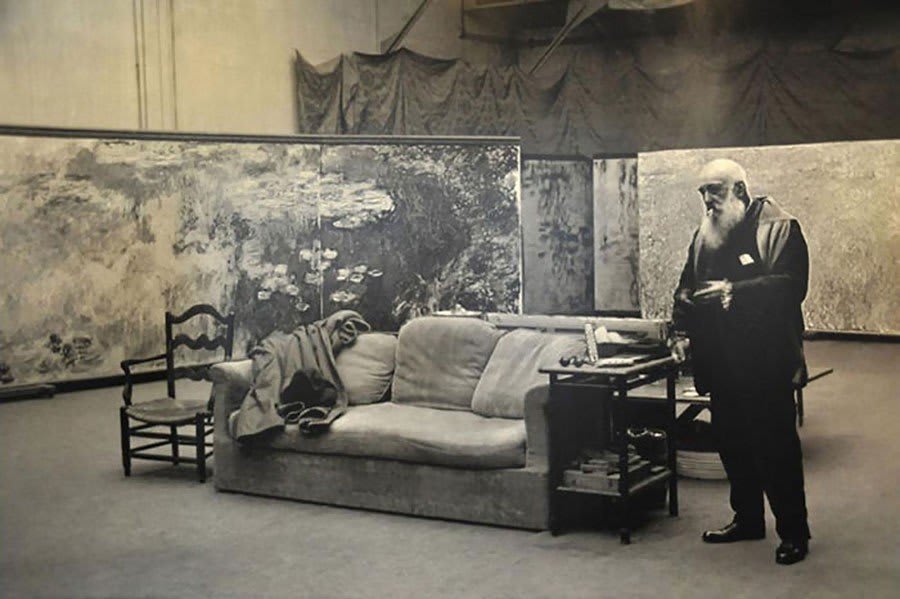
While many artists seek to free themselves from the image and create a painting entirely in form and color, Monet, in his most visionary works, always used what he had seen, nature.
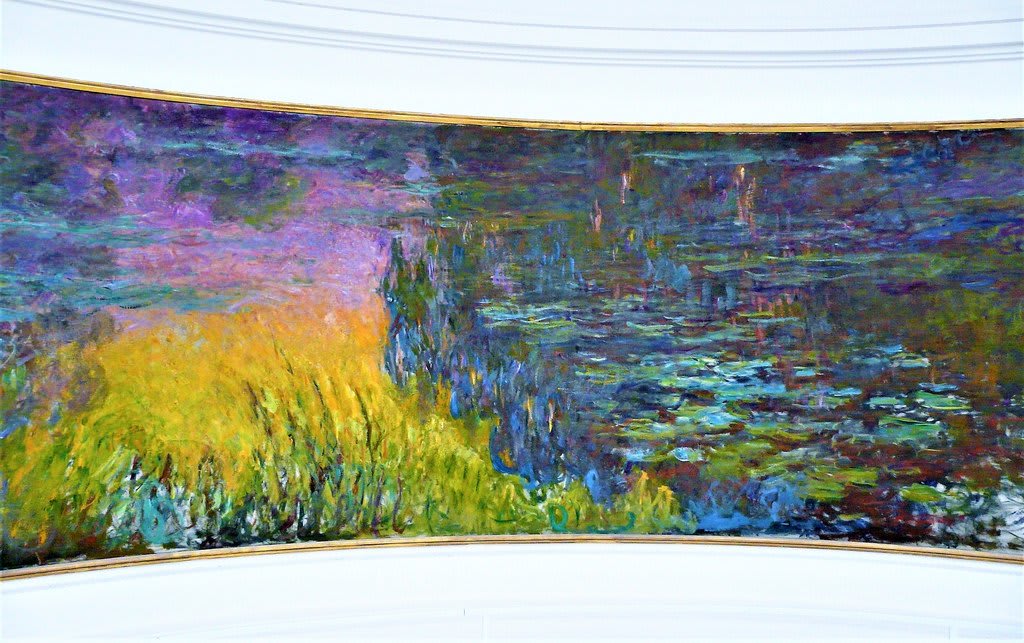
Monet had long dreamed of presenting the water lilies in a space that would give the illusion of an infinite whole and create a restful atmosphere for meditation.
He agrees to make several canvases on the condition that they build a exhibition hall that corresponds to his desires.
They come to an agreement regarding the garden of the Hotel Biron, in Paris where there is a museum dedicated to the sculptor Rodin.
An architect makes the plans for a pavilion of reasonable dimensions that must be built at the end of the property and that includes a circular support to accommodate twelve panels.
But on the occasion, the Ministry of Public Works refuses the project, considering that a special construction would be too much honor for the artist.
Monet decides then to cancel the donation and the American and Japanese buyers appear interested in acquiring the entire series for their respective museums.
It is thanks to the intervention of his friend Clemenceau, who considers that the large decorations are part of his project, that Monet wins a room in the Museum Orangerie, which is affiliated to the Museum of the Louvre, in Paris.
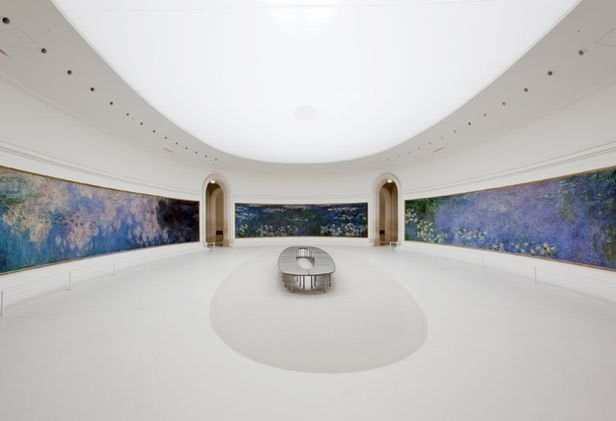
After his death in 1926, the Water Lilies are installed in two oval rooms in that Museum.
Today very visited and which for a long time were almost unknown to the public.
They were only discovered in the 1950s of the 20th century.
Water Lilies: GALLERY