
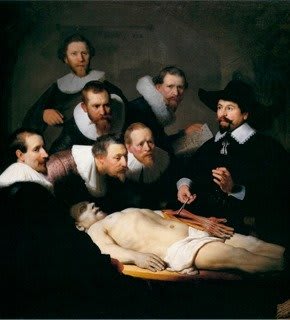
The Anatomy Lesson of Dr. Tulp by Rembrandt
The Anatomy Lesson of Dr. Tulp is one of the most famous works of the Dutch painter Rembrandt van Rijn, completed in 1632.
Article Index
The Anatomy Lesson of Dr. Tulp is one of the most famous works of the Dutch painter Rembrandt van Rijn, completed in 1632.
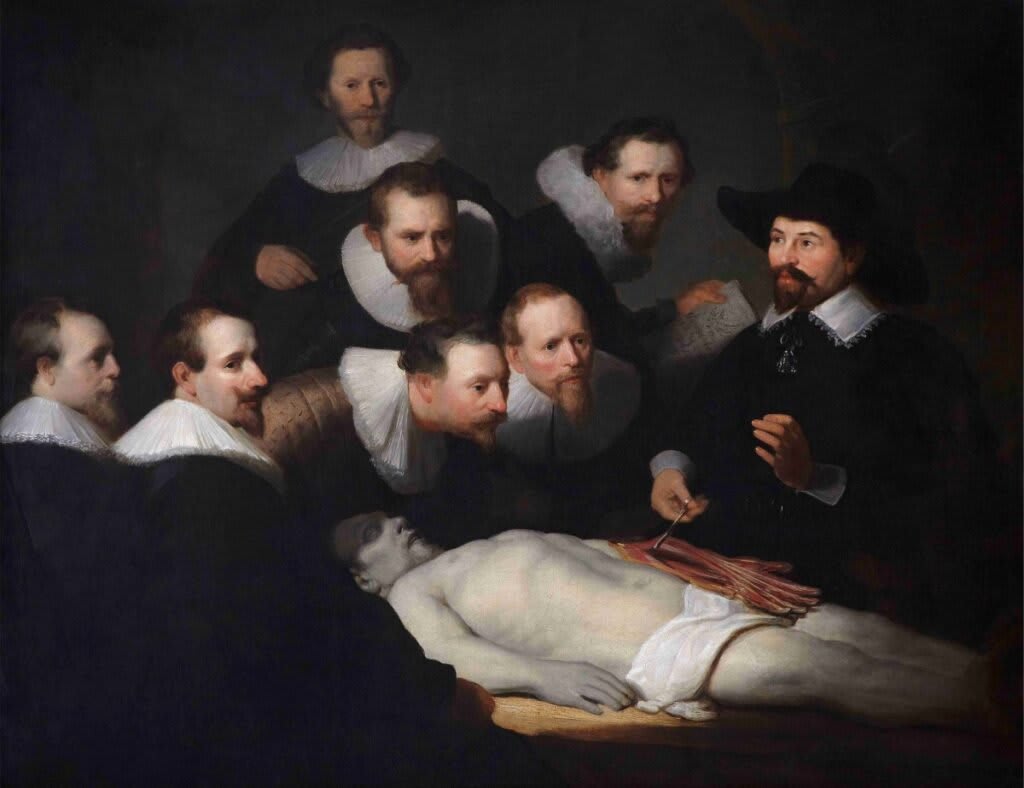
The painting depicts an anatomy lesson conducted by Dr. Nicolaes Tulp, a renowned surgeon of the Guild of Surgeons of Amsterdam, where he is demonstrating the dissection of a corpse to a group of students and surgeons.
Surprisingly, The Anatomy Lesson of Dr. Tulp is one of the most famous works of the Dutch painter Rembrandt van Rijn, completed in 1632.
The work is notable for its dynamic composition and the way Rembrandt portrays the faces of the attendees, each expressing a different emotion, ranging from curiosity to concentration.
The Anatomy Lesson of Dr. Tulp is considered one of Rembrandt's masterpieces and is an exemplary demonstration of his talent in capturing the psychological depth and dramatic intensity of a scene.
THE ANATOMY LESSON
The Netherlands had a tradition of anatomy lectures, established by the pioneering anatomist Andreas Vesalius (1514-64).
Once a year, the Prelector Anatomiae (First Anatomist), or the head of the surgeons' guild, would give a lecture to his members, during which the corpse of a executed criminal would be dissected.
On such an occasion, it was customary for the Prelector to have his portrait painted, along with other members present.
Dr. Nicolaes Tulp (1593-1674) was Prelector from 1628 to 1653 and the painting depicts the dissection lecture he gave on January 31, 1632.
In addition to himself, the portrait features seven members of the Guild of Surgeons, each of whom would have paid commissions to be included in the painting.
The corpse used was that of the thief Adriaen Adriensz, who had been hanged in the early morning.
In the lower right corner, there is a large open book on anatomy, almost certainly De Humani Corporis Fabrica (The Fabric of the Human Body - 1543), by Andreas Vesalius, with whom Rembrandt flatteringly associates Tulp.
Of the seven members of the guild attending, the one closest to Tulp is holding a list of names, while the heads of the other six form an arrow pointing to Tulp's right hand, which holds a surgical instrument.
This increases the dramatic concentration of the figures in Tulp's demonstration.
Rembrandt's chiaroscuro atmosphere and the use of light and shadow to increase the sculptural solidity of the forms also increase the intensity of the image.


