
Pintura modernista a óleo retratando trabalhadores rurais brasileiros em tons de azul e verde pastel, com elementos geométricos.
Arquivo

Workers - Tarsila do Amaral

Workers - Tarsila do Amaral

A

Arthur

Curadoria Histórica

Compartilhar:
Publicidade (Active View 100%)Espaço AdSense em LazyLoad
(Sem Penalidade CLS)

I invite you to contemplate "Workers" (Operários) by Tarsila do Amaral, one of the enduring icons of Brazilian modern art.

Painted in 1933, this seminal work portrays the harsh reality of urban laborers, emphasizing the resilience and dignity of the working class.

Patrocínio
Publicidade (Active View 100%)Espaço AdSense em LazyLoad
(Sem Penalidade CLS)

With bold colors and simplified forms, Tarsila masterfully conveyed the essence of arduous labor and the daily struggles faced by factory workers.

"Workers" is a powerful piece that prompts us to reflect on labor conditions and social inequality—themes that remain acutely relevant to this very day.

At the dawn of the 1930s, Tarsila do Amaral found herself in a vastly different world compared to the one she inhabited in the 1920s.

Her economic situation had been severely impacted by the 1929 crisis.

Living with psychiatrist Osório César, she encountered a different reality, became acquainted with socialism, and traveled to the Soviet Union in 1931.

In August 1932, she was arrested due to her journey and participation in left-wing meetings.

She was going through a challenging period, and to make ends meet, she painted commissioned portraits, created illustrations for publications, and from 1936 onwards, began writing for newspapers.

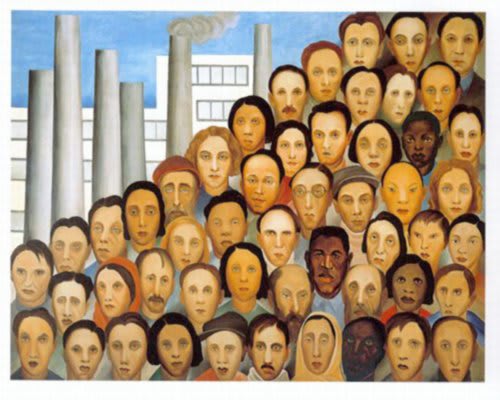
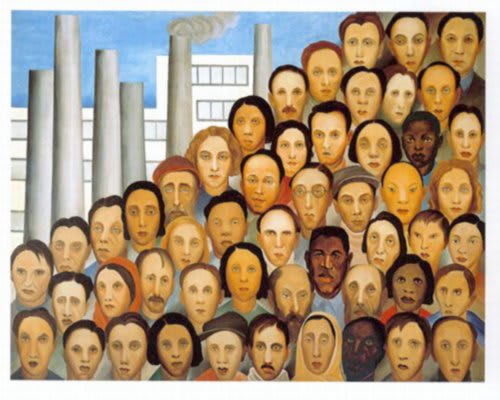
Tarsila stated that she used photographs to paint the faces in  Workers, or else drew from memory.

The painting features 51 faces of men and women of various ages and ethnicities.

In the background, the factory chimney and the office building underscore the plurality of occupations.

The variations in the faces hint at the coexistence between indigenous inhabitants and immigrants from diverse backgrounds.

Although the painter aimed for the anonymity of the figures, she depicted some people she knew: for instance, architect Gregori Warchavchik (the first on the left in the last row), singer Elsie Houston, and Benedito Sampaio, her father's farm administrator.

The disembodied heads are unified by their frontal posture, reminiscent of ex-votos.

They are identity portraits of workers, stripped of professional differentiation.

Somber expressions and vacant gazes document progress and its often-heavy price.

São Paulo, so deeply immersed in the industrial revolution at the time the painting was created, is fully represented in this work, as it draws a perfect parallel with the theme Tarsila intended.
The painting 'Workers' by Tarsila do Amaral, featuring a crowd of diverse faces against a factory backdrop.
WORKERS. Tarsila do Amaral. 1933 - Oil on canvas (150 x 205 cm). Collection of the Palaces of the Government of the State of São Paulo (Boa Vista Palace - Campos do Jordão - São Paulo - Brazil)

NOTE: Also on our website, explore the analysis of the work Second Class, which also forms part of the artist's social phase.

This work makes us reflect on the importance of art in capturing the essence of the era and the society in which it was created.

It is a work that reminds us of the strength and dignity of the working class, and the importance of remembering labor conditions and social inequality.

Furthermore, it is a work that demonstrates art's capacity to capture the essence of the era and the society in which it was created.

Tarsila do Amaral's "Workers" (Operários) stands as one of the most significant works of Brazilian modern art and one of the most emblematic in the history of Brazilian art.

It is a work that prompts us to reflect on the importance of art in capturing the essence of the era and the society in which it was created.

It is a work that reminds us of the strength and dignity of the working class and the importance of remembering labor conditions and social inequality.

This work is one of the most important pieces of Brazilian modern art and one of the most emblematic in the history of Brazilian art.

It is a work that prompts us to reflect on the importance of art in capturing the essence of the era and the society in which it was created.

It is a work that reminds us of the strength and dignity of the working class and the importance of remembering labor conditions and social inequality.

Tarsila do Amaral's art is among the most important in the history of Brazilian art and one of the most emblematic in Brazilian modern art.

It is an art that prompts us to reflect on the importance of art in capturing the essence of the era and the society in which it was created.

It is an art that reminds us of the strength and dignity of the working class and the importance of remembering labor conditions and social inequality.

Tarsila do Amaral is one of the most important artists in the history of Brazilian art and one of the most emblematic figures of Brazilian modern art.

She is an artist who prompts us to reflect on the importance of art in capturing the essence of the era and the society in which it was created.

She is an artist who reminds us of the strength and dignity of the working class and the importance of remembering labor conditions and social inequality.

Tarsila do Amaral's "Workers" (Operários) stands as one of the most significant works of Brazilian modern art and one of the most emblematic in the history of Brazilian art.

It is a work that prompts us to reflect on the importance of art in capturing the essence of the era and the society in which it was created.

It is a work that reminds us of the strength and dignity of the working class and the importance of remembering labor conditions and social inequality.

Tarsila do Amaral was one of the most important artists in the history of Brazilian art and one of the most emblematic figures of Brazilian modern art.

She is an artist who prompts us to reflect on the importance of art in capturing the essence of the era and the society in which it was created.

She is an artist who reminds us of the strength and dignity of the working class and the importance of remembering labor conditions and social inequality.

Tarsila do Amaral's art is among the most important in the history of Brazilian art and one of the most emblematic in Brazilian modern art.

It is an art that prompts us to reflect on the importance of art in capturing the essence of the era and the society in which it was created.

It is an art that reminds us of the strength and dignity of the working class and the importance of remembering labor conditions and social inequality.

Tarsila do Amaral was one of the most important artists in the history of Brazilian art and one of the most emblematic figures of Brazilian modern art.

She is an artist who prompts us to reflect on the importance of art in capturing the essence of the era and the society in which it was created.

She is an artist who reminds us of the strength and dignity of the working class and the importance of remembering labor conditions and social inequality.

Tarsila do Amaral's "Workers" (Operários) stands as one of the most significant works of Brazilian modern art and one of the most emblematic in the history of Brazilian art.

It is a work that prompts us to reflect on the importance of art in capturing the essence of the era and the society in which it was created.

It is a work that reminds us of the strength and dignity of the working class and the importance of remembering labor conditions and social inequality.

Tarsila do Amaral was one of the most important artists in the history of Brazilian art and one of the most emblematic figures of Brazilian modern art.

She is an artist who prompts us to reflect on the importance of art in capturing the essence of the era and the society in which it was created.

She is an artist who reminds us of the strength and dignity of the working class and the importance of remembering labor conditions and social inequality.

Tarsila do Amaral's art is among the most important in the history of Brazilian art and one of the most emblematic in Brazilian modern art.

It is an art that prompts us to reflect on the importance of art in capturing the essence of the era and the society in which it was created.

It is an art that reminds us of the strength and dignity of the working class and the importance of remembering labor conditions and social inequality.

Tarsila do Amaral was one of the most important artists in the history of Brazilian art and one of the most emblematic figures of Brazilian modern art.

She is an artist who prompts us to reflect on the importance of art in capturing the essence of the era and the society in which it was created.

She is an artist who reminds us of the strength and dignity of the working class and the importance of remembering labor conditions and social inequality.

Tarsila do Amaral's "Workers" (Operários) stands as one of the most significant works of Brazilian modern art and one of the most emblematic in the history of Brazilian art.

It is a work that prompts us to reflect on the importance of art in capturing the essence of the era and the society in which it was created.

It is a work that reminds us of the strength and dignity of the working class and the importance of remembering labor conditions and social inequality.

Tarsila do Amaral was one of the most important artists in the history of Brazilian art and one of the most emblematic figures of Brazilian modern art.

She is an artist who prompts us to reflect on the importance of art in capturing the essence of the era and the society in which it was created.

She is an artist who reminds us of the strength and dignity of the working class and the importance of remembering labor conditions and social inequality.

Tarsila do Amaral's art is among the most important in the history of Brazilian art and one of the most emblematic in Brazilian modern art.

It is an art that prompts us to reflect on the importance of art in capturing the essence of the era and the society in which it was created.

It is an art that reminds us of the strength and dignity of the working class and the importance of remembering labor conditions and social inequality.

Tarsila do Amaral was one of the most important artists in the history of Brazilian art and one of the most emblematic figures of Brazilian modern art.

She is an artist who prompts us to reflect on the importance of art in capturing the essence of the era and the society in which it was created.

She is an artist who reminds us of the strength and dignity of the working class and the importance of remembering labor conditions and social inequality.

Tarsila do Amaral's "Workers" (Operários) stands as one of the most significant works of Brazilian modern art and one of the most emblematic in the history of Brazilian art.

It is a work that prompts us to reflect on the importance of art in capturing the essence of the era and the society in which it was created.

It is a work that reminds us of the strength and dignity of the working class and the importance of remembering labor conditions and social inequality.

Tarsila do Amaral was one of the most important artists in the history of Brazilian art and one of the most emblematic figures of Brazilian modern art.

She is an artist who prompts us to reflect on the importance of art in capturing the essence of the era and the society in which it was created.

She is an artist who reminds us of the strength and dignity of the working class and the importance of remembering labor conditions and social inequality.

Tarsila do Amaral's art is among the most important in the history of Brazilian art and one of the most emblematic in Brazilian modern art.

It is an art that prompts us to reflect on the importance of art in capturing the essence of the era and the society in which it was created.

It is an art that reminds us of the strength and dignity of the working class and the importance of remembering labor conditions and social inequality.

Tarsila do Amaral was one of the most important artists in the history of Brazilian art and one of the most emblematic figures of Brazilian modern art.

She is an artist who prompts us to reflect on the importance of art in capturing the essence of the era and the society in which it was created.

She is an artist who reminds us of the strength and dignity of the working class and the importance of remembering labor conditions and social inequality.

Tarsila do Amaral's "Workers" (Operários) stands as one of the most significant works of Brazilian modern art and one of the most emblematic in the history of Brazilian art.

It is a work that prompts us to reflect on the importance of art in capturing the essence of the era and the society in which it was created.

It is a work that reminds us of the strength and dignity of the working class and the importance of remembering labor conditions and social inequality.

Tarsila do Amaral was one of the most important artists in the history of Brazilian art and one of the most emblematic figures of Brazilian modern art.

She is an artist who prompts us to reflect on the importance of art in capturing the essence of the era and the society in which it was created.

She is an artist who reminds us of the strength and dignity of the working class and the importance of remembering labor conditions and social inequality.

Tarsila do Amaral's art is among the most important in the history of Brazilian art and one of the most emblematic in Brazilian modern art.

It is an art that prompts us to reflect on the importance of art in capturing the essence of the era and the society in which it was created.

It is an art that reminds us of the strength and dignity of the working class and the importance of remembering labor conditions and social inequality.

Tarsila do Amaral was one of the most important artists in the history of Brazilian art and one of the most emblematic figures of Brazilian modern art.

She is an artist who prompts us to reflect on the importance of art in capturing the essence of the era and the society in which it was created.

She is an artist who reminds us of the strength and dignity of the

Publicidade
Publicidade (Active View 100%)Espaço AdSense em LazyLoad
(Sem Penalidade CLS)

Follow us on Instagram

@arteeartistas
© 2016 - 2026 Arte e Artistas desenvolvido por Agência WEB Solisyon • Todos os direitos reservados.