
Biography of Johannes Vermeer: Death, Legacy and the Rediscovery of a Genius
Biography of Johannes Vermeer: Death, Legacy and the Rediscovery of a Genius
Article Index
The year 1672 is known in Dutch history as "The Year of Disaster," due to the invasion of the Dutch Republic by French, German, and British armies.
This led to a dramatic economic crisis for the previously prosperous middle-class country.
The art market plummeted, and Vermeer could hardly afford to keep himself, his wife, his mother, and his eleven children.
He took on increasingly larger debts, borrowing thousands of guilders, and was even caught embezzling his mother-in-law's money.

Vermeer died on December 16, 1675, suffering a mental breakdown and depression.
In the court records, his wife stated that, "... during the ruinous war with France, he not only failed to sell any of his works, but also, to his great disadvantage, was left sitting with the paintings of other masters that he was dealing with."
As a result, and due to the great burden of his children not having their own resources, he fell into decline, which he took so seriously that, as if he had entered a frenzy in a day and a half, he went from being healthy to being dead.
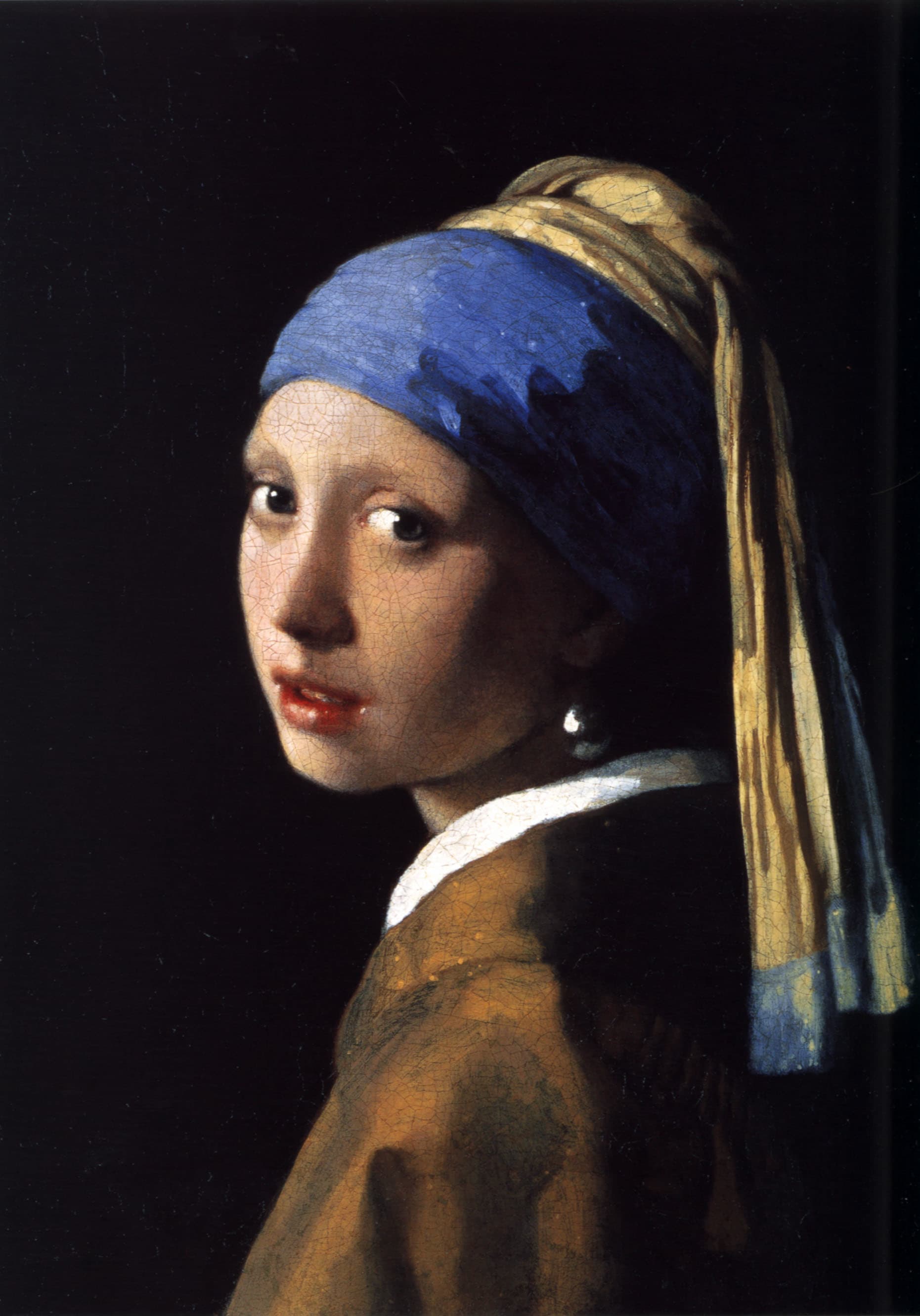
Today, the name Vermeer instantly evokes an image of his masterpiece Girl with a Pearl Earring, known as the "Mona Lisa of the North," the painting has become an universal icon in the canon of the Dutch Golden Age.
Vermeer's career was dedicated to exploring tender moments of everyday life, documenting private interior spaces of the mind and environment that synthesized the era of Baroque. However, his mastery of pigments and light elevated the artist beyond his contemporaries, providing an unparalleled glimpse into the lifestyle of his prosperous historical era.
LEGACY
Vermeer, who had very localized recognition during his lifetime, seemed to have disappeared from the art world until the 19th century, when French artists like Édouard Manet began to turn their eyes to the real and unpretentious artist who had until then gone unnoticed, he passed to be a great influence on these artists, who revived the awareness and grandeur of the master's work.
Despite having a small production of recognized works that have survived, Vermeer is considered today one of the greatest artists of the Baroque era.
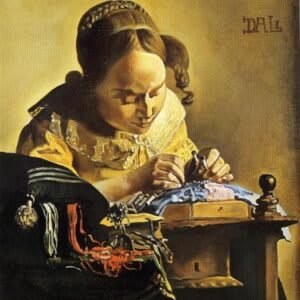
Fascinated by his work, in the 20th century, the surrealist Salvador Dali recreated some of his works to pay homage to the Baroque master, as we can see in The Lacemaker 'after Vermeer'.
To understand the rest of this journey, continue to our next article: Biography of Johannes Vermeer: In-Depth Analysis of Masterpieces.


