Biography of Johannes Vermeer: In-Depth Analysis of Masterpieces
Biography of Johannes Vermeer: In-Depth Analysis of Masterpieces
GALLERY - WORKS MENTIONED
Although only about 36 of his paintings have survived, these rare works are among the greatest treasures of the world's top museums. Vermeer began his career in the early 1650s painting biblical and mythological scenes on a large scale, but most of his later paintings - those for which he is most famous - depict scenes from everyday life in indoor settings.
The Lacemaker - In this composition, we have a possible self-portrait of the artist who is identified by the man on the left holding a cup in one hand and with the other, a musical instrument, possibly a harp. Unlike Rembrandt, who painted numerous self-portraits, there is no other cataloged Vermeer self-portrait other than this one included in this painting.
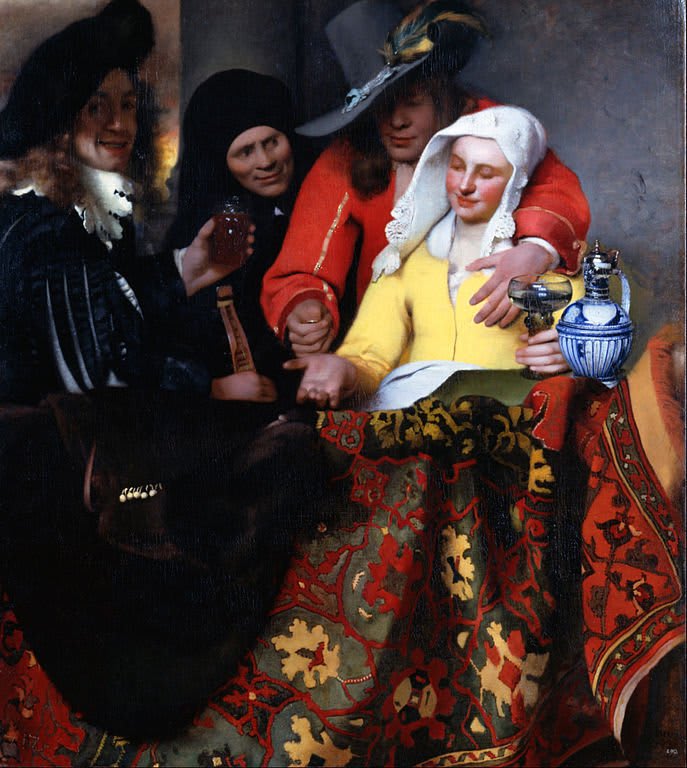
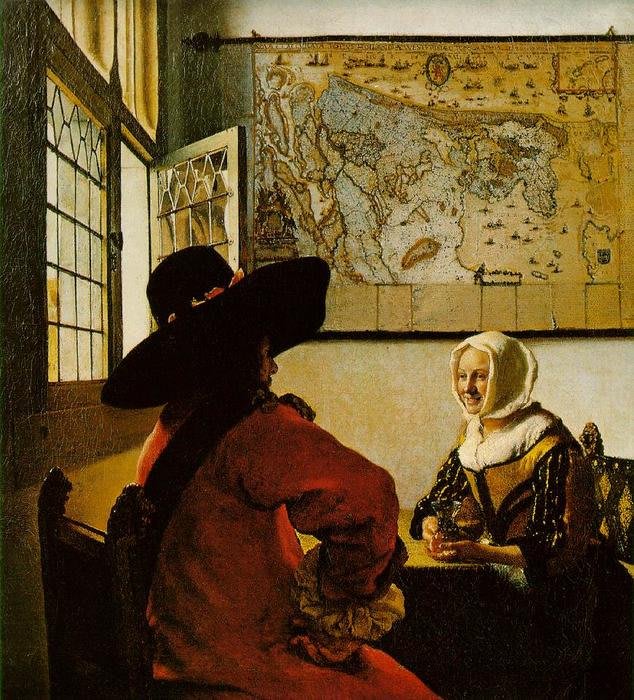
The Officer and the Laughing Girl - There are indications that it was Vermeer's wife who posed for this and many of his other paintings. Certainly, the delicacy and care with which he painted her face would reinforce this idea. Some historians believe that this is one of the first paintings he produced with the help of a camera obscura. Although there is nothing to prove that he used this resource, as it was not recorded in the household inventory at the time of his death. After the invention of photography, this is not perceived, but for 17th-century artists, it would have been more impressive, and we can see that although other painters placed figures and objects in the foreground and close to the observer, they were generally in proportion to the space they inhabited.
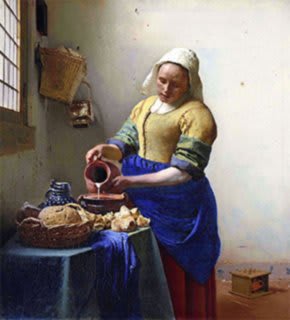
The Milkmaid - To learn more about the painting, click here
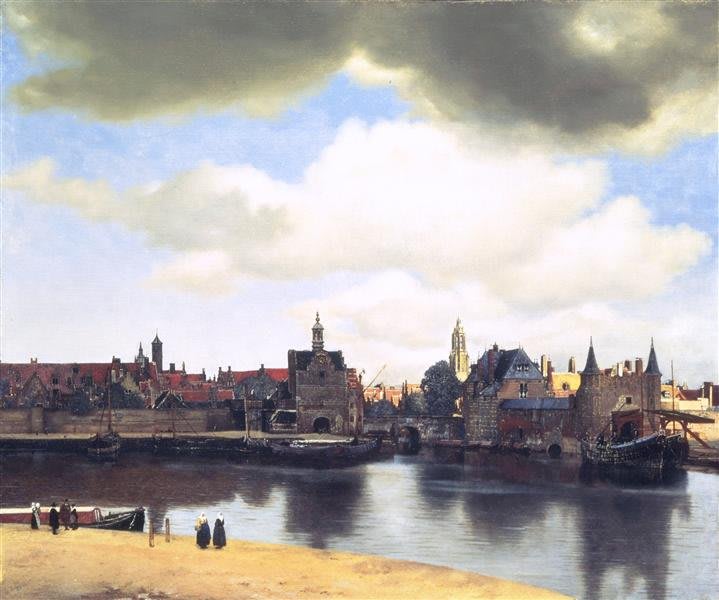
View of Delft - Vermeer depicted in this work a serene glimpse of urban life during the Dutch Golden Age, a period when the Dutch world economy, technology, and art were at their peak.
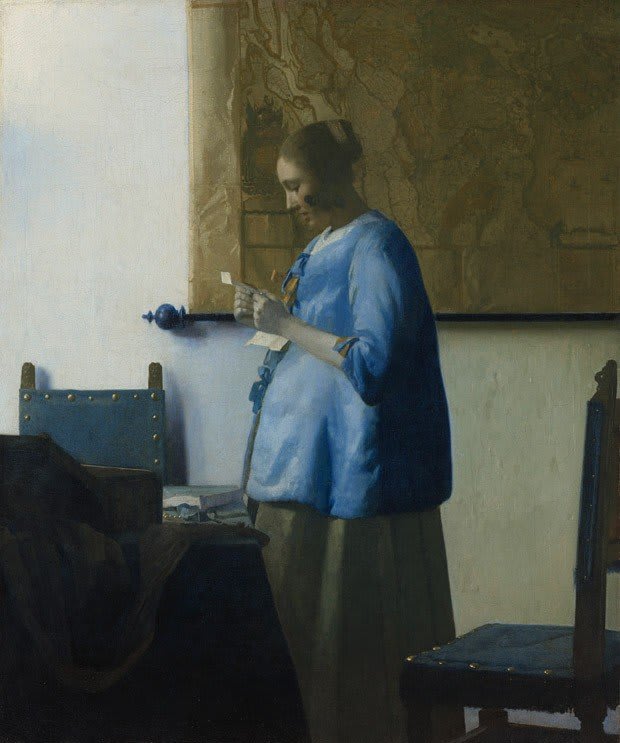
The Woman in Blue Reading a Letter - This is one of the most enigmatic and powerful representations by Vermeer of a new theme in Dutch genre painting (subjects of everyday life): wealthy women in domestic environments, often so absorbed that they do not notice the observer looking.
The Rendezvous - To learn more about the painting, click here
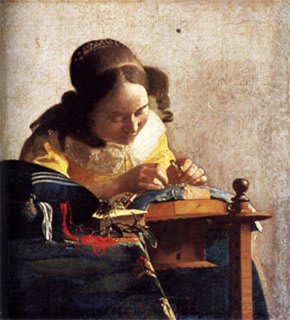
The Art of Painting - Click here and learn more about this masterpiece...
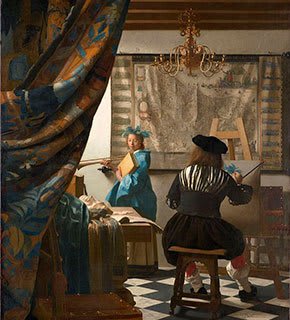
The Astronomer - The atmosphere created by Vermeer is enveloped by a soft lateral light, the hand on the celestial globe of the scientist is surrounded by objects skillfully arranged and described with realism. The astronomer tends to a stylization close to the allegory, and for this, the fine combination of the elements that surround him contributes.
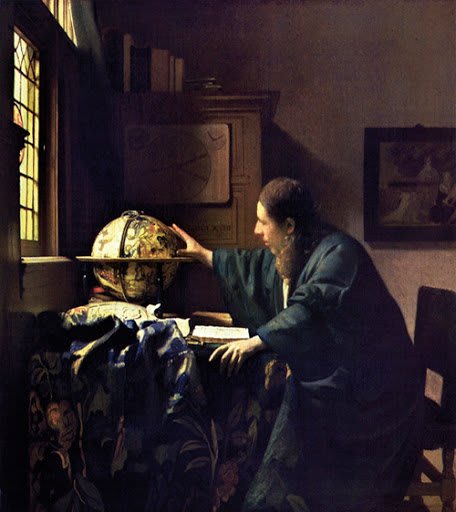
Allegory of Catholic Faith - Vermeer represents in this painting Mary Magdalene, who is shown raising her eyes from the Bible to contemplate the crucifix, paralyzed by divine love.
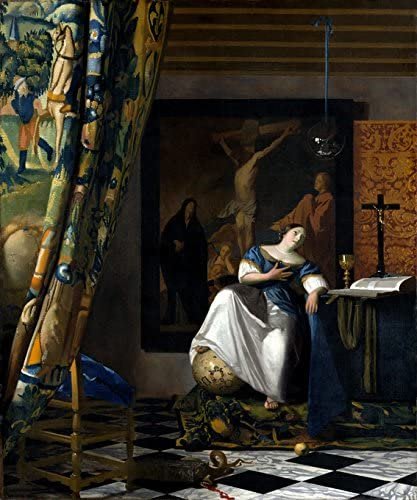
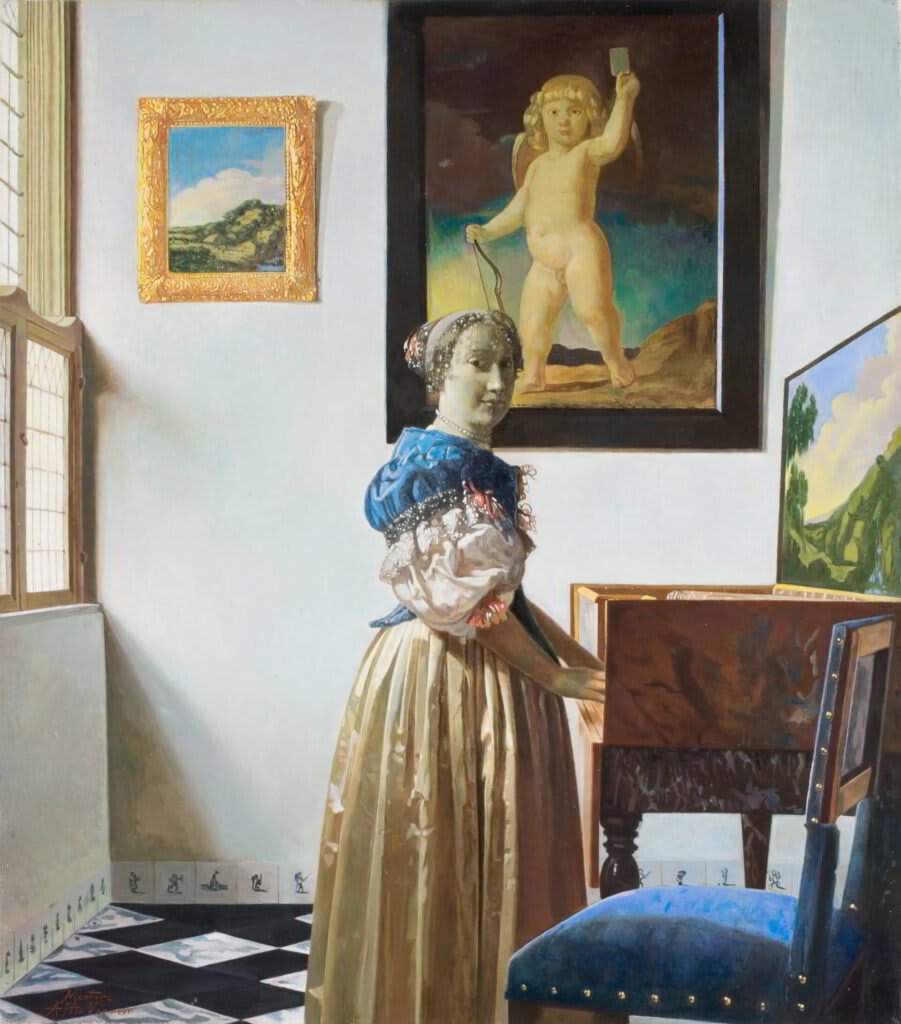
The Lady Playing the Virginals - The virginal, a musical instrument belonging to the harpsichord family, brings a very important meaning to this composition, as it was often used by young women from wealthy families who played in a domestic environment. The paintings in which the artist included women surrounded by elements of the musical universe, appeared mostly seated at the virginal, with a delicate aspect, as if they were posing for the painter. This, presenting the lady standing, is covered in meanings that offer the viewer the pleasure of deciphering them.