
Camille Pissarro: Biography and Most Famous Works
Discover the life and art of Camille Pissarro, the 'Father of Impressionism', and explore his most iconic paintings and quotes.
Article Index
Pissarro passed away in Paris in 1903, hailed as the ‘Father of Impressionism’. Although he was not the most prolific of the impressionists, he had the greatest influence on the development of the style and technique.
Pissarro and His Work
From his early years, influenced by the realism of Corot and his friendship with Melbye, Pissarro primarily painted landscapes. As his style evolved into impressionism, he often chose rural natural scenes or moments from the daily life of peasants, or sometimes impressions of urban streets. Thus, the composition of his paintings became less formal and more casual, focusing on the interaction of light in a specific location, the quality of color, or the atmosphere of the moment. In this way, the emerging impressionism of Pissarro attempted to capture reality not by precise replication of scenes or landscapes, but rather through the expression of colorful spontaneity. This change in stylistic approach was revolutionary for many in the art world and encouraged art viewers to reconsider their approach to appreciating art.
Commented Art
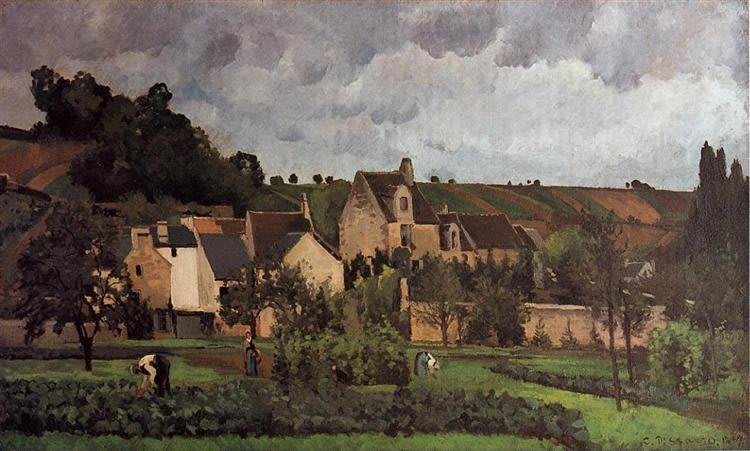
View of L'Hermitage in Pontoise - This is one of Camille Pissarro's most famous works. The image shows a winding road located in a village, with some people in heavy clothing working in a harvest. The scenery is picturesque and beautiful, but presented in a clear and non-sentimental way. The image represents a significant contribution to the genre of realism influenced by Corot.
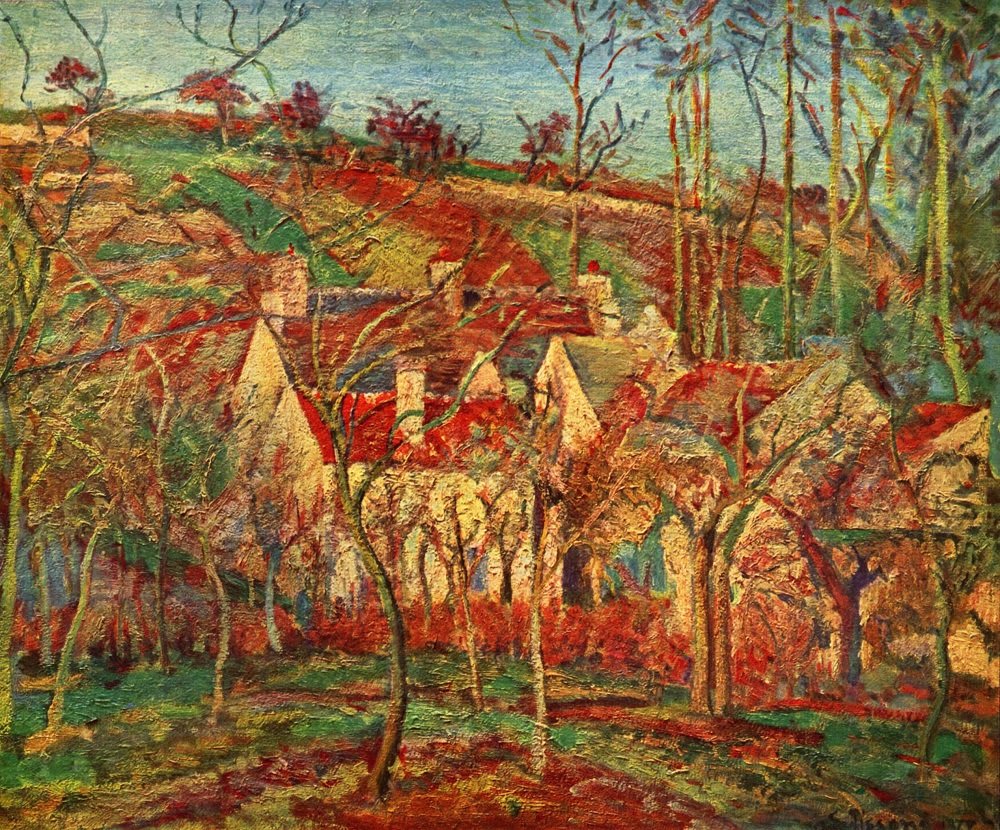
The Red Roofs - In this painting, we see a small cluster of houses amidst the trees of an orchard. The houses seem to be the theme of the painting, but the spider web formed by the trunks and branches of the trees prevents our gaze from resting on them, physically blocking our view. Instead of being able to see the houses clearly, our eyes slide over the surface of the composition.
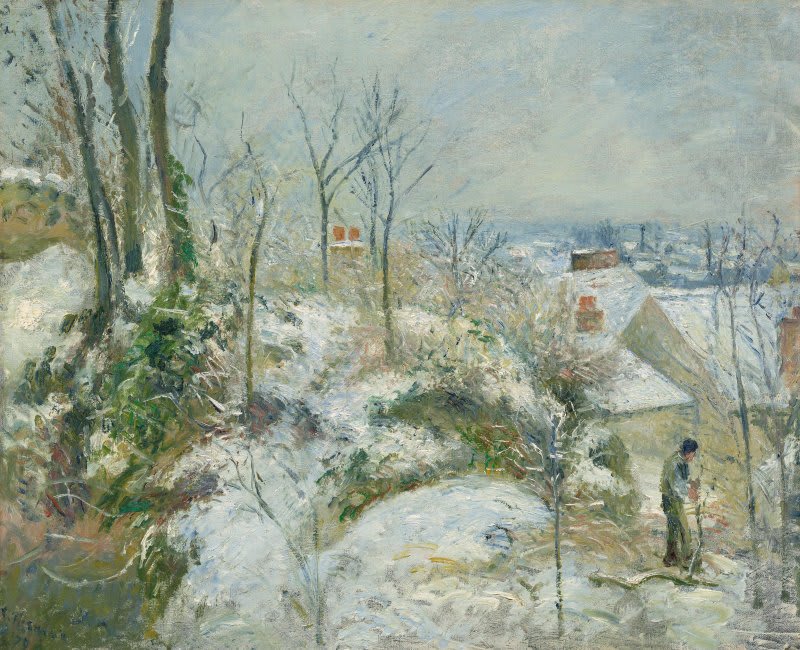
Winter in Pontoise - In 1879, France experienced a very harsh winter, which Pissarro explored in this and other works painted in his home in Pontoise, near the Seine River. In partnership with other impressionist painters, Camille Pissarro pursued the theme of snow throughout his career, producing around 100 paintings on this theme.
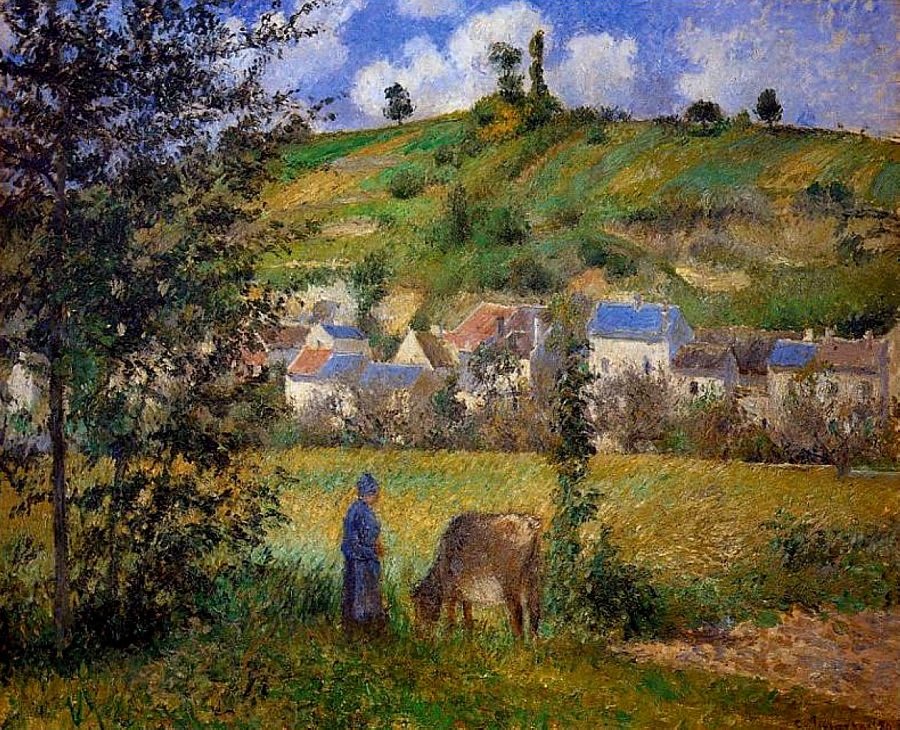
Landscape in Chapponval - Pissarro takes the formation of horizontal bands to an extreme, instead of giving an illusion of reality and depth, the painting is almost abstract in its composition. The bands composed of fields, houses, and sky seem almost stacked on top of each other, like the figures of a medieval tapestry. The figures also seem to play a different role, almost getting lost in the landscape, the cowherd and her load remain resolutely in the central foreground and demand our attention. Not only the sky and the woman's dress are blue, but also the roofs of the houses.
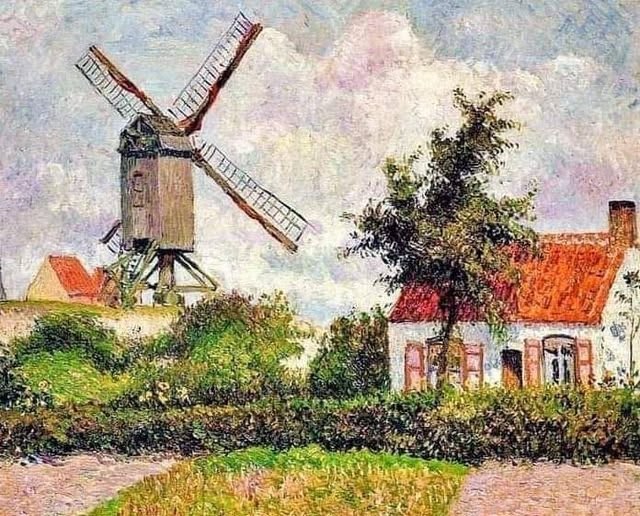
Windmill in Knocke - Pissarro's work is characterized by a palette of warm colors and the firmness with which he captures the atmosphere, through precise work with light.
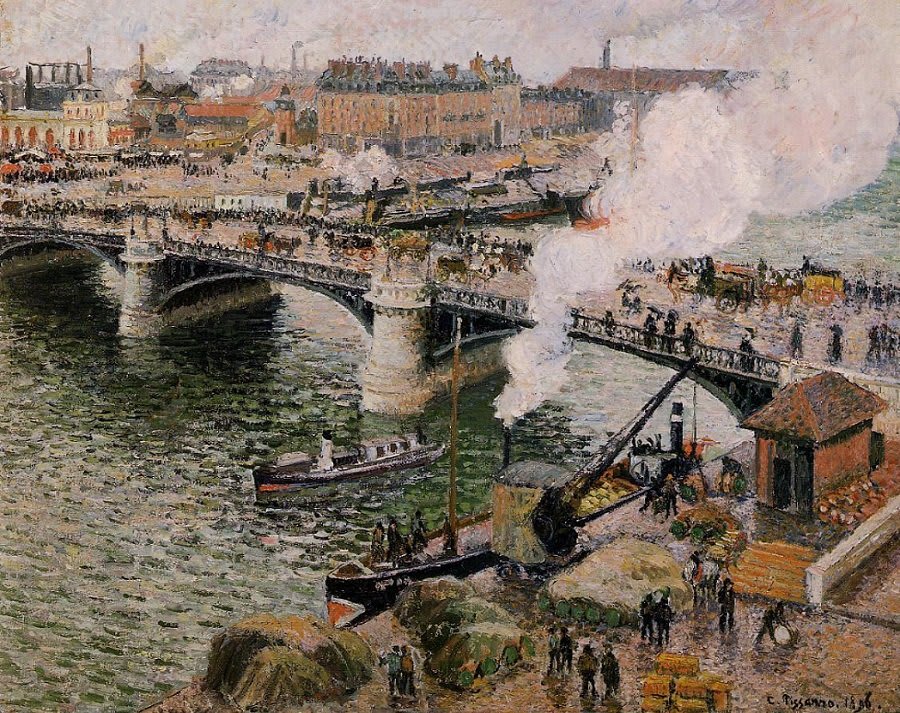
The Grand Bridge in Rouen, Rainy Weather - During his first trip in 1896, he painted around 12 paintings, and by the end of the second trip, he had completed a total of 28. The Grand Bridge in Rouen, Rainy Weather was painted during his second visit to Rouen. He arrived on September 2 and rented a room at the Hotel d'Angleterre, which overlooked the port. There, Pissarro depicted a bustling scene. There are sailors in the foreground working on boats, people, horses, and carriages crossing the bridge, and chimneys emitting thick smoke from factories that seemed to be productive. He obviously found the change of scenery in Rouen very inspiring.
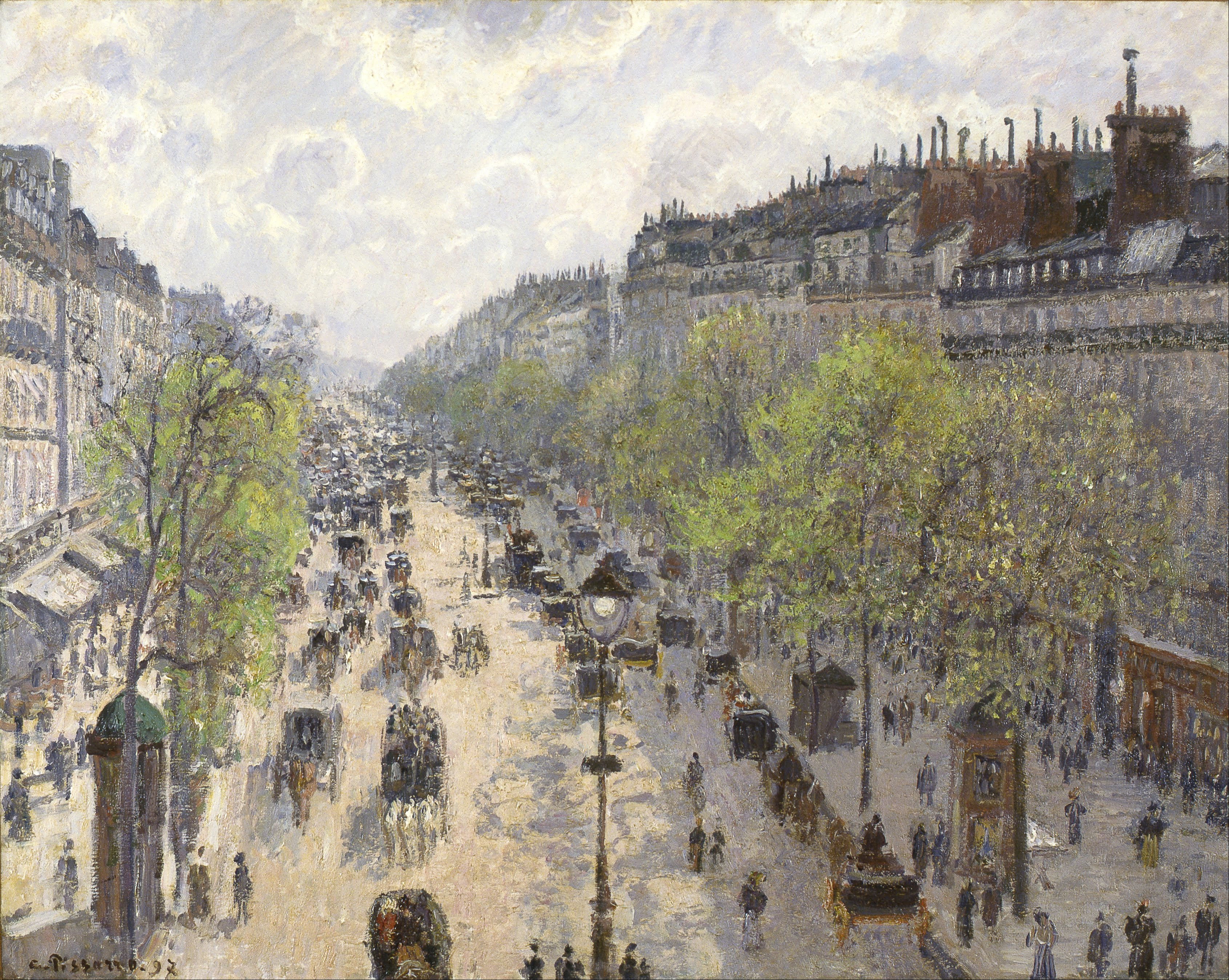
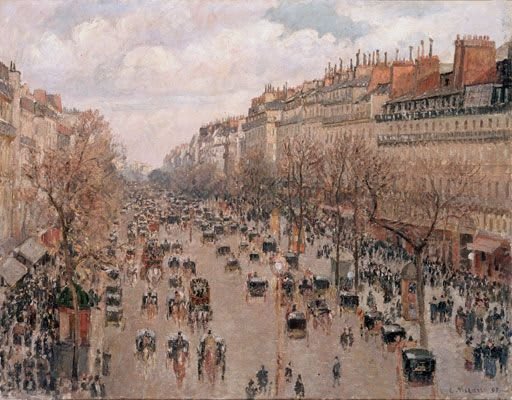
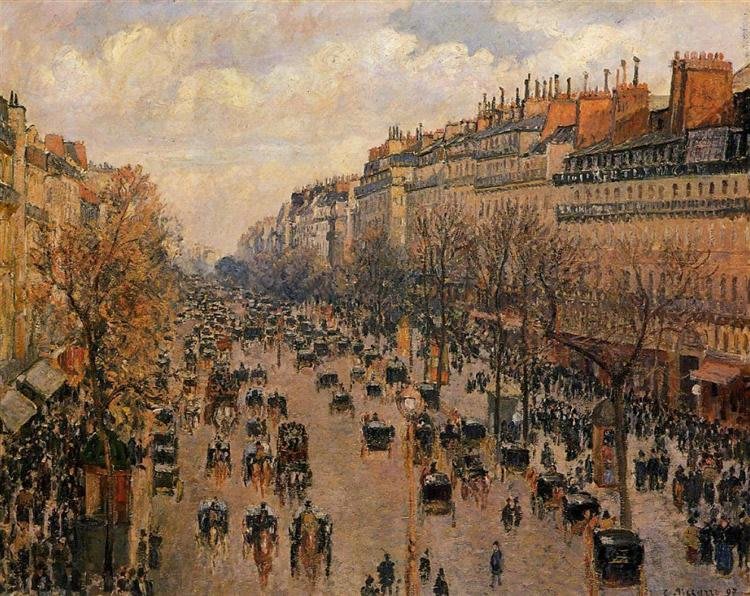
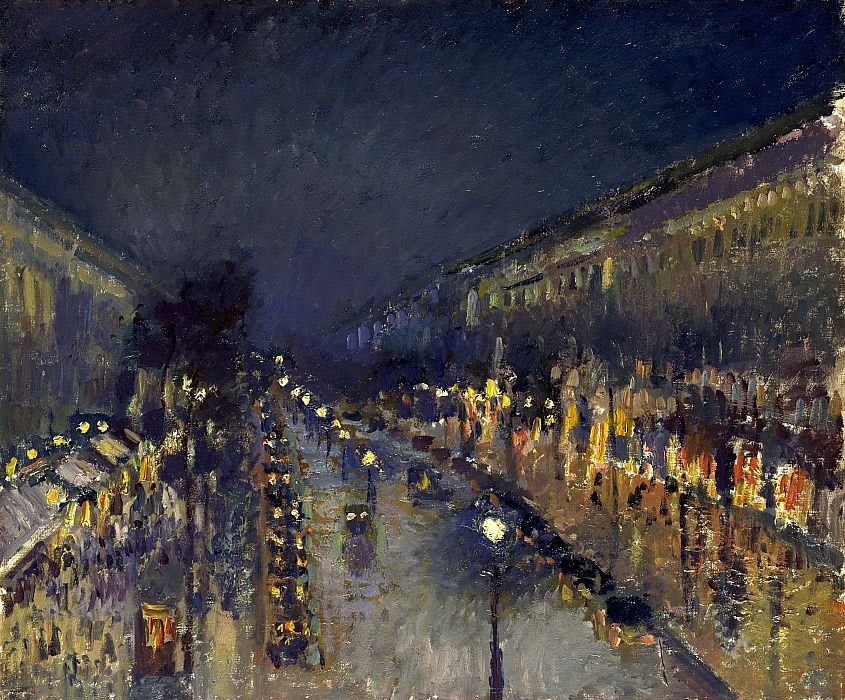
The Boulevard Montmartre - The painting is part of a series of paintings, depicted in Pissarro's room at the Hotel de Russie with a view of the street, which portray the same scene at different points in the day and different seasons of the year. He emphasizes the changing effects of natural light on the urban scene, resulting in a reflection on the passage of time and the transformation of the city.
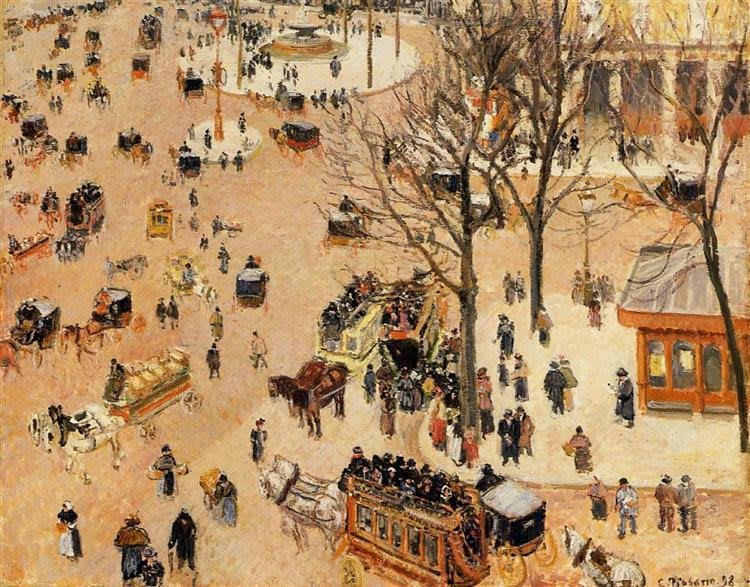
The French Theatre Square - Pissarro loved painting the streets of Paris, he always represented them as luminous, silver, and lively. Pissarro was interested in portraying the everyday life of the city and not the famous views. The small human figures and local traffic are well-painted in different strokes.
‘When you do something with all your soul, putting everything noble inside you, you will always find a compensation.’
‘Blessed are those who observe beautiful things in humble places, where others do not notice anything.’
‘Paint the essential character of things.’
– Camille Pissarro


