Claude Monet: Biography and Work: An Analysis of His Major Paintings and Enduring Legacy
Claude Monet: Biography and Work: An Analysis of His Major Paintings and Enduring Legacy
Article Index
Monet: The Master of Impressionism in Focus
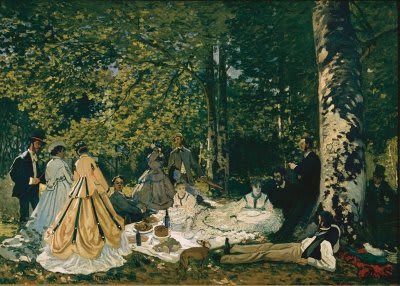
Claude Monet began "Luncheon on the Grass," a painting with life-sized figures, the year before its completion.
Still, it took him a while to finish it. Fearing that its large size might compromise the composition, Monet worked on numerous preparatory studies before arriving at the definitive version.
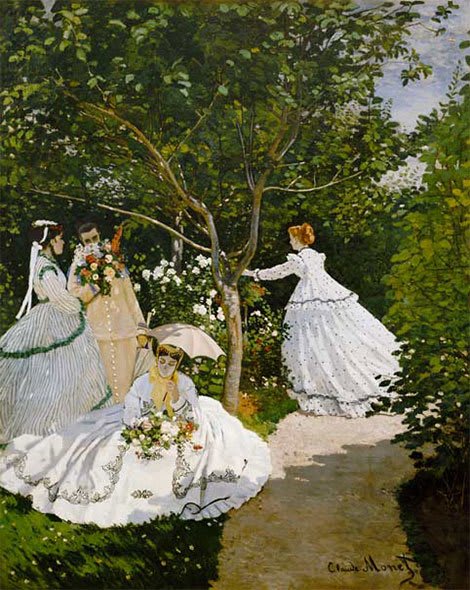
Monet sketched "Women in the Garden" during his stay in Ville d’Avray and finished it the following year.
Much of the painting was executed outdoors, a practice that would become the artist's hallmark.
His wife Camille posed as the model for the four female figures depicted in the scene.
To reach the upper parts of the enormous canvas, Monet had to lower the artwork into a trench he dug to accommodate it as the work progressed. An unusual, yet effective, method.
This fascination with capturing personal moments and leisure in French art can be traced back to earlier movements that celebrated similar themes through a different aesthetic lens: Antoine Watteau and the Rococo
Scenes of Family Life and the Dawn of Innovation
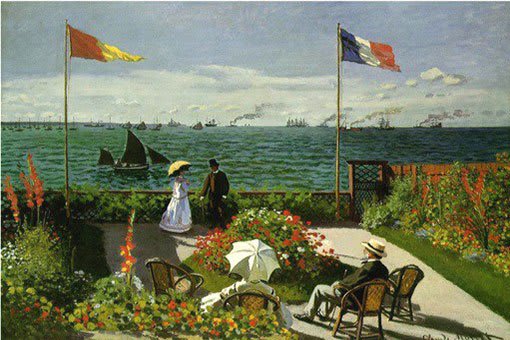
In "Terrace at Sainte-Adresse," Monet combines various elements: the sun, the sea, flowers, and human figures.
It was a composition that was already bold for its time. Despite the vibrant colors and innovative representation, the work still reflects an early period in the painter's trajectory, predating the full development of Impressionism.
This terrace wasn't just any place. It belonged to his aunt Marie-Jeanne's house.
In the scene, Monet depicts his own father, seated to the right of his aunt, in the foreground.
In the background, we see his cousin Jeanne-Marguerite, accompanied by a probable family friend, creating an intimate and personal portrait.
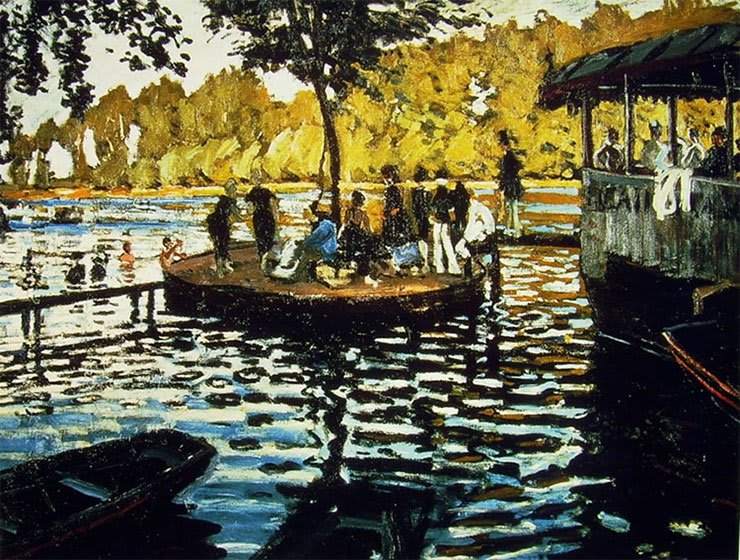
The famous painting "La Grenouillère" is a landmark work. It is directly associated with the deep friendship between Monet and Auguste Renoir.
This relationship inspired an explosion of creativity, leading them to paint together, side by side, observing the same landscape.
With quick, gestural brushstrokes, both captured a theme that would become one of the Impressionists' favorites: outdoor life and its reflections.
But one detail in this series of works would change the history of art forever:
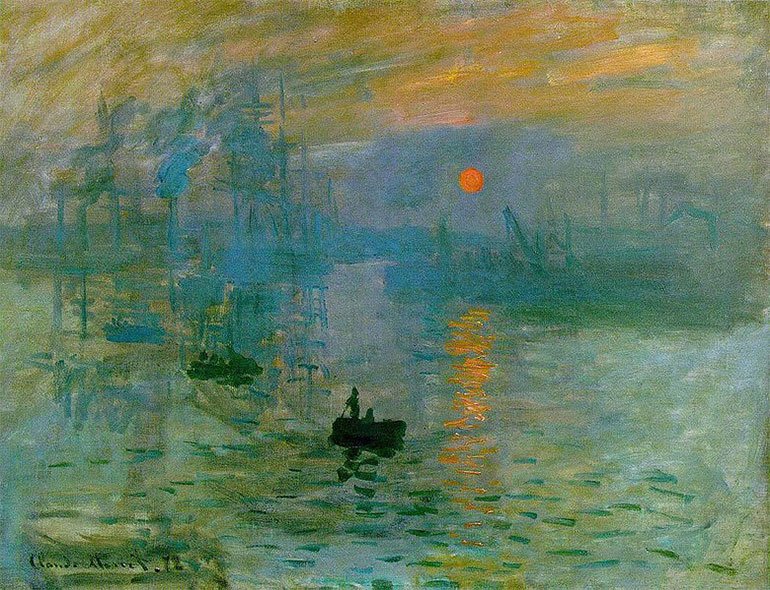
It was from the title "Impression, Sunrise" that the term "Impressionism" was derived.
The artists of the group themselves, led by Monet, eventually adopted this denomination for the artistic movement that was emerging with force.
This canvas is a true synthesis of the Impressionist style, where reality dissolves into the infinite possibilities that the painter's intuition bestows upon the image, transforming visual perception.
The Essence of Impressionism: Light and Color on the Seine
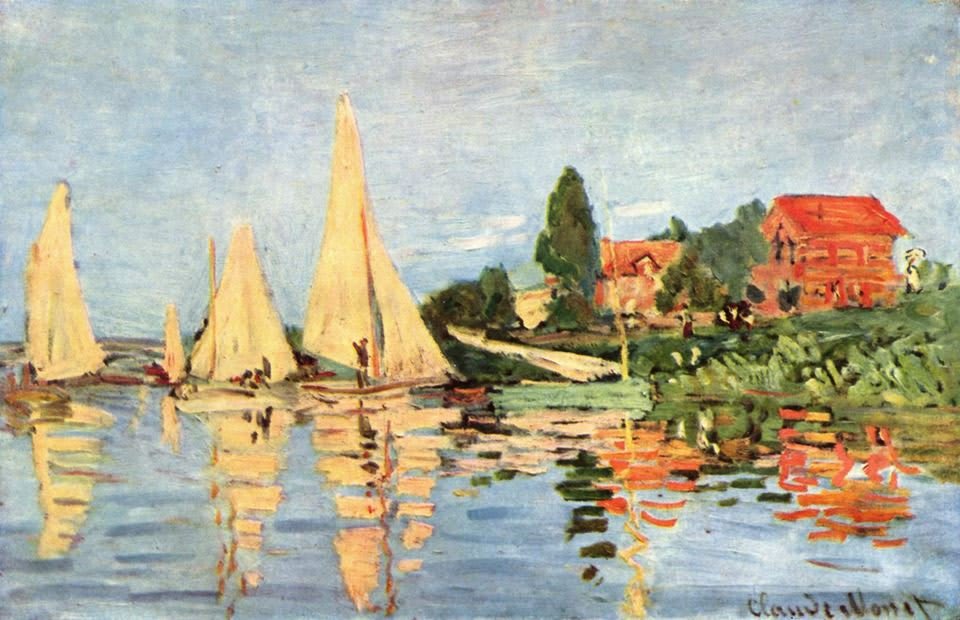
"Regattas at Argenteuil" is one of the inaugural works of Impressionism and, without a doubt, one of Monet's most celebrated.
Beyond the contrasting and harmoniously employed colors, what truly captivates in this painting are the broad and dynamic brushstrokes.
They are masterfully applied to create the reflections on the water, the sailboats, the houses, the sky, and the lush vegetation along the banks of the Seine, capturing the vibrancy of the moment.
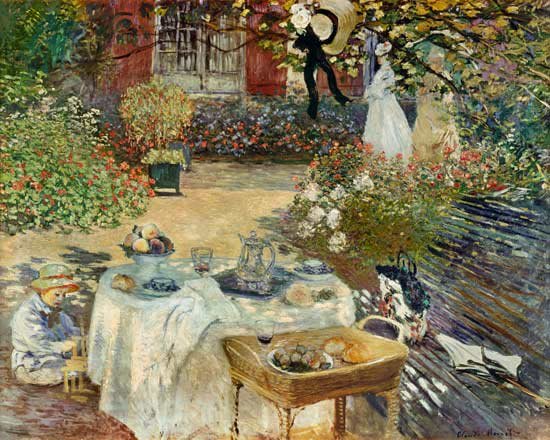
In "The Luncheon," Monet transports us to an idyllic setting. He depicts his wife Camille and young Jean, immersed in the luxuriant, summery vegetation of a carefully cultivated garden.
On a table covered with a white tablecloth, the details are exquisite: fresh fruit, tea in fine porcelains, and an elegant silver coffeepot.
The light dresses of the strolling women and the straw hat hanging from a branch evoke an atmosphere of leisure and well-being, suggesting a certain financial ease that made this scene possible.
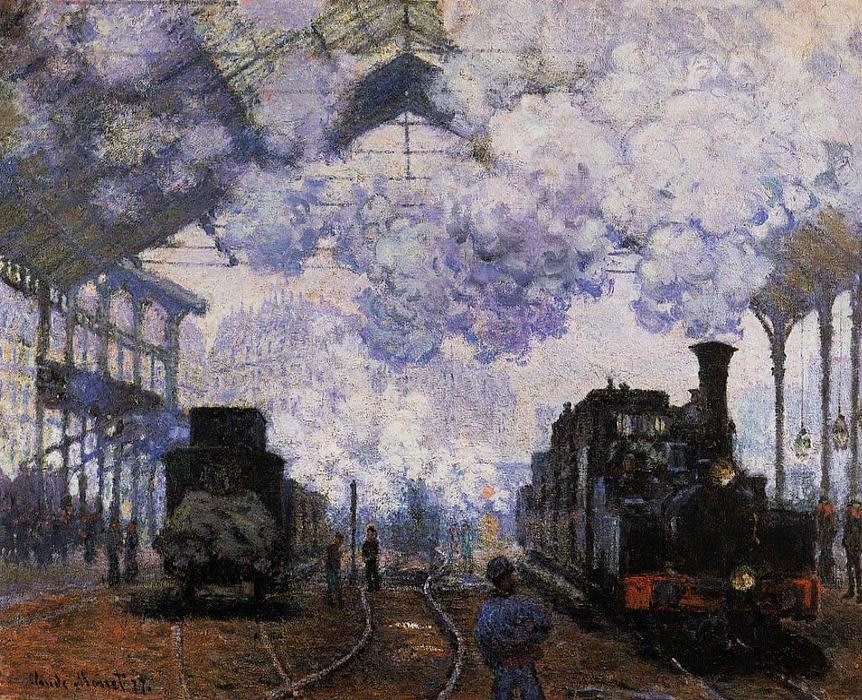
Just as in his celebrated bridge canvases, in "Arrival at Saint-Lazare Station," Monet explores the linear structure of the location.
Smoke, steam, and incidental light fill the image, animating the space with pulsating energy.
It's as if the station, with its grandeur and movement, transforms into a true cathedral of modern times, a temple of industry and progress.
While Monet focused on the fleeting effects of light on nature and industry, other revolutionary artists used their craft to document a more internal, psychological journey: Van Gogh's Self-Portraits
Exploring the Landscape and the Studio Boat
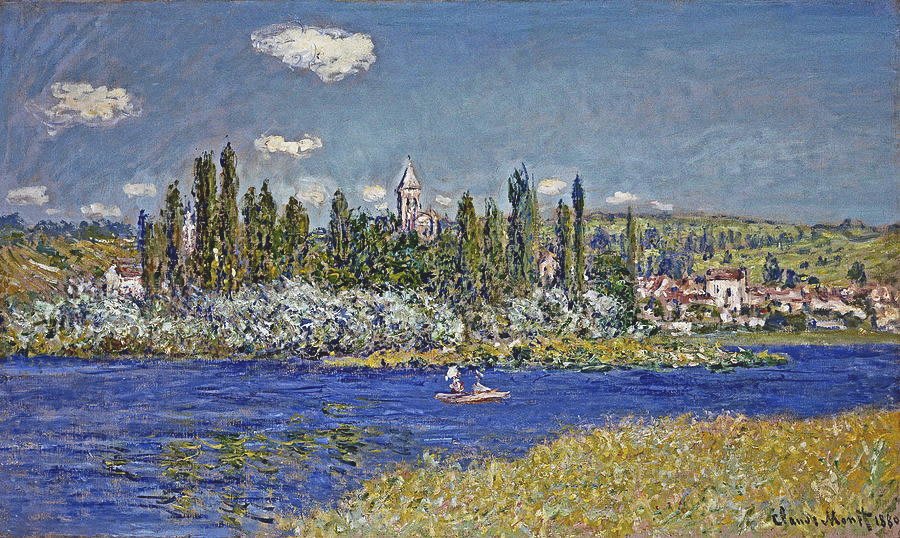
Vétheuil is a charming town, situated on the opposite bank of the River Lavacourt, another small village on the banks of the Seine.
At that time, there was no bridge. The two localities communicated only by a local ferry service.
Monet, however, owned a specially adapted boat, which he transformed into his floating studio.
This allowed him to navigate the river, mooring in front of any landscape that piqued his interest to paint.
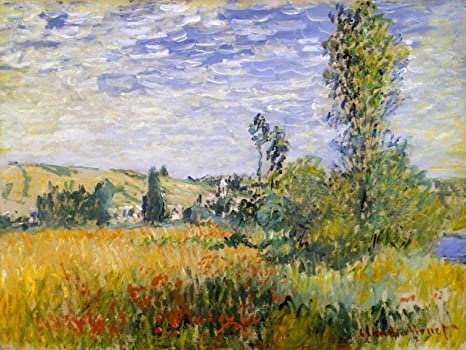
Between 1878 and 1882, Monet produced various views of Vétheuil and its surroundings, many of them, undoubtedly, created from his unique aquatic studio.
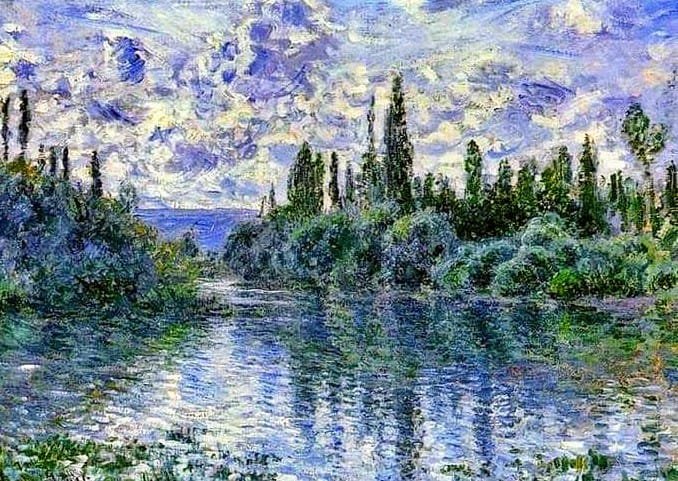
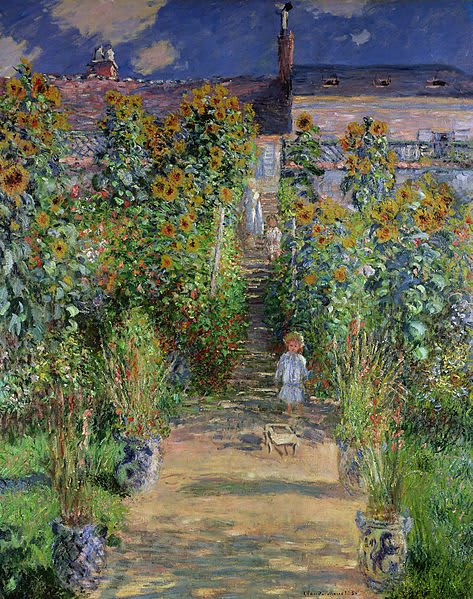
In the work "Garden at Vétheuil," the figures of Michel Monet and Jean-Pierre Hoschedé bring the composition to life.
They subtly emphasize the immensity of the garden, placing the human scale in contrast with the vastness of the painted nature.
Giverny: The Sanctuary of Water and Light
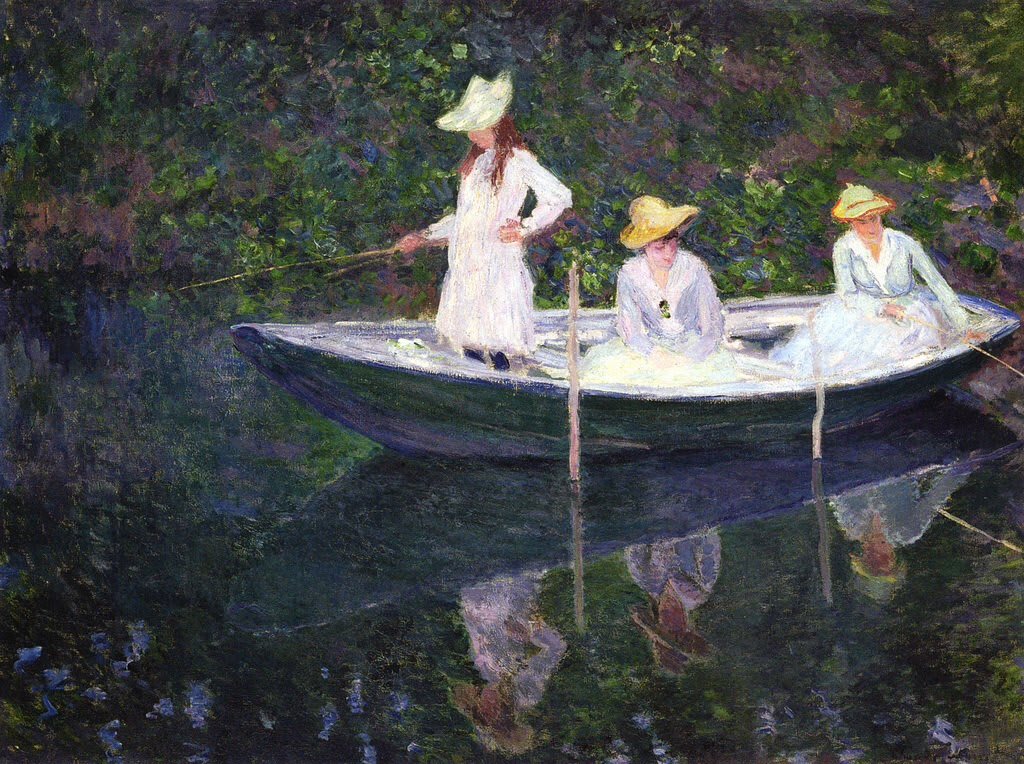
In "The Boat at Giverny," water plays a central role for Monet.
It's not just about its intrinsic movement, but its ability to reflect landscapes in an almost abstract way, dissolving forms into a play of lights.
Monet didn't seek to depict the exact ripple of the water. Instead, he used firm, fragmented brushstrokes to delineate the reflections on its surface.
This innovative technique became a defining characteristic of the Impressionist movement. In "The Boat at Giverny" itself, the painter depicts three young women who appear to be fishing on the Epte River.
The combination of light and color on the canvas invites the viewer into a sense of peace and relaxation, almost an invitation to serene contemplation.
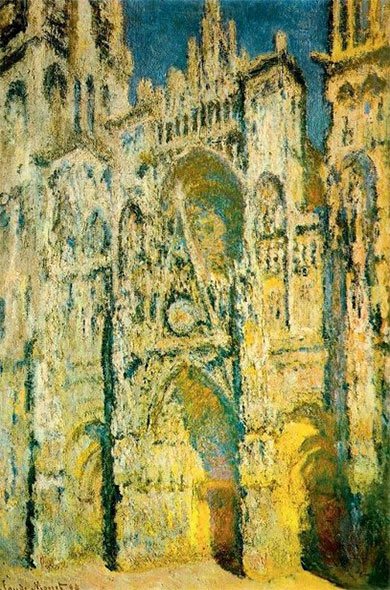
In the famous series "Rouen Cathedral in the Sun," Monet delved into the effects of light on objects.
He dedicated himself to exhaustive research, producing a series of canvases that depicted the same subject under a myriad of distinct luminous effects.
These motifs ranged from haystacks and poplars to complex and grandiose structures, such as the imposing Rouen Cathedral.
Some say that Monet even painted up to fourteen canvases of the same image in a single day, in a tireless effort to capture every nuance of sunlight.
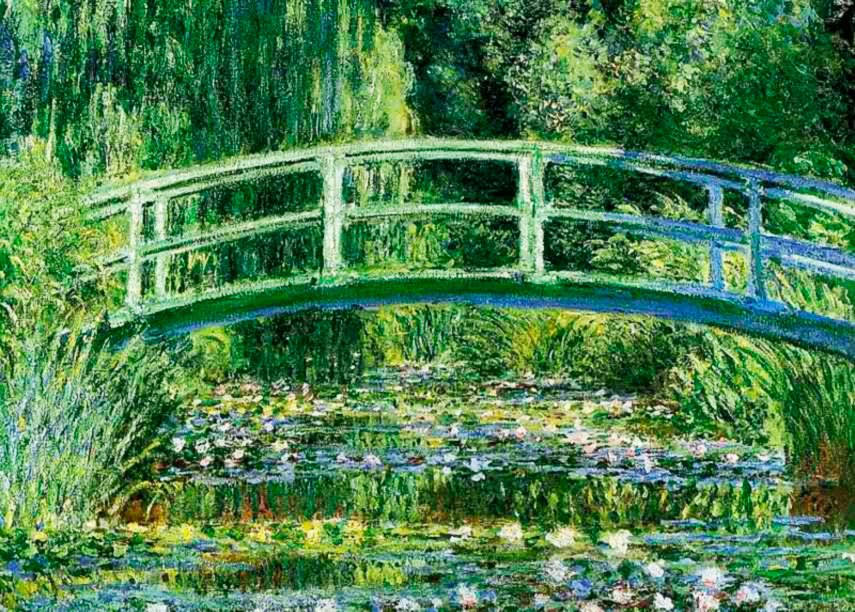
The Japanese Bridge, which still stands today in the famous gardens of Giverny, was one of Monet's most exhaustively explored themes.
In 1900, for instance, he dedicated himself to a series of six canvases, exploring not only the bridge but also the water lily pond and all the surrounding vegetation.
These works invite us to appreciate the enchanting and unique beauty of this very special place for the artist.
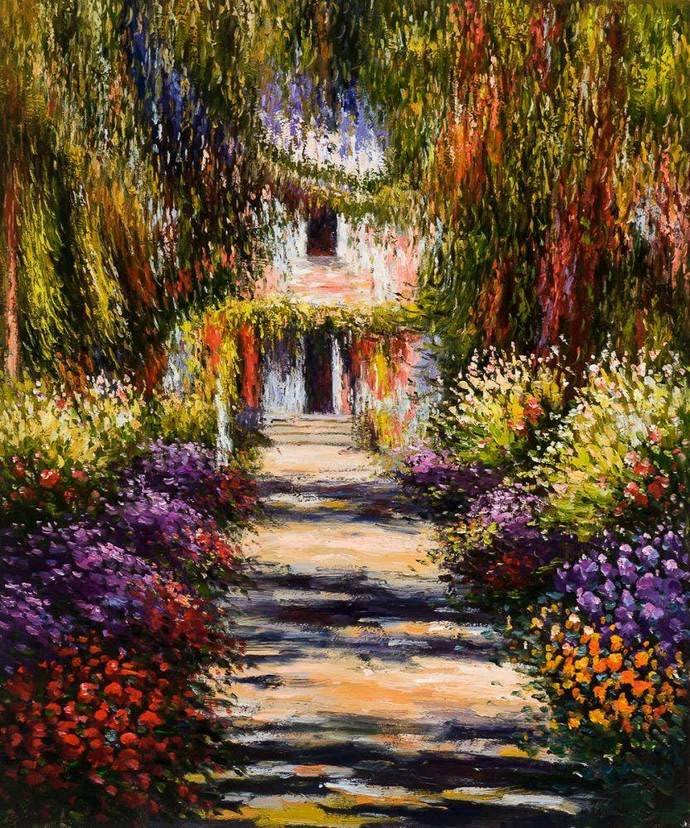
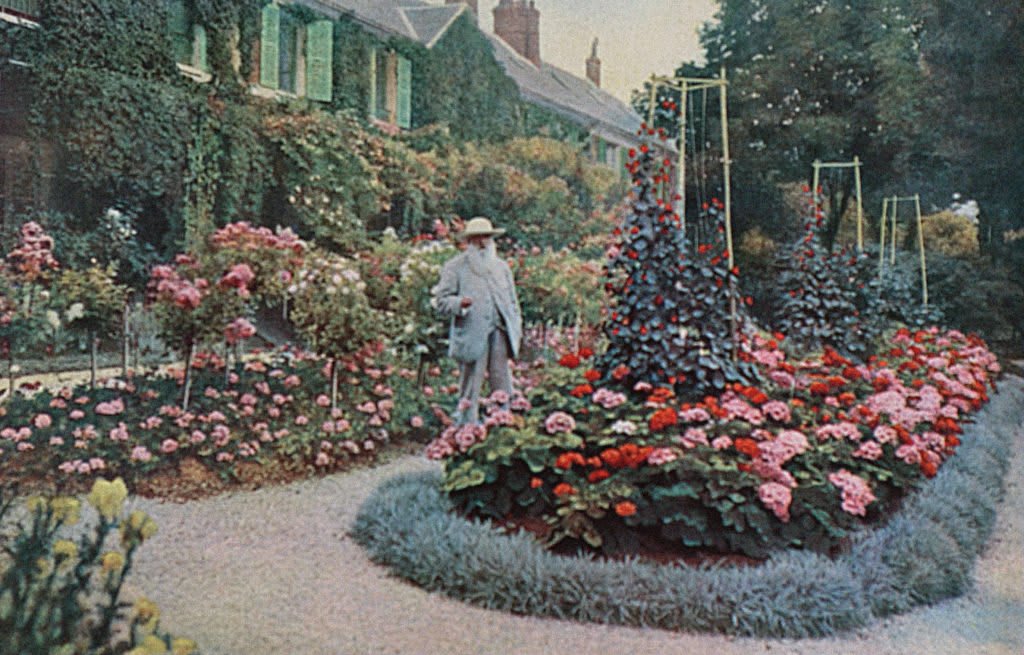
"Garden at Giverny" is a celebrated painting in which Monet shows us his own house, positioned in the background.
The highlight, however, falls on the beautiful garden that the French artist himself designed and cultivated with such care.
But Monet's later years would reveal an even deeper and more challenging phase:

Monet's intense shifts in spirit, his most intimate reactions to the landscape, powerfully emerge in his treatment of the water lilies.
In the famous series of paintings and panels, the artist's imagination reaches an incredible exaltation.
At times, only the water's surface remains, a portal encompassing a delicate play of light and shadow, cast by the surrounding countryside, in its reflection.
Learn more about this theme, click: Water Lilies
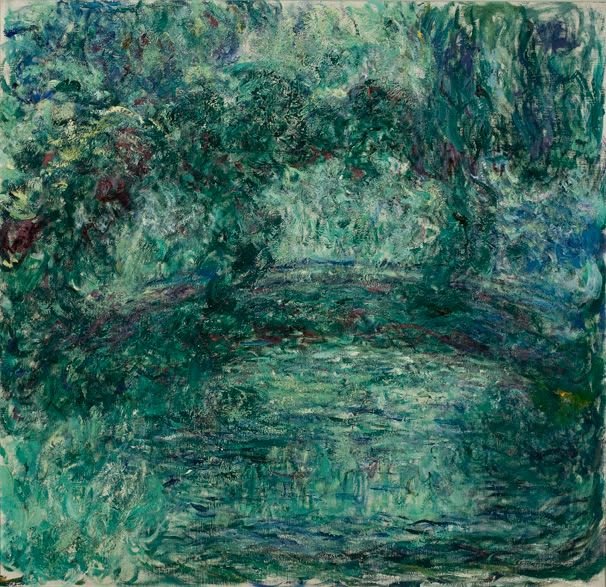
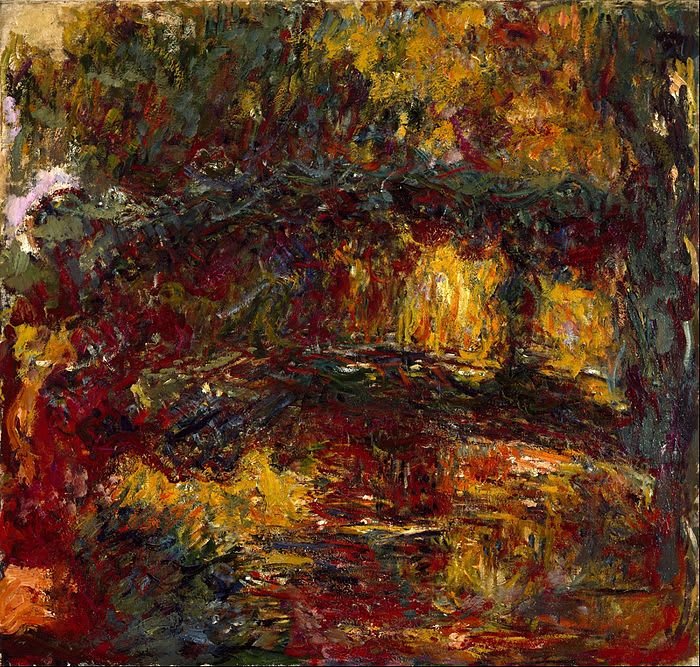
The famous bridge, a subject of so many of Monet's canvases, appears here moving towards total abstraction.
By this time, Monet was already suffering from cataracts, a condition that led him to lose part of his color vision.
Even with this difficulty, he persisted in what he loved most, continuing to paint his beloved gardens of Giverny, a testament to his artistic resilience.
The Final Legacy: Fire, Water, and a Transformed Vision
Claude Monet, far from being a religious person, was a convinced positivist in his philosophy.
Were he not a "materialist of color," as some define him, his critics would undoubtedly have seen Dante's Inferno itself in his final paintings.
They would have placed the Japanese bridge in a visual purgatory, for, at the end of the life of this man who so loved water and its freshness, and who wished for water to be his final resting place, fire emerges.
He, who dedicated his life to recording nature in its serenity, paints his lake in flames, an almost apocalyptic representation of his inner vision.
Monet's last works bear witness to an intense energy, a vitality that seems never to weaken, even in the face of adversity.
It's as if the man who, with his brushstrokes, helped liberate art from academic subjugation and taught both artists and the public to see in a new way, wanted, like Prometheus, to ignite the fire of modernity.
It seems he wanted to transform the embers of outdoor painting, realizing this modernity with his own hands in his final canvases.
The colossal force that sustained Monet throughout his life and art consumes itself in high flames.
In this brief but intense creative inferno, his final vision abruptly comes to fruition, leaving a legacy of intensity and ardent passion.
"I must have flowers, always and always." (Claude Monet)