Claude Monet: Biography and Works: The Legacy in Giverny and a Gallery of Masterpieces
Claude Monet: Biography and Works: The Legacy in Giverny and a Gallery of Masterpieces
Article Index
- Claude Monet: An Annotated Gallery of Works and His Unique Journey
- Intimate Details and Familiar Scenes in Monet's Canvases
- The Birth of Impressionism: The Work That Named a Movement
- Modern Cathedrals and Floating Studios: Monet and the Moving Landscape
- Water as a Mirror to the Soul: Giverny and Monet's Reflections
- The Giverny Obsession: Bridges, Gardens, and the Incessant Quest for Light
- The Incandescent Legacy: The Last Flames of a Genius
Claude Monet: An Annotated Gallery of Works and His Unique Journey
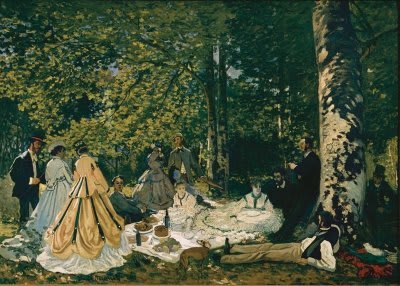
Claude Monet embarked on the ambitious canvas "Luncheon on the Grass," featuring life-sized figures, the year before its noted date.
Its completion, however, took longer than anticipated. He was concerned that the sheer size might compromise the overall composition.
Consequently, the artist dedicated himself to numerous preparatory studies before arriving at the final version of the work.
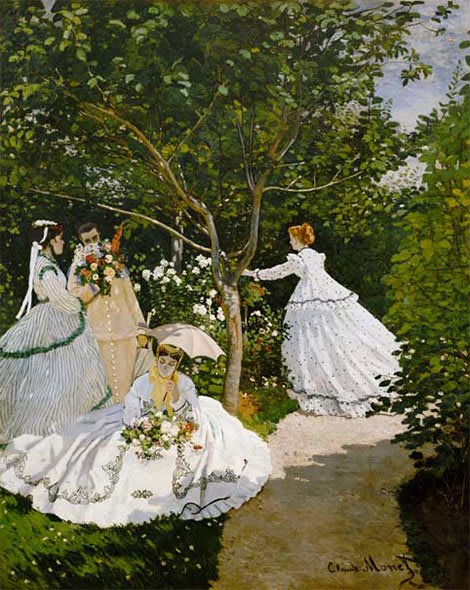
Claude Monet completed the sketch for this painting during his stay in Ville d’Avray.
He finalized it the following year, painting most of the work outdoors, a signature practice of his.
His wife, Camille, posed as the model for the four women depicted on the canvas.
But the technique for painting the colossal canvas was quite bizarre: to reach the upper sections of the enormous panel, Monet would literally sink the canvas into a trench he dug to accommodate it.
Intimate Details and Familiar Scenes in Monet's Canvases
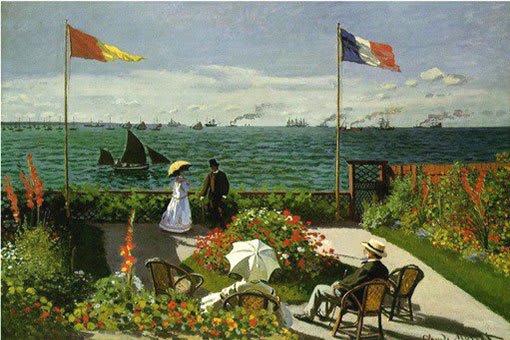
Monet brings together various elements in "Terrace at Sainte-Adresse": the sun, the sea, flowers, and figures.
This composition was considered quite daring for its time. However, due to its vibrant colors and, even more so, its depiction, the canvas is closer to the painter's early work than to Impressionism itself.
This was no ordinary terrace; it belonged to his Aunt Marie-Jeanne's house.
In the scene, Monet depicts his father seated to the right of his aunt in the foreground, while his cousin Jeanne-Marguerite and a likely family friend are in the background.
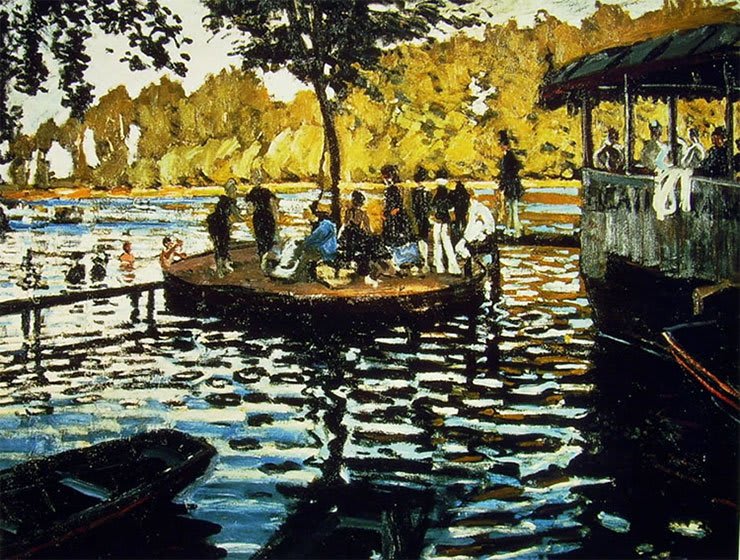
This famous painting by Monet is linked to the great friendship the artist cultivated with Auguste Renoir.
This relationship sparked immense creativity. Together, they painted, observing the same landscape with swift brushstrokes, capturing one of the Impressionists' favorite themes.
The collaborative spirit and vibrant colors seen in early Impressionist works laid the foundation for later avant-garde movements in France. Fauvism
The Birth of Impressionism: The Work That Named a Movement
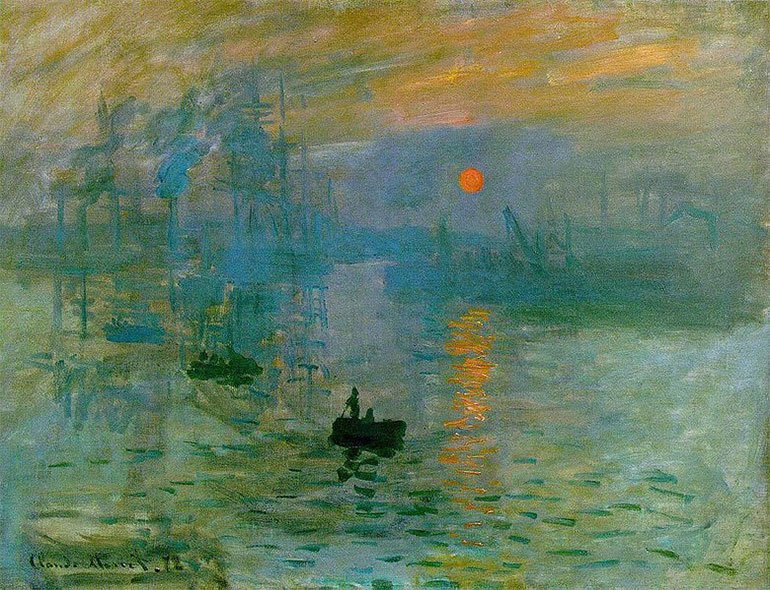
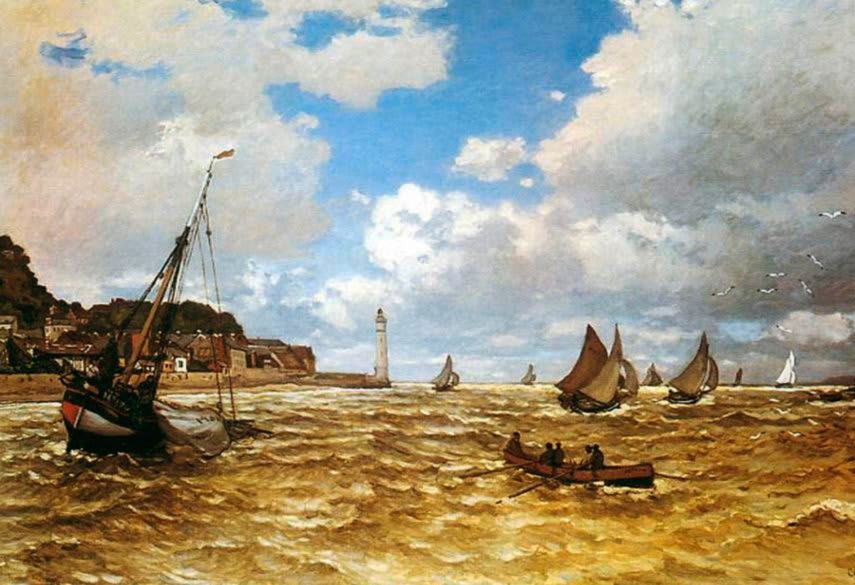
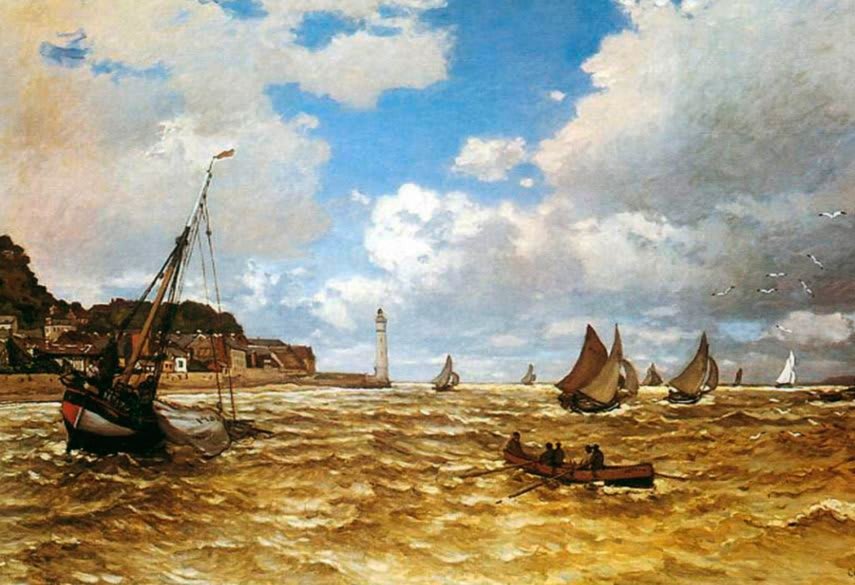
The term "Impressionism" was derived from the title of this iconic work.
The artists in the group themselves, with Monet at its helm, eventually adopted it as the name for their emerging movement.
It's a synthesis of the Impressionist style: reality takes on the infinite possibilities that the painter's intuition bestows upon the image.
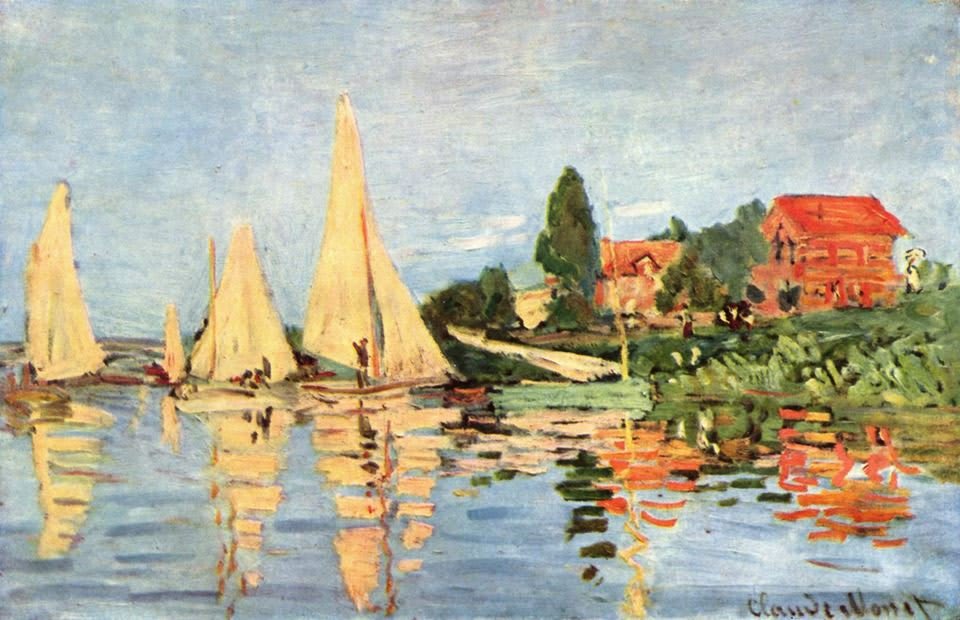
This is one of the earliest works belonging to Impressionism and also one of Monet's most renowned.
Beyond the remarkably well-employed contrasting colors, what stands out most in this painting are the broad brushstrokes.
They are applied to the water's reflection of the sailboats, houses, sky, and vegetation lining the banks of the Seine.
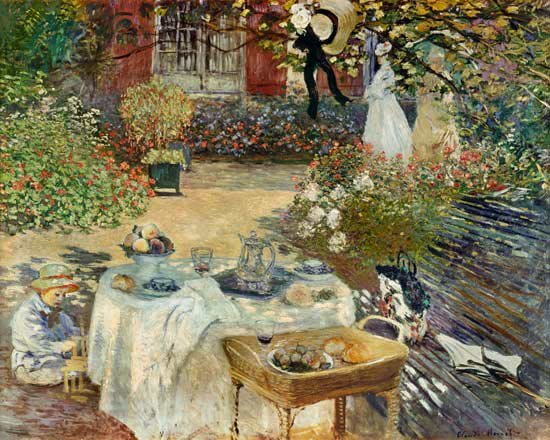
In this painting, Monet depicts his wife Camille and young Jean, nestled within the lush, summery vegetation of a well-tended garden.
On a table covered by a white tablecloth, there are fruits, tea to be served in fine porcelain, and a silver coffee pot.
The light dresses of the women strolling nearby and the straw hat hanging from a branch evoke an air of leisurely idleness.
Such an atmosphere, without a certain material ease, would have been unthinkable for the era.
Modern Cathedrals and Floating Studios: Monet and the Moving Landscape
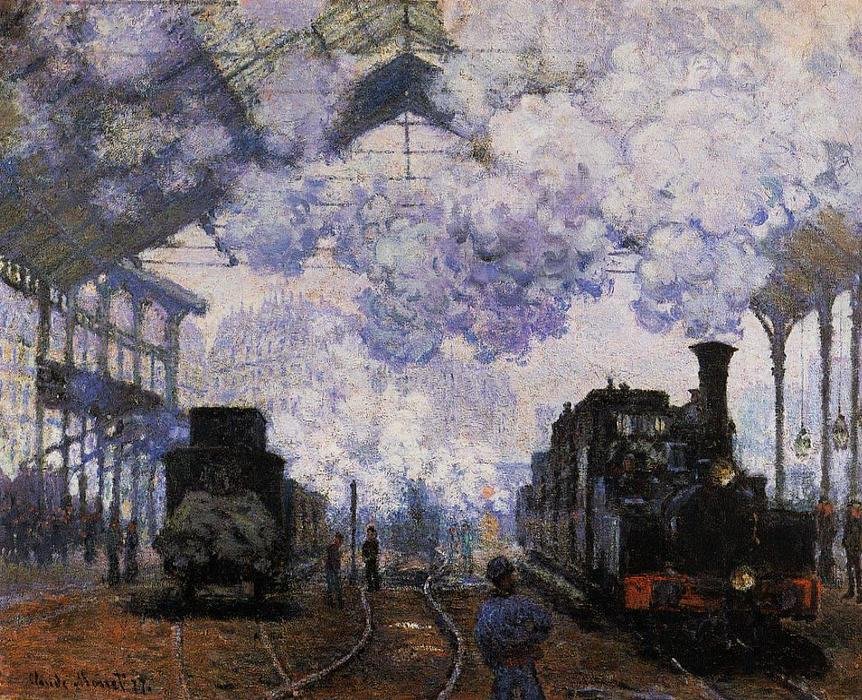
As in his bridge paintings, Monet here sought the linear structure of the location.
Smoke, steam, and incidental light fill the image, dynamically animating the space.
For the artist, the station becomes a veritable cathedral of modern times.
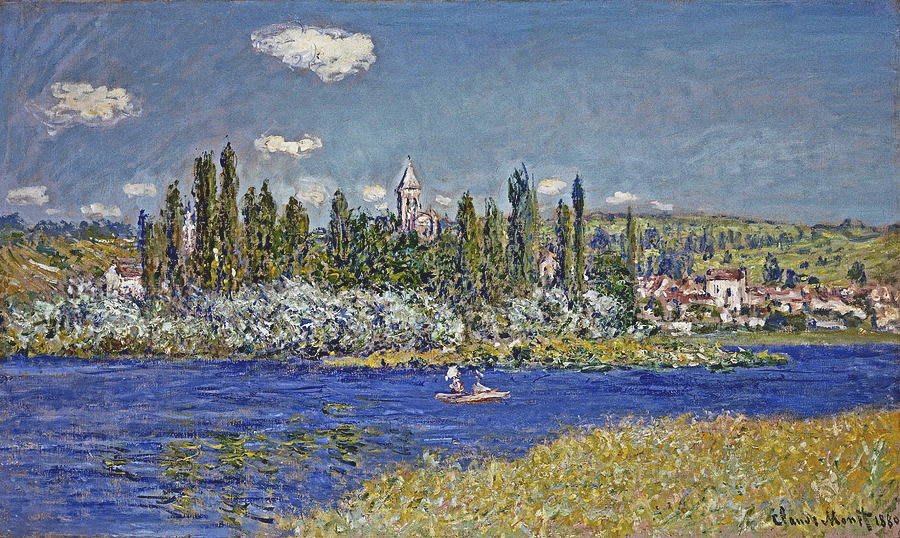
Vétheuil is a town located across the River Lavacourt, another small village on the banks of the Seine.
During that period, there was no bridge, and the two towns communicated via a local ferry service.
Monet, however, owned a boat that he used as a floating studio.
This allowed him to navigate the river, docking in front of the subjects he wished to paint, exploring the landscape in a unique way.
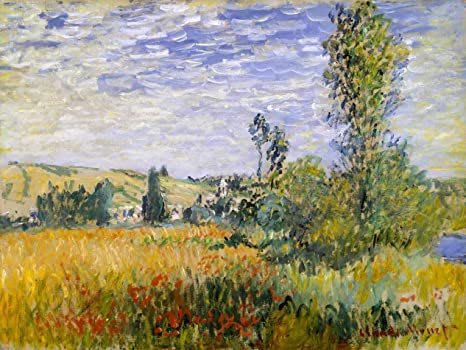
Throughout 1878 to 1882, Monet painted many views in and around Vétheuil, which were likely executed from this singular boat.
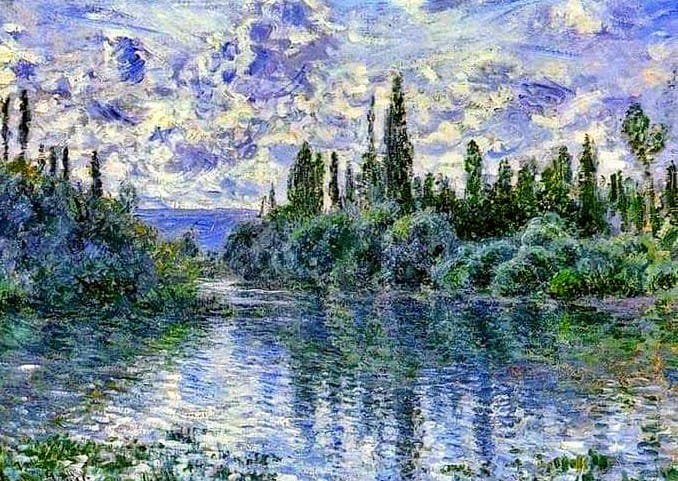
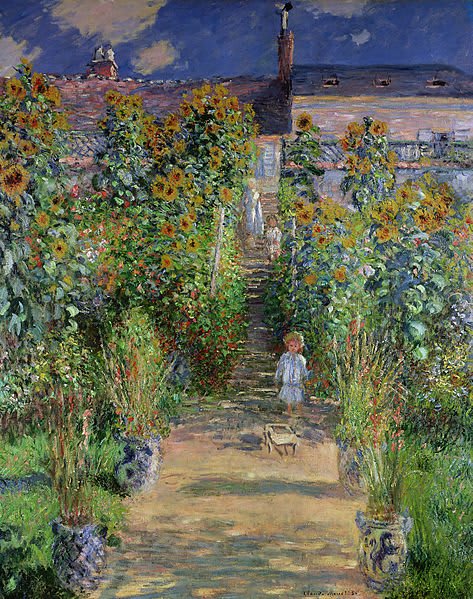
"Garden in Vétheuil" is a work where the figures of Michel Monet and Jean-Pierre Hoschedé animate the composition.
Their subtle presence serves to emphasize the vastness of the garden in relation to human scale.
Water as a Mirror to the Soul: Giverny and Monet's Reflections
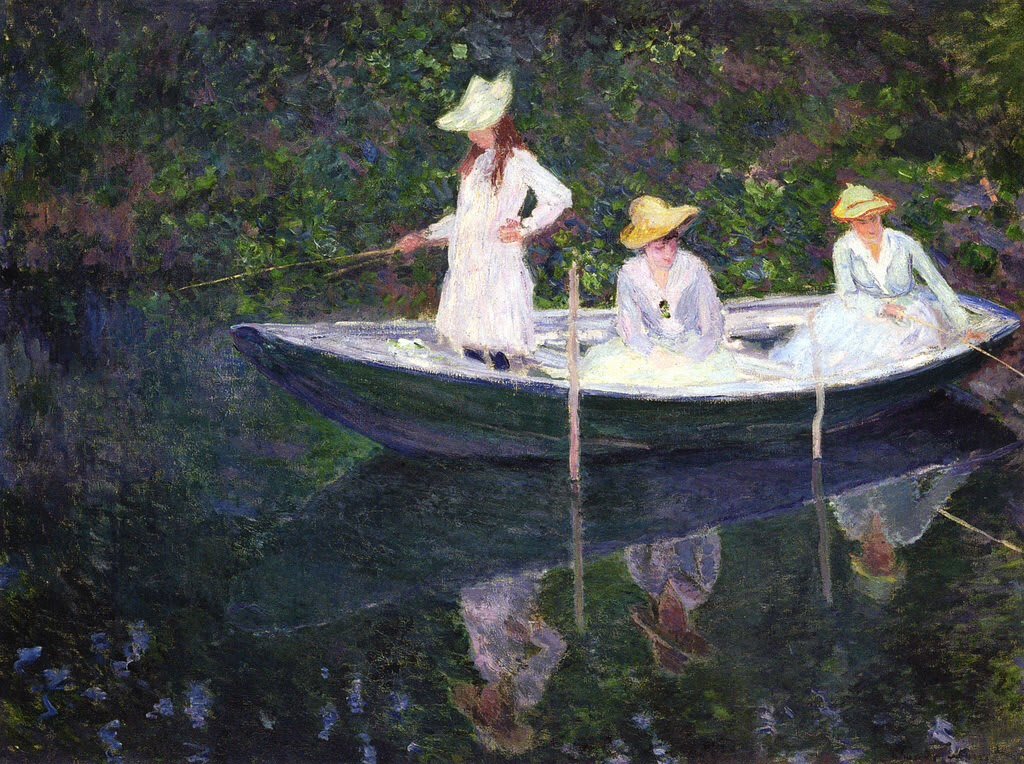
In "The Boat at Giverny," water played a fundamental role for Monet, not merely for its movement.
It reflected landscapes in an almost abstract manner, dissolving forms and contours.
There was no concern with showing the exact shape of its undulation, but rather, through firm and fragmented brushstrokes, delineating the reflections on its surface.
This innovative technique became a strong characteristic of the Impressionist movement.
In the work "Boat at Giverny," the painter depicts three young women who appear to be fishing in the River Epte. The interplay of light and color offers the viewer a sensation of peace and relaxation.
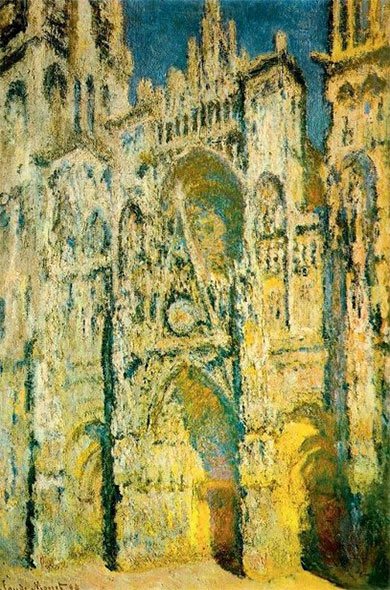
In "Rouen Cathedral in the Sun," Monet studied the effects of light on objects.
He conducted this research across a series of canvases depicting the same subject under varying luminous effects.
These subjects could be haystacks, poplars, or elaborate structures, such as Rouen Cathedral.
A fact that defies common belief: it's said that Monet even painted fourteen canvases of this same image in a single day, all to capture the fleeting essence of the sun.
The evolution of light and shadow in European painting can be traced through the works of several masters who preceded the Impressionist era. Biography of El Greco: The Greek Origins and Journey to European Renaissance
The Giverny Obsession: Bridges, Gardens, and the Incessant Quest for Light
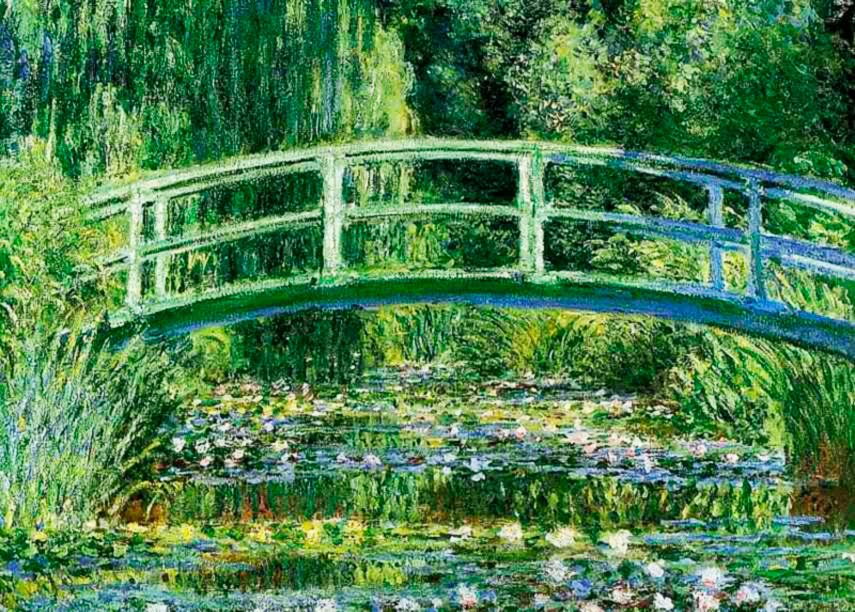
The Japanese Bridge, still standing in Giverny today, was one of Monet's most frequently explored subjects.
In 1900, for instance, he painted a series of six canvases, exploring the lily pond and everything surrounding it.
In these works, we can appreciate the enchanting vegetation of this unique place.
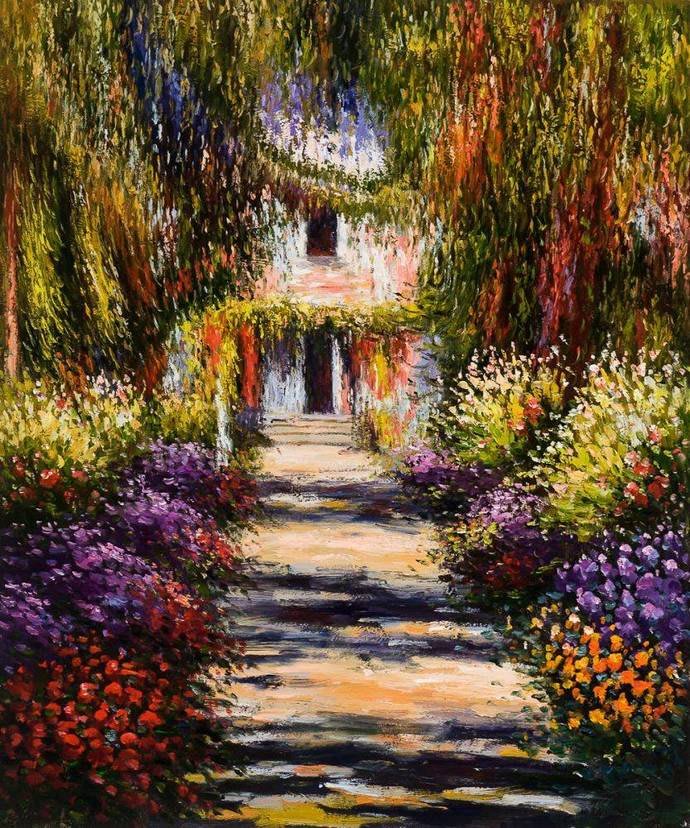
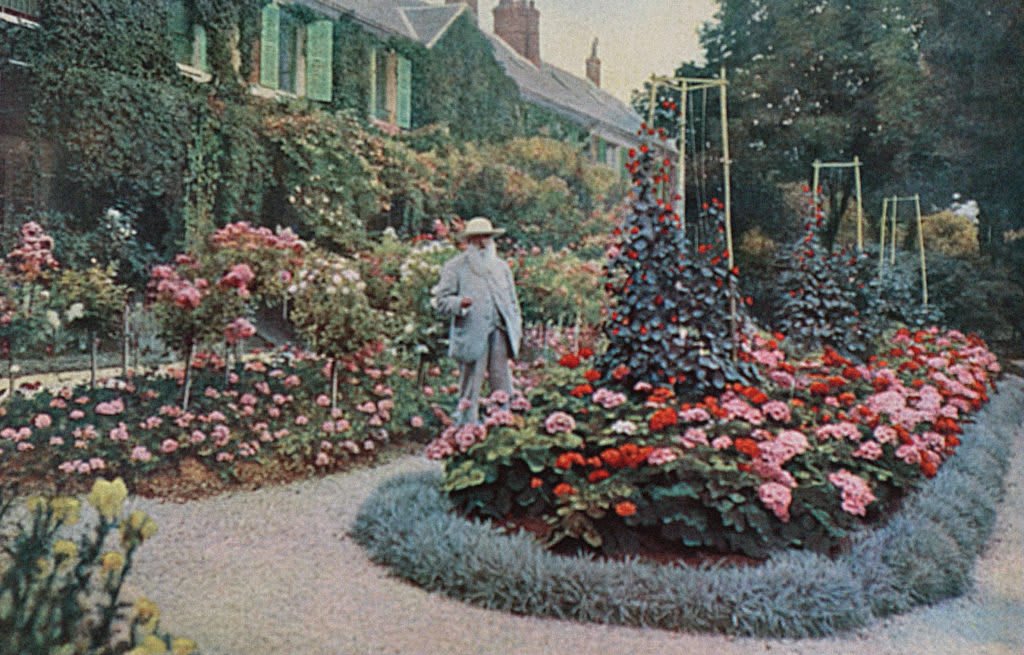
"Garden in Giverny" is a famous painting in which Monet depicts his own house in the background.
The scene is framed by the beautiful garden that the French artist lovingly and dedicatedly cultivated.
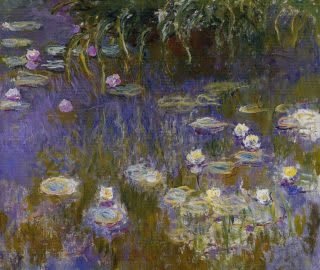
Monet's changing moods, his reactions to the landscape, are evident in his treatment of the water lilies.
In this famous series of paintings and panels, the incredible exaltation of his imagination persists in the water's reflection.
The surface, in its reflection, encompasses the delicate interplay of light and shadow cast by the surrounding countryside.
Learn more about this theme, click: Water Lilies
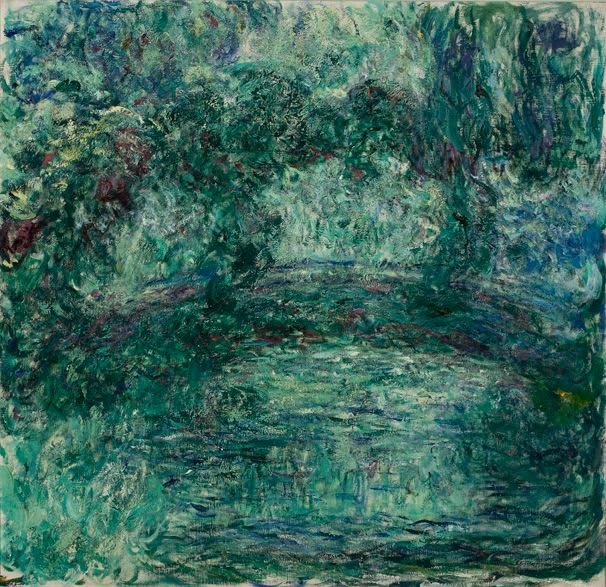
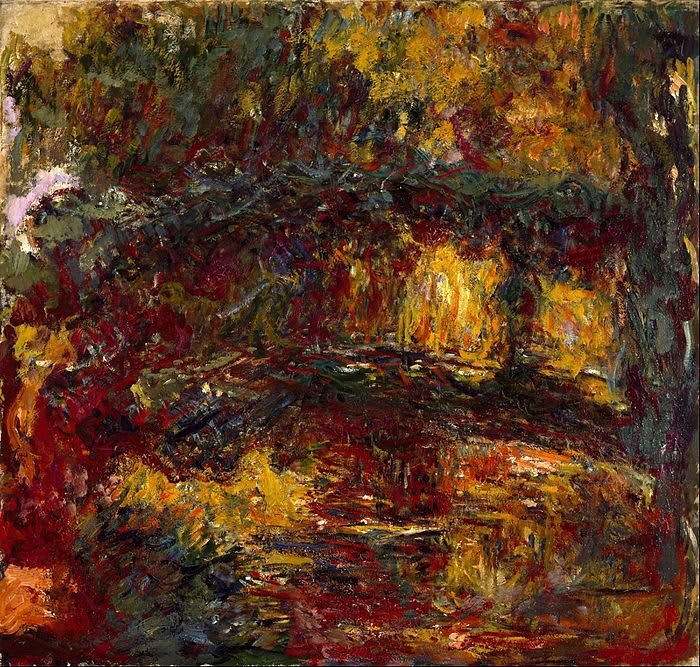
The famous bridge that Monet painted so often drifted increasingly toward abstraction in his final works.
During this period, Monet suffered from cataracts and gradually lost his perception of colors.
Even so, he continued to do what he loved most, painting his beloved Giverny gardens, against all odds.
The Incandescent Legacy: The Last Flames of a Genius
Claude Monet was not a religious man; he was a staunch positivist, a true materialist of color.
Had it not been for this conviction, his interpreters would, without a doubt, have seen in his final paintings the very Inferno of Dante.
And they might have, perhaps, placed the Japanese bridge in a visual purgatory.
But there's a profound irony here: at the end of life for this man who so loved water and its freshness, and who wished for water to be his final resting place, what emerges is fire.
He paints his lake ablaze, a breathtaking image.
His final works bear witness to an intense energy, a vitality that seems to never wane.
It's as if the man who helped free art from academic shackles and taught artists and the public how to truly see, was a modern Prometheus.
Someone who ignited the fire of modernity within the embers of open-air painting, striving to realize this modernity with his own hands in his final canvases.
The strength that sustained Monet throughout his entire life and art consumed itself in towering flames.
In this brief, yet fiery final blaze, his genius abruptly consumed itself, leaving an incandescent legacy for the history of art.
"I must have flowers, always, and always." (Claude Monet)