Edvard Munch: Biography and Works – Essential Masterpieces and Lasting Legacy
Edvard Munch: Biography and Works – Essential Masterpieces and Lasting Legacy
Article Index
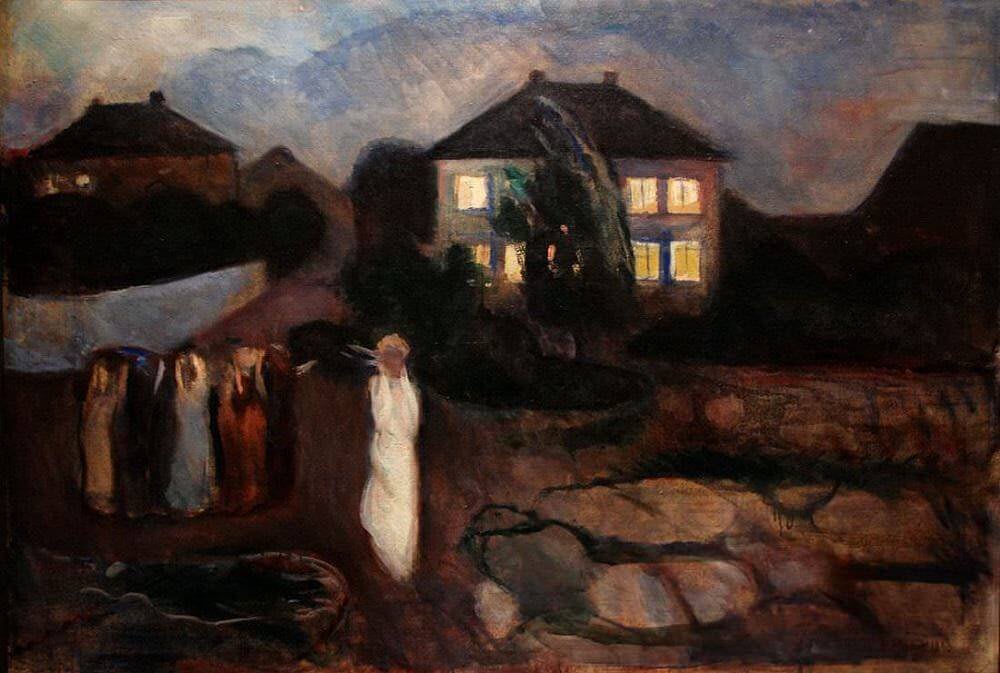
The Storm
A violent storm in Asgardstrand is believed to have inspired Edvard Munch to create this iconic painting.
The overwhelming force of the wind is skillfully suggested by the dramatic curve of the central tree.
Also observe the gestures of the women, especially the white-clad figure in the foreground. They cover their ears with their hands, as if to silence the wind's roar and the powerful sound of the sea.
In other Munch works, buildings serve as clear sources of fear. It's possible that this same meaning is present here, intensifying the scene's atmosphere.
Due to the strong illumination of the building, it's believed a wedding party was taking place. This leads us to imagine the woman in white as the bride, perhaps ready to invoke the very forces of nature.
For Munch, human existence was intrinsically linked and determined by the evolution of nature. He saw sexual relations associated with the fear of the inevitable cycle of life and death.
The raw power found in these landscapes shares a common atmospheric intensity with the works of other masters who redefined how we see nature. William Turner, the Precursor of Impressionism: Notable Works and Style Analysis (Part 2)
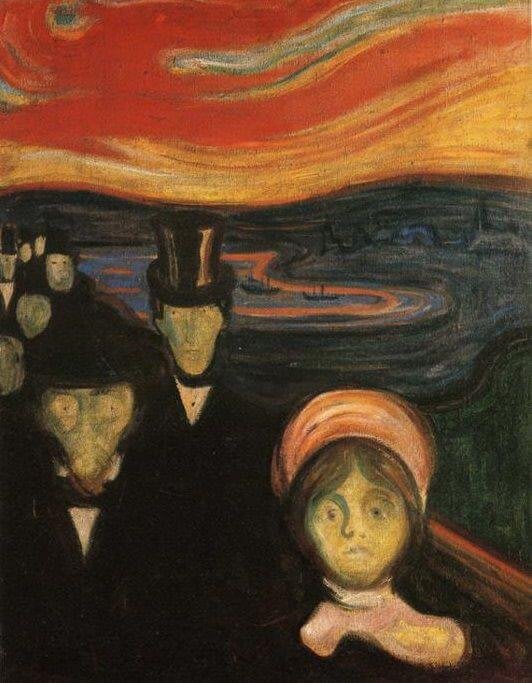
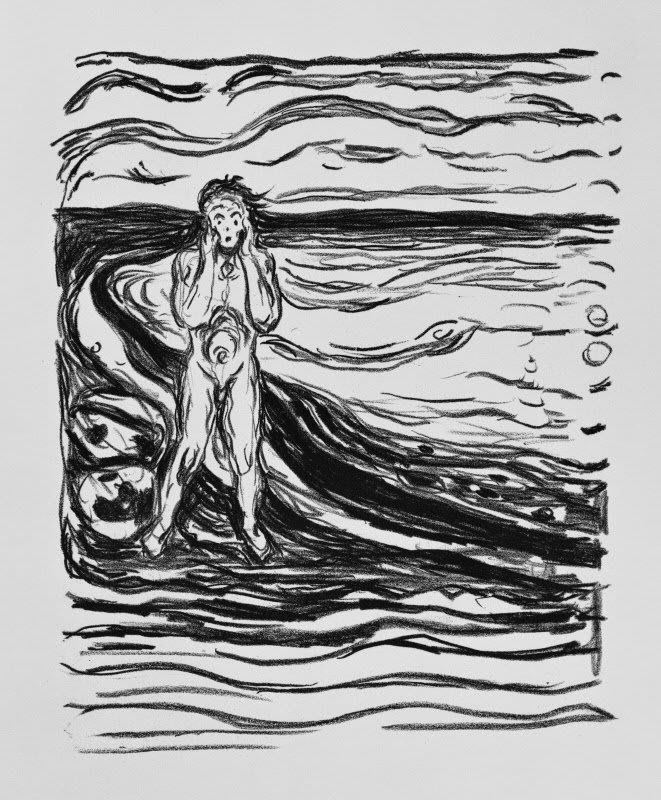
Anxiety
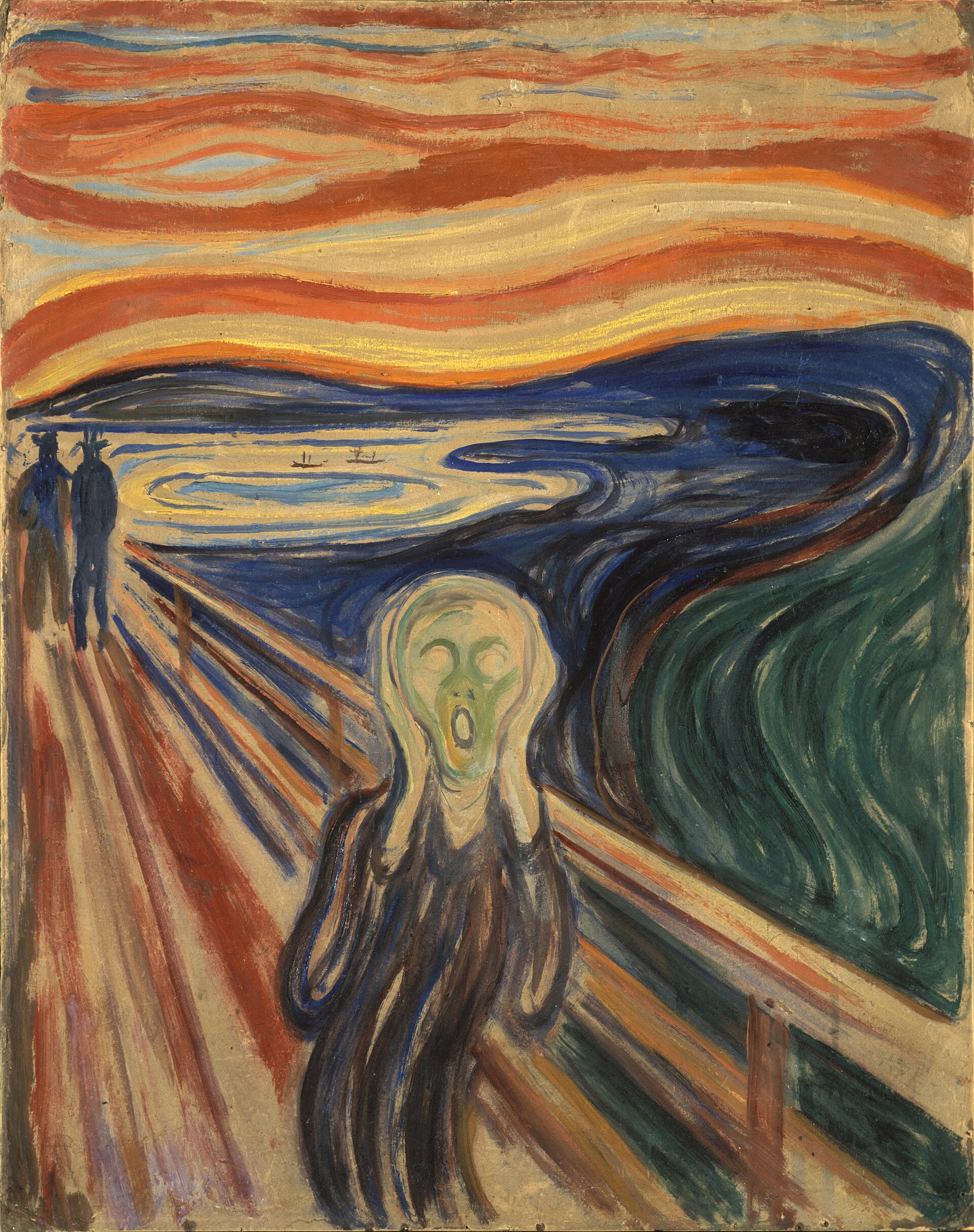
In this painting, Munch revisits and repeats several elements already seen in his most celebrated work, The Scream.
The same pier, which previously harbored a single alienated character, reappears here.
We can also note the distant lake, the two boats, the church, and other structures mysteriously aligned along the coast.
The somber tones and intense concentric swirls of lines are striking. They not only define but also encompass the land, sky, and sea, creating an oppressive atmosphere.
If in The Scream Munch explores the horror experienced in total isolation by a single being, Anxiety, in turn, addresses collective despair.
Here, the feeling of anguish is deeply sustained, perhaps in a less penetrating but equally impactful way.
This profound exploration of the human psyche and collective distress echoes the revolutionary shifts seen in later European art movements. Max Ernst: Early Years and the Dadaist Revolution
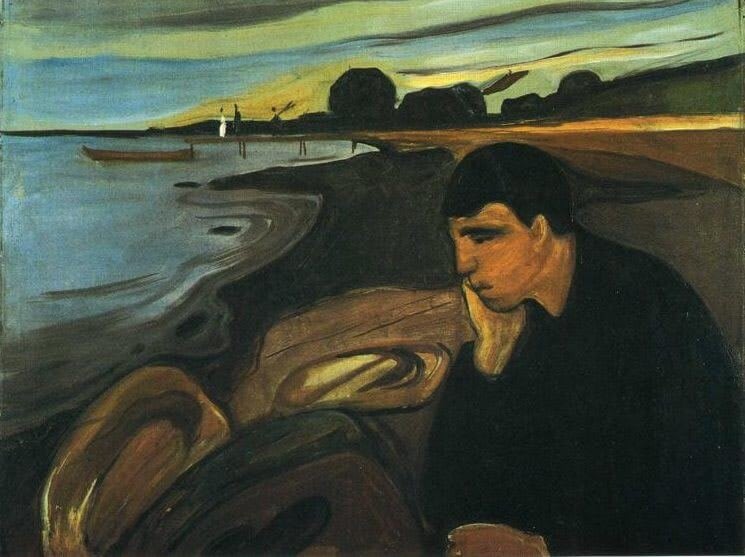
Melancholy
The painting Melancholy presents a striking visual duality.
In the foreground, we encounter the objective view of a deeply thoughtful man.
In the background, a more sketched image emerges, a distant scene that his "mind's eye" evokes as a powerful metaphor.
It is likely that Munch sought to portray an unattainable dream. This impossible pursuit would be the very cause of the melancholy that permeates the work.
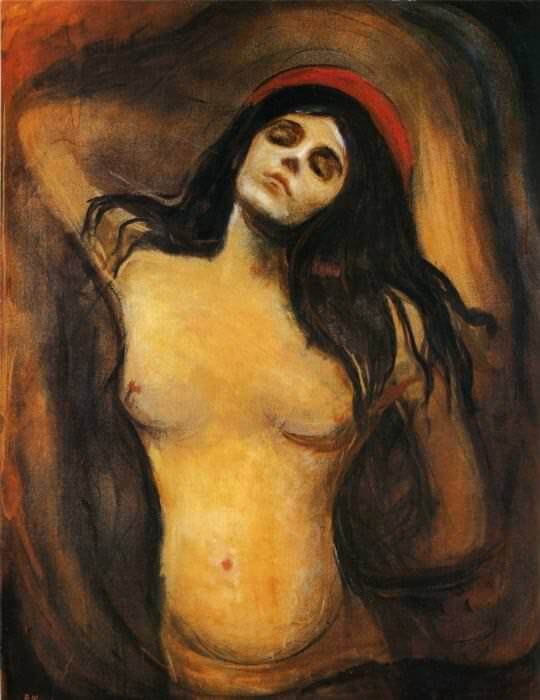
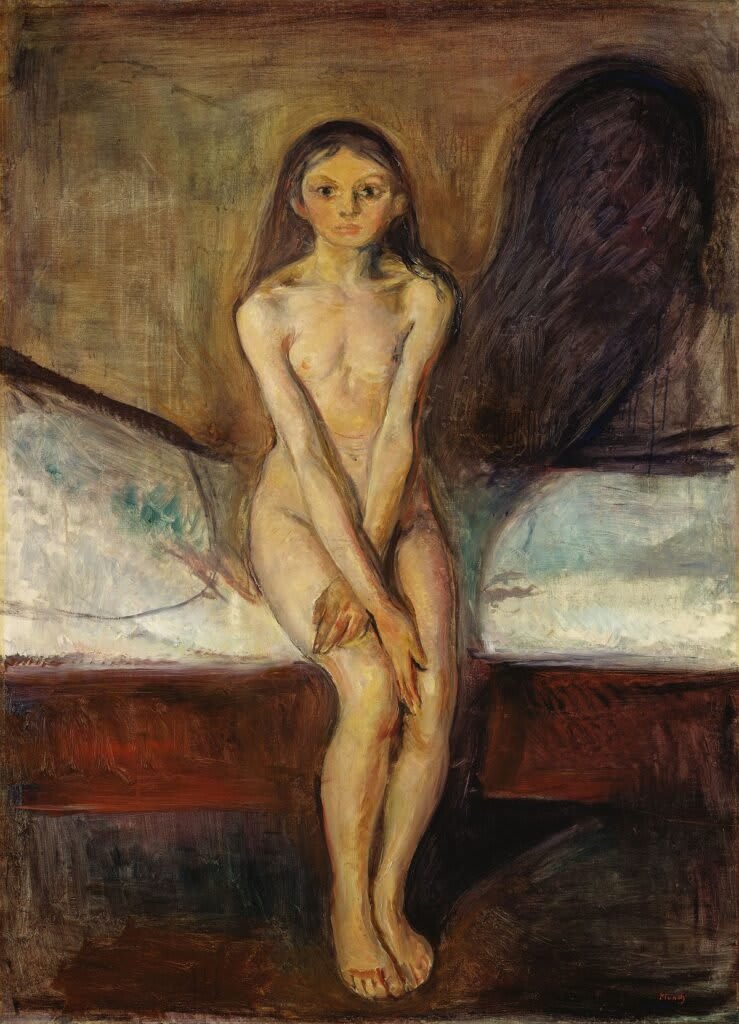
Madonna
Originally titled Loving Woman, this painting aimed to symbolize the essential acts of the female life cycle: sexual relations, fertilization, procreation, and, inevitably, death.
Calling the image Madonna is not inappropriate, if the word is interpreted metaphorically. Munch, after all, was unable to accept traditional Christianity or the idea of a personal god.
The blood-red halo encircling the woman's head can be seen as the spiritual counterpart to the reddish tones present in her lips, nipples, and navel.
She appears to float amidst healing bands of colored light, a striking characteristic of the symbolism of the era.
These emanations do not deform her, but rather create a supernatural aura, possibly inspired by the spiritualist notion that the aura surrounds all individuals, although it is visible only to mediums.
Munch’s use of bold, non-naturalistic color to evoke spiritual and emotional states prefigures similar innovations found in later artistic revolutions. Fauvism
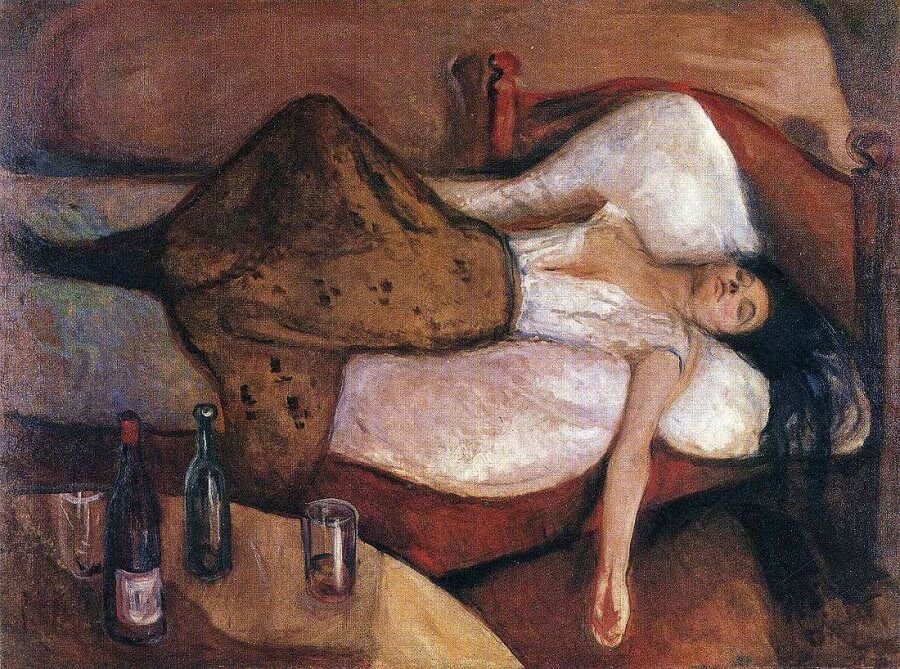
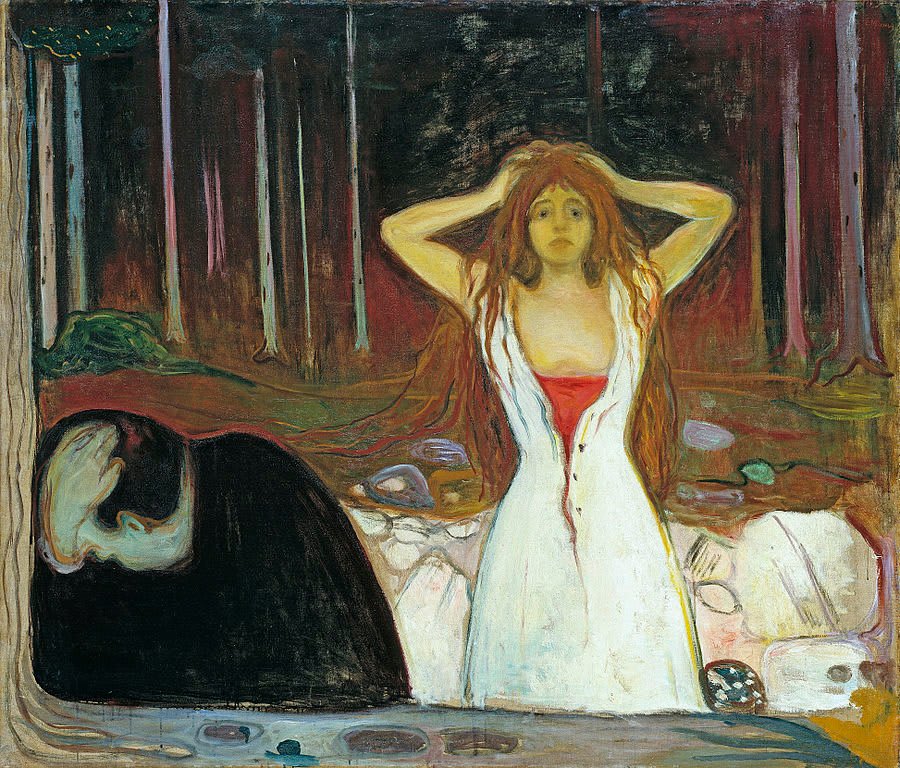
The Day After
Edvard Munch depicted various prostitutes in his works, often with a gaze that rendered them unattractive or even grotesque.
However, in The Day After, the woman surprisingly resembles the figure of the Madonna. She shares the same ethereal beauty, but in a completely distinct setting.
The multiple pairs of bottles and glasses arranged in the scene are a strong indication that the woman received a nocturnal visit, revealing an implicit story within the painting.
Yet Munch's gaze upon human fragility and solitude held even more nuances:
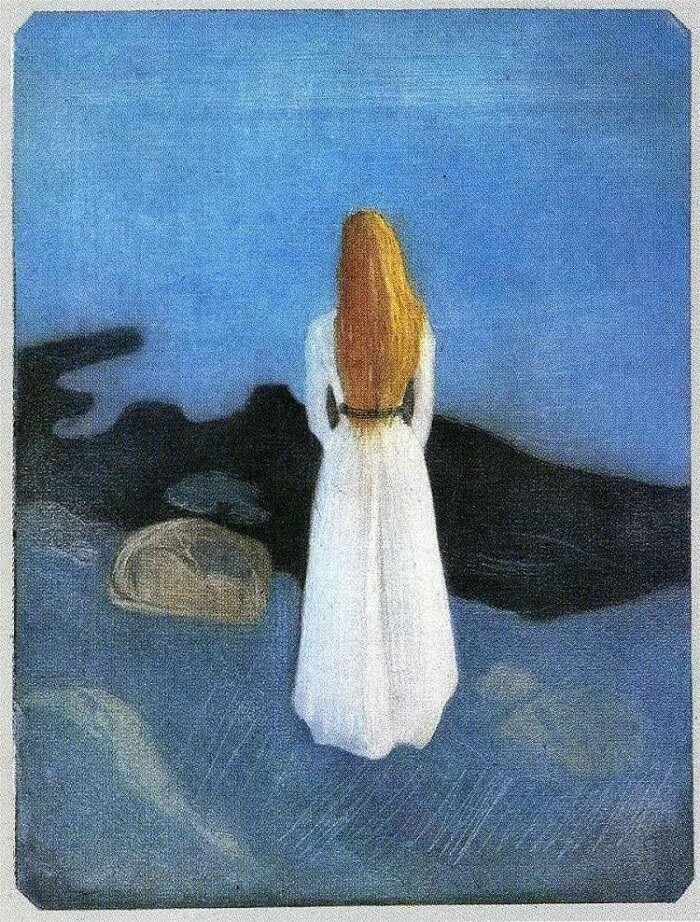
Young Woman on the Beach
This is a softer, yet equally profound, meditation on human solitude.
The enigmatic painting reveals the figure of a fragile girl, lost in reverie, as she gazes at the vast sea before her.
With her back to the viewer, she displays a calm and serene posture. Her white dress gleams softly under the pale light, and her hair sways in the evening breeze.
The absence of any visible horizon accentuates the enormity of the natural world surrounding her. This intensifies both her fragility and the precariousness of life.
This impression was created in Paris in 1896, a period of intense production for Munch. There, he produced some of his most important etchings, with this one considered a masterpiece.
Girls on the Bridge
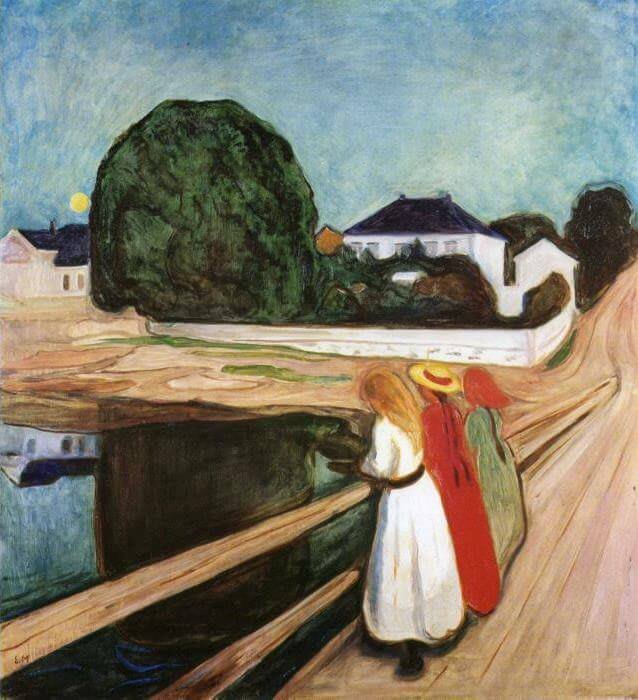
The theme of Girls on the Bridge was explored by Munch in multiple versions, both in paintings and prints.
This motif accompanied him repeatedly from the late 19th century and throughout his artistic life.
The scene, always featuring the same bridge as a central element, is a reflection of a real landscape in Asgardstrand.
Munch highlights the Oslo Fjord, with the elongated pier transforming into an inclined road. The curved sandy coastline, dotted with green patches, and the old house surrounded by foliage are precise details.
All these elements are framed by a white wooden fence. It is remarkable that these visual features are real and were never altered in his various representations.
The forms of the tree, though individually legible, create an articulated line of natural growth. They connect to patches of grass and, together, maintain an intrinsic relationship with the man-made elements: the house, the fence, and the bridge.
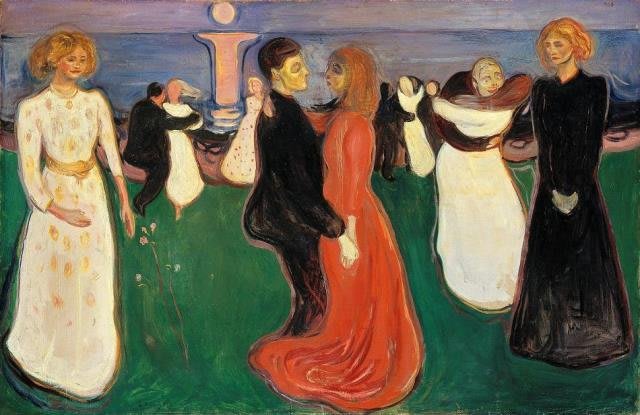
The Dance of Life
This masterpiece is an essential part of Munch's impactful series, titled "A Poem of Life, Love and Death".
In creating The Dance of Life, the artist employed colors with profound symbolism to express a complex range of human emotions.
Red represents love, passion, and pain; white symbolizes youth, innocence, and joy; and black is the color of solitude, sorrow, and death.
The composition is remarkably rich, with Munch revisiting elements and themes that had already been explored in other paintings produced during the same period of his career.
The Fairy Tale Forest
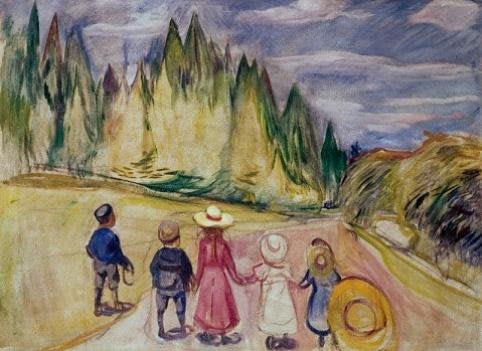
In 1901, Dr. Max Linde commissioned Munch to decorate the children's room in his family residence, located in Lübeck, Germany.
For this painting, the artist depicted six children from behind, observing a dense green forest ahead.
Dressed in typical attire of the era, the children embrace by their hands, keeping a safe distance from the mysterious forest.
Even in a daytime setting, without dark shadows suggesting an immediate threat, uncertainty remains about what the forest might hide.
The children act as a link between the observer and the mystical environment, playing a crucial compositional role in the work.
Rodin's The Thinker in Dr. Linde's Park in Lübeck
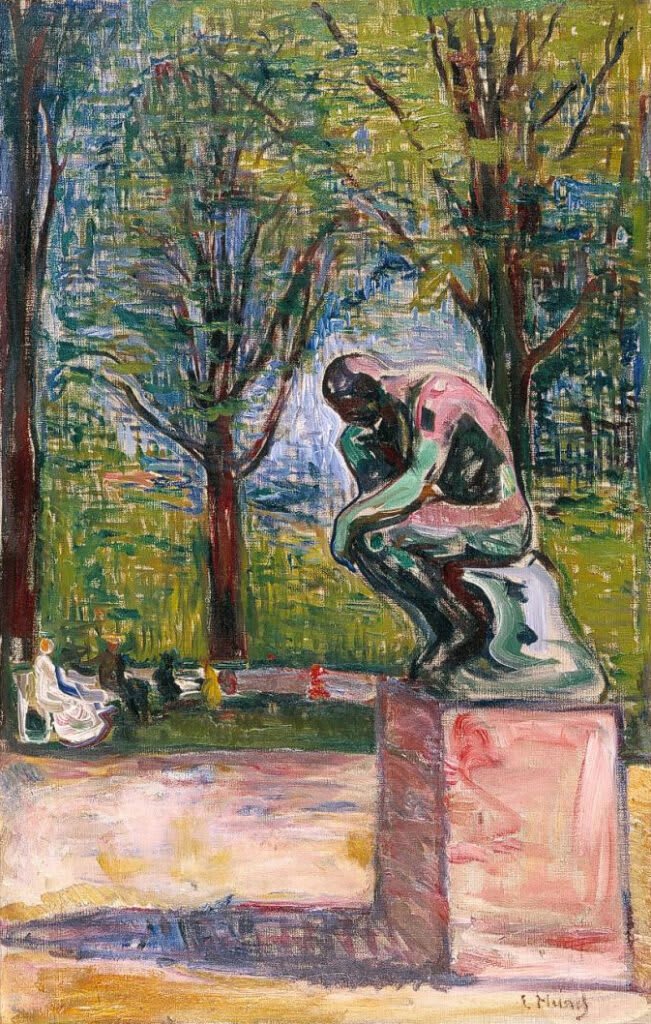
The German ophthalmologist Max Linde, one of Europe's most important art collectors in the early 20th century, met the sculptor Auguste Rodin in 1900.
Following this encounter, Linde began acquiring several works by the renowned sculptor.
In 1905, Dr. Linde purchased an enlarged version of the iconic sculpture The Thinker from Rodin, with the purpose of adorning the park of his residence in Lübeck.
At the same time, Linde established a deep friendship with Edvard Munch, becoming his patron and supporting the commercialization of his works.
It was in this context of collaboration and mutual admiration that Munch created this painting, observing the sculpture in its environment.
Linde quickly drew analogies between the creations of both artists, perceiving in them a common desire to expand the limits of artistic representation.
Munch's painting was completed in 1907, a year before his most intense phase of depression, which occurred in October 1908.
The application of colors in horizontal and vertical stripes is a striking characteristic of this period, when the artist still appeared less tormented.
The sky and trees, treated with some smooth areas of color, contribute to a unique framing of the scene, adding depth to the composition.
Next, a work revealing Munch's imposing vision of nature and cosmic power:
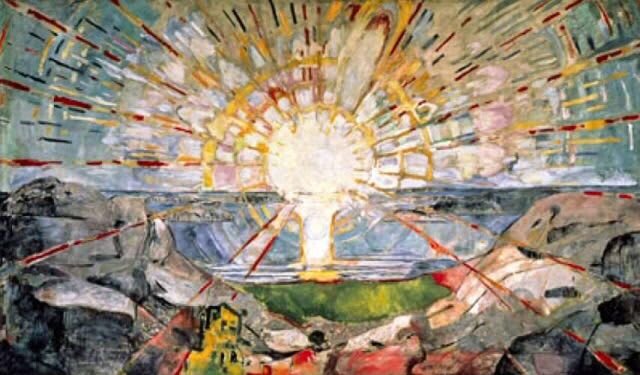
The Sun
In this magnificent mural, Edvard Munch magnified the image of a resplendent sun, filling the enormous frontal space of the assembly hall at the University of Oslo.
The symmetrically structured composition is entirely bathed in sun rays reflecting on the ocean's water.
We see the bare rocks of a Nordic landscape, beneath a narrow green strip separating land from sea.
The sun-king is omnipresent, radiating light over sky, land, and sea, with its rays extending for all eternity, capturing a sense of cosmic grandeur.
The Haymaker
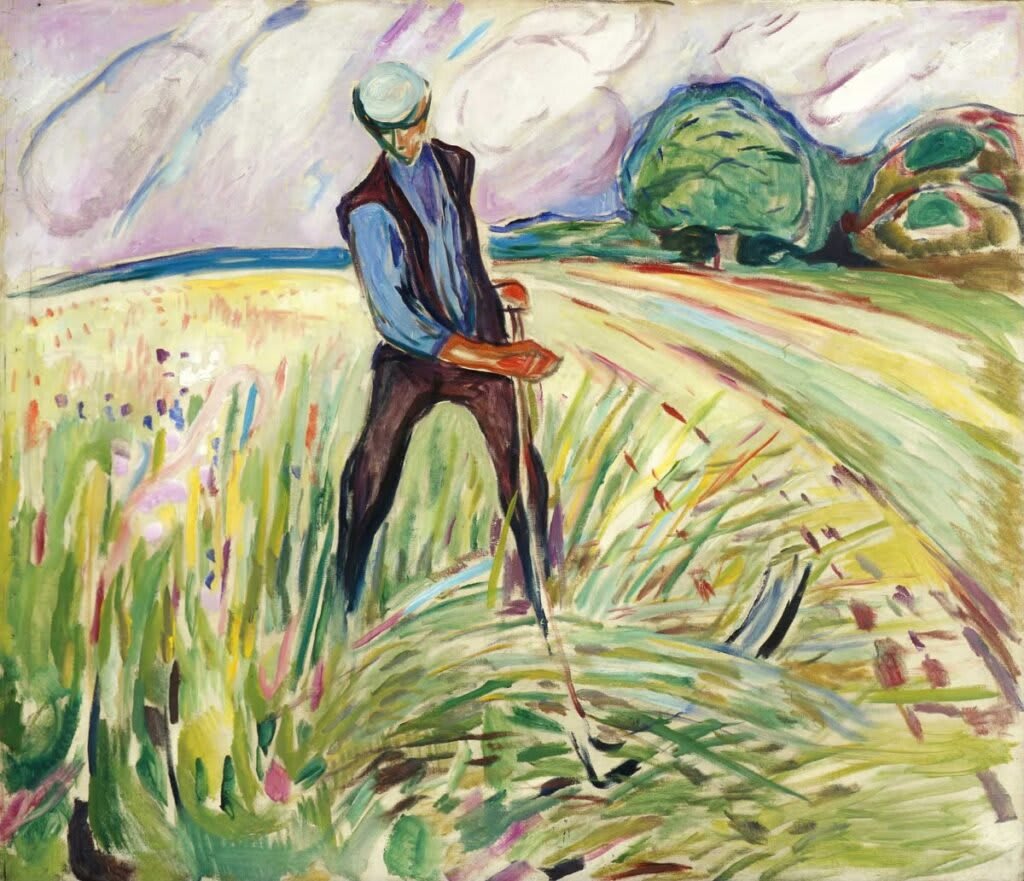
In this composition, Munch expresses a deeply harmonious interaction between man and nature.
The sloping lines of the clouds guide the viewer's gaze to the lower left corner, towards the overgrown grass that will soon be cut by the scythe's blade.
The circular movement present in the work emphasizes the repetitive and continuous gestures of the man at his labor, connecting him to nature's own rhythm.
Starry Night
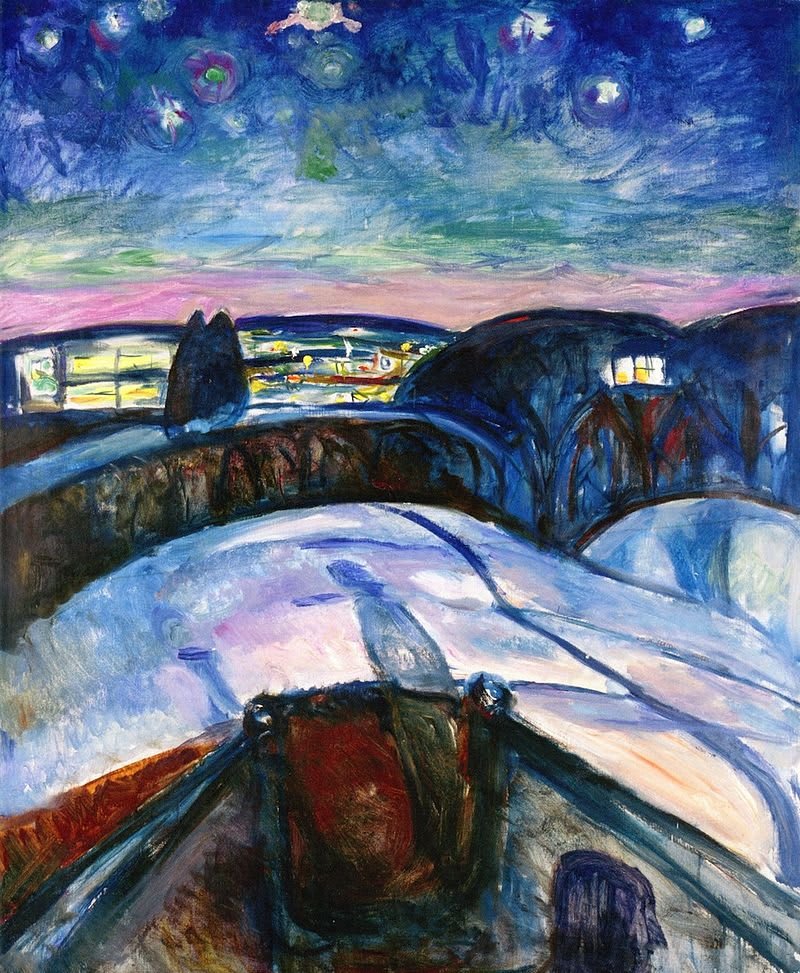
Just like in Vincent van Gogh's famous masterpiece, Edvard Munch's Starry Night also presents a landscape with animistic qualities.
We can perceive the same intense feeling in its colors and vigorous brushstrokes, connecting the viewer to the vibrant energy of the nocturnal scene.
Self-Portraits
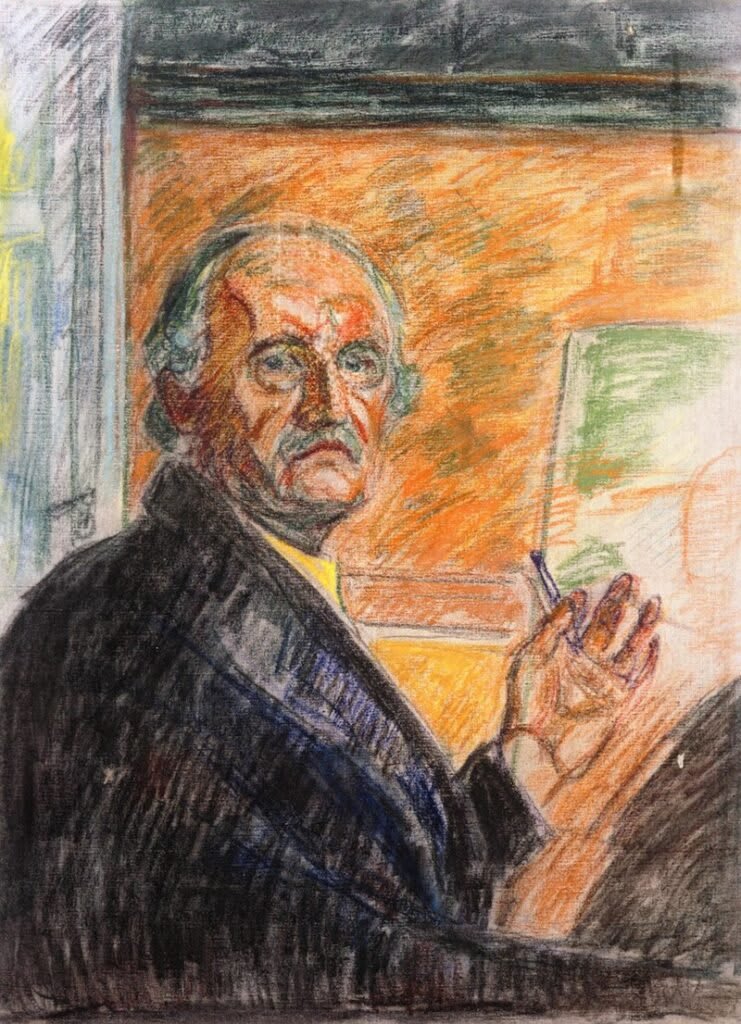
Over six decades of a prolific career, Edvard Munch produced an impressive 43 self-portraits.
In many of them, he depicts himself in states of illness, sadness, and profound loneliness, revealing an intimate vision of his own being.
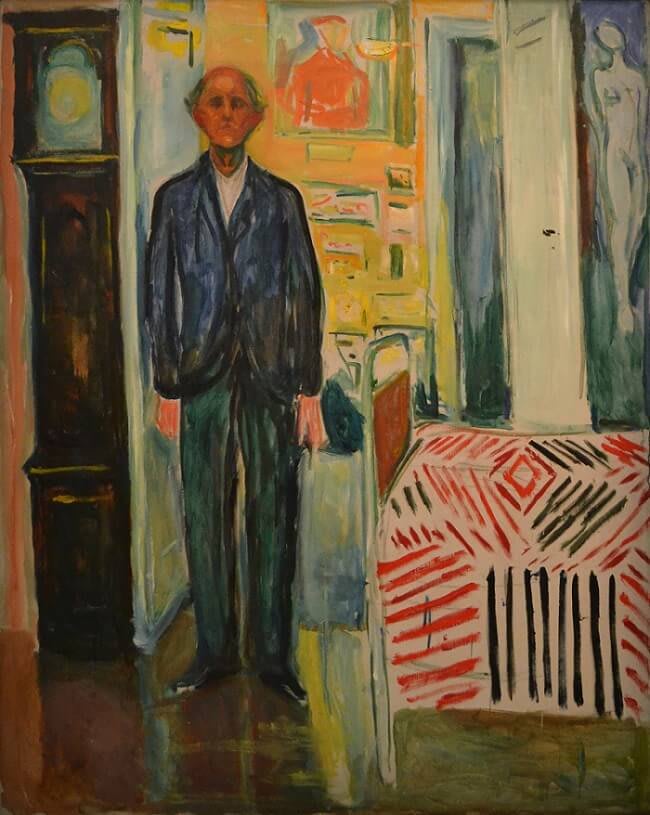
In the striking Self-Portrait Between the Clock and the Bed, we are confronted with the image of an elderly and visibly unhappy man.
Behind him, a brightly lit room bursts forth with light, filled with his past paintings. He positions himself before his own history, symbolizing the inevitable passage of time.
Time, indeed, is in constant motion, represented by a solemn pendulum clock dominating the scene.
A single bed, adorned with a modern and elegant diagonal line pattern, serves as a silent testament to his solitude.
The artist himself appears frozen, almost flattened, in a representation that suggests a premonitory vision of himself as a rigid body.
Few artists managed to confront their own old age with such chilling clarity as Munch.
He was on the verge of death; this work, indeed, would become his last self-portrait, the final record of his existence.