Gustave Courbet: A Comprehensive Gallery of Essential Realist Works
Explore the life and art of Gustave Courbet, a pioneering realist painter known for his bold and unflinching depictions of modern life.
Article Index
Gallery - Art Commentary
Gallery - Art Commentary
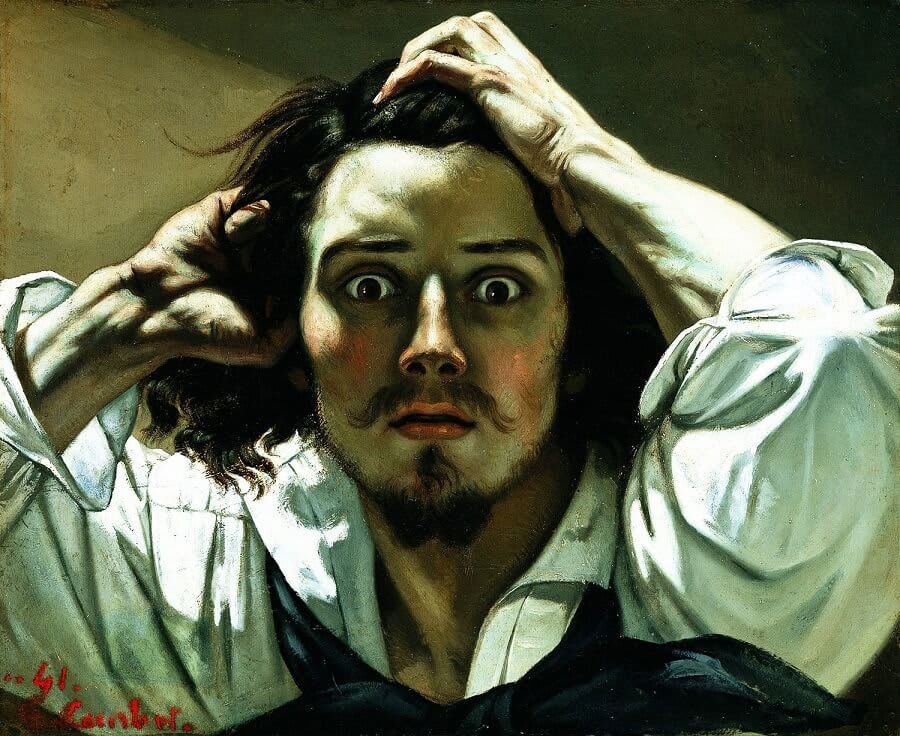
The Desperate Man - Before developing his unique style of realist painting and producing his groundbreaking works, Courbet painted several self-portraits, including this one.
With his eyes wide open, he's looking directly at you, pulling his hair out. Popular at the time, the romantic approach to portraiture focused on expressing the emotional and psychological states of the individual. Although Courbet never considered himself a romantic painter, he handled the task extremely well. When viewers look at this self-portrait, they not only experience his desperation (as the title suggests) but also get an idea of the artist's personality: bold, cunning, radical, ambitious, and determined. Determined to challenge established painting genres, protest against traditional clichés, and change the course of art history.
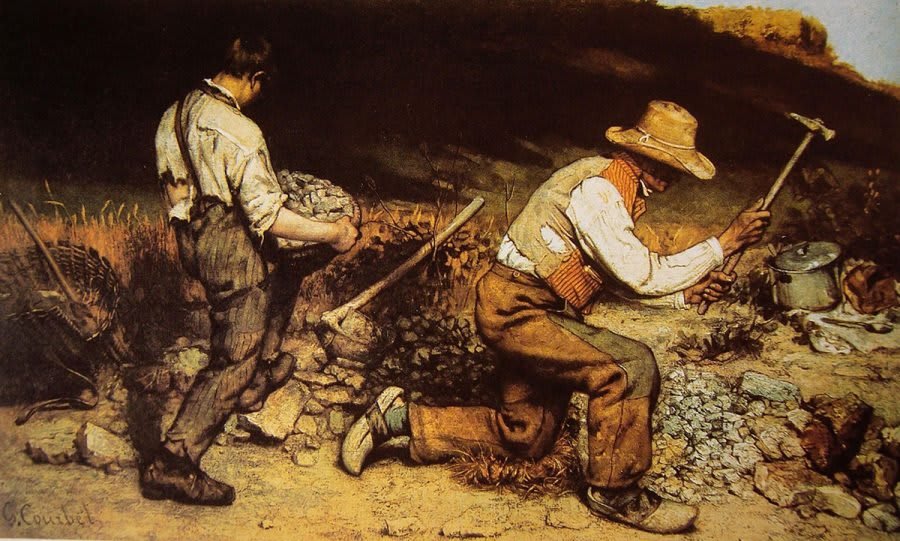
The Stone Breakers - Courbet created this work to depict the intense labor that the poorer segment of the population endured daily.
Clique AQUI and learn more about this work
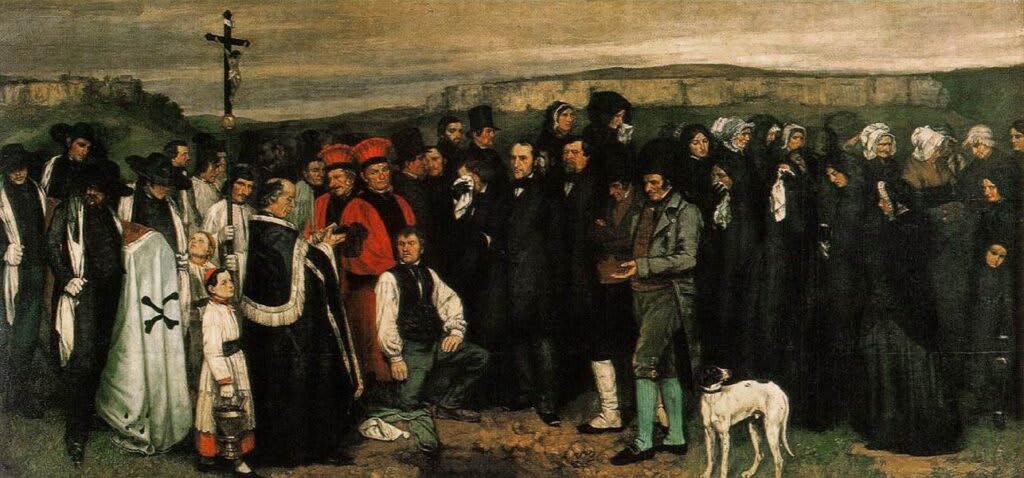
A Funeral in Ornans - The composition is decidedly not classical, presenting figures that circulate in the darkness, without focus on the ceremony. As an excellent example of realism, the painting adheres to the facts of a real funeral and avoids amplified spiritual connotations. Emphasizing the temporal nature of life, Courbet intentionally did not leave the light in the painting express the eternal. While the sunset could have expressed the great transition of the soul from the temporal to the eternal, the artist covered the night sky with clouds, so that the passage of day to night is just a simple echo of the coffin passing from light to the darkness of the ground.
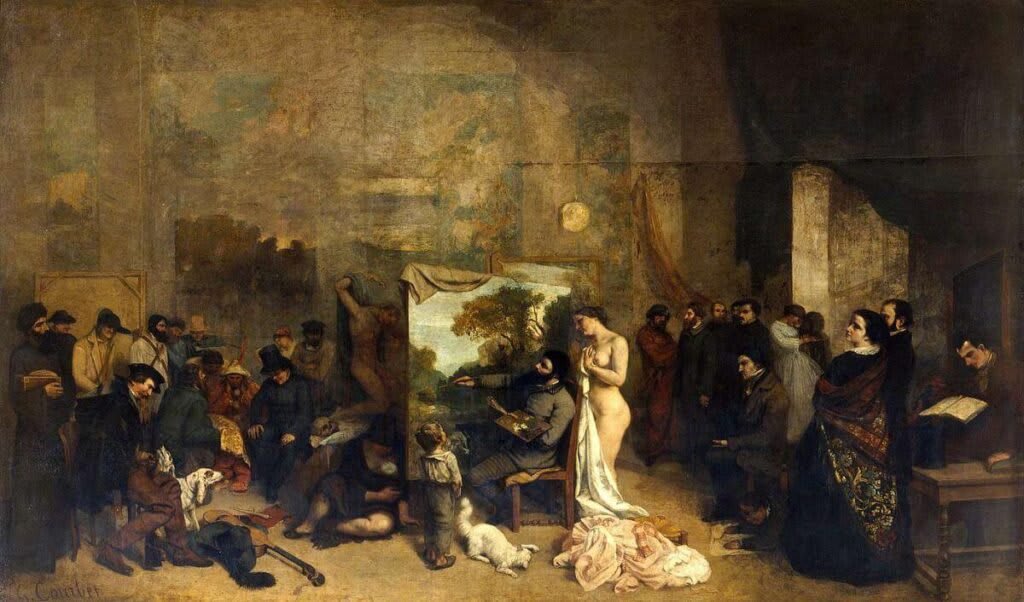
The Artist's Studio - In this vast allegory, considered a manifesto painting, each figure has a different meaning. And in the middle of it all is the artist himself, surrounded by benevolent figures: a female muse, naked like Truth, a child, and a cat. At the center, the painter presents himself as a mediator. He thus asserts the role of the artist in society in a huge scene on the scale of a historical painting.
Clique AQUI and learn more
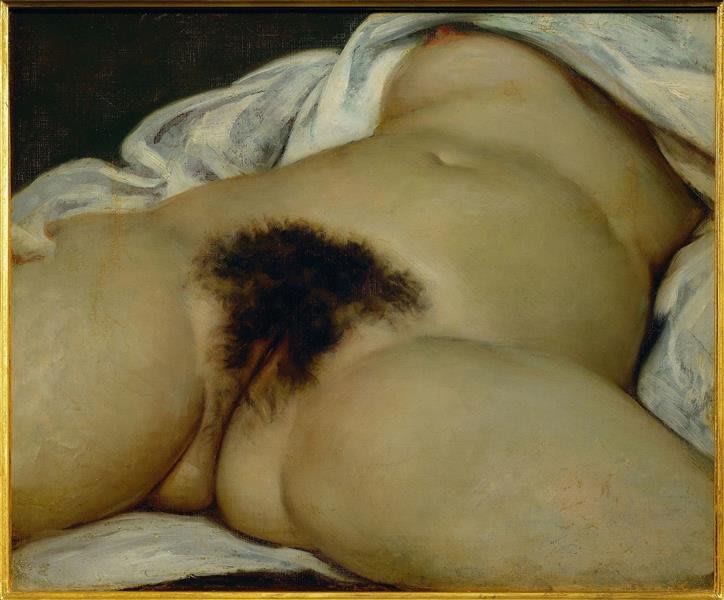
The Origin of the World - This is one of the most notorious nudes ever represented, and also one of the most polemical. Courbet shows the lower torso of a woman with her thighs open. The classical artifice is stripped away, and the viewer is forced to focus on the most intimate view of the female anatomy, where the artist directs the viewer exactly where to look and implies that looking at such a pictorial reality should be acceptable.
The painting was commissioned by the Turkish Ottoman diplomat Khalil-Bey, who was a collector of erotic images. He asked the realist artist to depict a frontal female nude in its most crude form.
After declaring bankruptcy, the owner had to sell all his works. The Origin of the World belonged to several collectors, always being sold and never exposed to the public. Only in 1995, Courbet's canvas was publicly exhibited for the first time when it became part of the Musée d'Orsay collection.
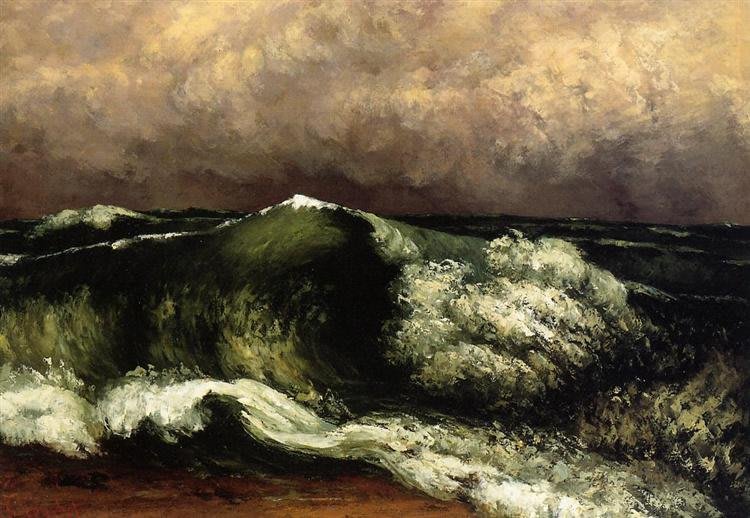
A Wave - Many of the first modernists were influenced by Japanese prints, and it is argued that Courbet was one of the first to be affected by this oriental aesthetic. Probably following the suggestion of the impressions, he shows us a slice of water isolated from the view of a vast space. The paintings summarize Courbet's landscapes and seascapes, which were always composed of broken patches of loaded paint in light and dark areas. This pictorial treatment was the inspiration for the early impressionists.