
Henri Rousseau: Biography and Works: Illustrated Gallery and Artistic Legacy
Discover the life and art of Henri Rousseau, a self-taught painter who left an indelible mark on the art world.
The genius dedicated his soul to painting the ceiling of the world's most famous chapel.

Surprisingly, he took over 4 years to work in almost suffocating conditions.
If you are interested in the lives of the great masters from that era, you should also see: Raphael: Biography and Work: Birth, Training and Rise (Part 1 of 3)
GALLERY - COMMENTED ART
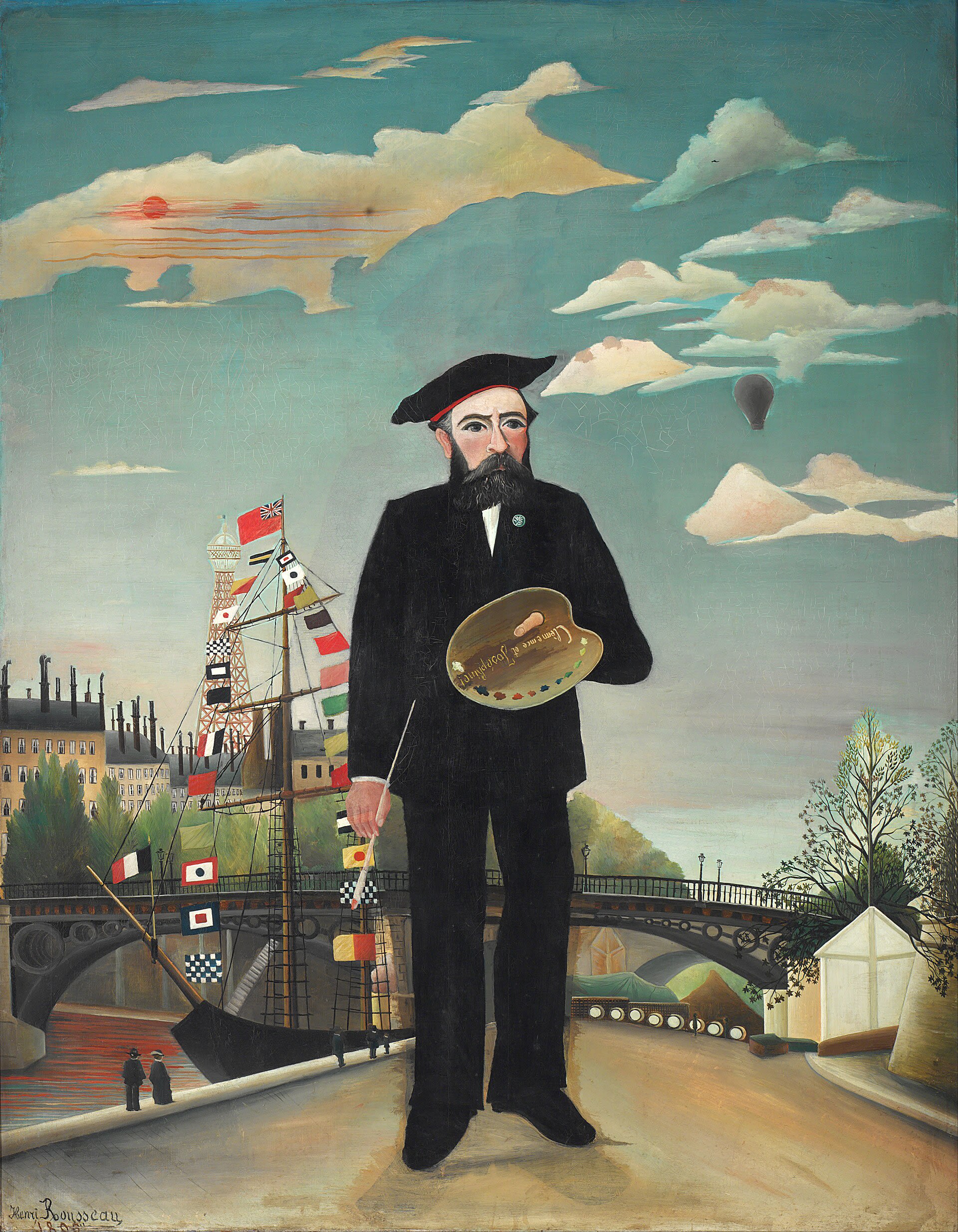
I, Portrait-Landscape - Here, Rousseau captures the height of greatness he aspired to as a painter, presenting himself in gigantic scale with brush and palette in hand and wearing a traditional artist's suit and hat, in front of a landscape that features the Eiffel Tower and a ship with a high mast decorated with flags of different countries.
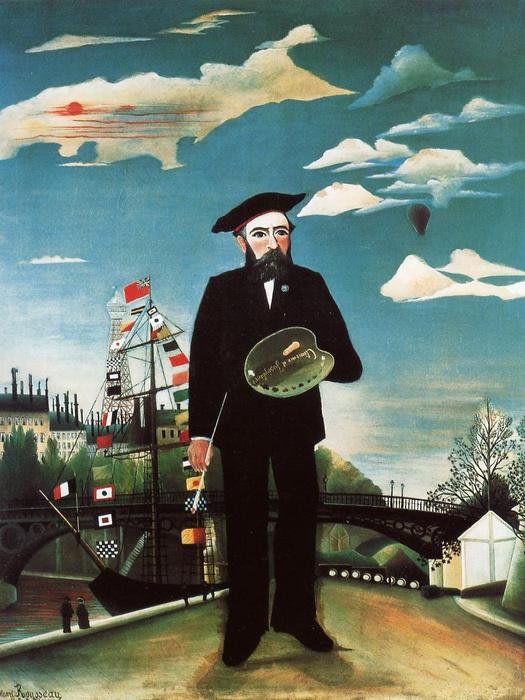
Although he completed the portrait in 1890, Rousseau later updated the work with additional autobiographical details: a ribbon of academic distinction, which he added to the lapel in 1901 after becoming a professor of drawing at the Association of Philotechny, and the names of his two wives, Clemence and Josephine, which he later painted on the palette.
Tiger in a Tropical Storm - In his first jungle painting, we can observe a tiger with wide eyes and teeth emerging suddenly from the grass where it was lying in wait, with wavy leaves, inclined branches, rain and a dark sky indicating the storm mentioned in the title.
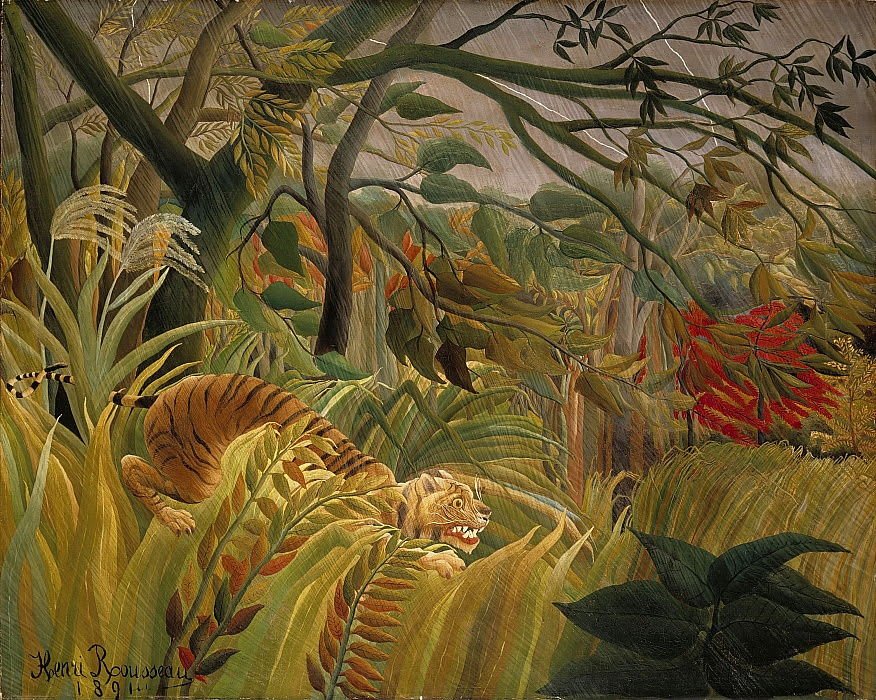
The canvas was also known as "Tigers in search of explorers" and "Storm in the jungle", alternative names that suggest some ambiguity about the subject.
Centenary of Independence
Rousseau represented the peasants dancing the farândole, a popular dance from southern France, around the three trees of liberty and two female figures representing the First and Third Republics.
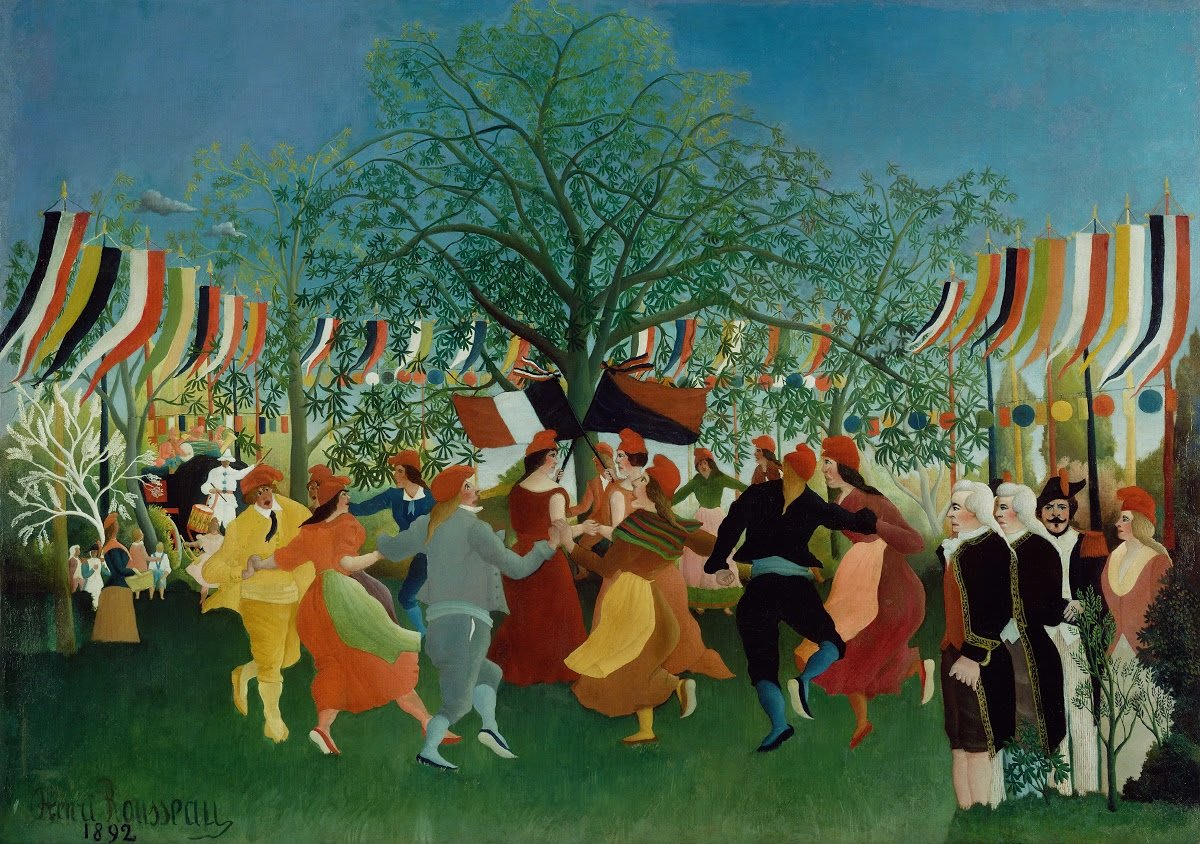
This is a painting in commemoration of the centenary of the proclamation of the first French Republic of 1792.
The way artists capture national identity through large-scale works is also central to this narrative: Biography of Candido Portinari: From Academia to Historic Mural Paintings
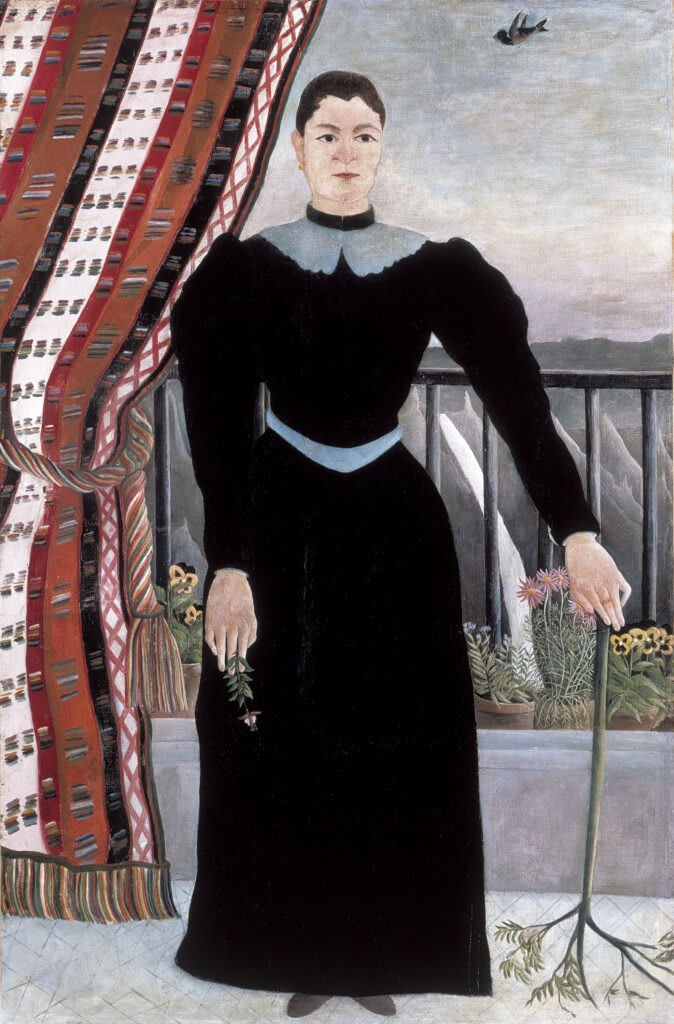
Portrait of a Woman - Painting acquired by Pablo Picasso in 1908, the artist was a friend and a great supporter of his work.
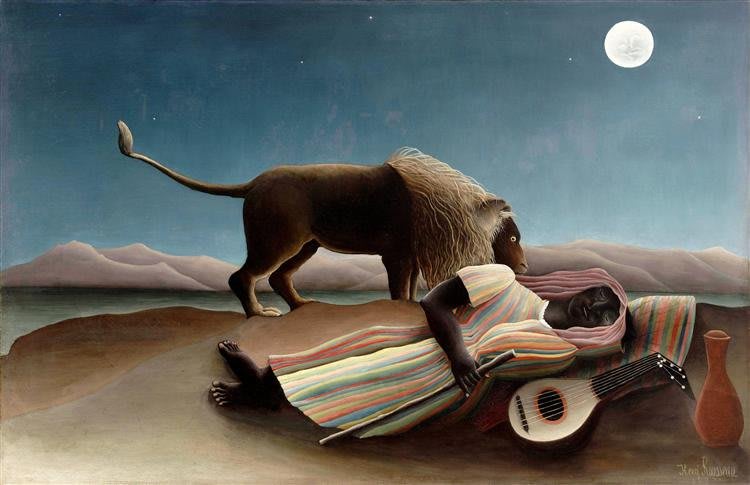
The Sleeping Gypsy - The composition reminds us of the surrealist painting, in which the artist presents a huge lion that finds a woman asleep.
Click here to learn more
For those who appreciate a deep dive into the technical details and hidden stories of legendary canvases: Biography of Johannes Vermeer: In-Depth Analysis of Masterpieces
The Hungry Lion - The lion and the antelope in the center of the painting use vague gazes that contribute to a surprisingly static scene of attack, with most of it occupied by lush trees before sunset.
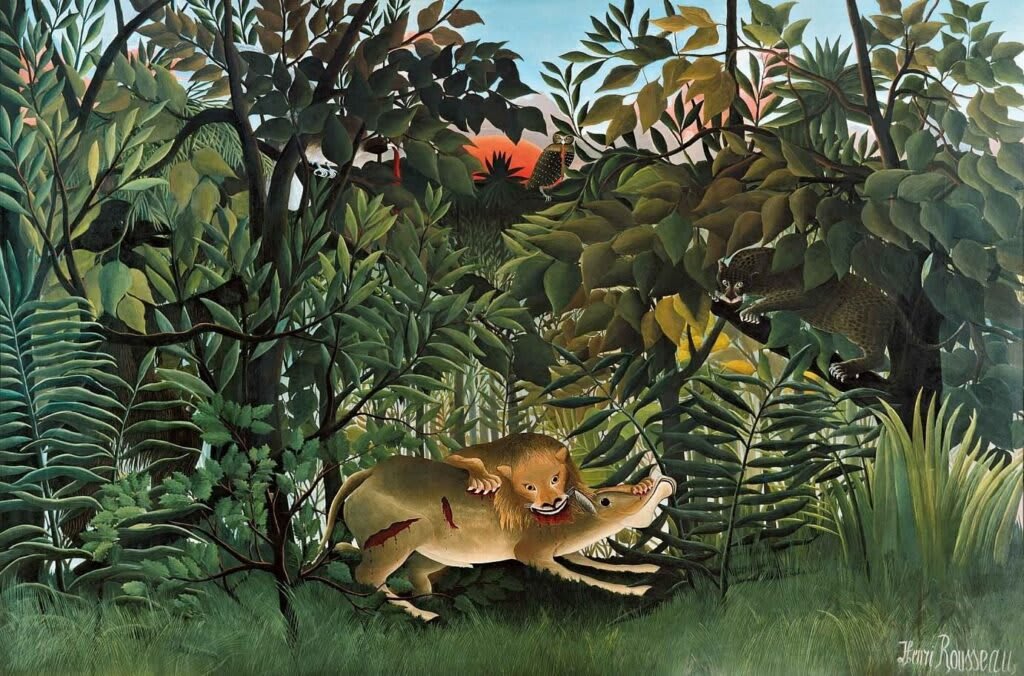
Rousseau based the poses of the two animals on a diagram made for the zoos of the Jardin des Plantes, home to a large collection of flora and fauna frequently visited by the artist.
The Dream - "The woman asleep on the sofa dreams that she was transported to the forest, hearing the sounds of the sorcerer's instrument", wrote Rousseau about this enigmatic painting.
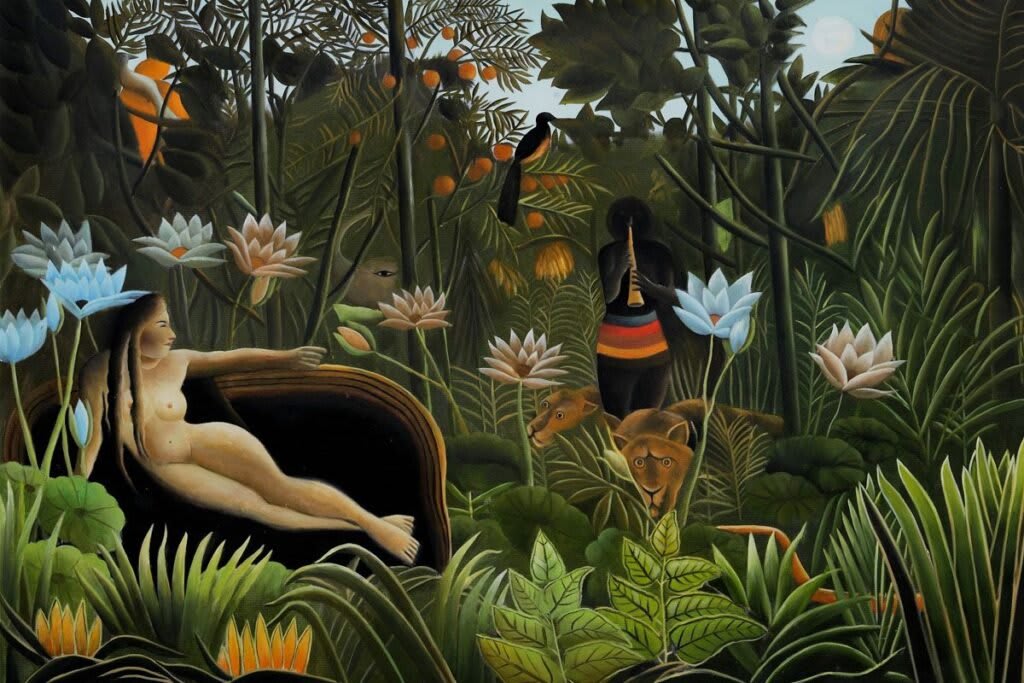
It is believed to have been his last painting and one of his masterpieces.


