
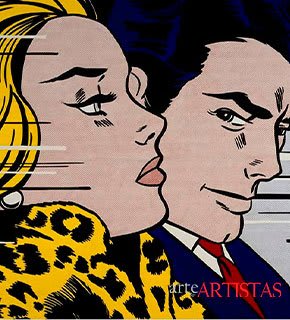
In the Car, Roy Lichtenstein
In the Car, Roy Lichtenstein
The pop art of Roy Lichtenstein revolutionized the way people thought about art.
With his paintings based on comic strips, he created a new visual language that was both glamorous and impersonal.
One of Lichtenstein's most famous works is the painting In the Car, which is part of a series created in the early 1960s.
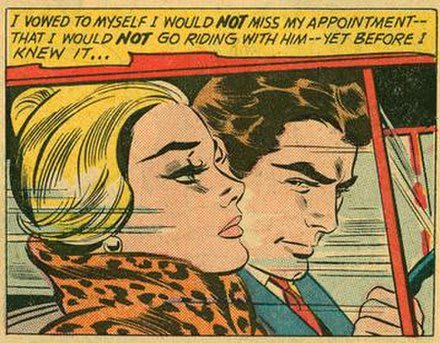
The painting is based on a 1961 cartoon by Tony Abruzzo that was published by Signal Publishing Corp.
Lichtenstein captures the essence of the era, depicting recognizable types, such as the blonde woman and the square-jawed man seen in this painting.
Like most of his early comic strip romances, this one consisted of the subject of a romance between a couple, representing a melodramatic scene.
Many of his other paintings deal with similar melodramatic themes, such as a woman fawning over a man or suffering the tragedy of her romance.
The woman's appearance is also quite faithful to his style, as he tended to prefer comic strip women who were uniformly dressed and had a very stereotypical style.
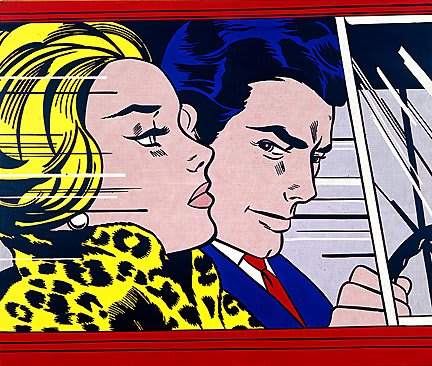
The painting itself depicts a man and a woman in a red car, with speed lines indicating their movement in the typical comic strip style.
The work, along with that of Andy Warhol, marked the beginning of the Pop art movement and, essentially, the end of Abstract Expressionism as the dominant style.
Lichtenstein did not simply copy comic strip pages directly; he employed a complex technique that involved cutting images to create entirely new dramatic compositions.
His work became a landmark in art history, revolutionizing the way people thought about art and style.
With his paintings, Lichtenstein showed that art can be both glamorous and impersonal, and that the way people think about art can be revolutionized.
The Influence of Lichtenstein on Pop Art
Lichtenstein was one of the leading artists of pop art, and his influence can be seen in many of the artworks created after him.
His technique of cutting images and creating dramatic compositions was adopted by other artists, and his way of thinking about art and style became a reference for many.
Lichtenstein's pop art continues to inspire artists and designers to this day, and his influence can be seen in many of the artworks created.
Lichtenstein's Legacy
Lichtenstein left a lasting legacy in pop art, and his influence can be seen in many of the artworks created.
His way of thinking about art and style became a reference for many, and his technique of cutting images and creating dramatic compositions was adopted by other artists.
Conclusion
Lichtenstein's pop art was a revolution in the way people thought about art and style.
His influence can be seen in many of the artworks created, and his way of thinking about art and style became a reference for many.


