
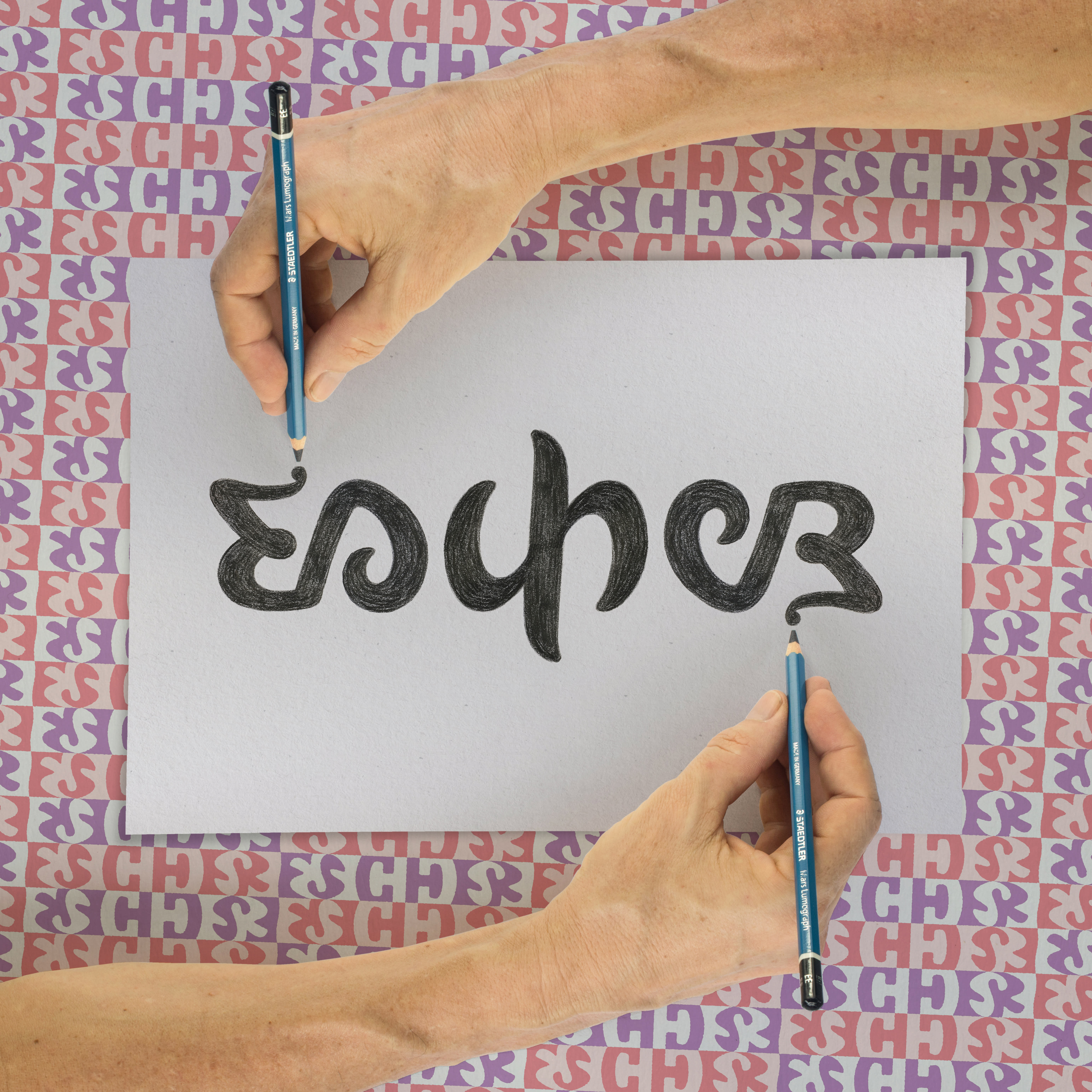
M.C. Escher: Aesthetic, Techniques and Visionary Works (Part 1)
M.C. Escher: Aesthetic, Techniques and Visionary Works (Part 1)
Escher and his work - Art commentary
With a career spanning over five decades, Escher was able to create works that continue to surprise and inspire to this day.
Techniques and Influences
The aesthetic reproduced in Escher's works is impeccable and developed, particularly through three unique techniques: woodcut, lithography, and mezzo-tint.
Obtained by matrices that serve as a kind of stamp for special papers and fabrics, woodcuts and lithographs make up the majority of his artistic collection.
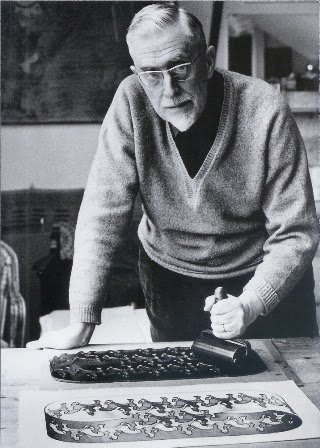
Although he used it little, the mezzo-tint method fascinated Escher. It consists of obtaining points of different sizes to create the illusion of intermediate tones, making it possible to achieve the gradient in images.
 Maurits Cornelis Escher" class="wp-image-9077">
Lithography, a technique widely used by him, is a method of printing in which the image to be obtained is drawn with greasy materials (pencils, sticks, paste, etc.) on a special limestone base (known as "litographic stone").
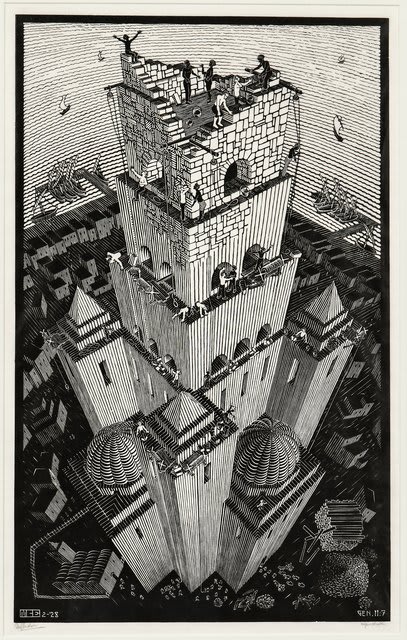
Tower of Babel - In this woodcut, Escher represents the Babylonians building the tower to reach God. It is in Genesis 11: 9; he describes the tower as a geometric structure and places the viewpoint above it, allowing the observer to exercise the visualization of the perspective used.
 Maurits Cornelis Escher" class="wp-image-9049">
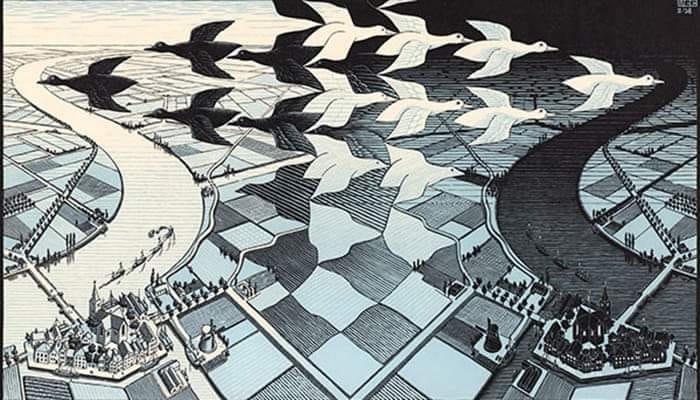
Day and Night - Grey rectangular fields evolve upwards, in silhouettes of white and black birds in an endless cycle. This is a reflection used by Escher in this woodcut belonging to the series Metamorphosis
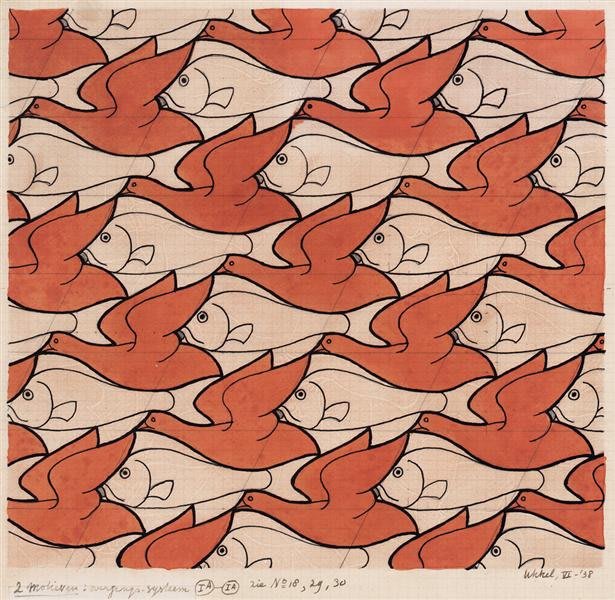
Bird Fish - From 1938 onwards, Escher created a series of woodcuts with the same theme, where fish and birds fit together like pieces of a puzzle.
 Maurits Cornelis Escher" class="wp-image-9048">
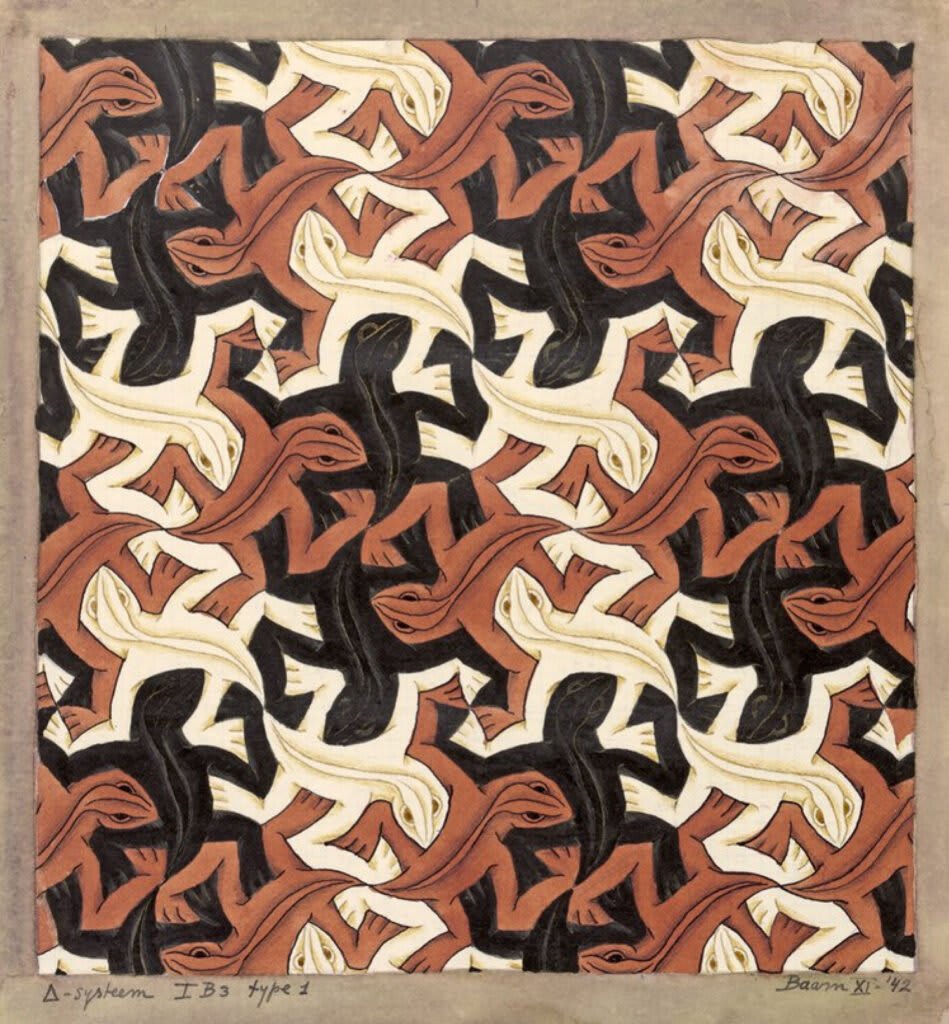
Lizards n° 56 (Lizards) - Escher was a master at transforming polygonal mosaics into non-polygonal works of art. Before moving any of the sliders. How can a lizard be moved to the position of a neighbor? How is the piece formed?
To understand the rest of this journey, continue to our next article: M.C. Escher: Iconic Works, Gallery and the Legacy of Illusions (Part 2).


