Maurits Cornelis Escher: Iconic Works, Gallery and the Legacy of Illusions (Part 2)
Maurits Cornelis Escher: Iconic Works, Gallery and the Legacy of Illusions (Part 2)
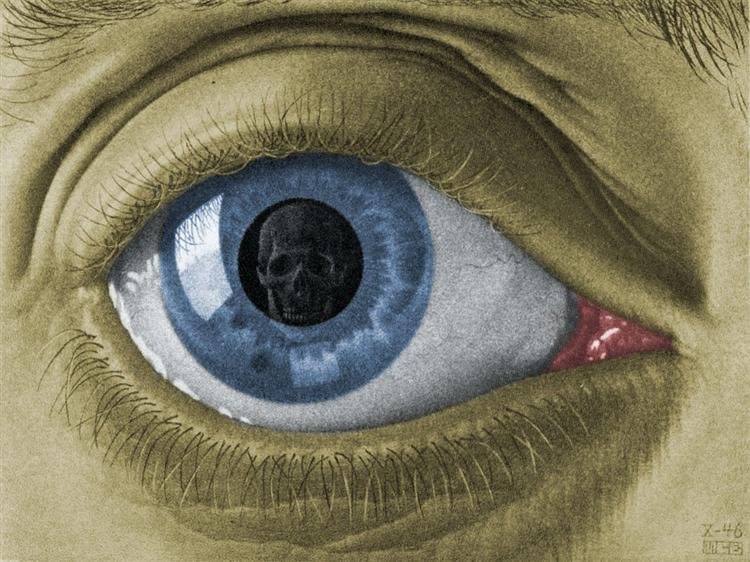
The Eye of the Beholder - When Escher sketched this work, he created by looking at himself in a reflection.
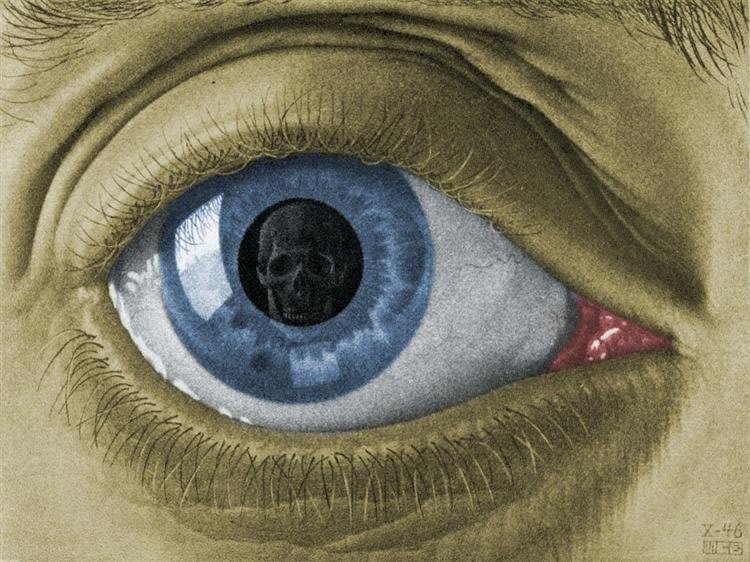
He felt it was necessary and logical to convey someone, an observer reflected in the convex mirror of the eye, and then decided to draw a skull as well.
He explained: "we are all confronted with death, whether we like it or not".
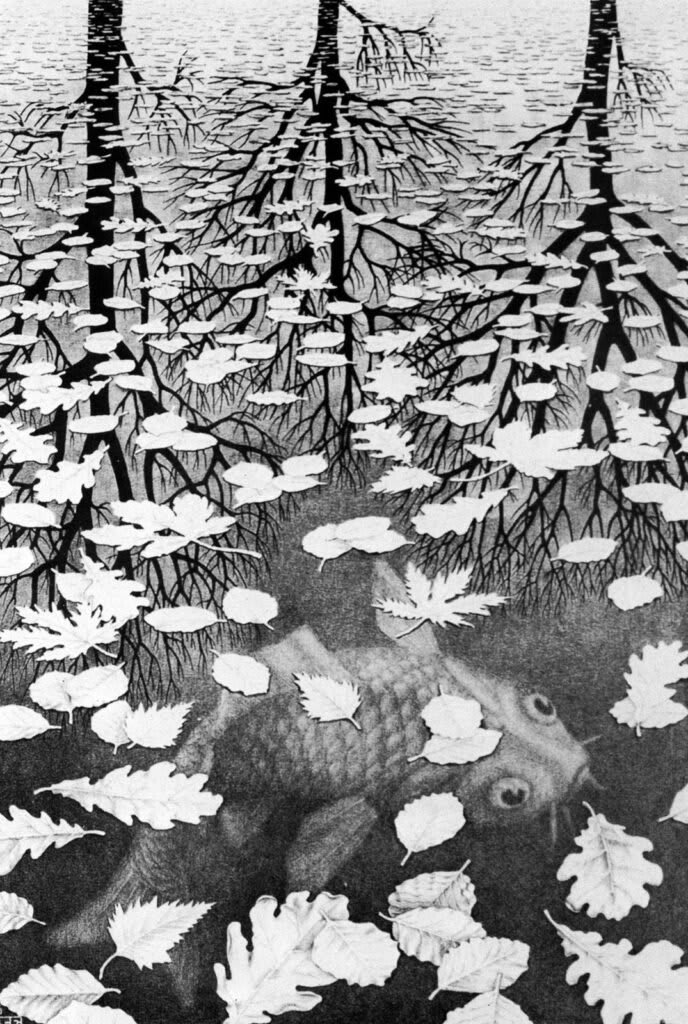
Three Worlds (Three Worlds) - This is one of Escher's most popular works of art because it provides a deep view of different worlds.
You can also see several trees reflected in the water, which is one of the worlds, as well as the 'second world', where you can see what is above the surface.
The 'third world' is life underwater, where we have in the foreground, a large fish.
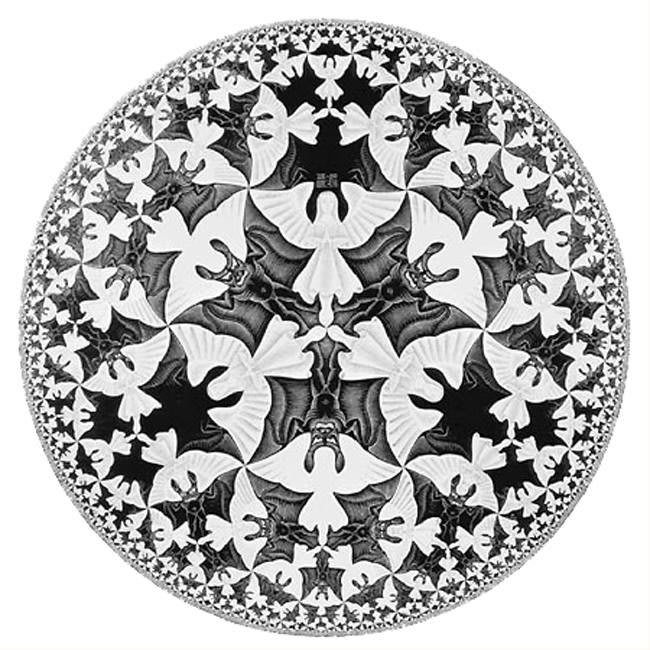
Circular Limit IV - The figures reduce from the inside out.
The six largest, three white angels and three black demons, are arranged radially around the center.
The circle is divided into six sectors where the angels dominate, in front of a black background, and the demons, in front of a white one.
Heaven and hell appear alternately six times.
This and many other works by Escher on the division of the regular plane can be associated with the theory of fractals, according to which one of them is a geometric object that can be multiplied infinitely in smaller parts, each of which is similar to the original object.
GALLERY OF SOME WORKS