Raphael: Biography and Works: An Analysis of the Great Paintings and Madonnas
Raphael: Biography and Works: An Analysis of the Great Paintings and Madonnas
Raphael entered history as the painter of madonnas simultaneously mystical, sweet, and sensual.
We follow the evolution of his art throughout his life, from his early works to the most famous and iconic.
In his childhood, he was influenced by his father, Giovanni Santi, an artist and poet, who taught him the techniques of painting and sculpture.
The formative years of a visionary often reveal the cultural roots that shape their future masterpieces. Biography of Candido Portinari: Childhood, Art, and the Roots of Brodowski
Author of masterpieces such as the 'Madonna of the House Santi', 'Madonna of the Grand Duke' and 'Madonna with Child', Raphael Sanzio is considered one of the greatest artists of the Italian Renaissance.
His art is characterized by a technical perfection and an emotional sensitivity, which led him to create works that are at the same time beautiful and profound.
With his ability to capture light and shadow, Raphael created a visual universe that is at the same time realistic and idealized.
The mastery of light and human detail in the Italian tradition find a compelling parallel in the dramatic compositions of the Dutch Golden Age. The Anatomy Lesson of Dr. Tulp by Rembrandt
His style is influenced by artists such as Leonardo da Vinci and Michelangelo, but also unique and innovative.
Aside from his paintings, Raphael was also a great architect and designed the famous Sistine Chapel in the Vatican.
Great Renaissance masters often extended their vision beyond the canvas, contributing to the world's most significant architectural landmarks. Hagia Sophia Basilica
The School of Athens, one of his most famous works, is an example of his ability to create environments that are at the same time beautiful and meaningful.
With his art, Raphael Sanzio left a legacy that continues to inspire artists and admirers around the world.
GALLERY - WORKS COMMENTED
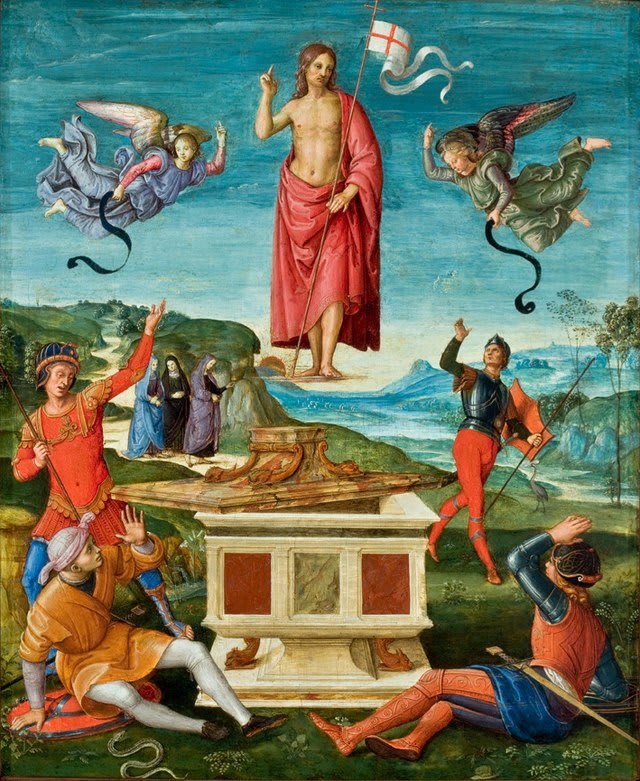
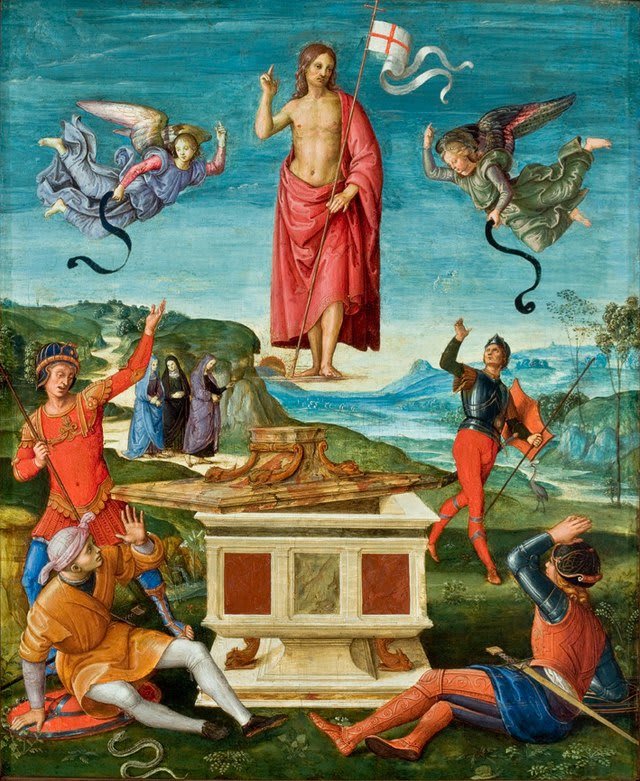
Resurrection of Christ - This work, which took time to be attributed to Raphael, is now fully accepted by art specialists.
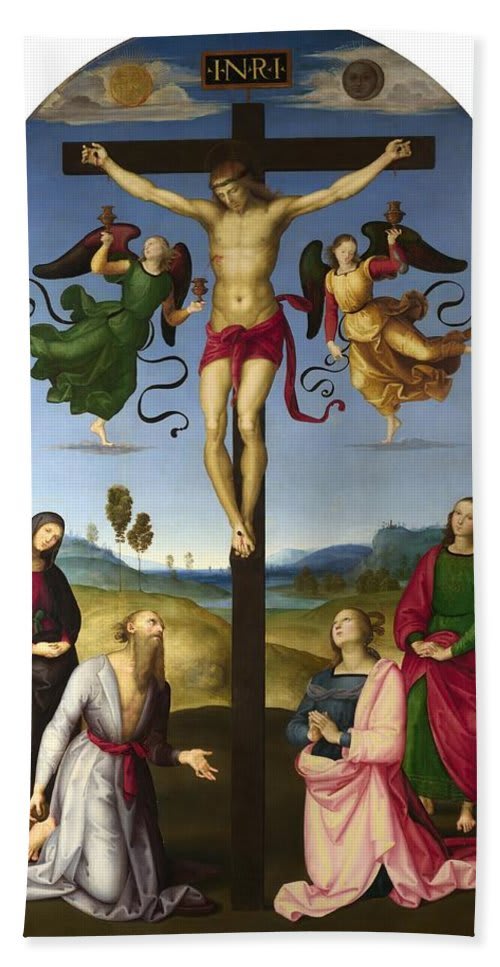
Crucifixion - This is one of his first works where we can see the influence of his master Perugino.
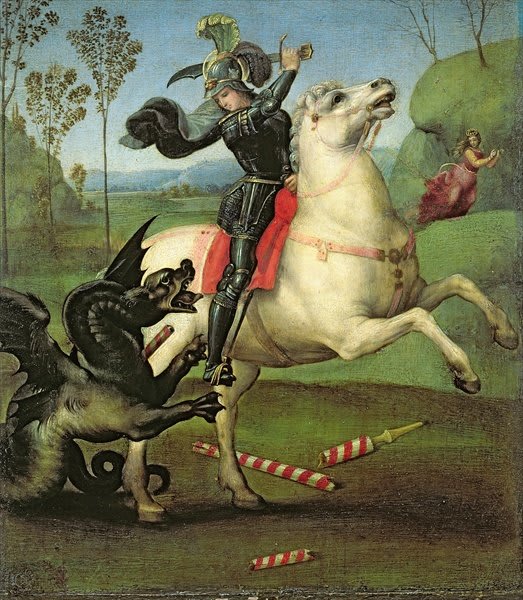
Saint George and the Dragon - This is probably the first version in which the artist addresses this theme.
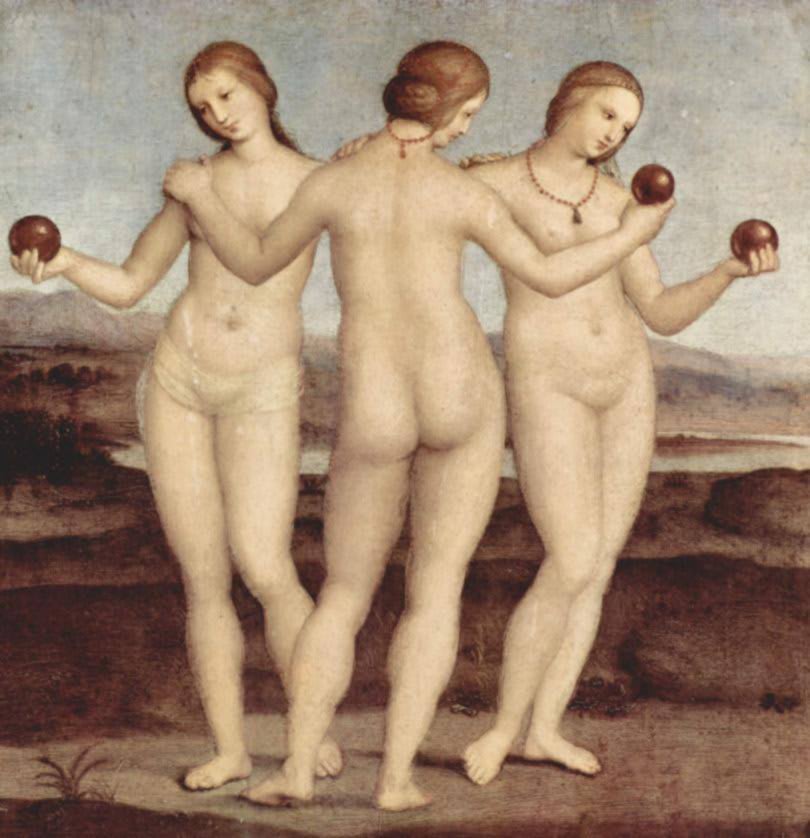
Raphael used geometric forms as a base in almost all his paintings, and the three famous mythological sisters painted by him, "The Three Graces", also have an irregular hexagon formed by the hands that hold the apples, the feet of each of them and their heads.
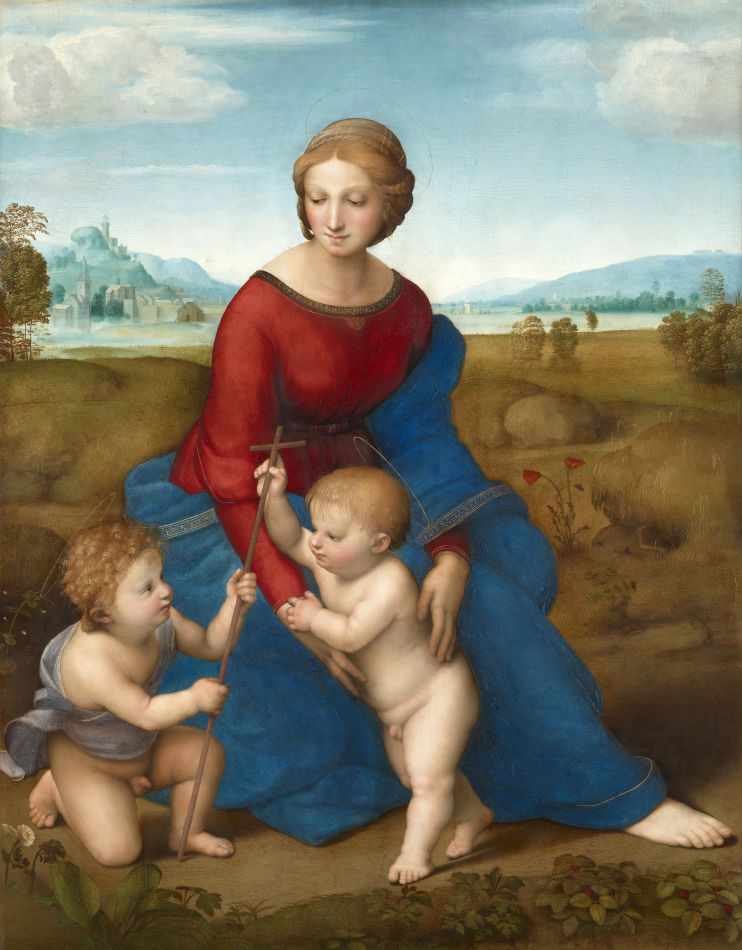
Madonna in the Meadow - This is a classic example of Raphael's art. The composition uses the same technique as Leonardo Da Vinci to paint figures using a triangle as a base.
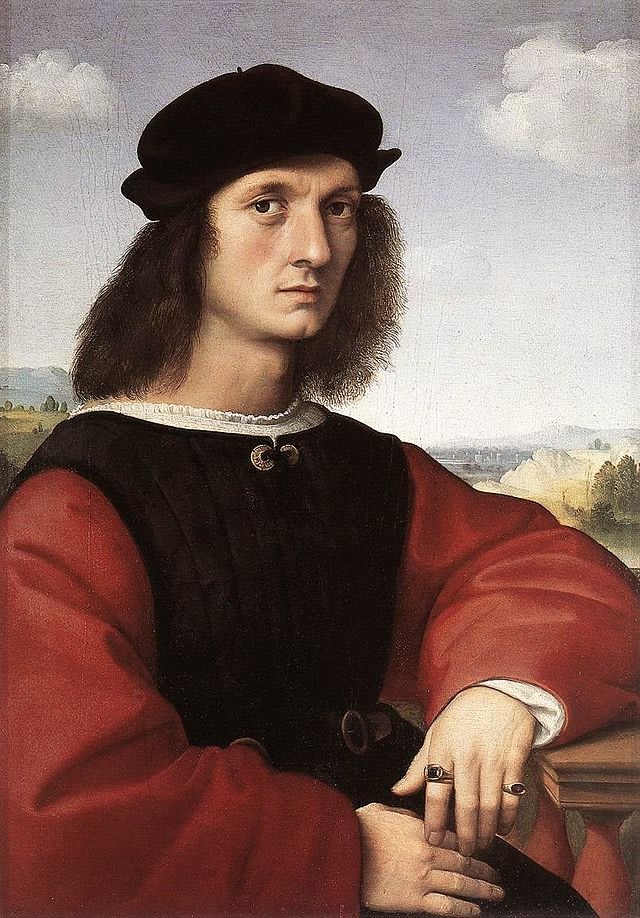
The Doni Couple - This pair of portraits of the couple Agnolo and Maddalena Doni finds a strong influence from Leonardo da Vinci, especially from his famous Mona Lisa, with the exception of the background landscape, which reminds us of the serenity found in Raphael's compositions.
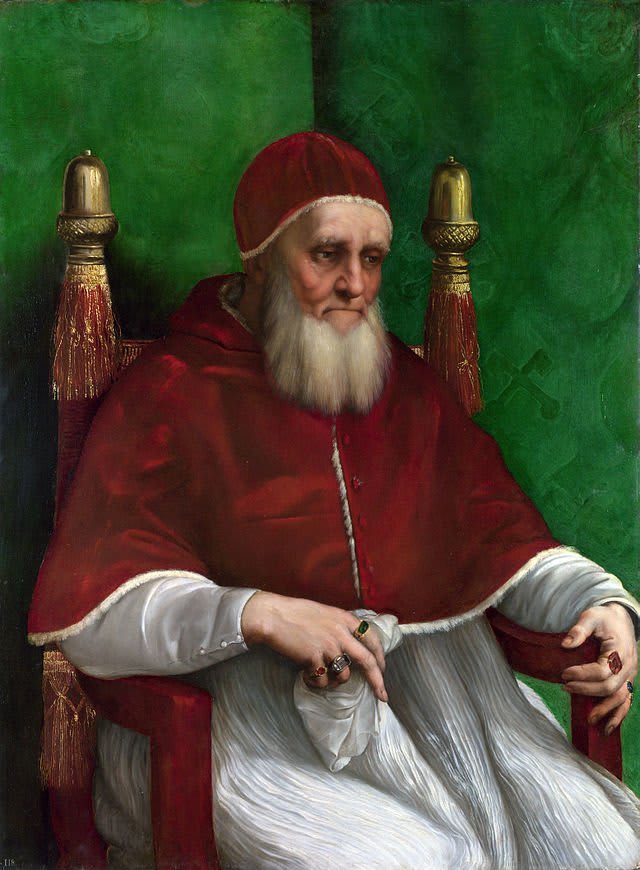
Portrait of Julius II - This is a tribute that Raphael made to the great patron of the arts in the 16th century, Pope Julius II. This version belongs to National Gallery, London
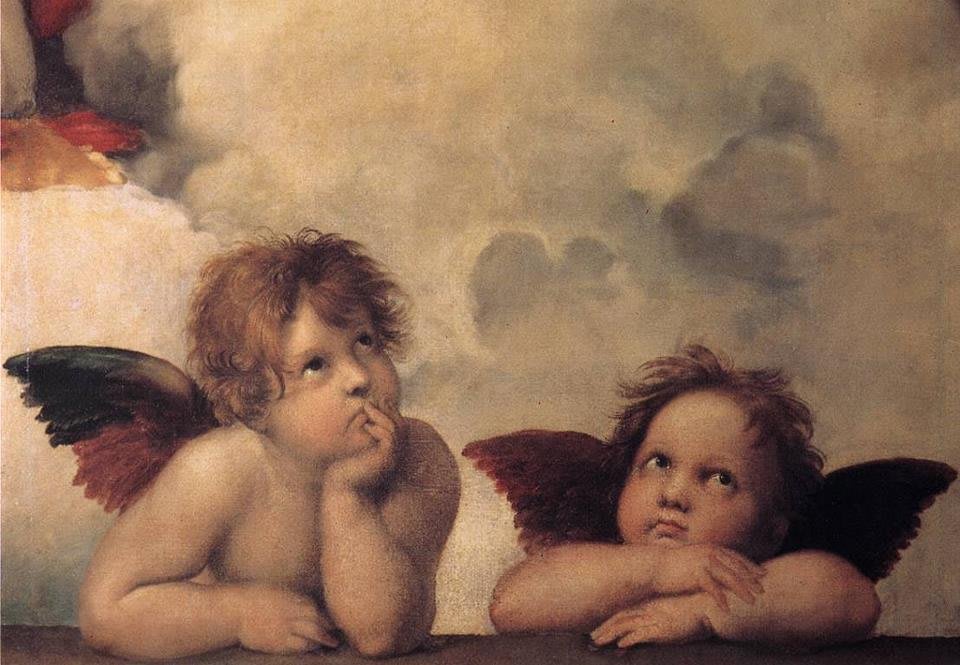
Madonna Sistina - This work was named after it because it would have been made to adorn the tomb of Sixtus II at the request of Pope Julius II, who had Saint Sixtus as his patron saint.
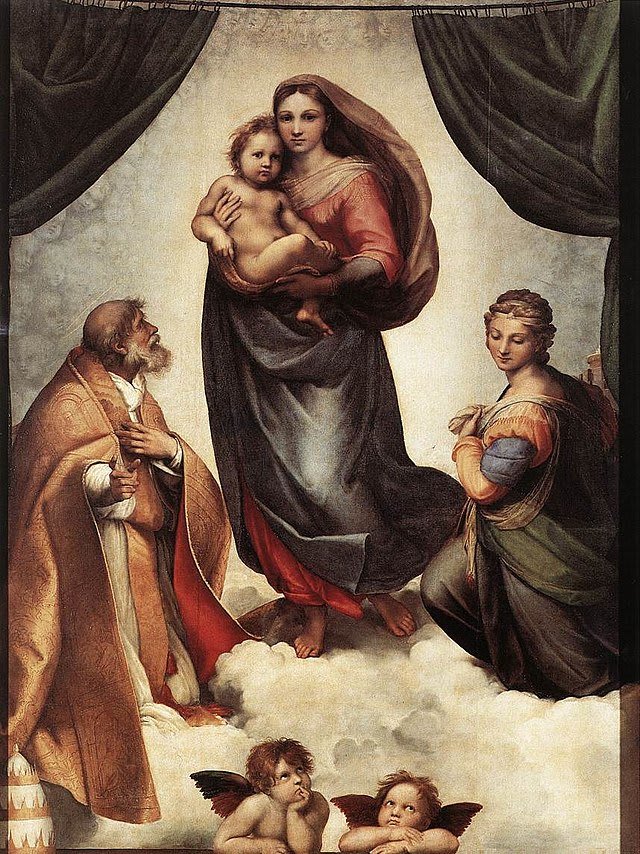
Raphael was able to balance idealism and reality in his works.