
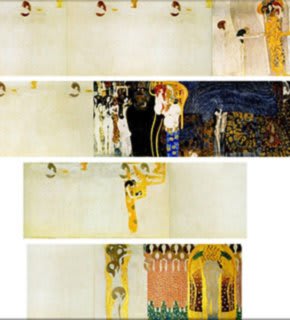
The Beethoven Frieze by Gustav Klimt
The Beethoven Frieze by Gustav Klimt
The Secession Building in Vienna was the venue for the 1902 exhibition that encapsulated the philosophy of the art movement.
At the exhibition, a sculpture dedicated to Ludwig van Beethoven was highlighted, created by the German artist Max Klinger.
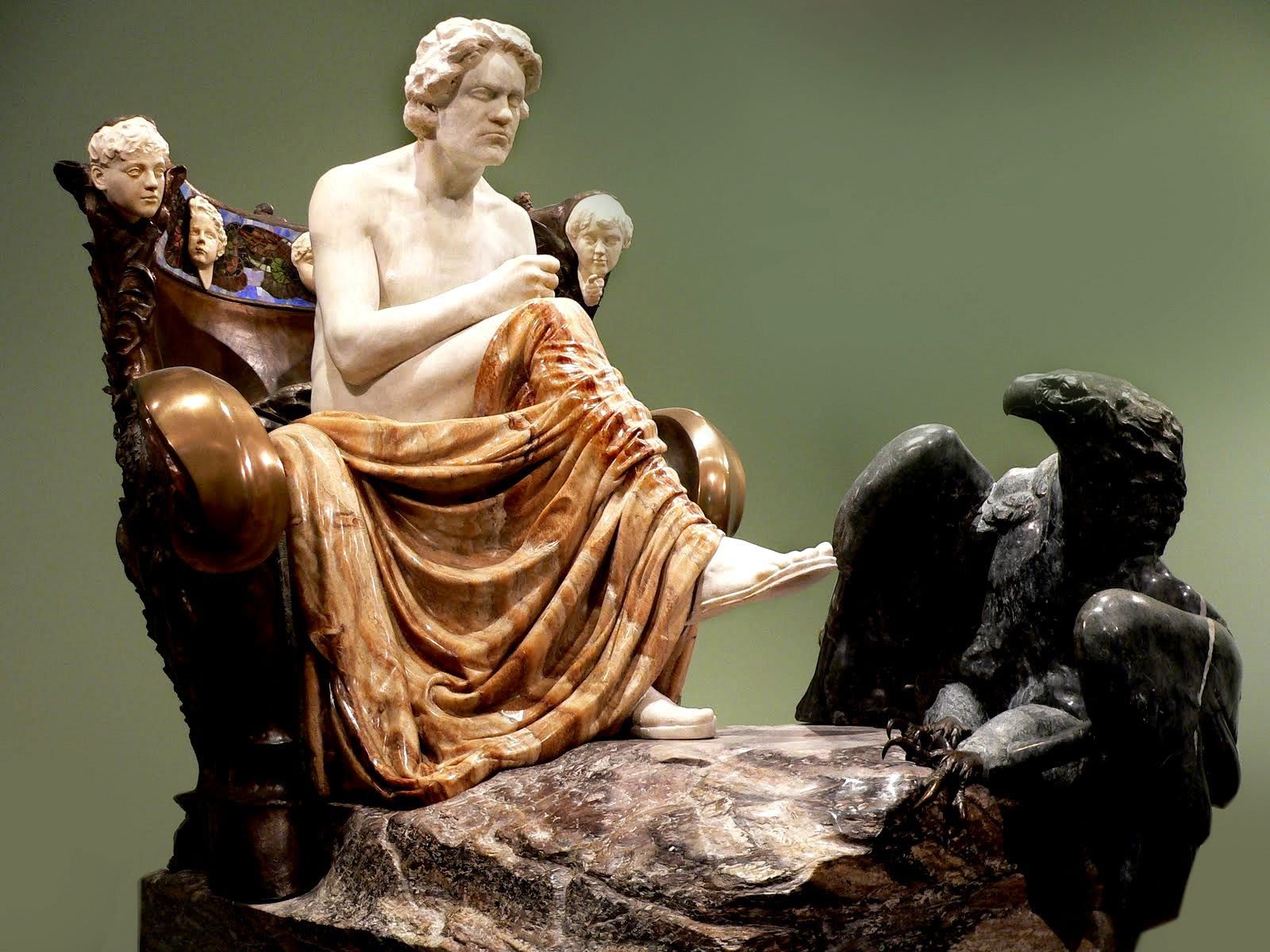
The architect Josef Hoffmann adapted the interior of the building, creating a space similar to a basilica, with a central nave and two side rooms.
In one of the rooms, Gustav Klimt exhibited The Beethoven Frieze.
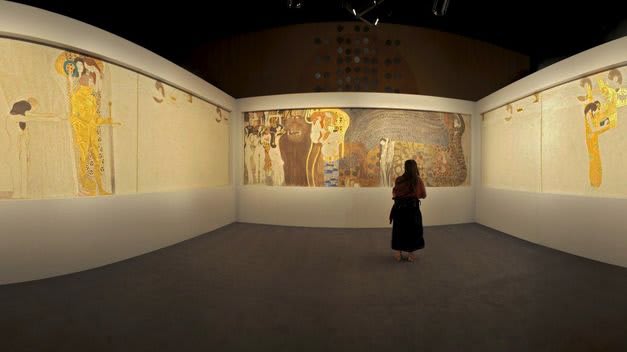
The work spanned three walls and consisted of an allegory about the pursuit of happiness, based on Richard Wagner's interpretation of Beethoven's 9th Symphony.
The Enemy Forces occupied the narrow wall of the room.
The piece is structured around the brutal figure of Typhon, represented by a giant simian.
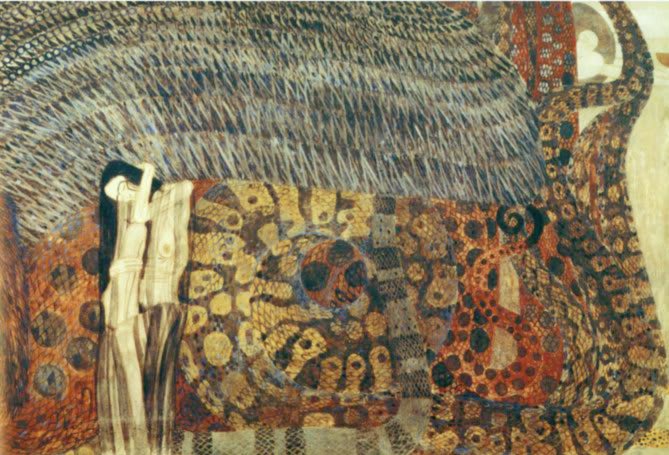
To the left of Typhon are the Gorgon daughters, despite their attractive physical appearance, their slanted gazes and golden snakes in their abundant black locks warn of their danger.
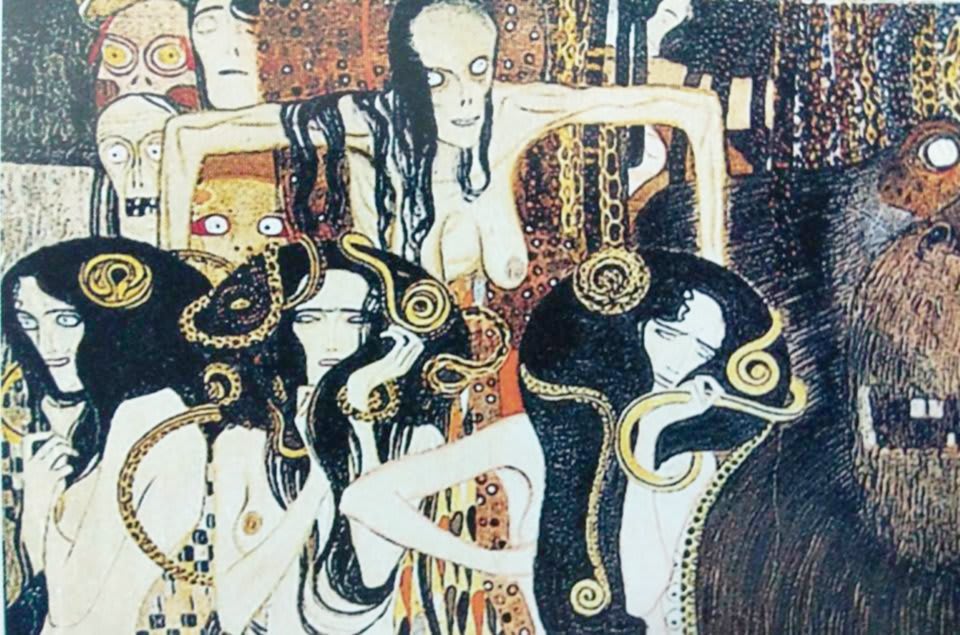
To the right of Typhon stands another group formed by the nude figures of Luxury, Voluptuousness, and Intemperance.
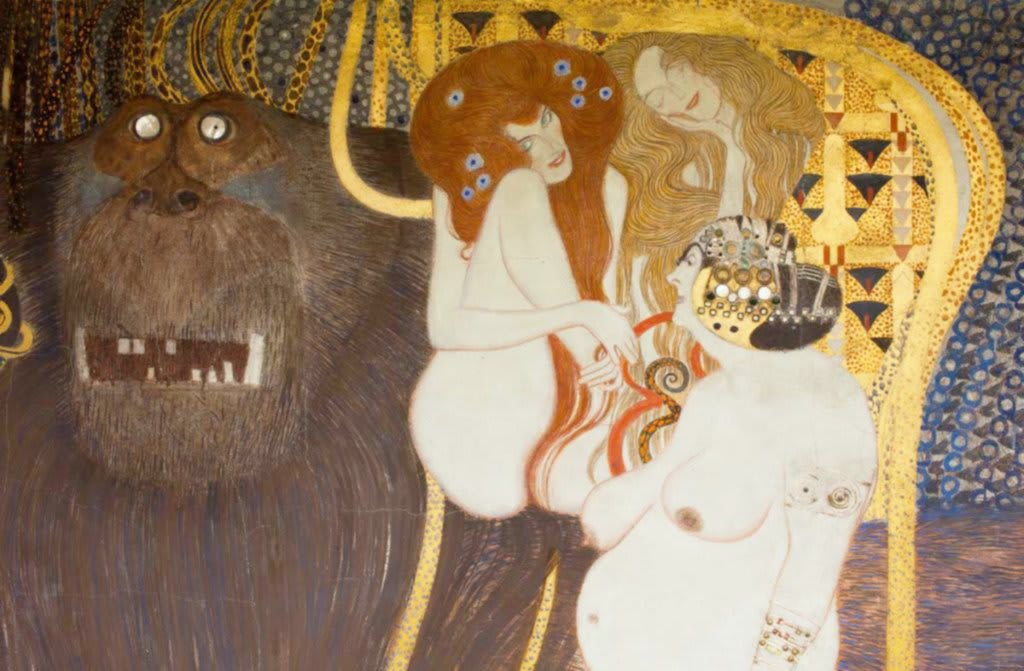
Just as in Philosophy and Medicine, the figures accumulate here.
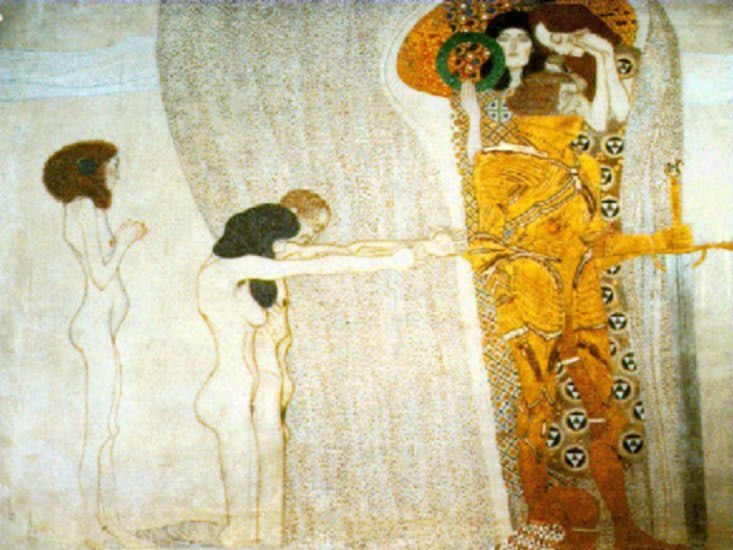
Happiness, noble divine spark, is the human being finds pure love, symbolized in the final kiss.
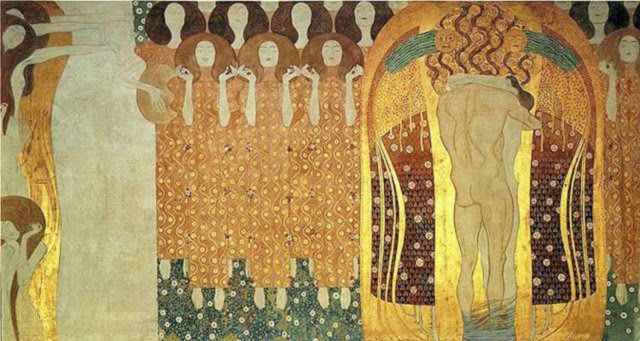
THE BEETHOVEN FRIZE
Year: 1901/1902
Technique: Casein paint on plaster background, with the insertion of gold leaf and semi-precious stones.
Dimensions: 215 x 630 cm
Location: Österreichische Galerie Belvedere, Vienna, Austria


