The Biography of Giuseppe Arcimboldo
Discover the life and works of Giuseppe Arcimboldo, a Renaissance artist known for his unique style and surrealistic paintings.
Article Index
Giuseppe Arcimboldo was an artist who lived during the High Renaissance, characterized by a peculiar style, making him a representative of Mannerism.
He was a contemporary of Michelangelo Buonarroti and other notable artists of the same period.
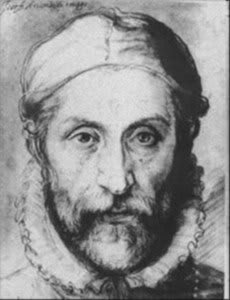
Arcimboldo was born in Milan, Italy, in 1527.
He was the son of Biagio Arcimboldo, also a painter.
He excelled in various fields.
In addition to being a painter, he was a figurinist, decorator, and writer.
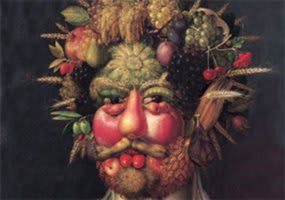
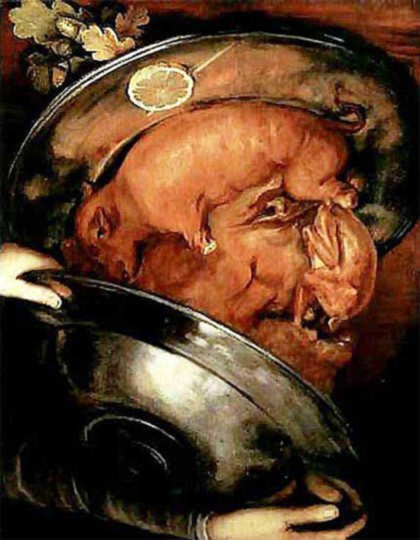
His most famous works are the various 'Composed Heads', where he portrayed human profiles by combining animals, people, plants, and various objects.
His paintings were seen, at the time, as a game in gatherings of noble people to decipher a kind of contemplative game.
It was the first 'Heads' that fascinated Emperor Maximiliano II.
After being crowned in 1563, the emperor hired him as the official painter of the court.
In addition to dedicating himself to canvases, the artist also organized parties, balls, and tournaments at the court, which gave him great popularity.
Arcimboldo died in 1593 and, in a short time, fell into oblivion.
Only at the beginning of the 20th century, his work was revalued, especially by the surrealists, who were inspired by the apparent daydreaming of his canvases.
Commented Works
The Spring
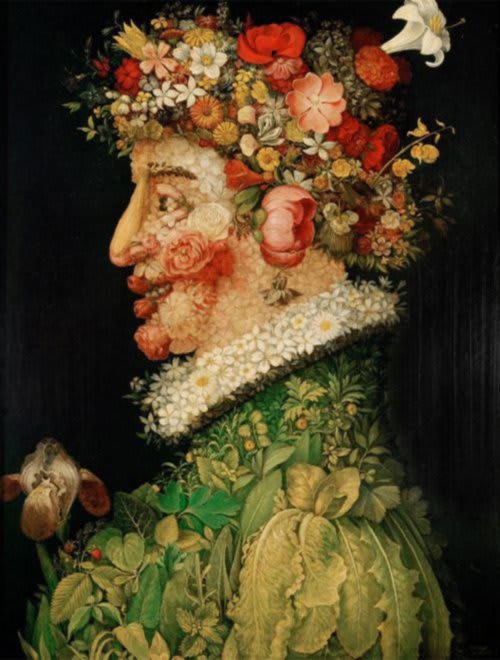
This painting was discovered in 1964, belonging to the first version of the Seasons.
Arcimboldo represents in this work a young man with his head, face, and hair overflowing with colorful flowers, alluding to that fresh and beautiful season as are the flowers.
Josse de Momper - Both paintings with the same title represent an Anthropomorphic Landscape - man and nature are represented in symbiosis
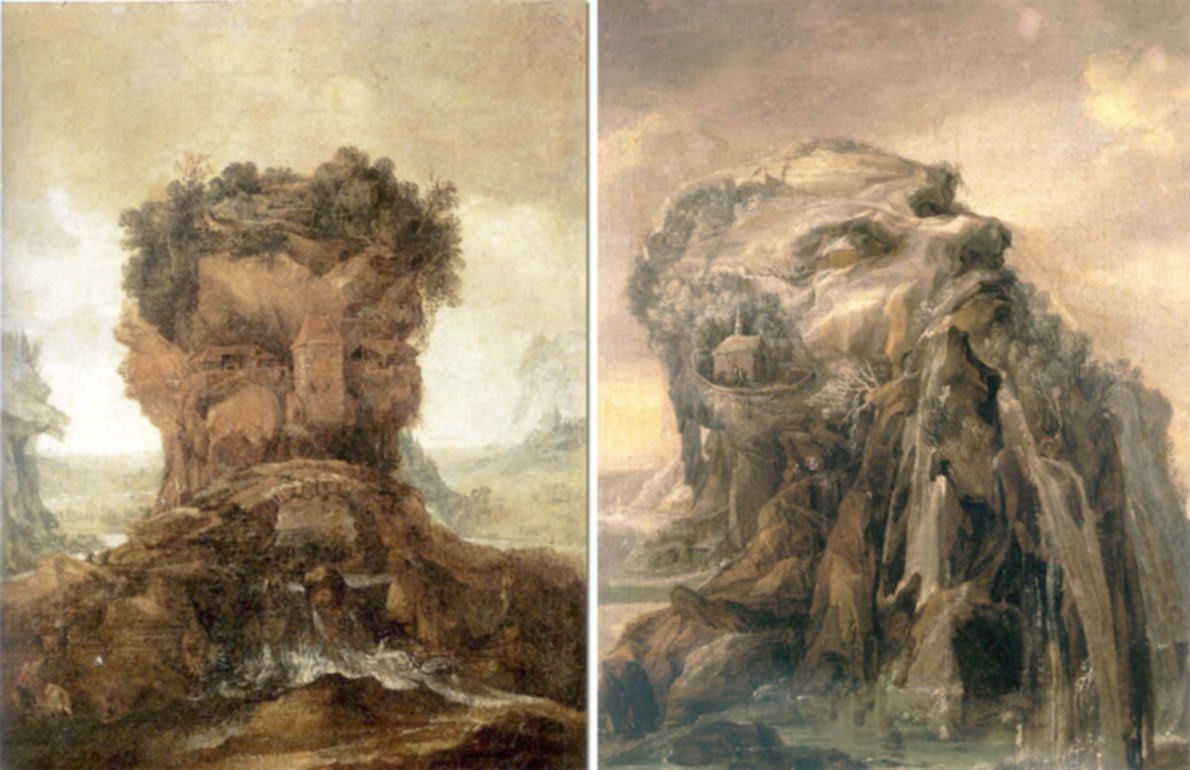
The Cook - We can observe in this image bodies of animals such as a pig and a chicken superimposed, composing part of a human head.
During the sack of Prague, this painting was also taken, as well as other works by Arcimboldo.
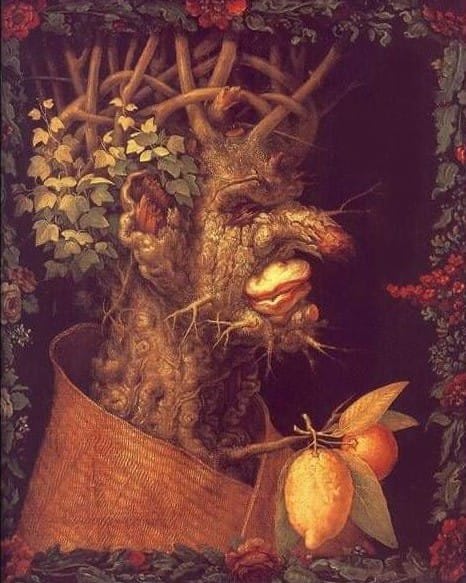
Winter - This painting belongs to the series 'The Seasons', where the human figure is represented by a typical tree of that cold and dry season.