The Creation of Adam by Michelangelo: Details, Meaning, and Hidden Anatomy
The Creation of Adam by Michelangelo: Details, Meaning, and Hidden Anatomy
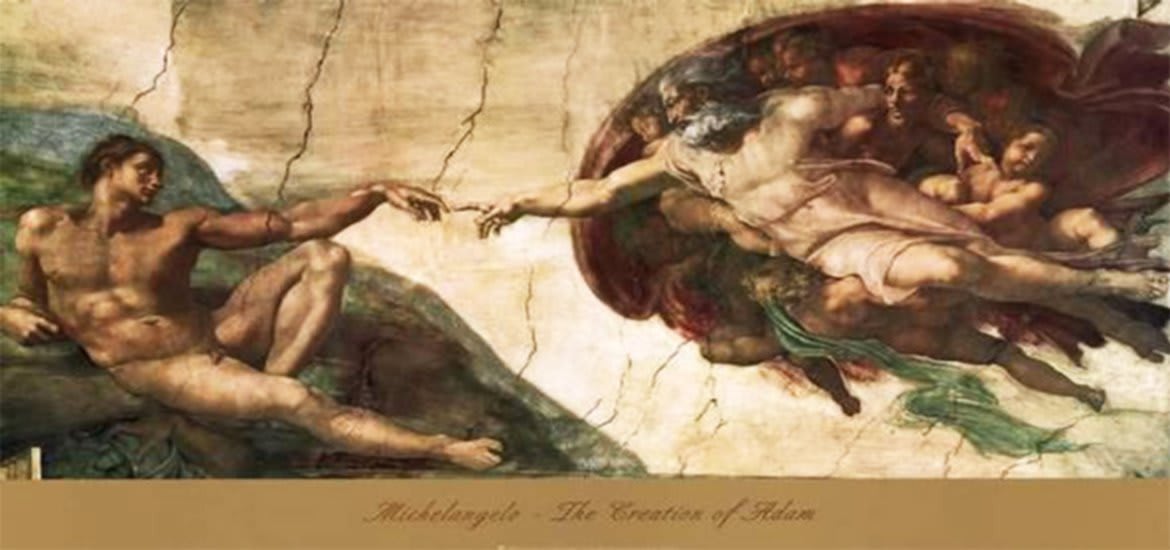
The Creation of Adam is a detail located on the ceiling of the Sistine Chapel that forms part of the scenes of the creation, which were painted by Michelangelo Buonarroti in the 16th century.
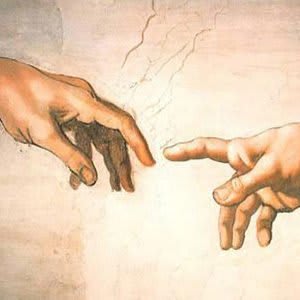
The painting shows the exact moment when Adam receives the energy of life as a gift from God.
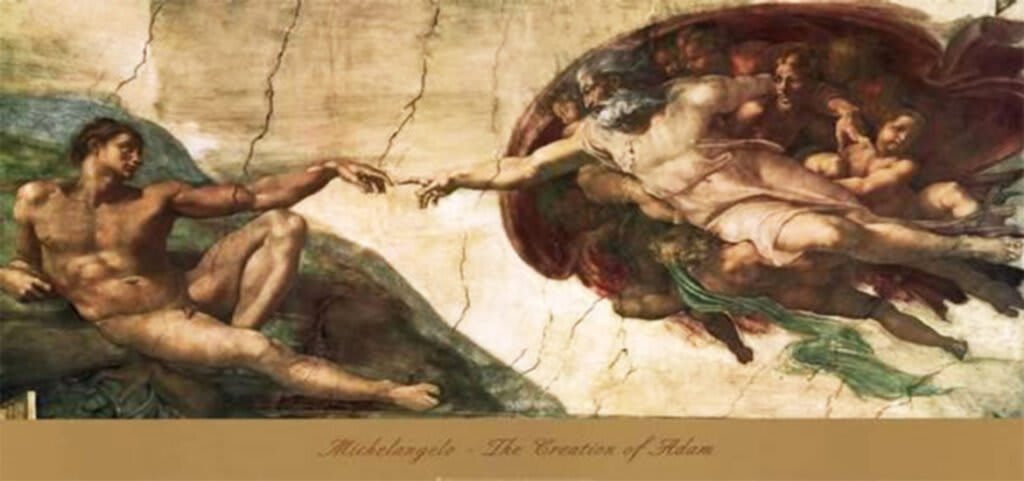
The composition represents one of the scenes that are part of the nine that were depicted from the Book of Genesis by Michelangelo on the ceiling of the Sistine Chapel.
The fingers of both, Adam and God, are expressed in a smooth and strong way, to give sense to the power of creation.
We observe in the scene, that the spark of life is about to happen, the magic of the touch between father and son.
The Space Between the Fingers
The point of greatest magnetism in the entire Sistine Chapel is not a touch, but the absence of it.
Michelangelo chose to leave a millimetric interval between the finger of God, charged with energy and muscular tension, and that of Adam, which rests still without strength, waiting for the awakening.
This strategic void is what defines the drama of the work: it is the exact moment of the "almost", where potential becomes act.
It is in this small space that resides the genius of the Renaissance movement, keeping the viewer in an eternal wait for the contact that will change the destiny of humanity.
The images of the angels, around God in his task, remain in the background, darker.
Many of them blend into the scene, without the individual details of the forms getting lost.
Well defined, Adam is portrayed in his outline, with strong lines, which determines the strength in the moment of creation, his gaze crosses that of God, and those of the angels, focusing the scene on the joined hands of the protagonists of this iconic painting.
The languid body of Adam reclines, almost unable to raise his hand towards the powerful figure of God, who approaches to transmit to him the spark of life.
The Mystery of the Hidden Anatomy
There is a fascinating theory that spans the centuries and connects the art of Michelangelo to science: the silhouette that surrounds God and the angels would, in fact, be a precise representation of a human brain.
If we observe the transverse cut, the curves of the cloak and the figures seem to map sulcus, lobes, and even the encephalic trunk.
For an artist who dissected bodies in secret to understand the musculature, this may have been his most audacious signature: the idea that the "breath of life" given to Adam was not only physical, but the very concession of human intelligence and consciousness.
The Gigantism of the Sistine Chapel
Painting the ceiling of the Sistine Chapel was a challenge that bordered on physical sacrifice.
Unlike the popular myth, Michelangelo did not paint lying down, but standing, on wooden scaffolding designed by himself, with his face turned upwards and the paint dripping over his eyes.
This monumental effort is part of what historians call terribilità - the technical and emotional force that the artist imposed on each fresco, transforming the Vatican's ceiling into one of the greatest narrative complexes in the history of Western art.
Michelangelo demonstrates in this painting, his faith and how much he was an admirer of religion.
His relationship with faith is exactly the opposite of that of Leonardo da Vinci, his great and eternal rival, and who only cared about the rational.
He wrote the biographer Giorgio Vasari:
"His last confession before dying was worthy of the condition of the greatest artist of Catholicism." I feel", he said to Cardinal Salviati, "I have not done enough for the salvation of my soul and die just when I was starting to learn the alphabet of my profession"
This detail of The Creation of Adam has been used countless times and for all sorts of purposes, such as advertisements, films, television, and graphic illustrations.
This demonstrates the celebrity of this icon, which, with more than 500 years of existence, has overcome the limits of time.
The Creation of Adam: DATA OF THE WORK
Title: The Creation of Adam
Author: Michelangelo Buonarroti
Technique: Fresco
Year: 1508-1512
Dimensions: 280 x 570 cm
Location: Sistine Chapel, Vatican
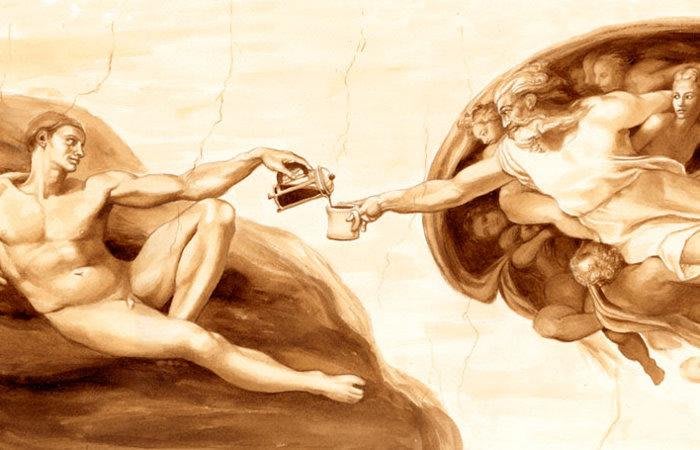
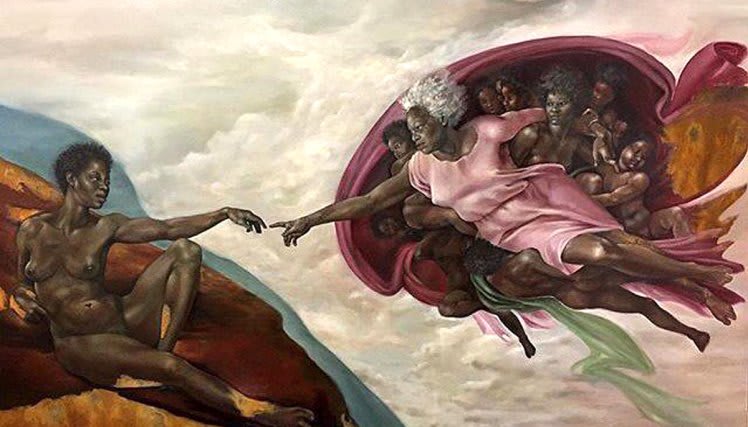
The Creation of Adam: A Painting Very Recreated...
It's incredible how this painting has been reinterpreted over the years, just like the Mona Lisa, belonging to the Renaissance, generating thus much fun and also knowledge of the importance of these works in the universal history of art.
Follow some...