
The Life and Legacy of El Greco: Master of Toledo, Enduring Artistic Influence
Discover the life and work of El Greco in Toledo, Spain, where he solidified his unique style. Learn about his legacy as a painter, sculptor, and architect, his death, and the profound impact of his works on Expressionism and artists like Picasso, with a commented gallery of his most famous pieces.
Article Index
Living in Toledo, El Greco worked as a sculptor and architect, but there are few recorded details of his artistic expression in these forms.
He was a man of great culture and knowledge, a Renaissance man, and it is believed that his library contained all the classical Latin, Roman, Spanish, and Greek literature, including the architectural treatises of Vitruvius, Leon Battista Alberti, Sebastiano Serlio and Andrea Palladio.
In 1585, El Greco moved to the medieval palace of Marqués de Villena, needing a larger studio to produce large-scale paintings.
He enjoyed a stable social life and was close friends with various scholars, intellectuals, writers, and priests.
Between 1597 and 1607, it was a period of great achievements and commissions, being hired to paint several chapels and monasteries simultaneously.
It was one of the most productive phases of his career when he created some of his most important works.
El Greco fell ill and died on April 7, 1614, in the city of Toledo, Spain; he was living a moment of financial comfort and artistic fulfillment.
LEGACY
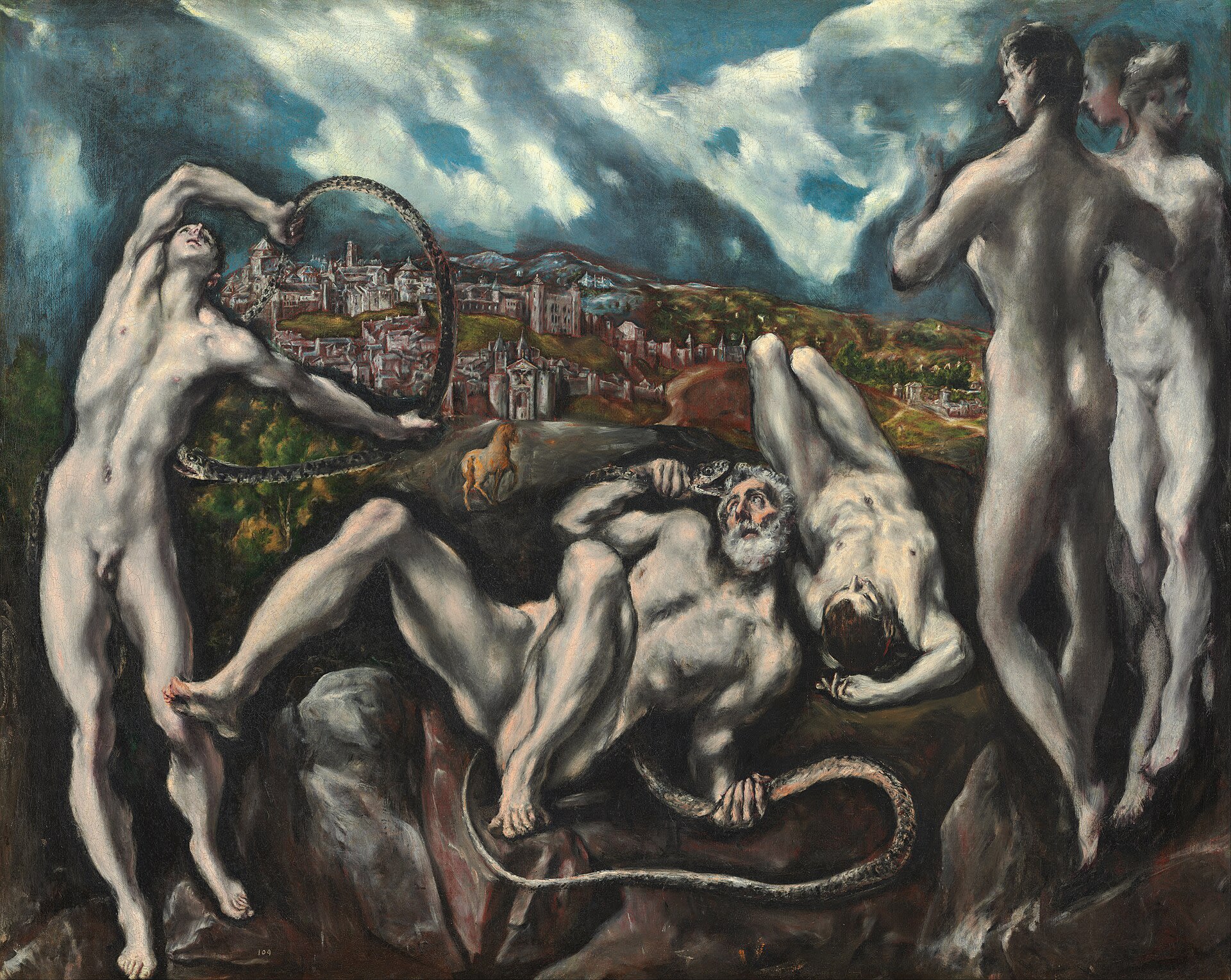
El Greco is generally considered one of the main figures of the Spanish Renaissance that defined the 15th and 16th centuries. Fascinated by his imagination, personal visual style, and overall composition, his work established a foundation for the development of cubism. El Greco exerted a significant influence on Pablo Picasso, who studied his works intensively and saw a modern approach to art through him.
His work laid a significant foundation for the development of Expressionism. We can see a direct link from El Greco in many expressionist landscapes that used a more organic approach to color and form, as in the works of Vincent van Gogh.
Along with the immense influences of El Greco on various art movements and artists, his work remains the spiritual and mystical attributes that establish his universal legacy.
GALLERY - COMMENTED ART

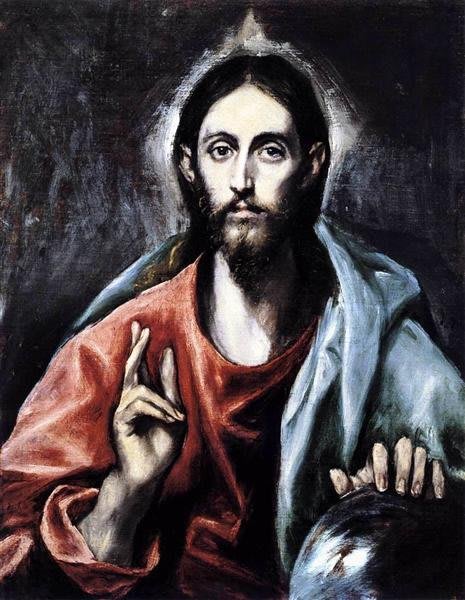
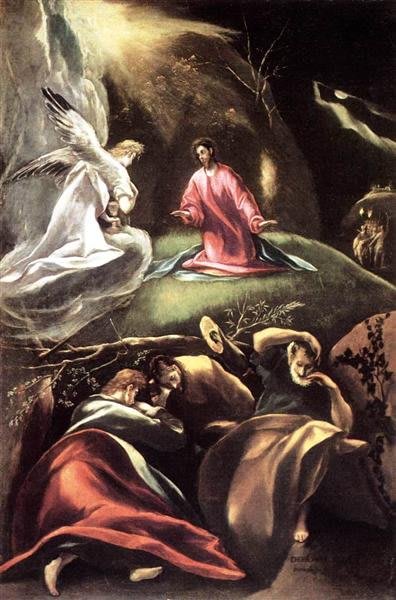
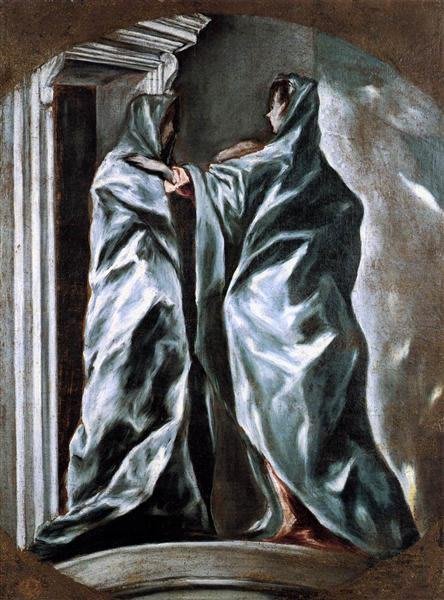
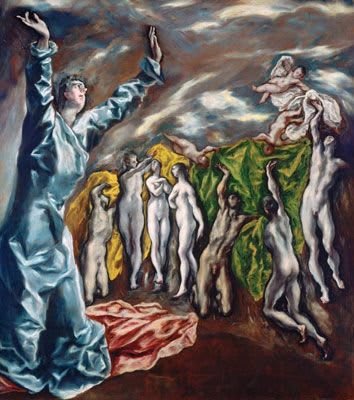
The Vision of Saint John - This large canvas is considered one of El Greco's masterpieces.
It depicts a passage from the Bible that describes the opening of the Fifth Seal at the end of time and the distribution of white robes "to those who were slain for the word of God and for the testimony they held".
In the foreground, we see the elongated figure of Saint John, on his knees with his arms wide open, praying to God above.
Behind him is a group of nude figures reaching for the heavens in search of their robes, some of which are white and others colored.
These are the souls of the martyrs who cry out to God for justice.
This work had a profound influence on Pablo Picasso, who is believed to have studied it deeply, using it as inspiration for the composition of his own masterpiece Les Demoiselles D'Avignon.
The connections can be traced in the dynamic composition created between the various figures in both paintings.


