
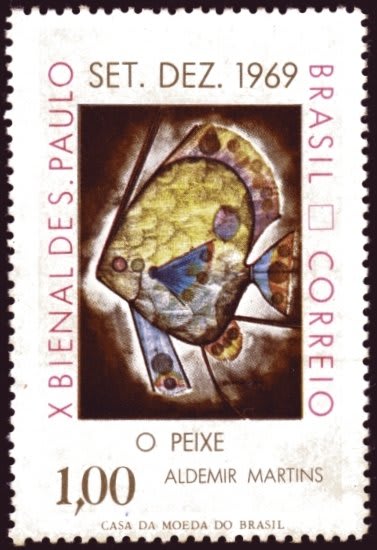
Aldemir Martins Biography and Work: Childhood, Formation, and Early Achievements
Discover the life and art of Aldemir Martins, a renowned Brazilian artist known for his unique style and captivating works.
Article Index
Aldemir Martins, a prominent Brazilian artist, is recognized for his diverse paintings, drawings, and illustrations that depict flora and fauna in a distinctive style, using colors that attract and fascinate the viewer.
Born in 1922, the same year Brazil experienced the effervescence of the Week of Modern Art, Martins was exposed to avant-garde movements like Surrealism in Europe, which was a dominant artistic trend at the time. In Latin America, Frida Kahlo incorporated philosophical ideas into her radical political ideologies to develop a unique form of magical realism, representing this movement.
Writer Jorge Amado once said: "Perhaps because the sun is so violent, the land so harsh, the drought so cruel, the floods so devastating, and the people so poor in a rich land, perhaps to compensate for so much difficulty in facing and overcoming, the suffering people of the Northeast give birth to great creators, poets, novelists, musicians, and painters. Martins is born, more than the Northeast, the Northeast itself."
Biography
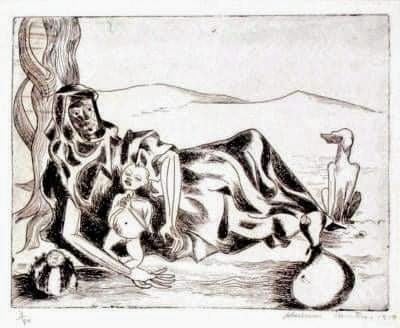
Aldemir Martins dos Santos was born on November 8, 1922, in Ingazeiras, a city located in the Cariri Valley, a district of Ceará, in the northeastern part of Brazil. He was the son of Miguel Souza Martins, a stonemason who worked on building railroads, and Raimunda da Costa Martins. His father's job required the family to move frequently, eventually settling in Flor do Sertão do Sul, near Fortaleza, when Aldemir was around 12 years old.
In 1934, Aldemir was sent to the Colégio Militar de Fortaleza, where he demonstrated artistic talents due to his skill as a stonemason, a trait he acquired from his father. In 1939, he completed his basic education by finishing the ginasial course.
From 1941 to 1945, he served in the army and was appointed as a Cabo Pintor. During this period, he designed the aerophotogrammetric map of Fortaleza, where he participated in a contest promoted by the Oficina de Material Bélico, winning his first prize.
During the 1940s, Aldemir and other artists from his state, including Antônio Bandeira, founded the Sociedade Cearense de Artistas Plásticas, a group aimed at revitalizing the artistic environment in Ceará. He began working as an illustrator for newspapers, magazines, and books. In this period, he exhibited at the II Salão de Pintura do Ceará.
In 1945, the artist, accompanied by other artists, participated in a collective exhibition at the Galeria Askanasi in Rio de Janeiro and also at the Salão Nacional de Belas Artes.
In 1946, he held his first individual exhibition in São Paulo at the Instituto de Arquitetos do Brasil and decided to settle in that city, where he resumed his journalistic activity. At that time, he met many politicians who would become important figures in Brazilian politics, such as Ulisses Guimarães, Roberto de Abreu Sodré, and others.
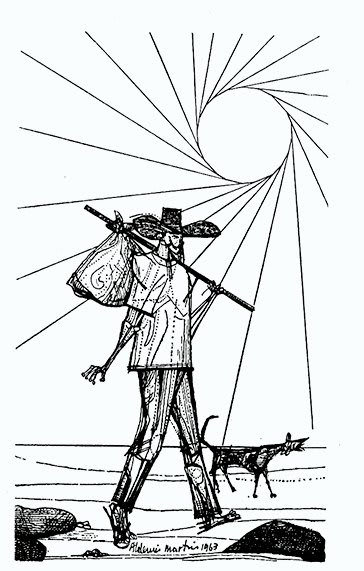
In 1947, he participated in the exhibition 19 Pintores, marking the rise of a new generation of Brazilian artists. In this exhibition, the artist won a 3rd place prize, thus becoming actively involved in other individual and collective exhibitions, receiving various awards.
Between 1949 and 1951, he attended two courses at the MASP (Museu de Arte de São Paulo) on the History of Art with Pietro Maria Bardi and engraving with Poty Lazzarotto. During this course, he produced a series of engravings depicting scenes of the drought in the Northeast. In this work, we see the influence of the artist Candido Portinari. After completing the course, he became a monitor at the institution.
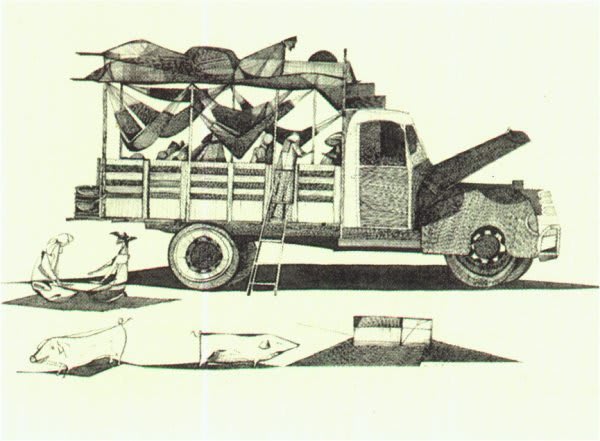
In 1951, the artist embarked on a journey on a pau de arara to observe and draw everything he saw, including women spinning wool, cangaceiros, and, of course, nature. The result of this work was a prize for drawing at the 1st Bienal Internacional de São Paulo.
In 1959, Aldemir received a prize in an exhibition at the Salão Nacional de Arte Moderna and then traveled to Italy, where he stayed for two years, working with applied art to commercial objects.
Upon returning to Brazil in 1962, he created the scenery for the 1st Festival da MPB of the extinct TV Record. During this period, he designed prints for Rhodia Têxtil and also worked on creating sculptures in ceramics and acrylic, as well as jewelry in gold and silver.
To continue understanding this journey, read our next article: Biografia de Aldemir Martins e sua obra: Consolidação da Carreira e Reconhecimento Nacional.


