
Andy Warhol: The Pop Art Maestro and the Factory that Shook the World
Andy Warhol: The Pop Art Maestro and the Factory that Shook the World
Article Index
The maestro poured his soul into painting the ceiling of the world's most renowned chapel.
Astonishingly, he toiled for over four years under conditions that were almost suffocating.
The Dawn of a Pop Revolution: Advertisements and Comic Strips
In 1960, Andy Warhol began integrating visual elements from advertisements and comic strips into his oeuvre.
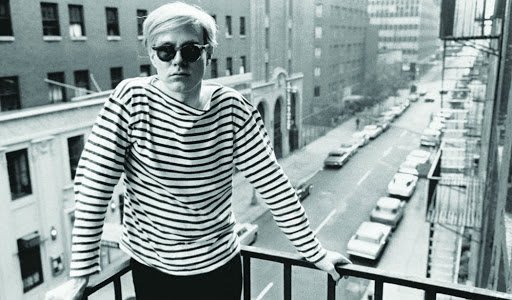 Keeping these themes central, his paintings from the early 1960s were primarily drawn from illustrated imagery found in print media and graphic design.
This approach profoundly redefined how art could engage with mass culture.
The dissolution of the boundary between the commercial and the artistic was also explored decades prior by iconic figures of French bohemia: The Dance at the Moulin Rouge, by Toulouse-Lautrec
 Andy Warhol harbored a lifelong fascination with Hollywood.
This was vividly showcased in his iconic series of celebrity images, featuring Marilyn Monroe and Elizabeth Taylor.
Venturing into New Mediums: Cinema and Publications
Driven by a desire to broaden his artistic exploration across various mediums, Warhol embarked on his film experiments in 1963.
He produced approximately 600 films between 1963 and 1976.
These productions ranged in duration, from a mere few minutes to an ambitious 24 hours.
Warhol had also been publishing artist books since the 1950s.
His first mass-produced book, the distinguished Andy Warhol's Index, saw publication in 1967.
The Pivotal Shift: Lexington Avenue and Campbell's Soups
In September 1960, Warhol relocated to a house at 1342 Lexington Avenue, nestled within Manhattan's Upper East Side.
This relocation heralded the commencement of his most prolific period.
Unlike the confined studio in his previous apartment, where he resided with his mother, he now commanded ample space to work unreservedly.
By late 1961, Warhol commenced crafting his renowned series of Campbell's soup cans.
The series employed diverse techniques, yet most of the works were conceived by projecting source images onto the canvas, tracing them in pencil, and ultimately applying paint.
In this manner, Warhol effectively expunged most traces of the artist's direct manual intervention.
The Age of Silkscreen Printing and "The Factory"
In 1962, Warhol deepened his exploration of silkscreen printing.
This stencil process entailed transferring an image onto a porous screen, with the ink applied via a rubber squeegee.
This technique served as another painting medium, simultaneously eradicating the artist's hand-drawn marks, akin to the approach taken with the Campbell's soup can images.
Furthermore, silkscreen printing enabled him to replicate the motif multiple times within a single image.
This yielded a serialized image that directly intimated mass production.
However, the profound inquiry into art was only just commencing:
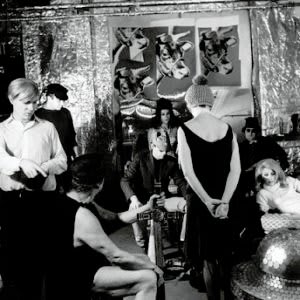
In 1964, Warhol relocated to 231 East 47th Street, christening the space "The Factory."
Having achieved considerable success as an artist by then, he could enlist numerous assistants to aid him in executing his projects.
This marked a pivotal turning point in his career.
Now, with the backing of his team, he could remove his hand from the creative process even more decisively on the canvas.
He began fabricating repetitive, mass-produced images that appeared devoid of inherent meaning.
These works ignited the profound question: What truly constitutes art?
This concept was initially posited by Marcel Duchamp, an artist whom Warhol held in profound admiration.
He also orchestrated an innovative project dubbed The Exploding Plastic Inevitable (EPI).
This was a multimedia production that fused the rock band The Velvet Underground with film projections, light, and dance, culminating in an unforgettable sensory experience of Performance Art.
Transgression through body and performance also resonated with pivotal figures in Brazilian modern art: Flávio de Carvalho
Beyond his artistic contributions, Warhol established Interview Magazine alongside his confidant, Gerard Malanga.
Warhol's Enduring Legacy: Repetition and Provocation
It is undeniable that Warhol experimented extensively with cinema.
He created over 600 films between 1963 and 1976, with durations ranging from a few minutes to 24 hours.
His foray into filmmaking officially commenced in 1963, signaling a new chapter in his pursuit of artistic expressions.
With the assistance of his aides at "The Factory," Warhol succeeded in further detaching his manual intervention from the canvas, with even greater emphasis.
This strategy facilitated the creation of repetitive, mass-produced images that deliberately appeared devoid of inherent meaning.
They compelled the audience to confront the fundamental query: What truly constitutes art?
In 1967, Warhol released his first book aimed at the general public, the influential Andy Warhol's Index.
It is noteworthy that he had already been issuing artist books since the 1950s, demonstrating a steadfast commitment to his passion for the printed word.
To delve deeper into the remainder of this creative phase, we invite you to explore our subsequent article:
Andy Warhol, biography and main works: From High Society to Creative Resurgence and Legacy.


