
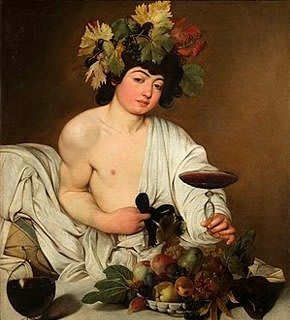
Pintura barroca a óleo de Caravaggio, retratando Bacchus jovem, nu, com vinho e folhas de videira em tons de verde e amarelo.
Arquivo

Bacchus - Analysis of the Painting by Caravaggio

Bacchus - Analysis of the Painting by Caravaggio

A

Arthur

Curadoria Histórica

Compartilhar:
Publicidade (Active View 100%)Espaço AdSense em LazyLoad
(Sem Penalidade CLS)

Caravaggio's painting 'Bacchus', completed around 1597, portrays the Roman god of wine in all his glory and splendor.

The work is a powerful and realistic representation of Bacchus, with his luminous skin and flowing robes, holding a cup of wine and looking directly at the viewer.
Patrocínio
Publicidade (Active View 100%)Espaço AdSense em LazyLoad
(Sem Penalidade CLS)
Bacchus - Analysis of the Painting by Caravaggio

Caravaggio uses his characteristic technique of light and shadow, known as chiaroscuro, to highlight the figure of Bacchus and create a dramatic effect.

The serene and confident expression of Bacchus contrasts with the dark background, creating a strong sense of presence and visual impact.

Bacchus: a masterpiece by Caravaggio

Bacchus is an important work by Caravaggio, considered one of the most beautiful paintings of the early part of his career.

It was executed shortly after he arrived in the city of Rome in 1589.

It is his first obviously classical work.

Surprisingly, he took more than 4 years working in almost suffocating conditions.

Bacchus is a work that portrays the Roman god of wine in all his glory and splendor.

The painting is a powerful and realistic representation of Bacchus, with his luminous skin and flowing robes, holding a cup of wine and looking directly at the viewer.

Caravaggio uses his characteristic technique of light and shadow, known as chiaroscuro, to highlight the figure of Bacchus and create a dramatic effect.

The serene and confident expression of Bacchus contrasts with the dark background, creating a strong sense of presence and visual impact.

Bacchus is a work that portrays the Roman god of wine in all his glory and splendor.

The painting is a powerful and realistic representation of Bacchus, with his luminous skin and flowing robes, holding a cup of wine and looking directly at the viewer.

Caravaggio uses his characteristic technique of light and shadow, known as chiaroscuro, to highlight the figure of Bacchus and create a dramatic effect.

The serene and confident expression of Bacchus contrasts with the dark background, creating a strong sense of presence and visual impact.

Bacchus is a work that portrays the Roman god of wine in all his glory and splendor.

The painting is a powerful and realistic representation of Bacchus, with his luminous skin and flowing robes, holding a cup of wine and looking directly at the viewer.

Caravaggio uses his characteristic technique of light and shadow, known as chiaroscuro, to highlight the figure of Bacchus and create a dramatic effect.

The serene and confident expression of Bacchus contrasts with the dark background, creating a strong sense of presence and visual impact.

Meaning and symbolism

Bacchus is a work that portrays the Roman god of wine in all his glory and splendor.

The painting is a powerful and realistic representation of Bacchus, with his luminous skin and flowing robes, holding a cup of wine and looking directly at the viewer.

Caravaggio uses his characteristic technique of light and shadow, known as chiaroscuro, to highlight the figure of Bacchus and create a dramatic effect.

The serene and confident expression of Bacchus contrasts with the dark background, creating a strong sense of presence and visual impact.

What the painter sought to characterize was the delicate body to sensuality instead of an infected soul by Christianity, transfigure the paganism of the image into hidden Christian symbolism.

In his time, this was a revolutionary concept and made Caravaggio literally unparalleled in his days.

The knowledge of some of these meanings may have made the image acceptable to the connoisseurs of the time.

The astute and dreamy eyes speculate about carnal things and promise gratification of the senses, not the spirit, as “love cools without wine and fruits”.

However, the possibility of a underlying moral, however bizarre it may seem, is contradicted by appearances and cannot be totally ignored.

The touch of incidence placed on the still life – the wormhole that ruined the apple or the pomegranate that exploded – suggests the theme Vanitas (translate the Hebrew word hevel, which included the concept of transience), that the boy is triumphant only in his youth.

TITLE - Bacchus

YEAR -  1596

TECHNIQUE - Oil on Canvas

SIZE - 85.1 x 94.9

LOCATION - Uffizi Gallery (Florence, Italy)

Publicidade
Publicidade (Active View 100%)Espaço AdSense em LazyLoad
(Sem Penalidade CLS)

Follow us on Instagram

@arteeartistas
© 2016 - 2026 Arte e Artistas desenvolvido por Agência WEB Solisyon • Todos os direitos reservados.