
Biography of Auguste Renoir and His Major Works: Maturity and Challenges
Discover the life and art of Auguste Renoir, from his early days as an impressionist to his later years as a master painter.
In 1880, while dining at a dairy shop where he often ate, Renoir met Aline Charigot. Friendship blossomed into love, and Aline became his model and wife
For the rest of his life.
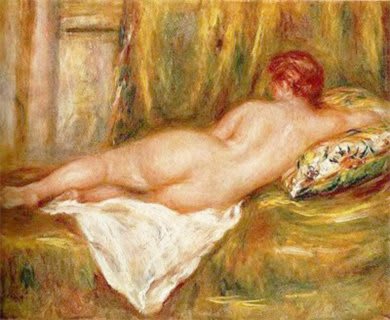
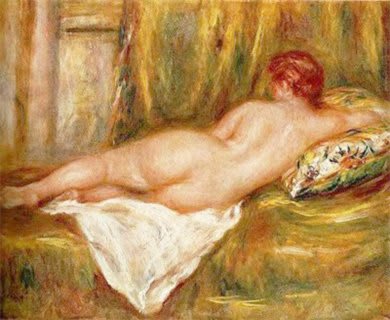
In 1879, at the headquarters of the magazine La Vie Miderne, Renoir held his first solo exhibition. He gradually distanced himself from the impressionists. From 1881 onwards, the so-called "rough" or "bitter" period, known by some in his work, began. Renoir valued the contours of the figures more and the colors became more opaque. Although known as an impressionist, he dedicated himself to this movement only a small part of his life. At the end of the 1870s, he declared that the impressionist experience was partially exhausted, preferring to freely explore other styles.
As Renoir sought a more structured aesthetic, other masters of his generation were also navigating their own creative evolutions. Auguste Rodin: Birth, Struggle, and Early Notable Works (Chapter 1/3)
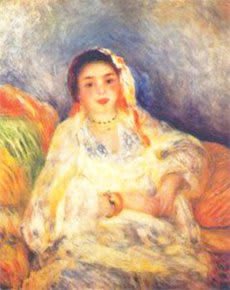
But history has a curious detail: In 1881, he traveled to Algeria with his friend Corday to see the country that had been a source of inspiration for Delacroix. In Algeria, he painted several landscapes and portraits of Algerian women.
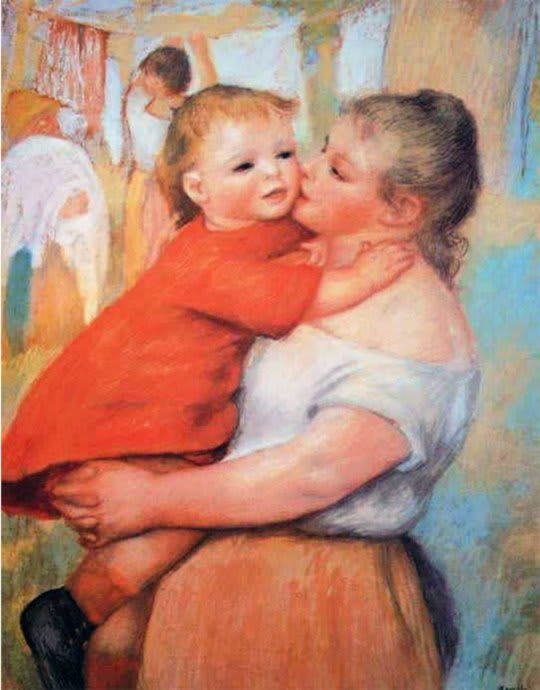
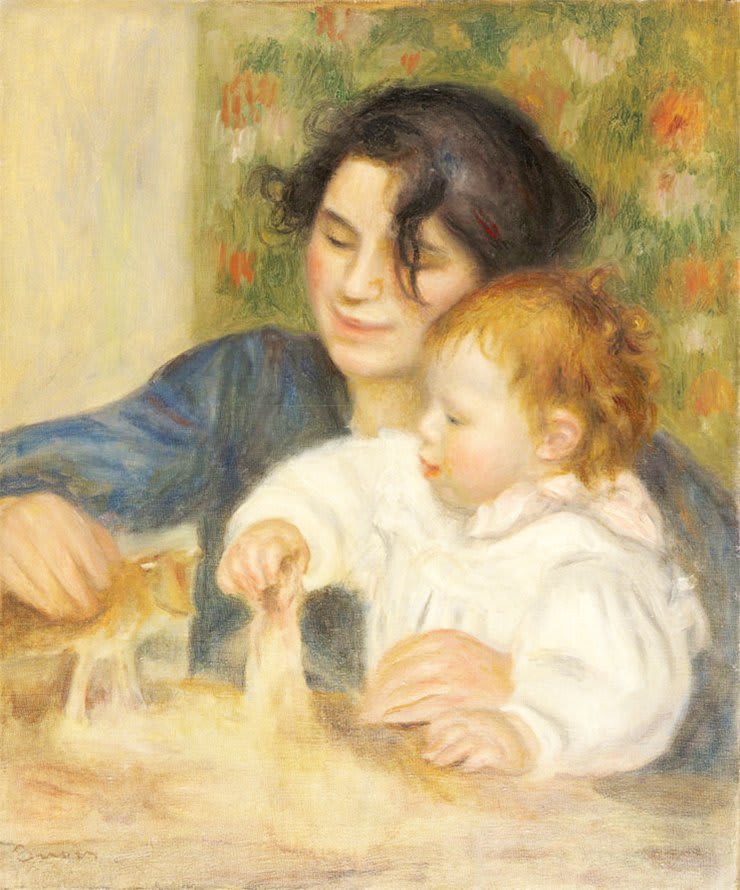
In 1884, when Aline was expecting a child, the artist decided to move to a new studio and a new apartment where their first child, Pierre, was born. From then on, Renoir dedicated himself entirely to family life; his favorite models would be the woman and the children.
A significant change: Between 1885 and 86, Renoir painted different versions of motherhood, all intense and full of charm. Mother and child were the subject of numerous paintings, pastels, blood-red drawings, and pen nibs.
In 1903, after some time spent in Le Cannet, he rented a spacious apartment in the Maison de la poste, in Cagnes. From his window, he could see the city and its surroundings bathed in the warm sun of Provence, the bright colors standing out due to the proximity of the sea.
In 1917, Renoir received a visit from a young painter named Henri Matisse, who was visibly interested in studying the work of the famous painter and transporting his ideas about color to a new era, and ended up becoming his friend.
A pivotal moment: In June 1914, the assassination of Archduke Franz Ferdinand led to the outbreak of World War I. France called up its men in August: Pierre enlisted in the 4th Infantry Regiment and Jean became a sergeant in the 1st Dragoon Regiment.
In 1910, Renoir painted a self-portrait that shows Renoir's open and happy attitude towards life.
Renoir’s serene self-representation provides a striking contrast to the psychological depth explored by other artists through their own likenesses. Van Gogh's Self-Portraits

The last 30 years of Renoir's life were filled with glory and arthritis. In periods of crisis, he sought relief from his pain in hydrotherapy. Even restricted to a wheelchair, with increasingly severe joint deformities, he tried to adapt by asking them to tie his fingers to the brush.

To understand the rest of this journey, continue to our next article: Biography of Auguste Renoir and His Major Works: Legacy and Essential Gallery.


