Eliseu Visconti
Eliseu Visconti is celebrated as one of the most vital Brazilian artists of his era, recognized as the most articulate proponent of Impressionist painting in the country. A masterful painter, illustrator, and designer, his work undeniably shaped Brazilian art as the 20th century dawned.
Eliseu Visconti is widely regarded as one of Brazil's most consequential artists of his period, indeed the most eloquent exponent of Impressionist painting in the country.
He was a Brazilian painter, illustrator, and designer, primarily celebrated for his impactful contributions to Brazilian art around the turn of the 20th century.
Eliseo d'Angelo Visconti was born in Italy, specifically in Giffoni Valle Piana on July 30, 1866. He relocated to Brazil as a young man, quickly becoming a prominent force in the nation's artistic landscape.
In 1882, Visconti enrolled at the Liceu de Artes e Ofícios do Rio de Janeiro (Lyceum of Arts and Crafts of Rio de Janeiro), where he commenced his painting studies. His raw talent immediately captivated the attention of the Lyceum's professors, among them the highly esteemed academic artist, Victor Meirelles.
In 1885, spurred by Emperor D. Pedro II's desire to recognize his burgeoning talent, Visconti also joined the AIBA – Academia Imperial de Belas Artes (Imperial Academy of Fine Arts). At the Academy, Visconti received direct instruction from professors Victor Meirelles, José Maria de Medeiros, Zeferino da Costa, Henrique Bernardelli, and Rodolpho Amoedo.
By 1890, an assembly took shape, held from June 16 to 21, drawing students and professors from the Academy. Its aim was clear: to foster a closer relationship between modernists and positivists. Then, in the middle of that year, a joint proposal, a result of agreement between both groups, was forwarded to Benjamin Constant, the Minister of the Interior charged with reforming the Academy. That very year, with the Republic's government approving the suggested reform, the Escola Nacional de Belas Artes (National School of Fine Arts) was established. Henrique Bernardelli and Rodolpho Amoedo, both professors from the overseeing committee, were subsequently appointed director and vice-director, respectively.
The Republic's inaugural competition took place in 1892, with the grand prize being a scholarship to study in Europe. Eliseu Visconti entered and triumphed in the very competition he had so deeply yearned for, thus becoming the first Republic scholar under the National School of Fine Arts.
In Paris, he immersed himself in studies at the École des Beaux-Arts, and soon found himself profoundly shaped by both Impressionism and Post-Impressionism, drawing particular inspiration from the canvases of masters such as Claude Monet and Pierre-Auguste Renoir. The year 1893, with the Belle Époque in full swing, saw Impressionists and artists aligned with Symbolism and Art Nouveau dominating the scene; the restless Visconti, naturally, couldn't remain untouched by these potent intellectual currents permeating Paris at the critical turn of the 19th to 20th century.
To understand how art continued to evolve beyond these early modern currents, consider the emergence of Fauvism
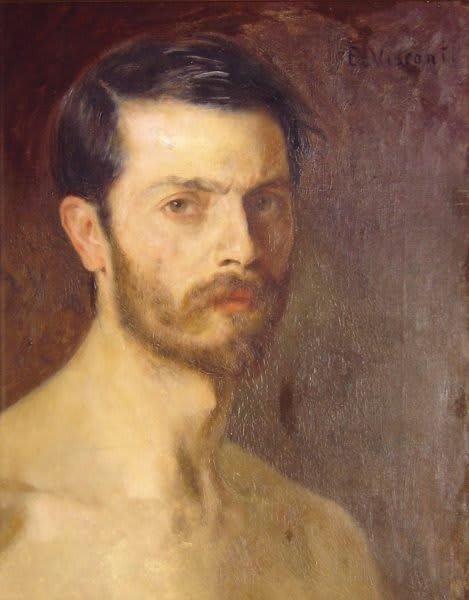
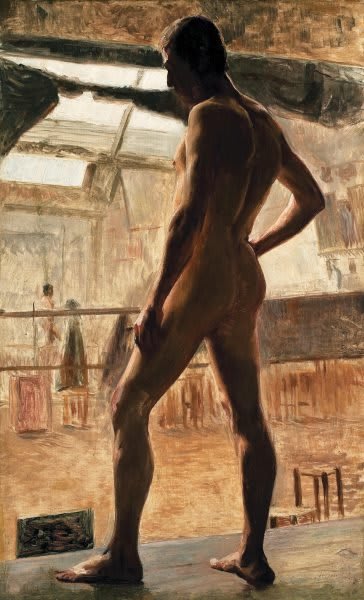
By 1894, he chose to frequent only the Académie Julian, a space where he discovered greater latitude to execute his paintings and drawings, crucially, with live models. The artist began to fundamentally transform his painting—not just in subject matter, but also in formal language, and consequently, in technique—responding directly to the movements he was encountering. Capitalizing on the vibrant environment surrounding him, Visconti brightened and expanded his palette, openly absorbing distinct influences from the Impressionist movement.
In 1898, as his scholarship period in Europe drew to a close, the artist opted to remain in France independently. He only returned to Brazil after the Universal Exhibition of 1900, leaving behind in Paris the young Frenchwoman Louise Alexandrine Palombe, then just 18 years old. Her parents had forbidden her from accompanying the artist back to Brazil. The couple would need several years to overcome her parents' resistance and formalize their union; she would remain his life partner until his dying day.
To explore the diverse landscape of Brazilian art in the 20th century, you might also appreciate the work of Iberê Camargo
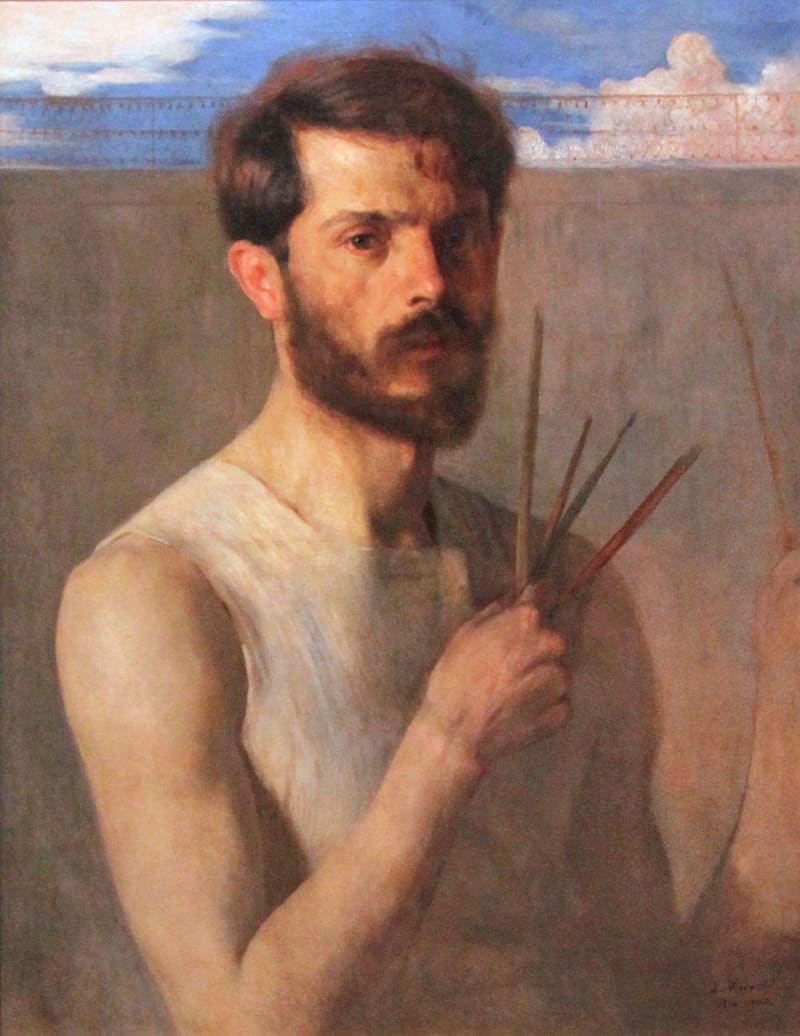
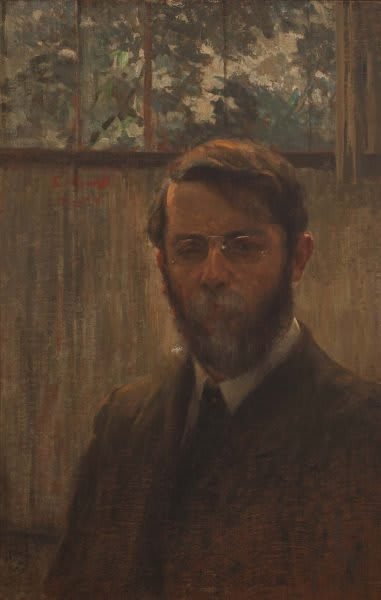
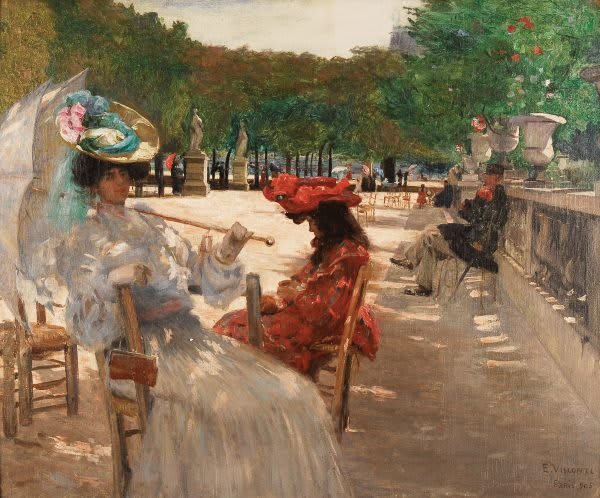
He journeyed back to Europe in 1904, resuming his artistic pursuits once more at the Académie Julian. In 1905, he exhibited at the Paris Salon, earning high acclaim as a portrait painter. His command of portraiture, honed by his profound studies of Diego Velázquez, positioned his portraits among the most exquisite in Brazilian art history.
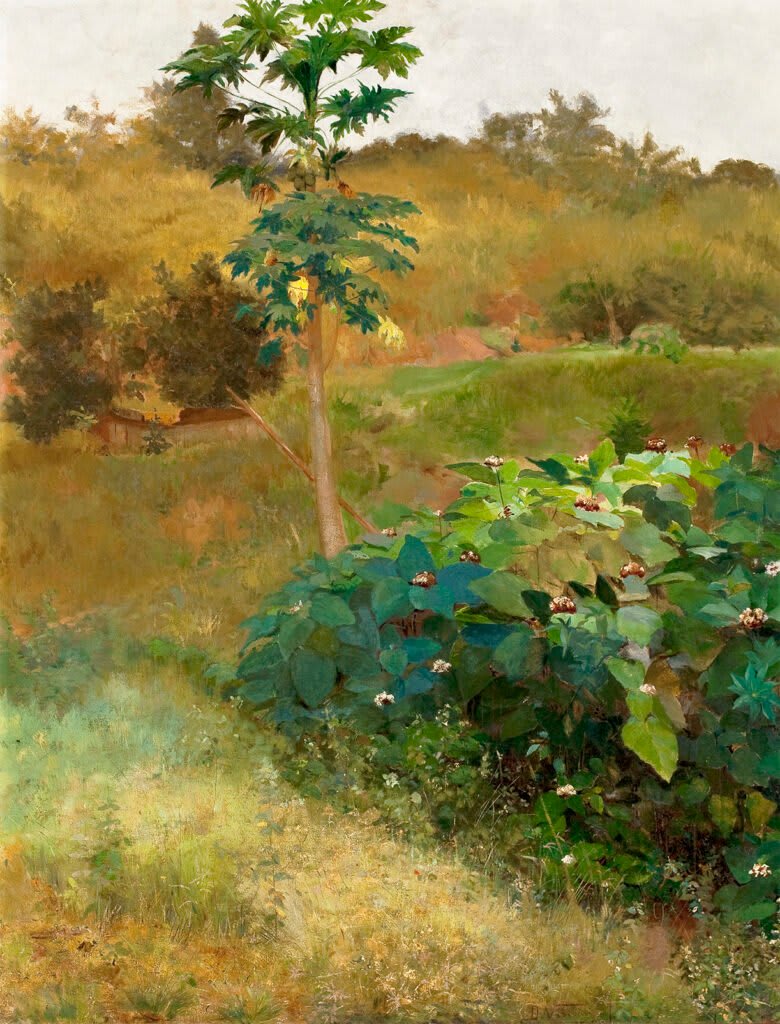
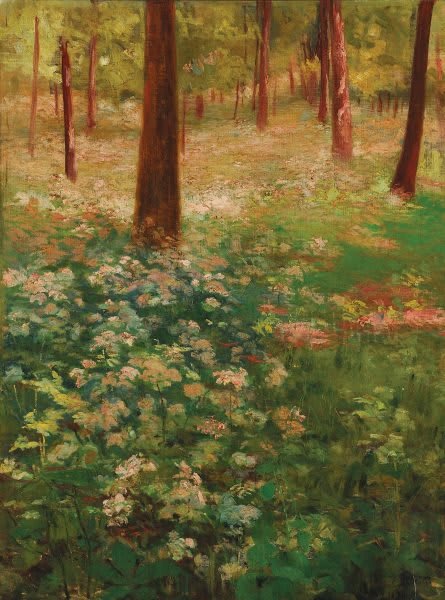
Visconti, a deeply dedicated artist, produced numerous easel paintings. He immersed himself in plein-air painting, with landscapes becoming a central theme, giving rise to the well-known canvases "Jardim de Luxemburgo" (Luxembourg Garden) and "Maternidade" (Maternity).
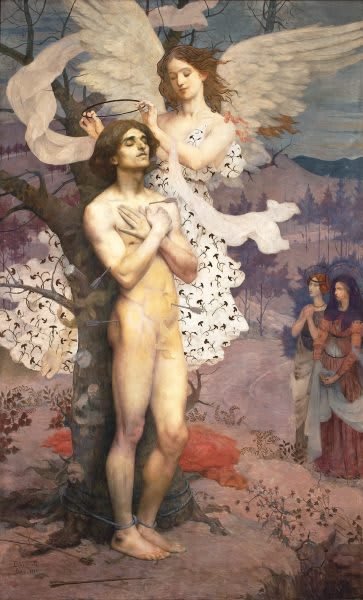
His style matured over his career, yet he is most readily recognized for his Impressionist landscapes, portraits, and allegorical compositions. He also functioned as a designer, crafting decorative panels, stained-glass windows, and various other ornamental elements for public edifices across Brazil.
Though considered by many to be a modernist, his absence from the Week of Modern Art of 1922 resulted simply from not receiving an invitation; still, he followed the event with keen interest. Pietro Maria Bardi, in an interview with IstoÉ Magazine, famously remarked: “He wasn't invited. They forgot the only truly modern artist of his time, and that was Visconti.”
He passed away in Rio de Janeiro on October 15, 1944, at the age of 78. Throughout his career, he garnered numerous awards and accolades for his significant contributions to Brazilian art. Today, his works are highly esteemed and prominently displayed in major museums and collections, both in Brazil and around the globe. He remains an utterly pivotal figure in the narrative of Brazilian art.
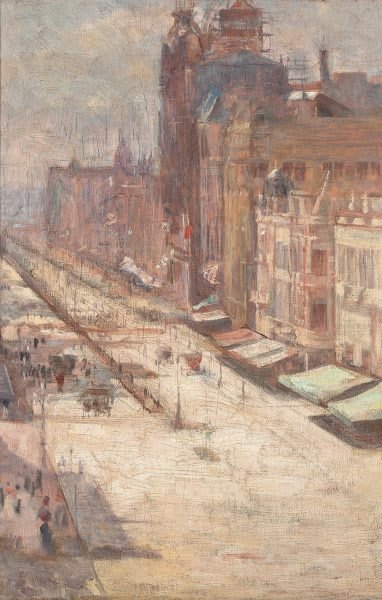
Eliseu Visconti, modern before modernism - Regarding his painting Avenida Central, a landscape so eloquently depicting Brazilian modernity, Paulo Herkenhoff wrote: “Visconti ingeniously adapts the challenges of Impressionist painting to Rio de Janeiro's climate. The hazy, atmospheric effects of Avenida Central — a filter of solar refraction in a humid atmosphere — evoke, though distinctly, the mist or haze of the Serra do Mar, as seen in the paintings of Visconti and Guignard, and indeed the effects of snow found in the white canvases of Courbet, Monet, and Cézanne…. Visconti's painting is prophetic of the inevitable modernity that would take hold in Rio, just as in other cities. From this perspective, Avenida Central was, and remains, a fundamental painting for grasping Brazil's entry into the modern age.”
For a deeper dive into another pioneering Brazilian artist who shaped the nation's contemporary art scene, explore the contributions of Hélio Oiticica and His Main Works