Almeida Júnior: Biography and Works
Discover the life and art of José Ferraz de Almeida Júnior, one of the most important Brazilian painters of the 19th century.
We invite you to explore the life and work of José Ferraz de Almeida Júnior, one of the most important Brazilian painters of the 19th century.
Born in 1850 in Itu, São Paulo, Almeida Júnior is known for his works that depict everyday life and rural scenes in Brazil.
He studied at the Imperial Academy of Fine Arts in Rio de Janeiro and later at the Academy of Fine Arts in Munich, Germany, where he was exposed to realism and impressionism.
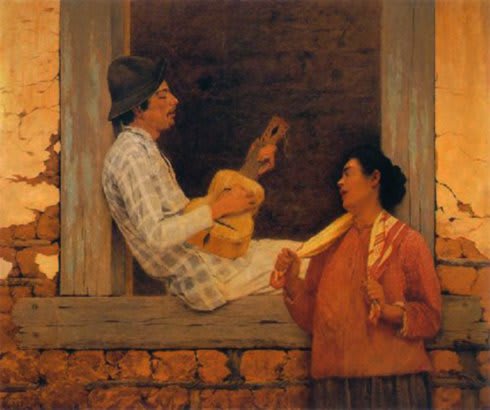
His most famous works include 'The Rest' and 'Caipira Smoking Tobacco,' which capture scenes of rural Brazil with great realism and sensitivity.
Almeida Júnior also excelled at portraiture, capturing the personality and humanity of his subjects with mastery.
Tragically, Almeida Júnior died at the age of 34 in 1899, leaving behind a legacy that influenced generations of Brazilian artists.
His works continue to be admired for their technical quality and their ability to capture the essence of the Brazilian people and life in 19th-century Brazil.
José Ferraz de Almeida Júnior was born in the city of Itu (São Paulo) on May 8, 1850.
The National Artist's Day is celebrated on his birthday in his honor.
Respected by all critics, he is considered the precursor of the modernists.
A realist painter, he was concerned with highlighting on the canvas the common man in his daily life, inserting typical Brazilian characters, which contrasted with the monumentalism that had previously dominated Brazilian plastic arts.
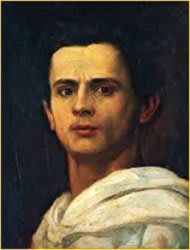
He entered the AIBA (Imperial Academy of Fine Arts) in 1869.
He had drawing classes with Jules Le Chevrel and the honor of being a student of Victor Meirelles.
He completed his studies at the AIBA in 1874 when he returned to his hometown.
In Itú, he opened his first atelier in 1875, acting as a professor and an excellent portraitist.
During a visit to the interior of São Paulo, Emperor Dom Pedro II was impressed with his work and granted him a scholarship to study in Europe.
He lived in Paris between 1876 and 1882, where he studied at the École National Supérieure des Beaux-Arts, under the tutelage of Alexandre Cabanel. During his time in Paris, he participated in four editions of the Salon Officiel des Artistes Français.
Upon returning to Brazil in 1882, he exhibited his paintings produced in the French capital at the AIBA.
In 1883, he set up a studio in the Cambuci neighborhood, in São Paulo.
The experience he gained studying in France contributed to the formation of new generations of painters, including Pedro Alexandrino.
Almeida Júnior died tragically at the age of 49.
His cousin José de Almeida Sampaio stabbed him in front of the Hotel Central de Piracicaba, in the interior of São Paulo.
He was married to Maria Laura do Amaral Gurgel, with whom he maintained a secret relationship for several years.
Out of revenge, his cousin killed him when he discovered the lovers' betrayal.
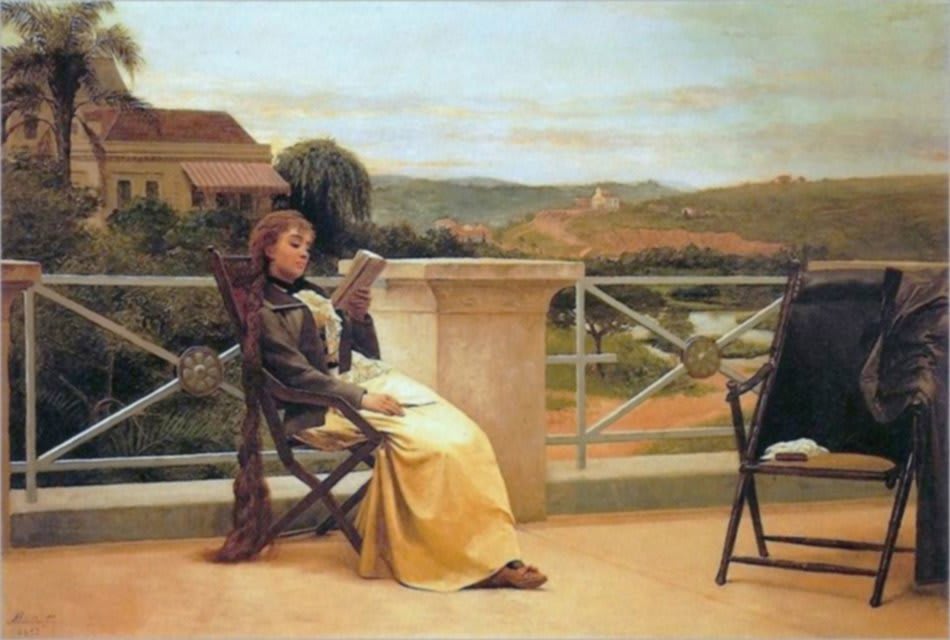
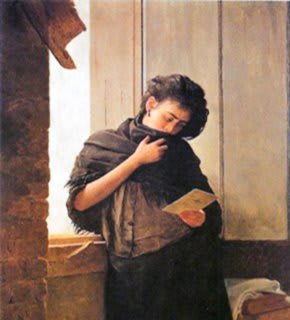
Some art historians believe that the woman in the painting is Maria Laura, reading a letter or photograph.
This painting was made in his studio in São Paulo, in the Cambuci neighborhood.
The Pinacoteca do Estado de São Paulo – which in 2000 held an exhibition in his honor, when several contemporary artists created reinterpretations of some of his works – has a valuable collection of his work.
Some of his works can also be seen at the Museu Nacional de Belas Artes, in Rio de Janeiro, and the Museu de Arte de São Paulo, among others.
Almeida Júnior and his work
Undoubtedly, the artist innovated with the treatment of light in his painting, which is still commented on and appreciated today, as well as the themes he chose for his compositions, where he values the common man, leading some critics to compare him with the realist painter Gustave Courbet, an artist he had contact with his works when he traveled to Europe.
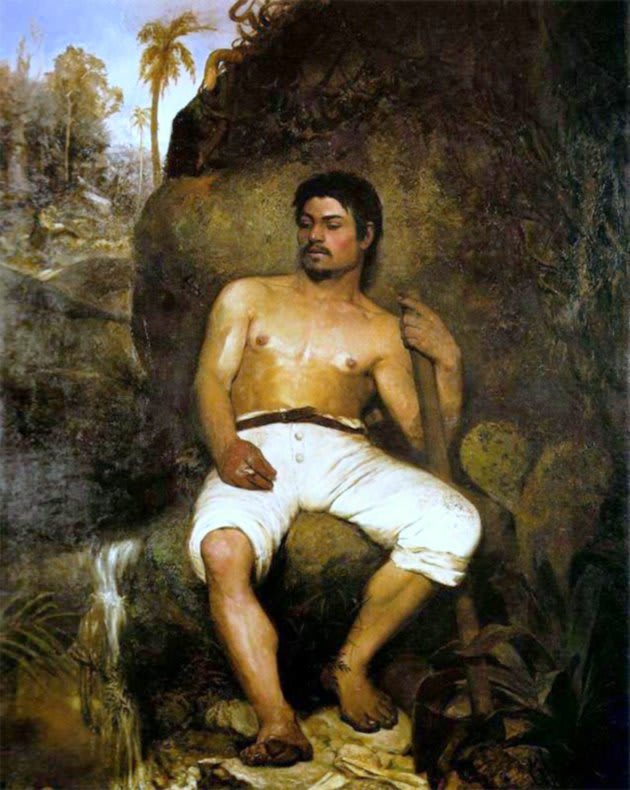
Even at the end of the 19th century, when academic characteristics dominated Brazilian art, Almeida Júnior was the first to paint the rural man, his environment, customs, and way of life in the interior.
An important characteristic of the artist's work is the narrative painting.
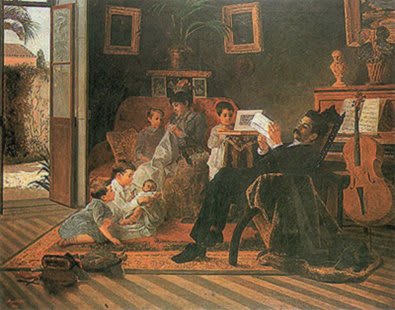
His paintings realistically depict everyday life in the countryside, in small towns, and in homes during that time, as in the painting he made on commission for the engineer Adolfo Augusto Pinto, which shows his family at home.
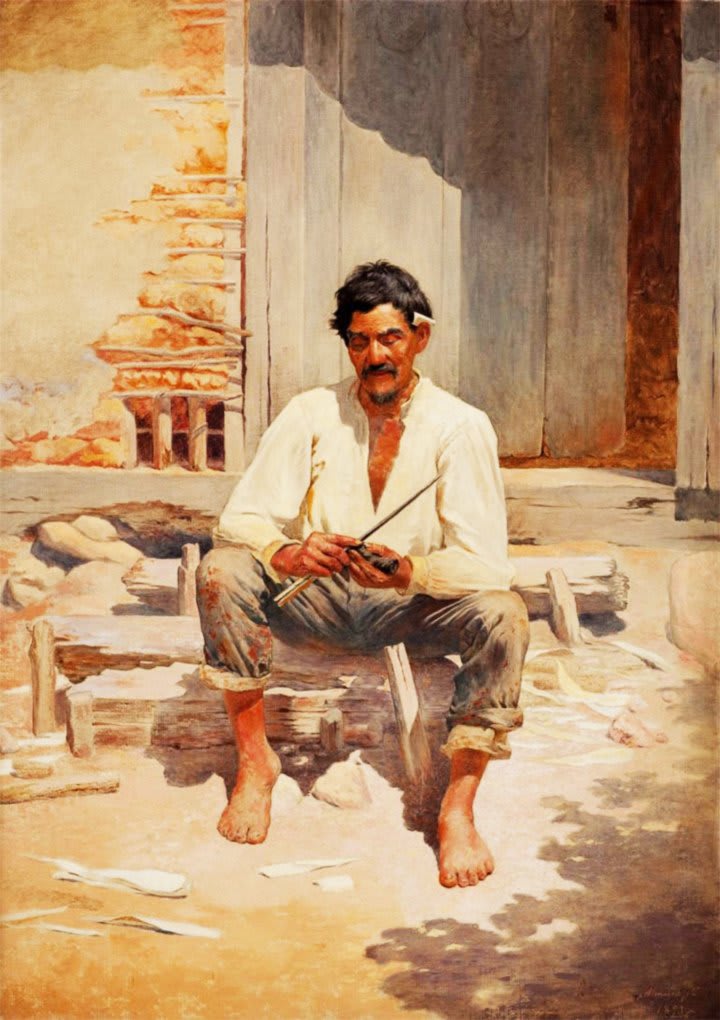
Caipira Smoking Tobacco is considered one of his most important and famous works.
To choose the title of this painting, its author probably sought the meaning of the word "Caipira", which means "cutter of grass". The man on the canvas was known in the region as Quatro Paus, and Almeida Júnior interpreted him as such, as he was a laborer on a coffee plantation in the region.
The narrative painting that is a constant in the artist's work always suggests the presence of a second character or others who do not appear in the painting.
In Saudade, for example, we have a woman with a letter or photograph in her hand, observing reflectively what she sees.
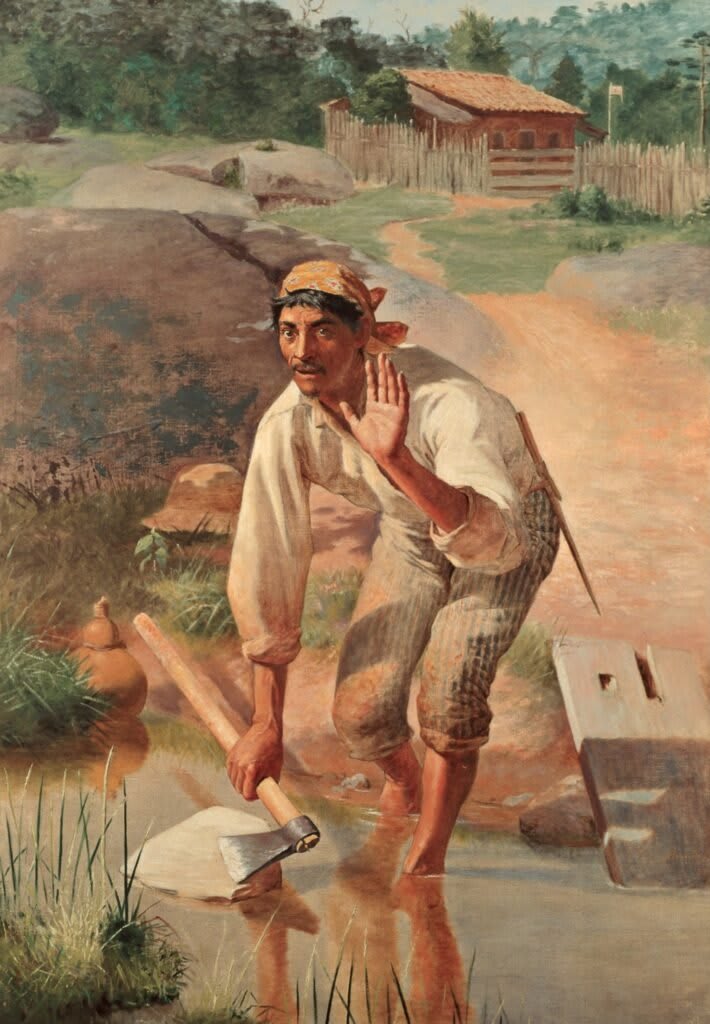
In another work, Amolação Interrompida, we find only one character who interrupts his work to welcome someone who has just arrived.
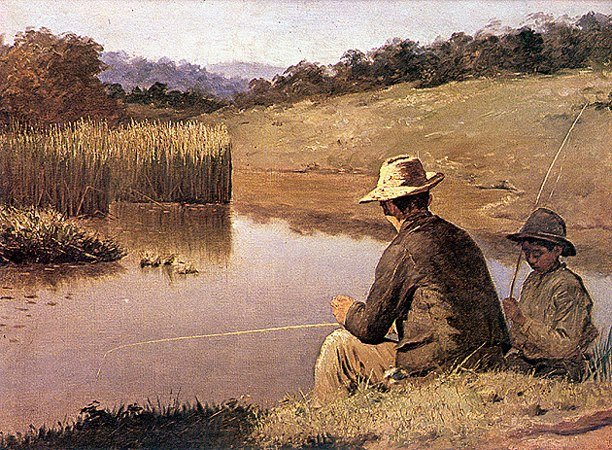
The scenes Almeida Júnior chose for his paintings were almost never thought of by other artists.
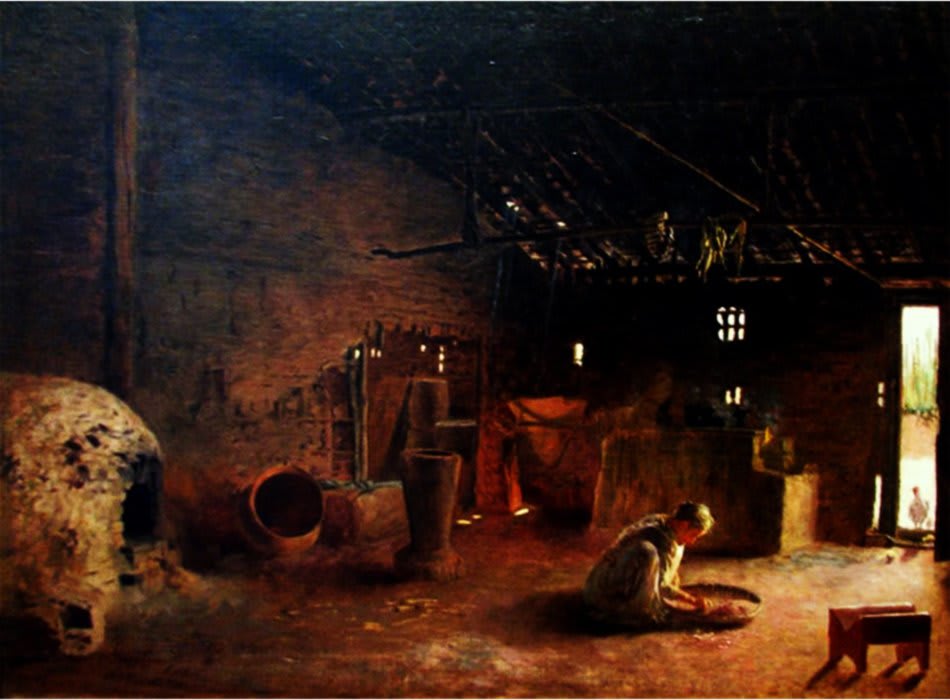
Who would have the idea of depicting a rural kitchen at that time?
It was themes like these that he liked.
In this work, the artist painted Nhá Delfina, his cousin's servant, working in the kitchen of the farm in Indaiatuba, in the interior of São Paulo.
This painting features typical objects from homes at that time, such as a wood-fired oven, a mortar, and a copper pot.
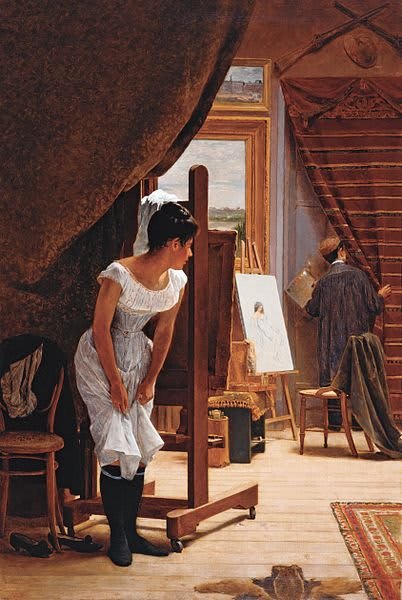
The Intruder - Almeida Junior managed to surpass the barrier of his time with this work, making a relevant theme for all those who in the 20th century sought to contribute in some way to the history and development of art in Brazil, thus achieving the polemic place of being the great introducer of modernism in the country.
We can observe through this famous painting, the artist in his studio, where he represents himself from behind to narrate a situation of interruption of his work, during the painting of a portrait. The way the painter resolved this situation, placing the model in the most visible part of the canvas, makes the viewer his accomplice, where he sees her clearly and does not disturb her.
From whom he protects is outside the pictorial representation, but we are allowed to imagine his presence in the field of desire, as he presents himself to the viewer.