
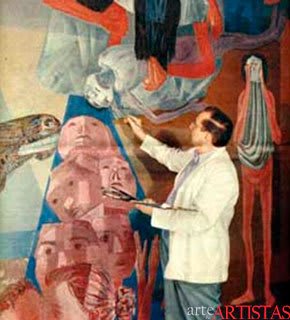
War and Peace - Candido Portinari
War and Peace - Candido Portinari
War and Peace are two colossal panels created by the renowned Brazilian painter Candido Portinari, each measuring approximately 14 x 10 meters.
Executed between 1952 and 1956, these panels were commissioned by the Brazilian government under President Juscelino Kubitschek, intended as a gift to the United Nations (UN) headquarters in New York.
Upon completing his monumental work, Portinari made a plea that, even after more than six decades, remains incredibly relevant.
The message conveyed by this great artist echoes through time, reminding us of the importance of peace and fraternity among peoples.
Here's his powerful message:
"The struggle for Peace is a decisive and urgent task. It is a campaign of enlightenment and warning that demands determination and courage," the painter warned.
"We must organize the fight for Peace, continuously expanding our anti-war front, bringing into it all people of good will, without distinction of beliefs or races, so that, united, the peoples of the entire world, not only with words but with actions, may lead to final victory the great cause of Peace, Culture, Progress, and Fraternity among peoples."
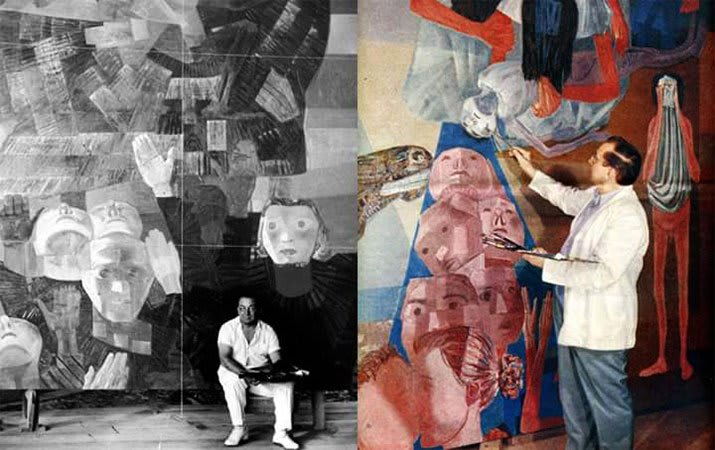
The execution of the panels, which began in 1953, coincided with the deterioration of the artist's health. From the following year, he began to suffer hemorrhages and other symptoms of lead poisoning.
At 51, Portinari found himself a victim of a key element in the composition of the paints he worked with, an element as toxic as his own obstinacy in completing the double creation.
After finishing War and Peace in 1957, he explored new artistic avenues, among them a series of fountain pen drawings that he left as a final legacy near his death.
War and Peace were the last and largest panels created by Portinari.
While creating the preparatory studies for the two panels, doctors advised him to stop painting due to the ongoing lead poisoning from the paints.
Portinari rejected the medical advice, determined to complete his masterpiece, even if it cost him his health.
"It was fatal. There was that medical prohibition, which he didn't heed. But he couldn't fail to convey the greatest message of his life, that of peace," lamented his son João Candido.
On February 6, 1962, Portinari passed away as a result of lead poisoning from the paints he used.
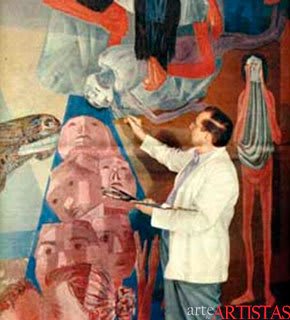
According to João Candido, director of Project Portinari...
"This synthesis-work constitutes the painter's greatest achievement throughout his life. The most universal, the most profound, too, in its majestic dialogue between the tragic and the lyrical, between fury and tenderness, between drama and poetry."
"This is not just an art exhibition. This is a great ethical and humanist message that addresses the main problem the world faces today: the issue of violence, non-citizenship, and social injustice. This is the great message of Portinari's entire life, which was synthesized in these final works he left behind."
– João Candido Portinari.
In the assessment of artist and assistant Enrico Bianco...
"War and Peace are the two great pages of the emotional communication that the philosopher/painter delivers to humanity."
- Video created for the exhibition of Portinari's War and Peace panels (Latin America Memorial - São Paulo - 2013)


