Fauvism
Fauvism was an early 20th-century art movement that originated in France, characterized by the bold and non-naturalistic use of color.
Fauvism was an early 20th-century art movement that originated in France, characterized by the bold and non-naturalistic use of color. The term 'fauve' means 'wild beast' in French, reflecting the movement's audacious and unconventional approach.
Led by artists such as Henri Matisse and André Derain, Fauvism had a lasting impact on modern art, influencing subsequent movements like Expressionism and Cubism.
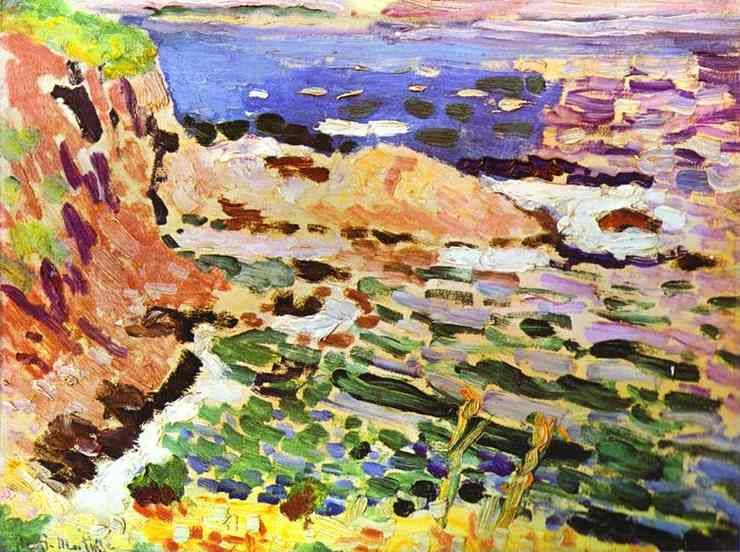
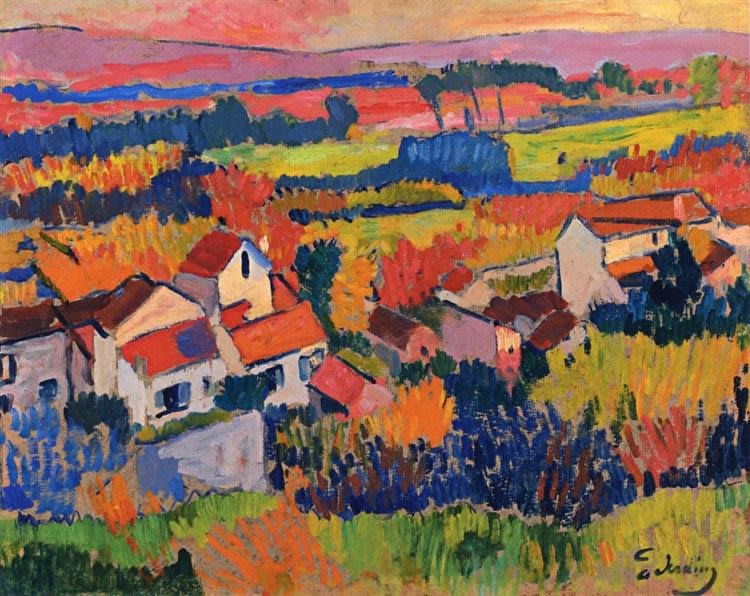
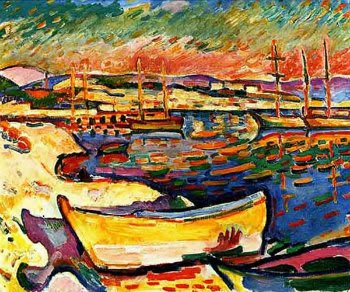
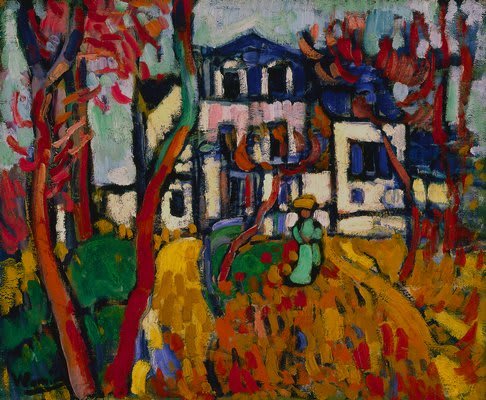
Fauvism is the name applied to the artistic movement produced by a group of artists (including Henri Matisse and André Derain) during the period of 1905 to 1910, characterized by strong colors and fierce brushstrokes.
The name Les Fauves (the wild beasts) was coined by critic Louis Vauxcelles when he saw the work of Henri Matisse and André Derain at an exhibition at the Salon d'Automne in Paris in 1905.
The paintings that Derain and Matisse exhibited were the result of a summer spent working together in Collioure, in southern France, and were made with strong colors and loose, expressive brushstrokes.
The forms of the subjects were also simplified, making the works appear quite abstract.
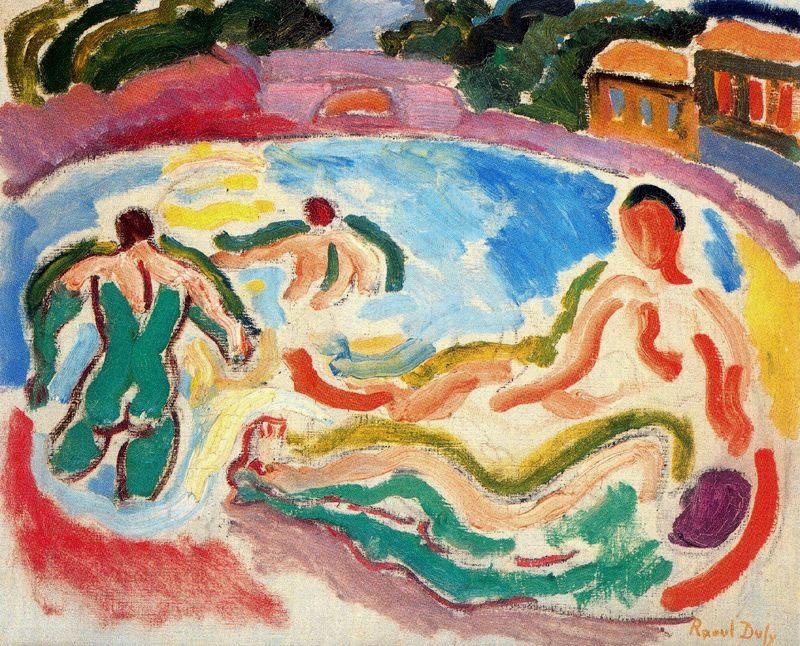
Other artists associated with Fauvism included Georges Braque, Raoul Dufy, Georges Rouault and Maurice de Vlaminck.
Fauvism: ORIGIN, OBJECTIVE AND CHARACTERISTICS
The Fauvists were interested in the scientific theories of color developed in the 19th century - particularly those related to complementary colors.
Complementary colors are pairs of colors that appear opposite each other in scientific models, such as the color wheel or chromatic circle, and when used side by side in a painting, make the other colors appear brighter.
Fauvism can be seen as an extreme extension of the post-impressionism of Paul Gauguin, combined with the neo-impressionism of Georges Seurat.
The influences of these earlier movements inspired Matisse and his followers to reject traditional three-dimensional space and instead use flat areas or patches of color to create a new pictorial space.
Fauvism can also be seen as a form of expressionism in the use of bright colors and spontaneous brushstrokes.
It has been frequently compared to German Expressionism, which emerged around the same time and was also inspired by the developments of post-impressionism.
Although one of the first modernist avant-garde movements of the 20th century and one of the first styles to manifest itself in the direction of abstraction, for many of the artists who adopted a Fauvist approach, it became a stepping stone to future developments in their style.
In 1908, most of the leading artists of the group had moved away from the expressive emotionalism of Fauvism.
A renewed interest in the post-impressionist artist Paul Cézanne and his analytical approach to painting landscapes, people, and objects inspired many artists to adopt order and structure.
During a period Georges Braque, who had adopted Fauvism in some of his works, continued to develop Cubism with Pablo Picasso, while one of the founders of Fauvism, André Derain, adopted a more conventional neoclassical style.
Henri Matisse, however, continued to use the characteristic Fauvist traits of bright, emotive colors, simple forms, and expressive brushstrokes throughout his career.
Matisse is the most important representative of this movement.
GALLERY OF SOME WORKS