
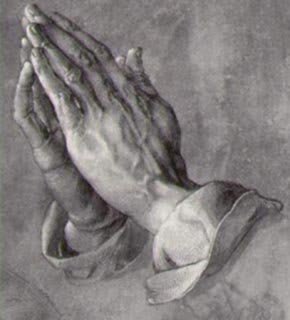
Hands in Prayer - Albrecht Dürer
A masterpiece of Renaissance art, Hands in Prayer is a powerful representation of faith, hope, and spiritual connection.
Article Index
The genius dedicated his soul to painting the ceiling of the world's most famous chapel.
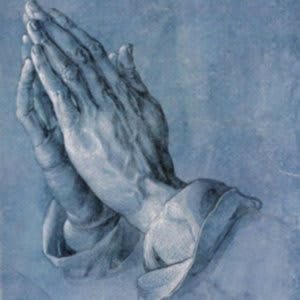
I invite you to contemplate the beauty and symbolism of "Hands in Prayer", a representation of art that transcends cultures and religions.
This iconic image depicts hands joined in a gesture of prayer, symbolizing faith, hope, and spiritual connection.
Upon observing "Hands in Prayer", we are invited to reflect on human spirituality and the search for something greater that unites us as human beings.
"Hands in Prayer" - A Story of Art and Effort
"Hands in Prayer" also known as "Hands that Pray", is a print by Albrecht Dürer, probably one of the most reproduced images in the world and has become an international symbol of piety and Christianity, to this day.
Created with ink and pencil on blue paper created by the artist himself and was produced not as a standalone work, but as a preliminary sketch for a retablo commissioned by Jacob Heller in 1507.
The retablo represented the coronation of the Virgin Mary for a church in Frankfurt.
These hands are turned towards the hands of an apostle kneeling beside the tomb of Mary.
Around the 1930s, a legend emerged about the hands of this sketch, suggesting that they were the hands of the artist's brother Albert, worn out by hard work and immortalized in this drawing.
However, it is much more likely that the artist modeled the drawing from his own hands, and similar hands can be seen throughout his work, thus giving birth to the work Hands in Prayer.
Learn the story of this legend, as follows briefly here:
"In a village near Nuremberg, in Germany, lived a family with 18 children, one of whom was the future artist, Albrecht Dürer.
To ensure food on the table for that multitude, the father and head of the household, a goldsmith by profession, worked almost 18 hours a day in his business and still did any other paid work he could find in the neighborhood.
Albrecht had a brother, named Albert, and the two enjoyed painting and had natural talents, which they wanted to study and learn technique to improve.
The Dürer family, however, was very poor and unable to provide education for the two.
Then, the brothers discussed the matter between themselves and decided on what they thought was a good solution, indeed the only one, that one would dedicate himself to studying, while the other would work in the coal mines, to pay for the artistic preparation of the other.
After they had finished the agreed, the brother who won the draw and who was to be the first to study, would then maintain the studies of the other.
Taken the lots, it was Albrecht who was to study, while the brother Albert to the hard work of the mines.
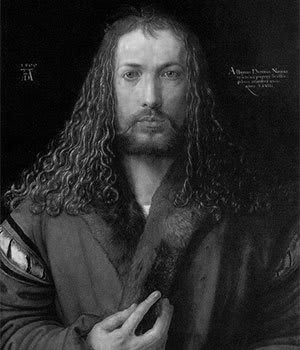
With a suitable education, Albrecht created works that gave him great fame and considerable income, surpassing his masters.
Then, not repudiating the agreement he had made with Albert, proposed to the brother that he also study, that he, Albrecht, would pay the expenses.
Albert however, thanked the brother for the respect for the commitment assumed, but declined the offer with the argument, true, that the four years spent in the mines had unfortunately caused him a strong arthritis that had caused a visible deformation in the hands, which left him unable to fulfill the dream of being an artist like his brother.
Despite this, he did not feel sad with the situation, on the contrary, his sacrifice helped to make his brother a renowned artist, he felt proud of it.
Albrecht Dürer was born in the city of Nuremberg, Germany on May 21, 1471.
He was a painter, engraver, illustrator, mathematician and art theorist, probably the most famous artist of the Nordic Renaissance, having influenced artists of the 16th century in his country and in the Netherlands. Among the artists of his time, he was undoubtedly the most universal.
He died on April 6, 1528, at the age of 57, in Nuremberg.


