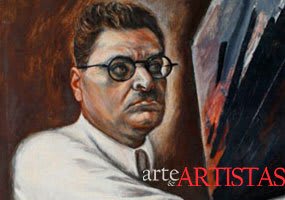
José Clemente Orozco
José Clemente Orozco: A Life of Art and Revolution
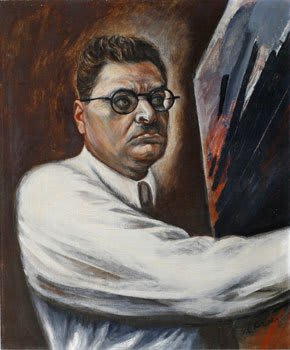
José Clemente Orozco was a renowned Mexican painter and muralist, considered one of the three great muralists of his country, along with Diego Rivera and David Alfaro Siqueiros, who played a crucial role in the development of Mexican art during the first half of the 20th century.
BIOGRAPHY
José Clemente Orozco was born on November 23, 1883, in Zapotlán el Grande, a small town in the Jalisco region, in the southwestern part of Mexico. When he was still a child, Orozco's parents moved to Mexico City in the hope of providing a better life for their three children. His father was a businessman, and his mother, worked as a homemaker and sometimes sang to earn extra income.
Despite his parents' efforts, they often lived on the brink of poverty.
CHILDHOOD
The Mexican Revolution was heating up, and Orozco, a very sensitive child, began to notice the many difficulties that people around him were facing.
As he walked to school, he saw the Mexican cartoonist José Guadalupe Posada working in an open storefront.
Posada's politically charged paintings not only intrigued Orozco but also awakened his first understanding of art as a powerful expression of political revolt.
At 15, Orozco left Mexico City and traveled to the countryside.
His parents sent him to study agricultural engineering, a profession he had little interest in pursuing.
While in school, he contracted rheumatic fever.
His father died of typhus shortly after he returned home.
Perhaps Orozco finally felt free to pursue his true passion, because he almost immediately began taking art classes at the Academy of San Carlos.
To support his mother, he also worked at small jobs, first as a draftsman for an architecture firm and later as a post-mortem painter, painting portraits of the deceased by hand.
The raw intensity and distorted forms that began to emerge in his work share a stylistic lineage with the expressive depth of earlier European masters. Biography of El Greco: The Greek Origins and Journey to European Renaissance
By the time Orozco was certain of his artistic career, a tragedy occurred.
Mixing chemicals to make fireworks for Mexico's Independence Day celebrations in 1904, he created an accidental explosion that injured his left arm and wrist.
Due to the national festivities, a doctor did not attend to him for several days.
When he was finally treated, gangrene had set in, and his entire left hand had to be amputated.
While recovering, the Mexican Revolution loomed large in everyone's minds, and Orozco's personal suffering reflected the growing political conflict surrounding him.
After surviving the ordeal, Orozco survived by working for a time as a cartoonist for an independent and opposition newspaper.
Even after finally securing his first solo exhibition, titled "The House of Tears," it's no surprise that his paintings were filled with social complexities.
MURALS
In 1922, the artist began creating murals.
The original impetus for this work was an innovative literacy campaign implemented by Mexico's new revolutionary government. The idea was to paint murals on public buildings as a way to convey the messages of their campaign.
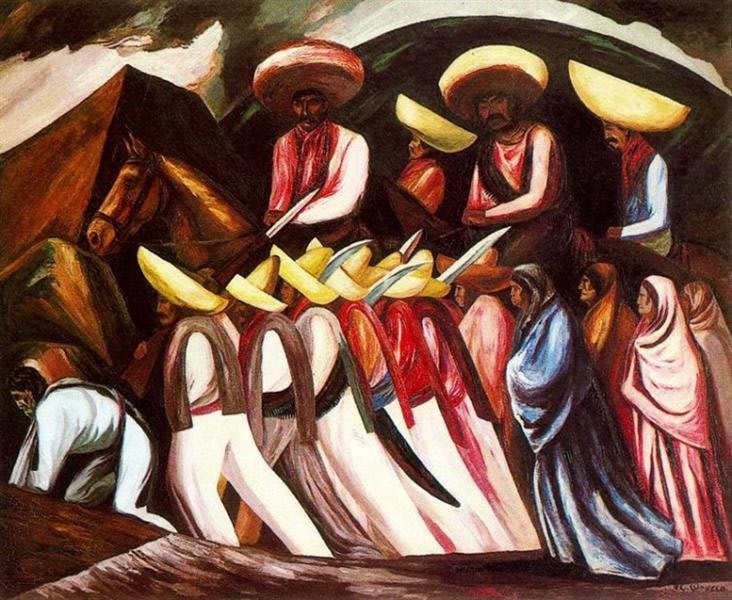
His vast scenes illustrated the lives and struggles of peasants and the working class.
In 1923, he married Margarita Valladares and had three children.
In 1927, after years of working as a respected artist in Mexico, he left his family and moved to the United States.
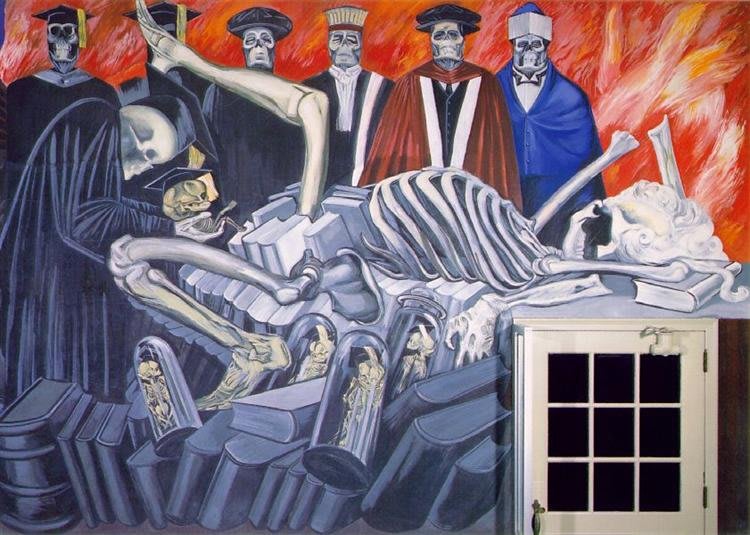
He spent a total of ten years in America, a period during which he witnessed the 1929 financial crisis, created important murals.
Orozco’s dynamic use of scale and raw energy during his time in the United States significantly influenced the development of future art movements in the country. Biography of Jackson Pollock: From Childhood to Artistic Legacy
In 1934, Orozco returned to Mexico and his family.
Already a renowned and highly respected artist, he was invited to paint at the Guadalajara Government Palace.
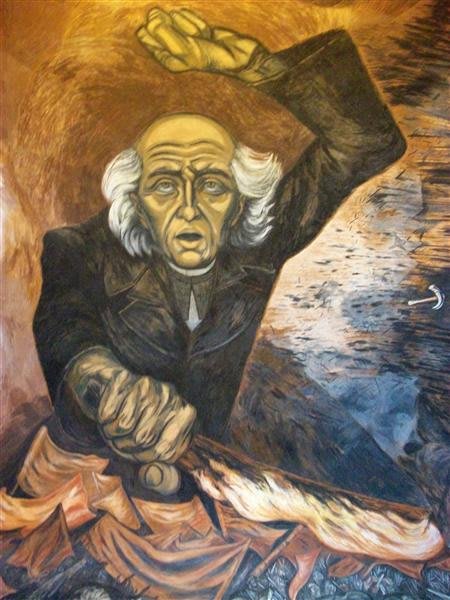
The main fresco found in its vaulted ceilings is titled The People and Their Leaders .
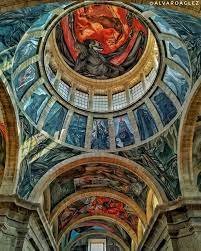
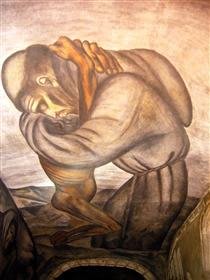
During this period, the artist, now in his late 50s, painted what would be considered a masterpiece, the frescoes found in the Hospicio Cabañas de Guadalajara, a UNESCO World Heritage Site and one of the oldest hospital complexes in Latin America.
The work, known as the "Capella Sistina of the Americas," is a panorama of Mexican history, from pre-Hispanic times to the Mexican Revolution, which he depicts as a society engulfed in flames.
In 1940, the New York City Museum of Modern Art (MOMA) hired him to create the centerpiece of its exhibition "Twenty Centuries of Mexican Art." His contributions included Dive Bomber and Tank , both comments on the impending Second World War.
Throughout his life, Orozco was also a professor and wrote essays on art and politics, a man of unparalleled vision, as well as marked contradiction.
He died of heart failure at 65, on September 7, 1949, in Mexico City, leaving a lasting legacy in Mexican art history and the visual narrative of the struggle for justice and freedom.
GALLERY