
Leonardo da Vinci: Biography and Work: Timeline and Milestones of a Multifaceted Career
Explore the detailed timeline of Leonardo da Vinci's life, from his early works to his great changes and historical influences on the Italian Renaissance.
Article Index
April 15, 1452 - Born in Anchiano, a small village near Vinci in Tuscany.
Located in the Tuscany region, in Italy, the birthplace of Leonardo da Vinci is an important point in the history of art and science.
His father, Ser Piero, was a lawyer and his maternal grandfather, Caterina Buti, was a noble.
Leonardo was the fourth of eight children, and his family was influential in the region.

Surprisingly, it took him more than 4 years working in almost suffocating conditions to create a masterpiece.
At the time, Tuscany was a place of great culture and art, and Leonardo's family was part of that world.
His father was a wealthy and influential man, and Leonardo grew up in an environment of great luxury and education.
He was educated at home and began to show an interest in art and science from an early age.
His first teacher was Andrea del Verrocchio, an artist and engineer who worked in Florence.
Infancy and Education
Leonardo da Vinci was born on April 15, 1452, in Anchiano, a small village near Vinci in Tuscany.
His father was a lawyer and his mother was a noble.
Leonardo worked in Verrocchio's workshop for several years, learning painting and sculpture techniques.
He also began to develop his interests in sciences, such as anatomy and engineering.
1453 - The Fall of Constantinople and the End of the Roman Empire in the East. Gutenberg invents the printing press
The fall of Constantinople in 1453 marked the end of the Roman Empire in the East.
This had a significant impact on the history of art and science, as it led to a flow of knowledge and ideas between Europe and Asia.
The shift in power during this era deeply affected the preservation of historic monuments across the region. Hagia Sophia Basilica
The invention of the printing press by Johannes Gutenberg in 1450 allowed for the mass production of texts and images.
This revolutionized the way people accessed and shared information.
Leonardo da Vinci was influenced by these changes and developed his own ideas and inventions.
1456 - The Siege of Belgrade
The siege of Belgrade in 1456 was an important event in European history.
It marked the first major battle between the Ottomans and the Christians.
He began to work on engineering military projects and developed his skills in anatomy.
1469 - Leonardo works as an apprentice in Verrocchio's workshop
Leonardo da Vinci began working as an apprentice in Verrocchio's workshop in 1469.
He worked there for several years, learning painting and sculpture techniques.
Verrocchio was an artist and engineer who worked in Florence.
He was an important mentor for Leonardo and helped him develop his skills.
1472 - Leonardo joins the Company of Painters of Saint Luke
Leonardo da Vinci joined the Company of Painters of Saint Luke in 1472.
The company was an organization of artists who worked in Florence.
While Leonardo flourished in Florence, other young masters were also beginning their journey through the rigorous training of the era. Raphael: Biography and Work: Birth, Training and Rise (Part 1 of 3)
Leonardo was one of the most prominent members of the company and worked on many important projects.
The company was also a support network for artists, and Leonardo was influenced by his colleagues.
1475-1480 - Paints the Virgin of the Rocks, The Annunciation, and The Adoration of the Shepherds
Leonardo da Vinci painted the Virgin of the Rocks, The Annunciation, and The Adoration of the Shepherds between 1475 and 1480.
These works are considered some of Leonardo's earliest important works.
They show his skill in painting and his ability to create works that are both beautiful and significant.
The Virgin of the Rocks is one of Leonardo's most famous works and is considered one of the first important works of the Renaissance.
1481 - The Inquisition begins and lasts until 1820
The beginning of the Inquisition in 1481 marked a period of great religious persecution in Europe.
The Inquisition was an organization that sought to identify and punish those considered heretics or infidels.
Leonardo da Vinci was influenced by these changes and vocabulary his own ideas and inventions.
1482 - Leonardo moves to Milan to work for Duke Ludovico Sforza
Leonardo da Vinci moved to Milan in 1482 to work for Duke Ludovico Sforza.
The duke was an important patron of art and science, and Leonardo was influenced by his ideas and inventions.
He worked on many important projects for the duke, including the painting of The Virgin of the Rocks.
1483 - Leonardo begins working on the painting of The Virgin of the Rocks
Leonardo da Vinci began working on the painting of The Virgin of the Rocks in 1483.
The painting is considered one of Leonardo's most important works and is one of the first important works of the Renaissance.
It shows his skill in painting and his ability to create works that are both beautiful and significant.
1484- 89 - Completes several commissioned works, expands work as an architect, engineer, and inventor
Leonardo da Vinci worked in many different areas during the 1480s.
He completed several commissioned works, including the painting of The Virgin of the Rocks.
He also expanded his work as an architect, engineer, and inventor.
He developed his skills in anatomy and began to work on engineering military projects.
He also worked on flying machines and war machines, and developed his ideas on aerodynamics.
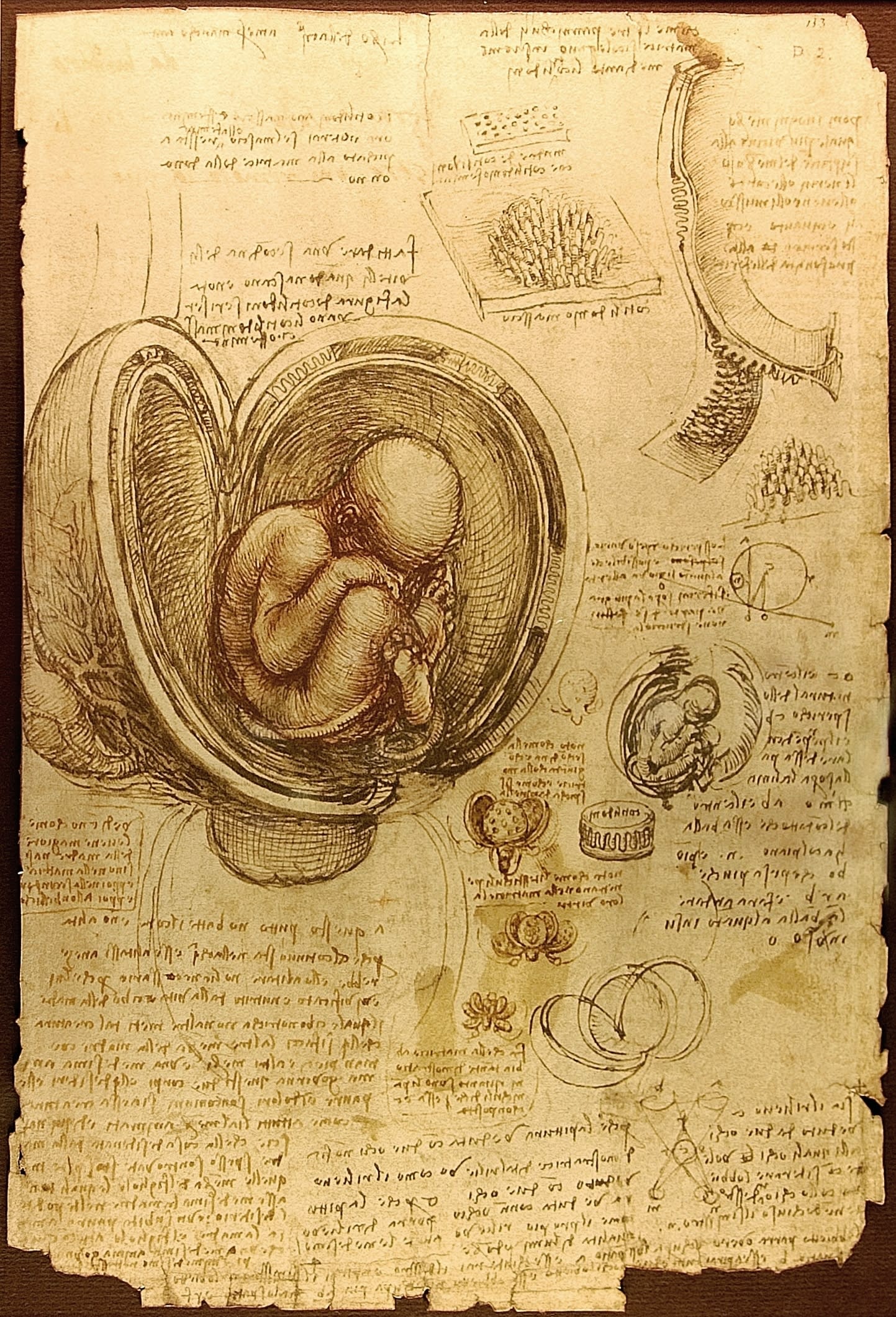
1487 - Leonardo begins his studies and work in anatomy
Leonardo da Vinci began his studies in anatomy in 1487.
He began to work on anatomy projects and developed his skills in drawing and painting.
He also began to work on engineering military projects and developed his ideas on aerodynamics.
He worked in many different areas during the 1480s.
1491 - Niccolò Copernicus enters the University of Krakow
Niccolò Copernicus entered the University of Krakow in 1491.
He was a Polish astronomer and mathematician who developed the heliocentric theory of the universe.
1492 - Leonardo visits Rome. - First voyage of Columbus to the New World
Leonardo da Vinci visited Rome in 1492.
He was influenced by these changes and developed his own ideas and inventions.
He also visited Italy and was influenced by these changes.
1493 - Leonardo completes the clay model of the Great Horse for Ludovico Sforza
Leonardo da Vinci completed the clay model of the Great Horse for Ludovico Sforza in 1493.
The model is considered one of Leonardo's most important works and is one of the first important works of the Renaissance.
The Great Horse is one of Leonardo's most famous works and is considered one of the first important works of the Renaissance.
1495-97 - Paints his most famous mural work, The Last Supper, for the Refectory of the church of Santa Maria delle Grazie in Milan
Leonardo da Vinci painted his most famous mural work, The Last Supper, for the Refectory of the church of Santa Maria delle Grazie in Milan, in 1495-97.
The Last Supper is one of Leonardo's most famous works and is considered one of the first important works of the Renaissance.
1499 - The French invade Italy. Leonardo flees Milan
The French invade Italy in 1499 and Leonardo flees Milan.
1502 - Leonardo is hired as a military engineer by Cesare Borgia
Leonardo da Vinci was hired as a military engineer by Cesare Borgia in 1502.
The Borgia was an Italian military leader who was looking for someone to help him develop his ideas on engineering military projects.
Leonardo was influenced by these changes and developed his own ideas and inventions.
1503 - Receives the commission for the work The Battle of Anghiari
Leonardo da Vinci received the commission for the work The Battle of Anghiari in 1503.
The work is considered one of the first important works of the Renaissance.
The Battle of Anghiari is one of Leonardo's most famous works and is considered one of the first important works of the Renaissance.
1504 - Paints the work Leda and the Swan
Leonardo da Vinci painted the work Leda and the Swan in 1504.
The work is considered one of Leonardo's most important works and is one of the first important works of the Renaissance.
Leda and the Swan is one of Leonardo's most famous works and is considered one of the first important works of the Renaissance.
1506 - Leonardo is invited to go to Milan by King Louis XII
Leonardo da Vinci was invited to go to Milan by King Louis XII in 1506.
The king was looking for someone to help him develop his ideas on engineering military projects.
1509 - Leonardo draws maps and geological plans of Lombardy. Begins to paint Saint John the Baptist
Leonardo da Vinci drew maps and geological plans of Lombardy in 1509.
He also began to paint Saint John the Baptist.
1512 - The French are defeated and leave Milan. - Michelangelo completes the painting of the ceiling of the Sistine Chapel
The French are defeated and leave Milan in 1512.
Michelangelo completes the painting of the ceiling of the Sistine Chapel in 1512.
The painting is considered one of the most important works of the Renaissance.
While the Italian masters reached the pinnacle of their craft, other artists across Europe were exploring unique spiritual and stylistic paths. Biography of El Greco: The Greek Origins and Journey to European Renaissance
1513 - Leonardo goes to Rome to work for Giuliano de' Medici
Leonardo da Vinci went to Rome in 1513 to work for Giuliano de' Medici.
The Medici was an Italian political leader who was looking for someone to help him develop his ideas on engineering military projects.
1515 - The French reconquer Milan
The French reconquer Milan in 1515.
1516 - Leonardo goes to France to work for King Francis I. Even after a stroke, he still manages to draw
Leonardo da Vinci went to France in 1516 to work for King Francis I.
May 2, 1519 - Dies in the Château du Clos Lucé, near Amboise, France
Leonardo da Vinci died in the Château du Clos Lucé, near Amboise, France, on May 2, 1519.
He was one of the greatest artists and scientists of all time, and his works continue to inspire and influence people to this day.
His work is one of the most important of the Renaissance, and his inventions and ideas revolutionized the way people live and work.
He is remembered as one of the greatest geniuses of all time, and his work continues to be studied and admired by people all over the world.
To understand the rest of this journey, continue to our next article:
To understand the rest of this journey, continue to our next article: Leonardo da Vinci: Biography and Work: Analysis of Immortal Works and Legacy for Humanity.


