
Pablo Picasso: A Life's Tapestry of Cubist Revolution and Defining Relationships
Pablo Picasso's Biography and Work: The Cubist Revolution and Defining Relationships
Picasso seemed incapable of fidelity. After Fernande left him on a summer night in 1911, he began to court one of Fernande's friends, Marcelle Humbert. Picasso called her Eva, implying she was his first love, and all indications suggest he fell deeply for her. The artist declared to his agent that he loved Eva so much he would write it in his paintings. Around that time, the words ‘Ma Jolie’ (my beautiful) began appearing in his works. It was the name of a popular song, and Picasso seemed to adopt it as an affectionate way to refer to Eva. But this relationship was not to last. Eva tragically died of an illness in 1915.
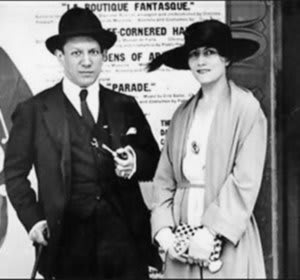
In 1915, Picasso met the pianist and composer Erik Satie. At the time, Satie was composing music for the ballet called "Parade," produced by the renowned Russian impresario Serge Diaghilev. Picasso agreed to paint the stage backdrops and costumes. One of the dancers, Olga Khokhlova, daughter of a Russian general, captivated Picasso.
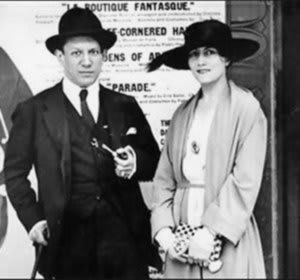
By July 1918, they were married. In February 1921, Olga Khokhlova gave birth to a son named Paulo. For some time, the artist was a devoted father, always delighting in sketching and painting his son. By this era, Picasso's works were already highly sought after and sold for substantial prices.
Well into his forties, Picasso was a resounding success. The bohemian days of poverty, in the humbler parts of Paris, had given way to wealth and comfort in his villa on the Mediterranean coast, to chauffeur-driven limousines - and to an unhappy marriage.
The trajectory from early professional success to the complexities of a private life is a theme shared by many of history's most celebrated masters. Raphael: Biography and Work: Birth, Training and Rise (Part 1 of 3)
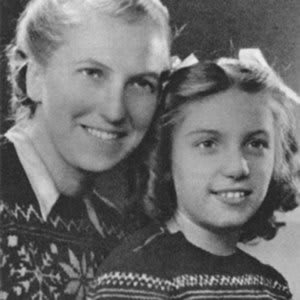
In 1927, he met Marie-Thérèse Walter, a seventeen-year-old girl, and they began an affair. Picasso remained married to Olga, and his clandestine meetings with his lover took place in secret. However, the paintings from this period would have given away the secret, had Olga observed them carefully, which she didn't seem interested in doing.
In 1935, Marie-Thérèse had a daughter with the artist, named Maria-Concepción, nicknamed Maya. Picasso's first daughter was named after his sister, who had died forty years earlier in Spain. With Maya's birth in 1935, Picasso and Olga separated. It was impossible for him to obtain a divorce, so he could not marry Marie-Thérèse, Maya's mother.
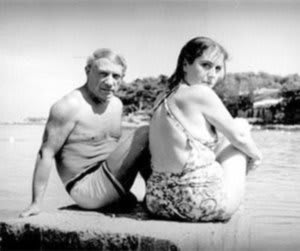
In 1936, a friend of Picasso's, the poet Paul Éluard, introduced him to the photographer Dora Maar. The artist immediately fell for her, and they became lovers, though he still continued his encounters with Marie-Thérèse. His romance with Dora Maar lasted nearly ten years. Her full name was Henriette Theodora Marković, and she was another significant muse in Pablo Picasso's journey. A brunette with green eyes, the Frenchwoman who grew up in Argentina proved to be a talented poet and, later, a skilled photographer.
As European society began to fracture, other avant-garde artists were also seeking new visual languages to express the growing tension of the era. Max Ernst: Early Years and the Dadaist Revolution
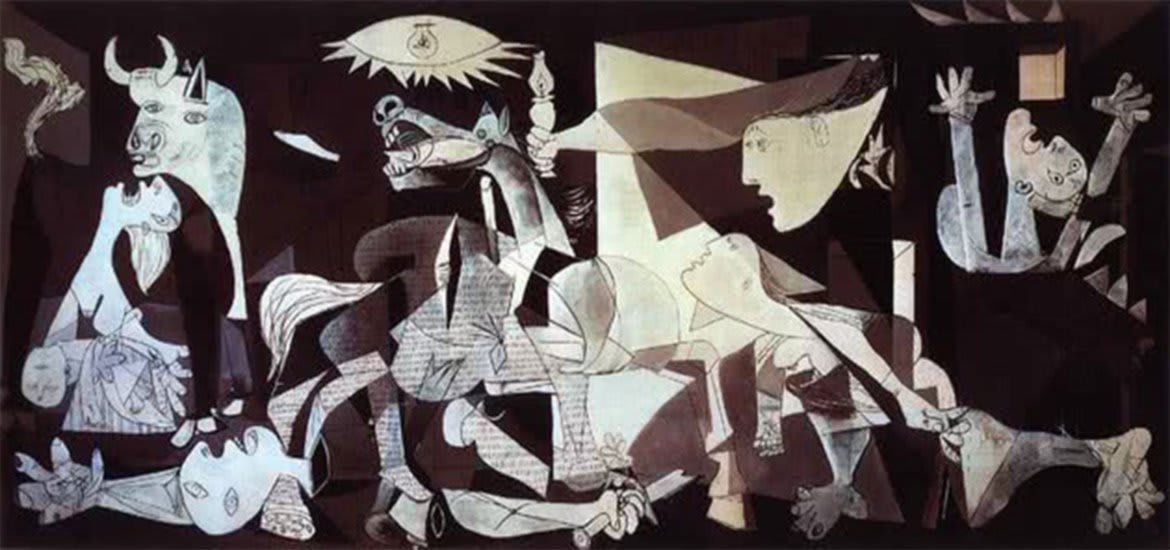
Around this time, unsettling news about Nazi activities in Germany began to emerge. In 1936, the Civil War erupted in Picasso's beloved Spain, with the Nazi army collaborating to spread destruction. Dora Maar, with her photographs, collaborated with her lover to produce his masterpiece, Guernica. When she discovered Picasso was seeing other women, Dora Maar reportedly had a breakdown and was sent to a hospital. She never again became involved with men and is said to have uttered the phrase: "After Picasso, only God."
Since his separation from Olga, Picasso lived alone, spending weekends with Marie-Thérèse and brief periods with Dora Maar, until he met Françoise Gilot in Nazi-occupied Paris in 1943. With Françoise, the painter felt a difference. He, at 64, and she, some forty years his junior, were lovers. They moved in together in Antibes, where in 1947, their first child, Claude, was born. Shortly after, they had a daughter, whom they named Paloma.
To understand the rest of this journey, continue with our next article: Pablo Picasso's Biography and Work: Later Years and Essential Commented Works.


