
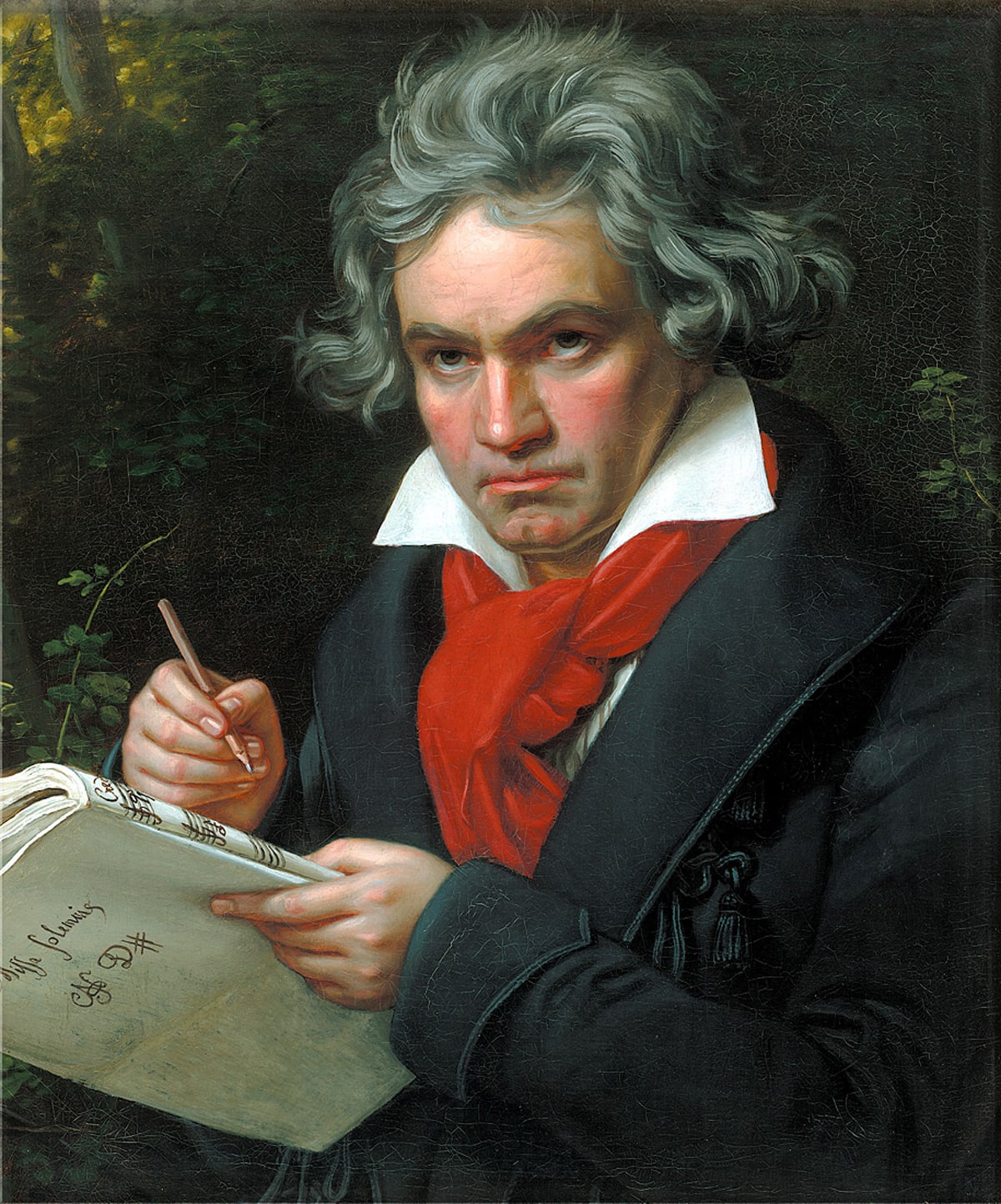
Ludwig van Beethoven's Biography: Immortal Legacy and Grand Works (Final Chapter)
Ludwig van Beethoven's Biography: Immortal Legacy and Grand Works (Final Chapter)
Beethoven passed away on March 26, 1827, at 56 years old, from liver cirrhosis. The autopsy also provided clues about the origins of his deafness, though his explosive temperament, chronic diarrhea, and deafness are consistent with arterial disease; a competing theory relates his deafness to typhus contracted in the summer of 1796.
Arterial disease is a condition that can cause damage to the brain and heart, leading to serious health problems.
Beethoven is considered one of the greatest, if not the greatest, composer of all time. The body of his musical compositions, often compared to the works of William Shakespeare, stands at the pinnacle of human brilliance.
Summarizing his life and imminent death during his final days, Beethoven, who was never as eloquent with words as he was with music, borrowed a slogan that concluded many Latin works of the era.
Plaudite, amici, comoedia finita est, which means: Applaud, friends, the comedy is over.
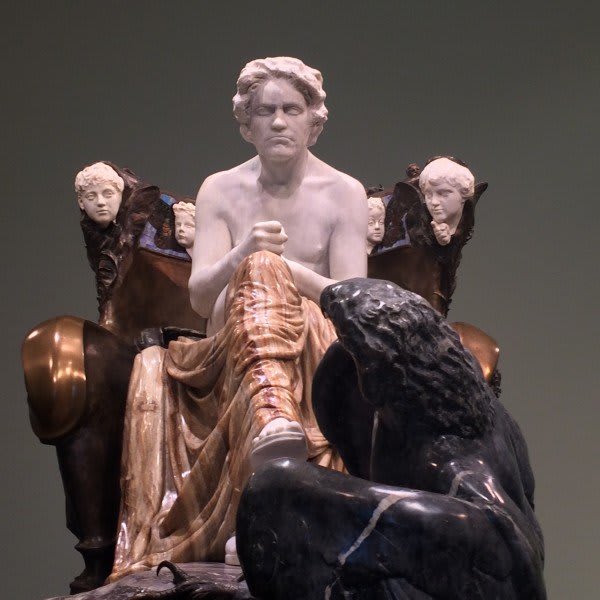
SOME OF BEETHOVEN'S MOST WELL-KNOWN COMPOSITIONS INCLUDE:
Symphony No. 3 - In 1804, just weeks after Napoleon Bonaparte proclaimed himself Emperor of France, Beethoven premiered his Symphony No. 3 in homage to Napoleon. As all of Europe watched with a mix of admiration and terror, he admired, abhorred, and to some extent, identified with Napoleon, a man of seemingly superhuman capabilities, only a year older than himself.
Beethoven began composing the piece in 1804, but its completion was delayed a few times for other projects. One of his most well-known works among modern audiences, it is recognized for its ominous first four notes.
Für Elise - Beethoven completed it in 1810 (which means "For Elise"), although it was not published until 40 years after his death. In 1867, however, the original manuscript, which had been lost, was discovered by a German music scholar.
Symphony No. 7 - Premiering in Vienna in 1813 to benefit soldiers wounded at the Battle of Hanau, Beethoven began composing one of his most energetic and optimistic works.
Symphony No. 9 - Ode to Joy: Beethoven's ninth and final symphony, completed in 1824, remains the illustrious composer's most impressive achievement.
by Roseli Paulino - @arteeartistas


