
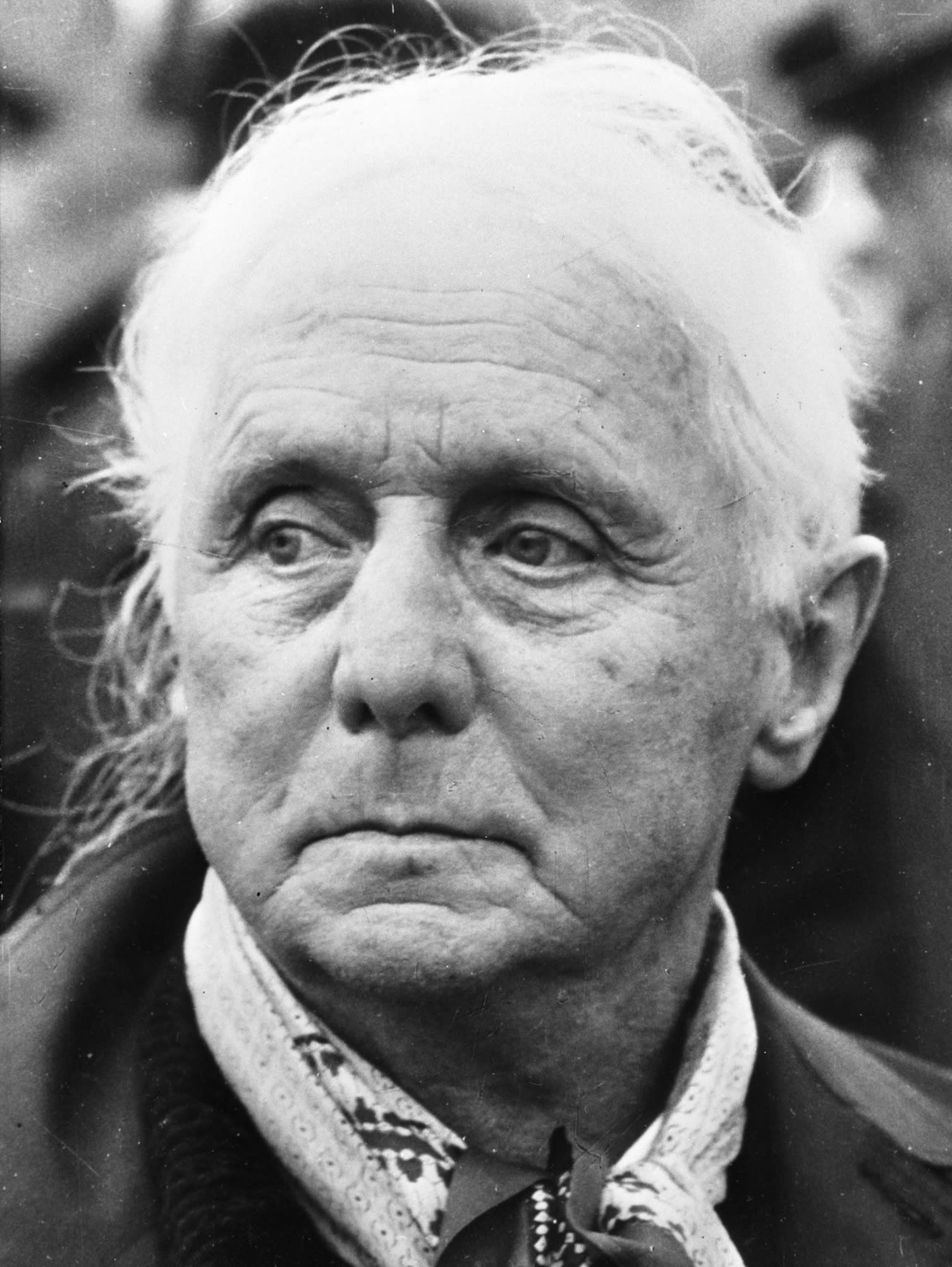
Max Ernst: Early Years and the Dadaist Revolution
Discover the early life of Max Ernst, his artistic formation, the impact of Dadaism, and the experiences that shaped his revolutionary art.
Max Ernst was a German painter, sculptor, graphic artist, and poet who became one of the leading modernist artists in Europe in the early and mid-20th century and a key figure in Dadaism and Surrealism. Many of his works reflect the terror he experienced during the two World Wars.
BIOGRAPHY
Max Ernst was born in Germany on April 2, 1891, in the small town of Brühl, near Cologne. He was the third of nine children in a middle-class Catholic family. His father, Philipp, was a disciplinarian teacher of the deaf and a amateur painter who inspired Max to challenge authority, while his interest in painting and sketching in nature influenced Max to start painting early.
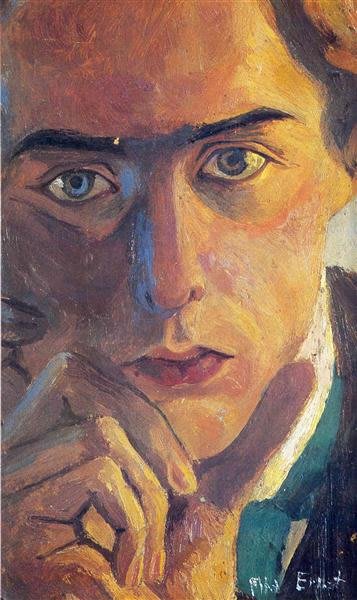
In 1909, he enrolled in the University of Bonn, studying philosophy, art history, literature, psychology, and psychiatry. He visited asylums and became fascinated with the art of mentally ill patients; he also started painting that year, making sketches in the garden of Bruhl Castle, portraits of his sister, and himself.
In 1911, he met August Macke and joined the group of artists Die Rheinischen Expressionisten (The Rhineland Expressionists), deciding to become an artist.
In 1912, he visited the Sonderbund exhibition in Cologne, where he saw works by Pablo Picasso and the Post-Impressionists Vincent van Gogh and Paul Gauguin, artists who profoundly influenced his artistic approach.
In 1914, he met Hans Arp in Cologne, who became a lifelong friend and fellow Dadaist.
After Ernst completed his studies in the same year, his life was interrupted by the First World War, being conscripted and serving on both the Western and Eastern fronts for four years. However, for a brief period on the Western front, Ernst was assigned to map-making, which allowed him to continue painting. Several German expressionist painters died in action during the war, including August Macke and Franz Marc.
In 1918, he returned to civilian life and moved back to Cologne. He soon married the art history student Luise Straus, whom he had met in 1914.
In 1919, Ernst visited Paul Klee in Munich and studied paintings by Giorgio de Chirico, which deeply impressed him. In the same year, inspired in part by de Chirico and also by the study of catalogs, teaching manuals, and similar sources, he produced his first collages, a technique that would dominate his artistic activities in the coming years. In the same year, Ernst and several colleagues founded the Cologne Dada group and subsequently organized Dadaist exhibitions.
Ernst's marriage to Luise was short-lived, and they had a son, Ulrich 'Jimmy' Ernst, born on June 24, 1920, who also became a painter.
In 1921, he met Paul Éluard, who became a lifelong friend. A year later, the two met André Breton.
In 1922, unable to obtain the necessary documents, Ernst entered France illegally and began living with Paul Éluard and his wife Gala Éluard in the Parisian suburb of Saint-Brice, leaving behind his wife and son.
In 1923, the Éluards moved to a new house in Eaubonne, near Paris, where Ernst painted several murals. During his stay in Paris, Max Ernst adapted the theories of Sigmund Freud as a unifying paradigm that underlies the theoretical, technical, textual, and visual components of his art. In the same year, his works were exhibited at the Salon des Indépendants.
In 1924, he suddenly left, first for Monaco and then for Saigon, Vietnam, abandoning the Éluard couple. He returned to Paris at the end of 1924 and soon signed a contract with Jacques Viot that allowed him to paint full-time.
To continue understanding this journey, read our next article: Max Ernst: Surrealism, Exile, and an Innovative Artistic Legacy.


