
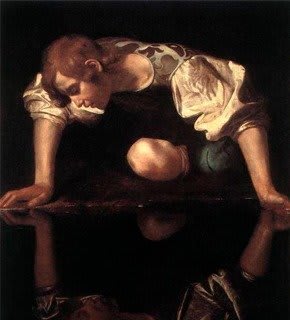
Narcissus, by Caravaggio
Narcissus, by Caravaggio: A Timeless Masterpiece
Narcissus is an iconic work by the Italian painter Caravaggio, completed around 1597-1599.
In this oil-on-canvas painting, Caravaggio depicts the Greek myth of Narcissus, a beautiful young man who fell in love with his own reflection in a pool of water and ultimately transformed into a flower.
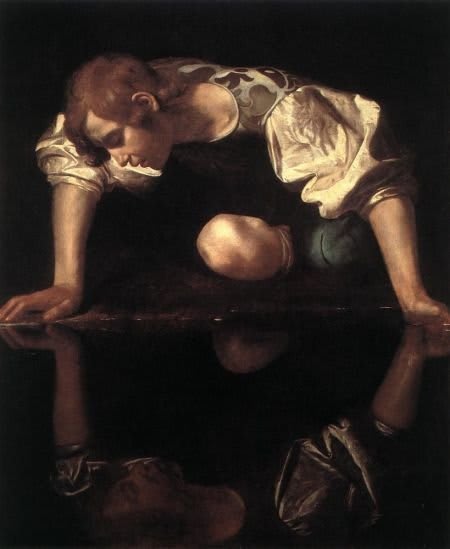
The painting is characterized by its realism and dramatic representation of the theme, with Narcissus leaning over the water, entranced by his own reflection.
Caravaggio masterfully employs light and shadow to emphasize Narcissus' figure and create a sense of introspection and melancholy.
Narcissus is considered one of Caravaggio's most emblematic works
Standing out for its innovative composition and visual impact.
Narcissus is a painting by Michelangelo Merisi da Caravaggio that depicts a young man gazing deeply into the water of a lake, while he leans against it.
It represents the classical Greek-Roman mythological story of a handsome and vain young man who falls in love with his own reflection.
There are many paintings of Narcissus, but Caravaggio's is by far the most famous.
With its realistic observation of the human state and introspective melancholic atmosphere, this is an important work by the Baroque master of his intermediate career phase.
A timeless myth
About the myth: Nemesis, the goddess of retribution, heard a desire for revenge from her rejected lover, and led Narcissus to a lake where he saw his own reflection.
Narcissus fell irreversibly in love with his reflected image in the water, then lost the will to live, didn't eat or drink, and eventually died.
According to legend, a beautiful yellow narcissus flower bloomed then where he died and was named after him.
Narcissus shows the unhappy fall of someone who loves themselves or their possessions excessively.
This mythological story is the origin of the word 'narcissism', in which someone is fixated on themselves and their attributes and has an inflated sense of superiority.
In the painting, Narcissus is depicted sitting on the edge of a lake, leaning and fixed on his reflection he sees in the water.
Against a dark background, the striking contrast of Narcissus' white shirt and arms creates the impression of a circle with the reflection of his inclined forearms, perhaps representing the infinite darkness of obsessive love for oneself.
Famous for his use of light and shadow (a technique known as chiaroscuro), Caravaggio's intelligent shading provides depth that reflects in the lake's water, making the viewer feel they can reach and touch the water.
Caravaggio made chiaroscuro a dominant stylistic element of his vast body of work, one of the characteristics of baroque, strong contrast of shadow and light.
Such was his legacy that young Italian artists of the following generation, inspired by his techniques, became known as Caravaggisti - the artists who followed Caravaggio.


