
Oscar Niemeyer: Biography and Works – The Roots of an Architectural Genius
Explore the life and works of Oscar Niemeyer, a renowned Brazilian architect known for his innovative and organic designs.
Article Index
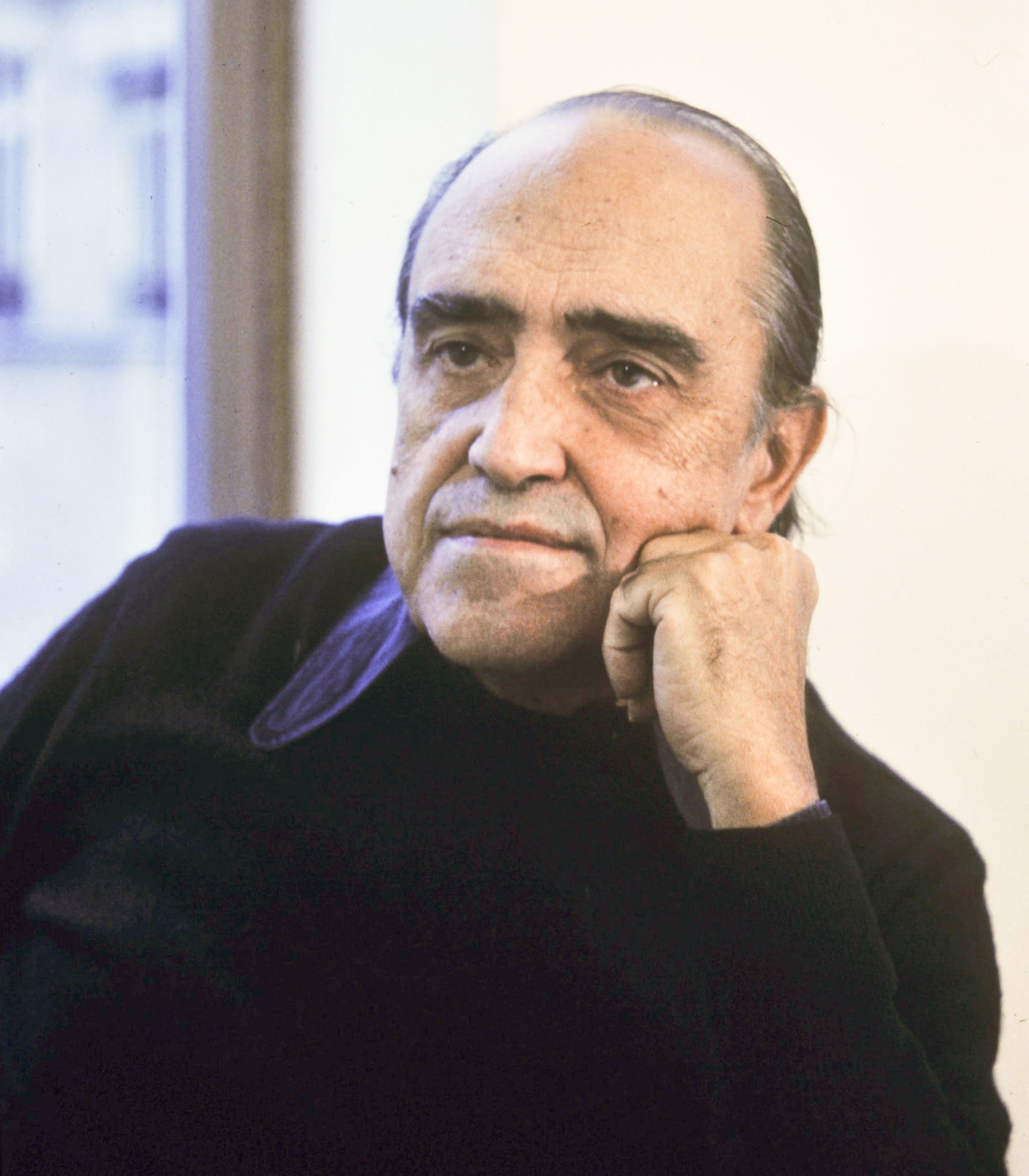
Oscar Niemeyer was a renowned Brazilian architect born in 1907 in Rio de Janeiro and passed away in 2012.
He is known for his innovative contributions to modern architecture, being one of the main exponents of the Brazilian modernist movement.
Niemeyer is famous for his works that present curved and organic forms, in contrast to the traditional rigidity and geometry of architecture.
Some of his most famous projects include the Pampulha architectural complex in Belo Horizonte, the Copan building in São Paulo, and the city of Brasília, which he designed and is considered a UNESCO World Heritage Site.
Oscar Niemeyer is undoubtedly the most famous Brazilian architect and one of the most important and acclaimed worldwide.
He was one of the first exponents of modern architecture in Latin America, particularly known for his project in the construction of Brazil's new capital, Brasília.
ARCHITECTURAL CAREER
Oscar Niemeyer Soares Filho was born on December 15, 1907, in the city of Rio de Janeiro, Brazil.
He inherited the German surname of his grandmother with roots in Hanover, Germany.
Niemeyer graduated in architecture in 1934 at the National School of Fine Arts in Rio de Janeiro.
In the same year, he met Lúcio Costa, one of the leaders of the modernist movement in Brazilian architecture.
They worked together from 1937 to 1943 on the project for the Ministry of Education and Health building, considered by many to be the first masterpiece of modern architecture in Brazil.
During the 1940s, Niemeyer began working alone.
His first solo project was the plan for a complex within the Pampulha, in Belo Horizonte, which was commissioned by Juscelino Kubitschek in 1941, who was the mayor of that city at the time.
The scheme included a church, casino, dance hall, restaurant, yacht club, golf club, and the mayor's weekend retreat, all situated around an artificial lake.
The buildings of the complex are notable for their free-flowing forms.
In 1947, Niemeyer represented Brazil in the planning of the United Nations works in New York City, USA.
During this period, he gained international recognition working in collaboration with Le Corbusier to design the United Nations Headquarters in New York.
This success earned him the appointment as rector of the Harvard University Graduate School of Design, but he was unable to take the position after being rejected for American citizenship due to political reasons.
In 1956, Juscelino Kubitschek was elected president of Brazil, and he asked Niemeyer to design the country's new capital, Brasília.
Niemeyer agreed to design the government buildings but suggested a national competition for the master plan, which was later won by his mentor, Lúcio Costa.
During the construction of the new capital, Niemeyer was the chief architect of the NOVA-CAP, the government agency responsible for Brasília.
Among the buildings in Brasília designed by Niemeyer are the Palácio do Presidente da República, the Brasília Palace Hotel, the Prédio do Ministério da Justiça, the Capela Presidencial, and the Catedral de Brasília.
In the 1960s, Niemeyer returned to working in his private office in Rio de Janeiro.
Niemeyer's left-wing stance, which was a staunch Stalinist, cost him dearly during the military dictatorship.
His office was looted, the headquarters of the magazine he coordinated were destroyed, his projects mysteriously began to be rejected, and clients disappeared.
In 1965, two hundred professors, including Niemeyer, requested the resignation of the University of Brasília in protest against the treatment given to universities by the government.
In the same year, he traveled to France for an exhibition at the Louvre Museum and lived in Paris and Israel for some time.
In 1966, he designed an urban area in Grasse, near Nice, France, and also a building for the French Communist Party in Paris.
From 1968, back in Brazil, he began teaching at the University of Rio de Janeiro.
Other architectural projects from this period include the Ministry of Defense building in Brasília and the Constantine University, known today as the Université Mentouri in Constantine, Algeria.
In the mid-1980s, Niemeyer began to rethink and reformulate some of his previous projects in Brasília.
He changed the shape of the external arches of the Ministry of Justice building and replaced the cathedral's windows with stained-glass panels.
In 1988, he received the Pritzker Architecture Prize.
In 1987, he designed the Memorial da América Latina in São Paulo, a cultural center that comprises several buildings (Assembly Hall, Latin American Library, Gallery, Creativity Pavilion, Congressmen's Annex, Simón Bolivar Auditorium, and a 25,210-meter-long walkway) with an Oscar Niemeyer sculpture.
In 1989, he received the Prince of Asturias Award for the Arts.
To continue understanding the rest of this journey, read our next article: Oscar Niemeyer: Biography and Works – The Legacy, Personal Life, and Final Years.


