
Pablo Picasso's Biography and Work: Final Years and Essential Commented Works
Explore the biography of Pablo Picasso, focusing on his final years and a commented analysis of his essential artworks.
Article Index
- The Arrival of Jacqueline Roque: A New Phase
- The Art Sanctuary in Mougins
- The Master's Solitude and Worldwide Recognition
- The Last Chapter: Death and Farewell
- Essential Works: Unveiling Picasso's Trajectory
- The First Strokes of a Genius: Youth and Formation
- The Turn to Blue: Melancholy and Depth
- From Blue to Rose: A Transition of Colors and Themes
- The Cubist Revolution: Fragmentation and Perspective
- From Classical to Surreal: New Perspectives
- Picasso and Surrealism: A Unique Connection
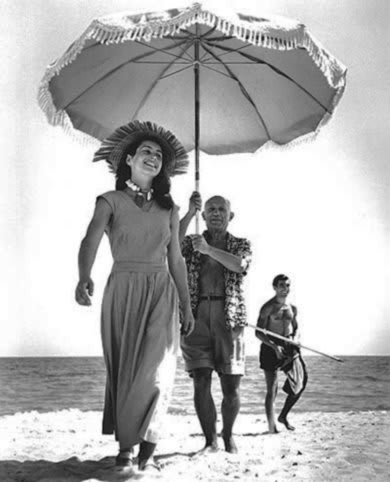
The life of Pablo Picasso alongside Françoise Gilot extended until 1953.
She, however, could not tolerate the parallel life the artist led with Marie-Thérèse Walter, compounded by the numerous casual affairs that constantly came to light.
With unwavering determination, Françoise decided to leave him, taking their children from Antibes to Paris and leaving Picasso alone.
But this solitude didn't last long. Fate had other plans for the Spanish master.
After Françoise's departure, the master would find a new and decisive muse: Jacqueline Roque.
The Arrival of Jacqueline Roque: A New Phase
Jacqueline Roque would become Picasso's second official wife, a relationship that would profoundly mark his final years.
Their first encounter took place in the charming town of Vallauris, in the south of France.
Olga's death in 1955 finally paved the way for Picasso to remarry, legitimizing their union.
After years of intense cohabitation, the wedding ceremony took place in 1961.
Like all the significant women in his life, Jacqueline quickly became a central and recurring theme in his works.
Picasso painted her almost obsessively, exploring the reduction of form, the simplification of contours, and an increasingly refined palette of colors, lines, and textures.
The Art Sanctuary in Mougins
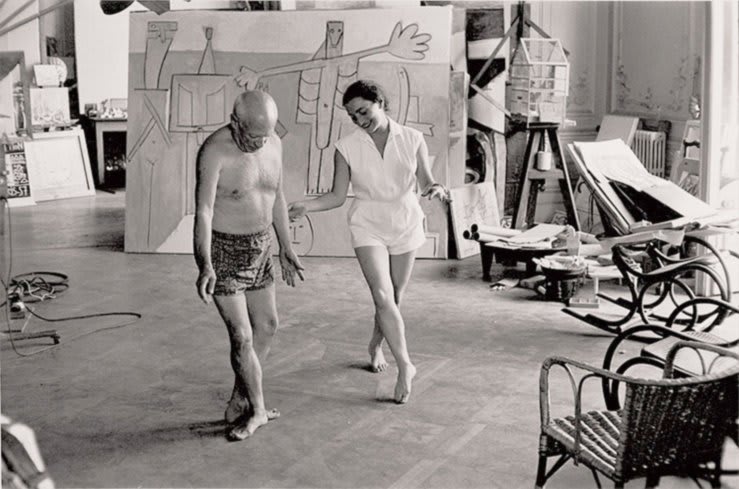
Picasso and Jacqueline shared a spacious home in Notre-Dame-de-Vie, in the village of Mougins.
This house, blessed with a breathtaking view of the bay of Cannes, quickly transformed into a vast and productive studio.
There, even at eighty years old, the artist continued his incessant and colossal production of paintings and sculptures.
Picasso would live for another thirteen years, "cheating death" and dedicating himself with fury and love to his art.
A significant portion of his work from that period would later be allocated to the prestigious Picasso Museum of Barcelona, inaugurated in 1963.
The Master's Solitude and Worldwide Recognition
As the years passed, Pablo Picasso plunged into profound solitude.
He had outlived almost all his companions and closest friends.
Access to the old master was granted to very few chosen ones, under the watchful eye of his wife Jacqueline.
Only names like Alberti, Maria Teresa León, Joan Miró, Luis Miguel Dominguin and his family, Malraux, Hélène Parmelin (author of Picasso Unknown), and photographer David Douglas Duncan had the privilege of witnessing his life and work during that period.
In 1966, France and the art world paid a grand tribute to Picasso.
A vast exhibition of his work – including painting, ceramics, and sculpture – occupied the prestigious Grand and Petit Palais in Paris, celebrating his incomparable legacy.
The consecration of his status as a living genius would come in 1967.
That year, his paintings achieved the highest prices ever recorded for works by a living artist, an unprecedented feat in art history.
The Last Chapter: Death and Farewell
April 7, 1973, began like any other day at his mansion in Mougins.
Picasso worked intensely for ten or twelve hours, chatted with friends, resolved outstanding matters, and smoked his inseparable black cigarettes.
He dined with Jacqueline, toasting to his own health, unaware that it would be his last night.
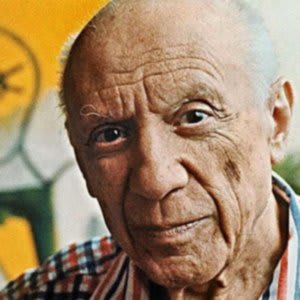
The next morning, he awoke with slight respiratory discomfort. At 12:20 PM, at the age of 91, the great master passed away, under the care of Doctor Rance.
By decision of Jacqueline and the family, Picasso was buried in the park of the Château de Vauvenargues.
There, at the foot of Mount Sainte-Victoire, so beloved by Auguste Rodin: Birth, Struggle, and Early Notable Works (Chapter 1/3) Cézanne, he found his final rest.
And, as a final touch of fate, a snowstorm, completely unexpected for the season, accompanied the funeral procession.
It seemed as if nature itself, in its sadness and grandeur, wished to participate in the final farewell to the unparalleled master PABLO PICASSO.
Essential Works: Unveiling Picasso's Trajectory
The First Strokes of a Genius: Youth and Formation
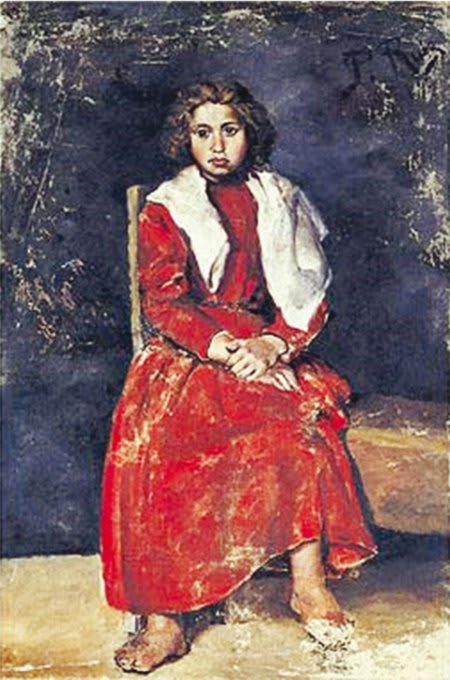
"Girl with Bare Feet" marks one of Picasso's first forays into painting, at a mere fourteen years of age.
The model's identity remains a mystery; it is only known that she was a familiar young woman who served for his initial studies.
This work, notably, was the artist's favorite for many years.
There is a theory that she reminded him of his sister, Concepción, who tragically passed away in the same year this canvas was created.
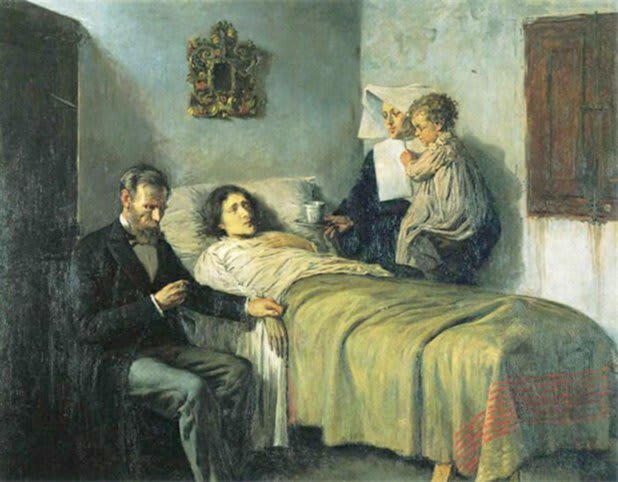
At fifteen, Picasso already demonstrated remarkable talent with the academic work "Science and Charity".
This painting earned him an honorable mention at the National Exhibition of Fine Arts in 1897.
Additionally, he won a gold medal in a competition in his hometown, Málaga.
A curious detail: the doctor examining the patient's pulse was modeled after the artist's own father, recognizable by his reddish hair.
The work is a clear testament to Picasso's precocious skill and refined technique.
This standard of early technical mastery mirrors the meticulous development seen in other legendary figures of art history: Biography of Johannes Vermeer: In-Depth Analysis of Masterpieces
The Turn to Blue: Melancholy and Depth
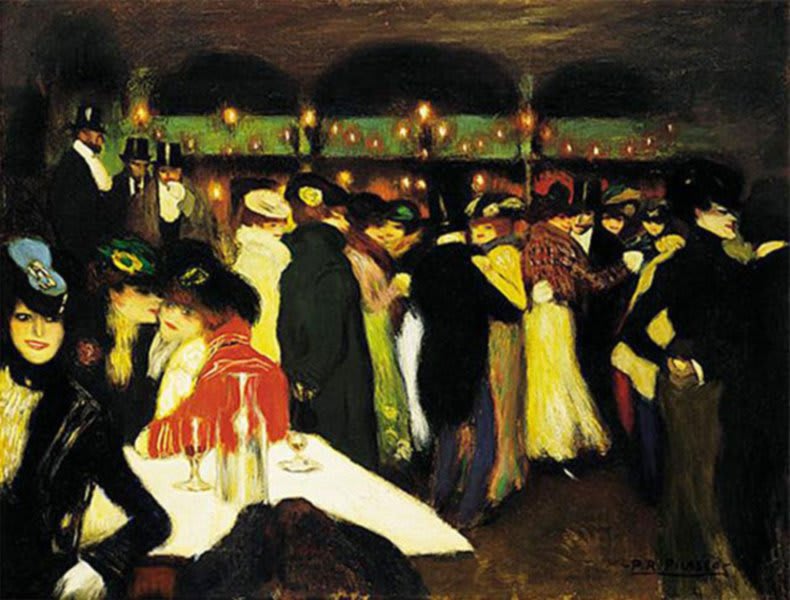
In 1900, after a brief stay in London, Picasso settled in Paris, the effervescent capital of art.
His first painting in the city was no coincidence: “Le Moulin de la Galette” depicted a renowned meeting point for artists, about which he had heard so much.
In this work, the influence of the Impressionists is clearly perceived, marking a period of experimentation and assimilation.
The vibrant atmosphere of the French art scene was also famously captured by the pioneers of Impressionism: Woman with Parasol (The Passeio) – Claude Monet
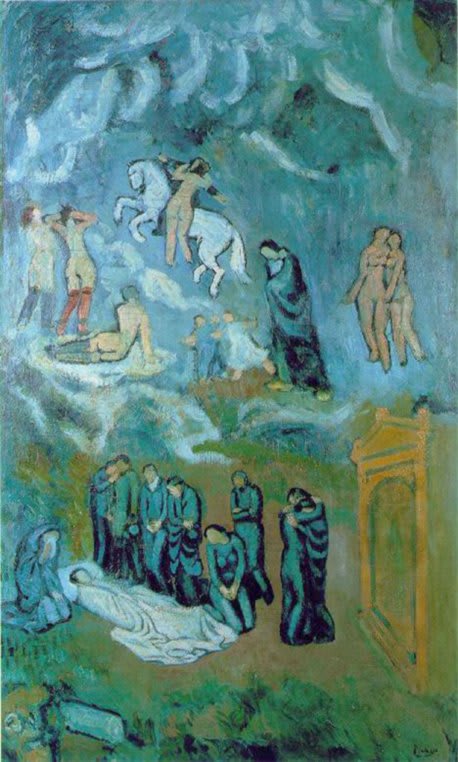
The tragic suicide of his friend Casagemas, a fundamental support at the beginning of his career in Paris, marks the painful start of Picasso's Blue Period.
This artistic phase, which would extend until 1906, is permeated by melancholic and reflective tones.
In the painting "Evocation", a clear influence of the Renaissance master El Greco can be noted, especially in the dramatic intensity and elongated composition of the figures.
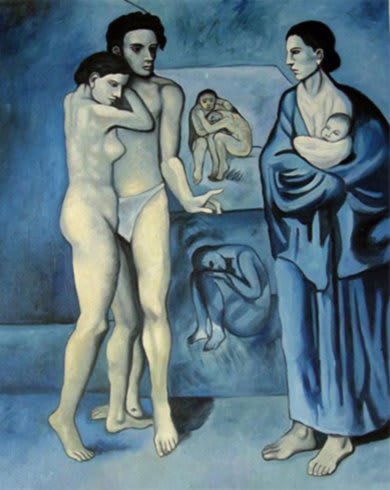
Picasso's Blue Period, spanning the years 1900 to 1904, is marked by predominantly monochromatic paintings.
Shades of blue and blue-green dominate the palette, only occasionally punctuated by other warmer colors.
The works from this period seem to mirror Picasso's experience, permeated by relative poverty and emotional instability.
In late 1901, the artist produced several posthumous portraits of Casagemas.
This series culminated in the somber and enigmatic painting "La Vie" (Life), where his deceased friend is portrayed as the central male figure, perpetuating his memory.
From Blue to Rose: A Transition of Colors and Themes
In the work "Acrobat on a Ball", the viewer witnesses a crucial moment in Picasso's trajectory.
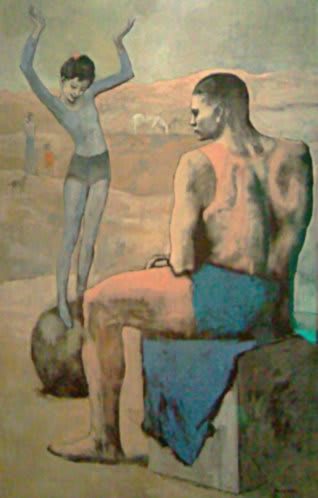
This painting integrates the transitional works between the artist's "Blue" and "Rose" periods.
In it, Picasso masterfully explores the contrast and balance of forms and lines, the interplay between weight and light, and the tension between stability and instability.
The Rose Period brought back to Picasso a world of forms, dimensions, and spaces closer to reality, though subtly transformed.
The paintings were once again filled with a palpable vitality, contrasting sharply with the introspective melancholy of the Blue Period characters.
The Cubist Revolution: Fragmentation and Perspective
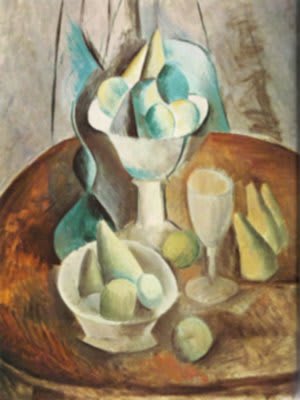
Cézannian Cubism, one of the initial branches of this revolutionary movement, carries notorious influences from its precursor, Paul Cézanne.
This foundation can be clearly observed in the work "Fruit Bowl with Pears", created in the first phase of Cubism, where structure and geometry begin to deconstruct traditional representation.
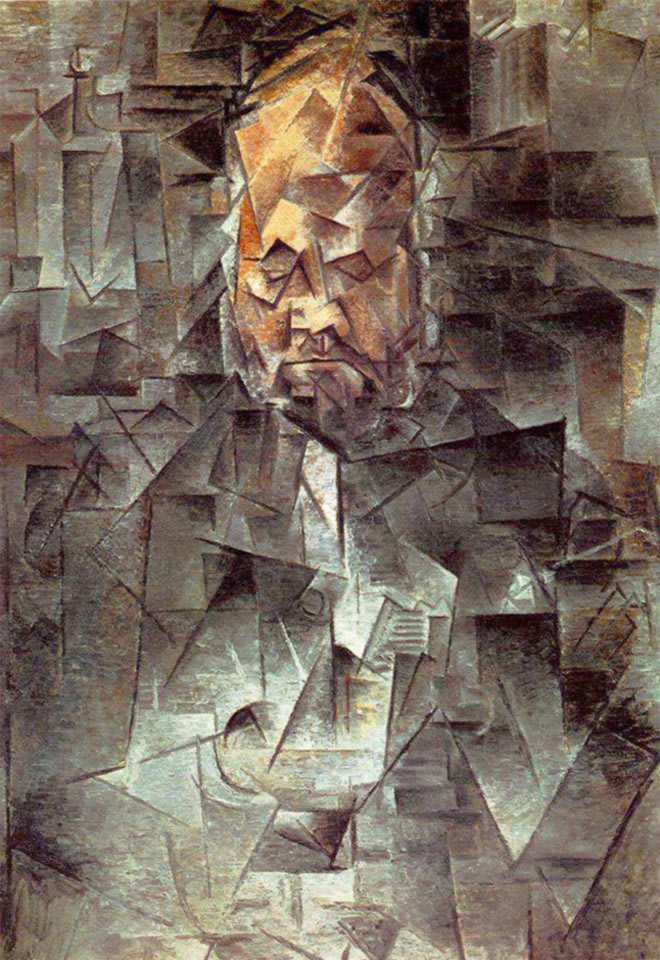
In this impressive portrait of Ambroise Vollard, we find an emblematic example of Analytical Cubism.
This style developed through the more in-depth works of Picasso and Braque, building on the research initiated with Cézannian Cubism, fragmenting reality into multiple viewpoints.
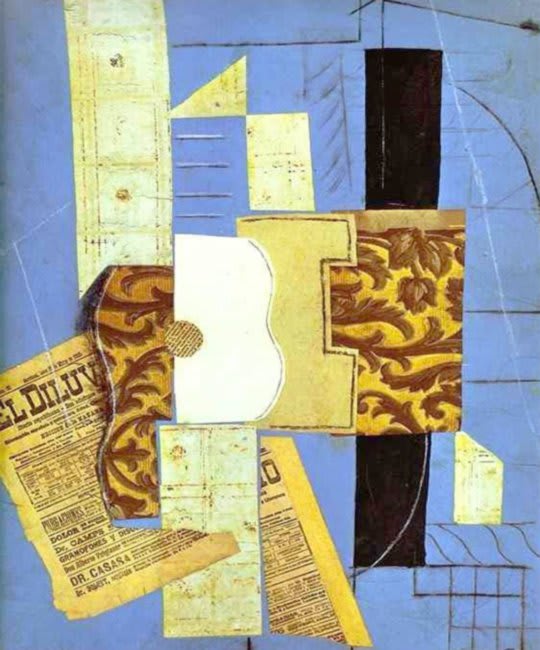
In the early 20th century, Cubists Pablo Picasso and Georges Braque revolutionized the art world.
They elevated collage, a technique previously limited to scrapbooks, into an avant-garde and expressive art form.
A collage, by its very nature, is an image constructed from newspaper clippings, photographs, and other printed images, meticulously glued onto a flat surface.
Frequently, these compositions are enriched with painted elements.
By definition, collage is a form of mixed media, employing diverse approaches in a single work.
The term "mixed media" also extends to the use of multiple types of paint or the combination of painting with drawing, expanding artistic possibilities.
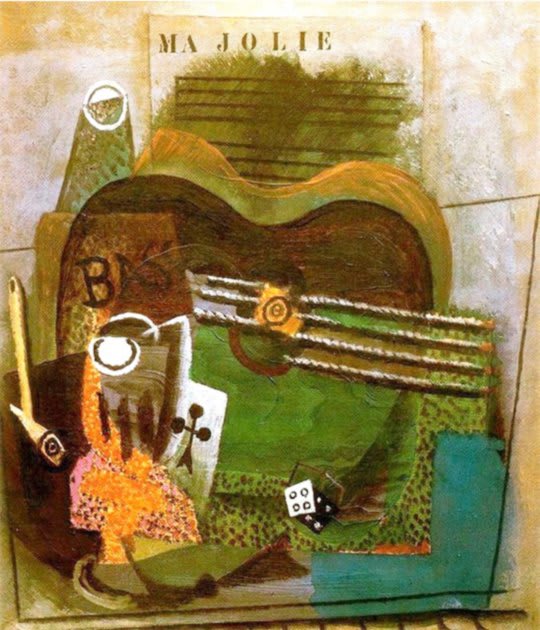
In 1911, Marcelle Humbert became an overwhelming passion in Picasso's life.
He affectionately nicknamed her Eva, a name that would echo in his work.
Around this time, the words ‘Ma Jolie’ (my beautiful one) began appearing in his paintings.
It was the title of a popular song, and Picasso adopted it as a tender way to refer to Eva.
However, this intense relationship was brief.
Tragically, Eva passed away due to an illness in 1915, leaving a profound void in the artist's life.
From Classical to Surreal: New Perspectives
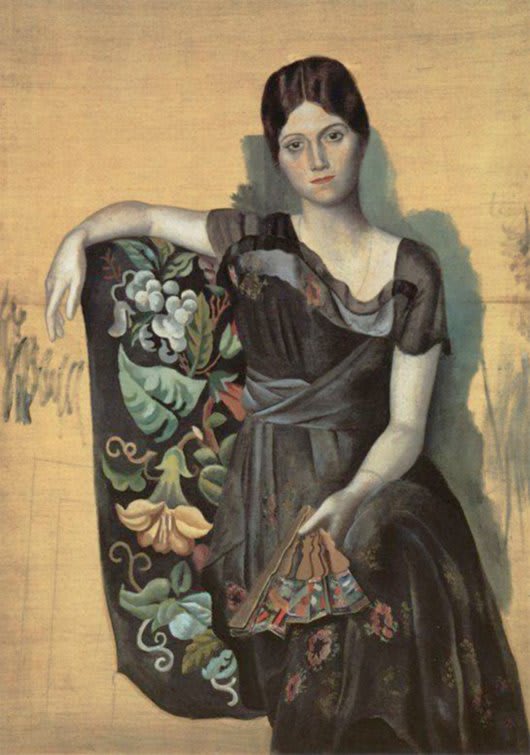
Even as one of the founders of Cubism, Picasso never allowed himself to be confined to a single movement.
He continued exploring, applying his vast knowledge and engagement across diverse artistic currents.
This is clearly perceptible in the portrait of his wife, Olga Khokhlova, which denotes a more classical approach.
By this time, Picasso's works were already intensely sought after and sold for very high prices, ensuring material comfort for the family.
However, financial prosperity would not ensure domestic stability.
Within a few years, both Olga and Picasso would demonstrate deep dissatisfaction with their marriage.
Picasso’s return to traditional forms echoes the enduring influence of the great masters who defined the heights of training and rise: Raphael: Biography and Work: Birth, Training and Rise (Part 1 of 3)
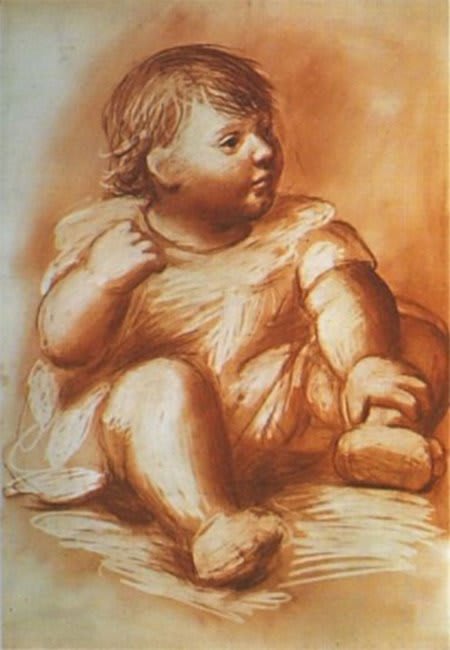
In this delicate painting of his son Paulo, conceived with the dancer Olga Khokhlova, Picasso demonstrates all his mastery and sensitivity for drawing.
Picasso and Surrealism: A Unique Connection
Between 1925 and 1938, after his more classical period, a considerable part of Picasso's work found resonance with the Surrealism.
Even participating in some Surrealist exhibitions at the invitation of the influential André Breton, Picasso's relationship with the movement maintained a rather formal character.
His distorted and voluminous figures of the time evoke an otherworldly and, at times, nightmarish atmosphere, characteristics that drew him closer to the Surrealist universe.
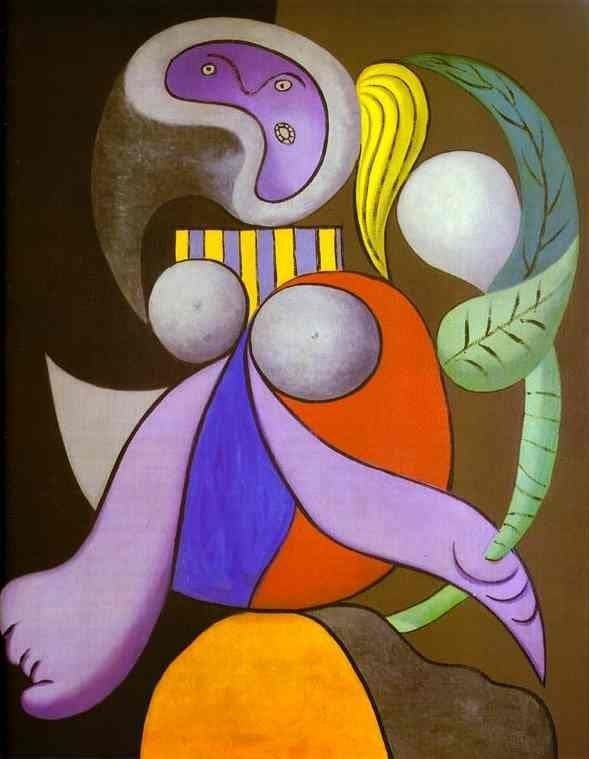
In the work "Woman with a Flower", Picasso portrays his mistress Marie-Thérèse Walter.
The figure appears distorted and deliberately deformed, a clear manifestation of Surrealism's influence on his aesthetic during that period.
But history holds a distressing detail:
The portrait of his daughter Maya, at just three years old, in "Maya with her Doll" appears almost sinister.
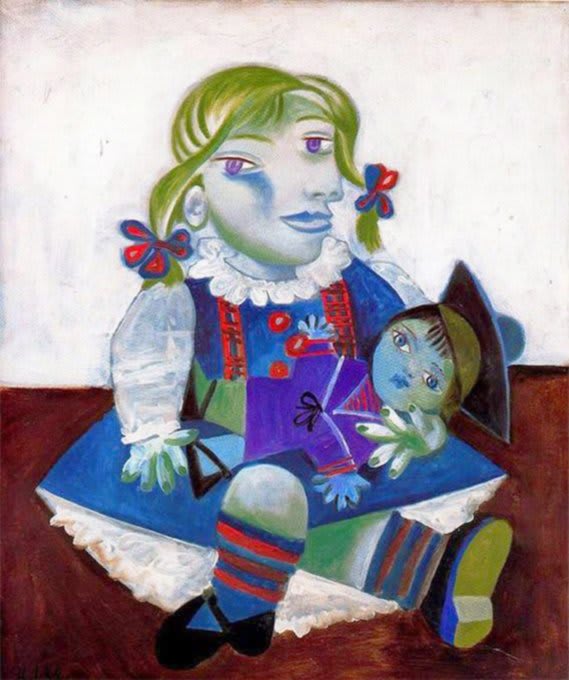
This portrait of his daughter Maya, at just three years old, evokes an almost sinister sensation.
It is as if Picasso's work, already deeply haunted by the imminent horrors of war, proved incapable of capturing the pure innocence of childhood.


