Post-Impressionism
Post-Impressionism
The Post-Impressionism is a predominantly French art movement that developed approximately between 1886 and 1905, from the last impressionist exhibition to the birth of Fauvism.
The movement encompasses a wide range of distinct artistic styles that share the common motivation of responding to the simplicity of the impressionist movement. Due to its broad emphasis on abstract qualities or symbolic content, it includes neo-impressionism, symbolism and sensitivism, along with some later works of the impressionists, but all concentrated on the artist's subjective vision.
Paul Cézanne is known as the father of this movement, just like Paul Gauguin, Vincent van Gogh and Georges Seurat, presented distinct characteristics to express themselves, each with a different style.
Cézanne inaugurated an era in which painting transcended its traditional role as a window to the world and, instead, became a window to the artist's mind and soul. These artists were dissatisfied with what they considered the triviality of the subject and the loss of structure in impressionist paintings, although they did not agree on the path to follow.
The term was first applied in 1906 by the English painter and art critic Roger Fry in the title of an exhibition of modern French painters: Manet and the post-impressionists, which he organized for the Grafton Galleries, in London.
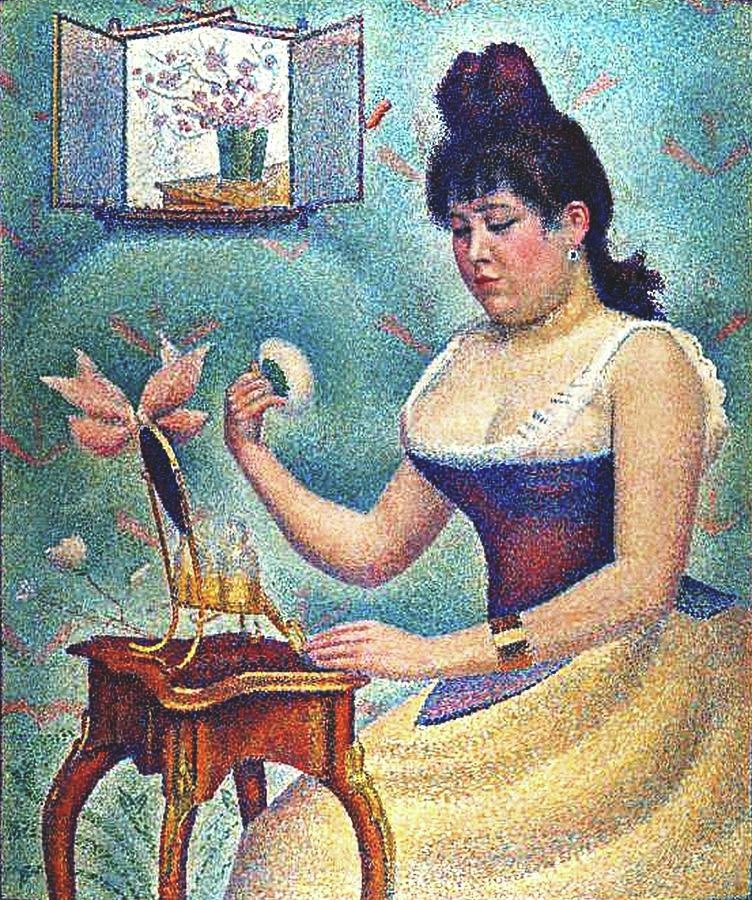
Georges Seurat and his followers were concerned with applying pointillism, a painting technique that consists of the systematic use of small colored dots. Structure, order, and the optical effects of color dominated the aesthetic vision.
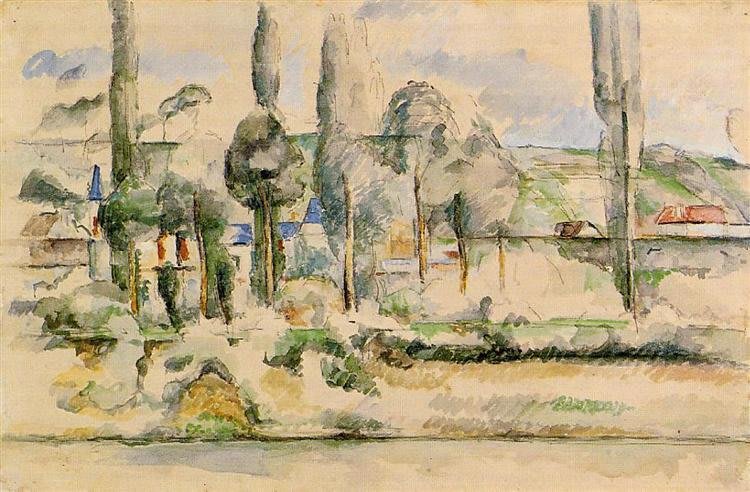
Paul Cézanne proposed to restore a sense of order and structure to painting, to make impressionism something solid and lasting like museum art. He achieved this by reducing objects to their basic forms, maintaining the saturated colors of impressionism.
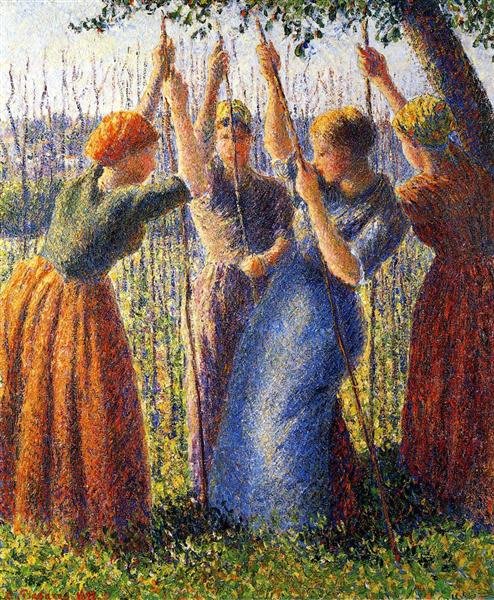
Between the mid-1880s and the early 1890s, the impressionist Camille Pissarro experimented with neo-impressionist ideas. Discontent with what he called romantic impressionism, he investigated pointillism in a scientific manner, before returning to a more pure painting in his last decade of life.
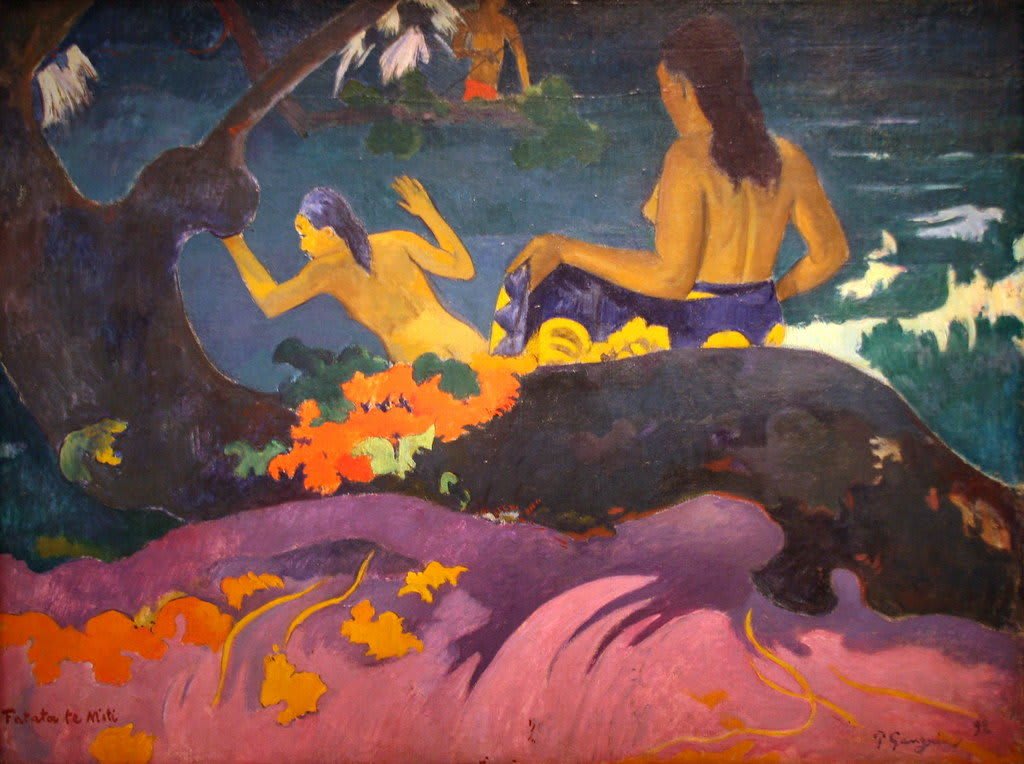
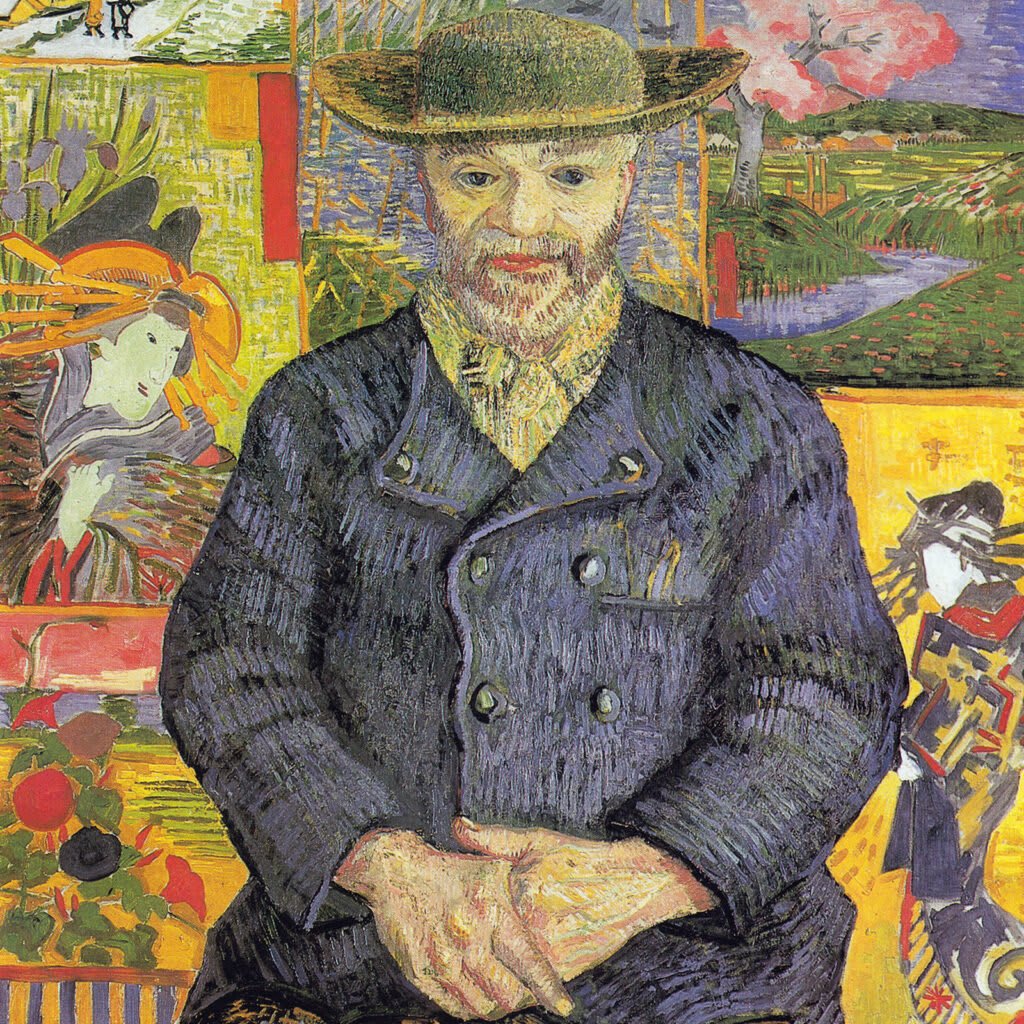
Vincent van Gogh and Paul Gauguin used vibrant colors and brushstrokes to convey their feelings and state of mind. Symbolic meanings and highly personal significance were particularly important to these artists who rejected the interest in representing the observed world, they looked to their memories and emotions to connect with the observer on a deeper level.
Despite the various individualized styles, most post-impressionists focused on abstract forms and patterns in the application of paint to the surface of the canvas, they expanded impressionism while rejecting its limitations: they continued to use bright colors, often dense paint application, and real-life subjects, but were more inclined to emphasize geometric forms, modifying the form to achieve expressive effects and using random colors.
Critics grouped the various post-impressionist styles into two general and opposing stylistic trends - on one side was the structured or geometric style, with Paul Cézanne as the precursor to cubism, while on the other side was the expressive or non-geometric art that led to expressionist abstraction.
Paul Cézanne based himself on saturated colors and broad brushstrokes to evoke the artist's internal turmoil. Along with Paul Gauguin, he experimented with new approaches to painting and rejected academic representation, fine finish, and the impressionists' fixation on optics.
Paul Gauguin developed these ideas further in his theory of sensitivism. According to his principles, the final visual form is determined by a synthesis of the external appearance of the natural form, the artist's feelings about the subject, and aesthetic considerations of color, line, and form.
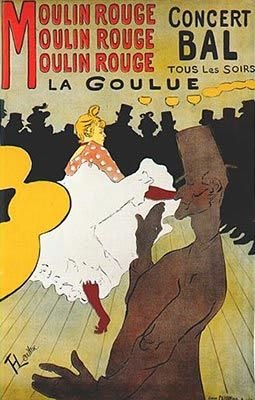
At the end of the 19th century, an influx of Japanese products and art on the European market initiated japonism - the European interpretation of Japanese artistic styles in Western art objects. Similar influences are also evident in the work of Henri de Toulouse-Lautrec.
Toulouse-Lautrec was an observer of the cabaret world with a unique perspective; he was born into the French nobility, but was physically disabled, and therefore incorporated a perspective with much knowledge. His unique view of Parisian nightlife resulted in paintings and lithographs of dance halls and cabarets that featured strong contours and planes of color also influenced by the ukiyo-e style.
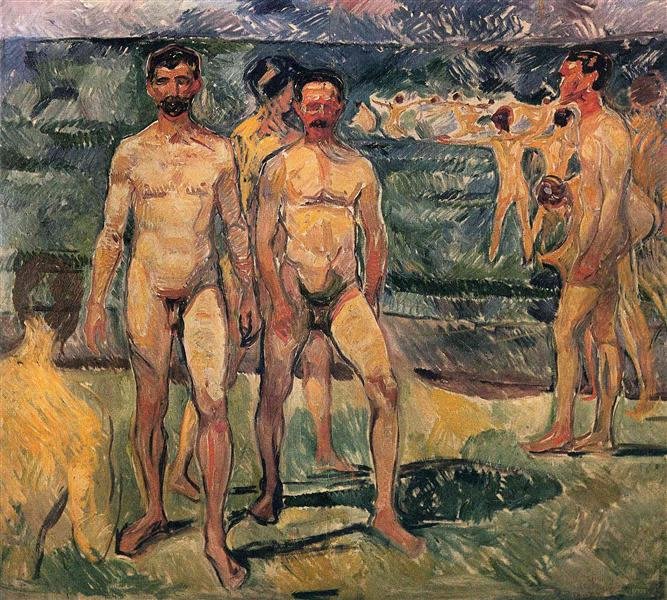
Although post-impressionism was centered in France, the artistic styles and theories that emerged from the movement quickly spread to other countries. The Norwegian painter Edvard Munch expanded the ideas of symbolism to create his own personal and highly expressive artistic style.
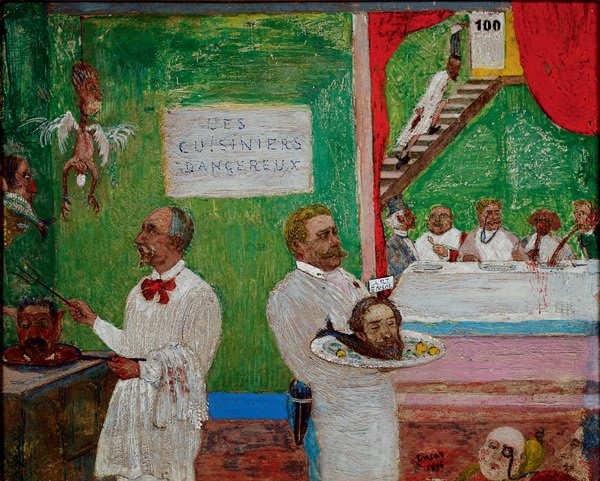
Through abstract representations and the use of strong colors and vigorous lines, he sought to convey the artist's internal struggle, as well as the growing anxiety of the modern man. Others, such as the Belgian painter and engraver James Ensor, implemented vibrant nuances and flat perspective in an anti-realistic manner to convey the generalized tension and anxiety.
Critics grouped the various post-impressionist styles into two general and opposing stylistic trends - on one side was the structured or geometric style that was the precursor to cubism, while on the other side was the expressive or non-geometric art that led to expressionist abstraction.
GALLERY - CITED ARTISTS
Featured Work: The Great Bathers
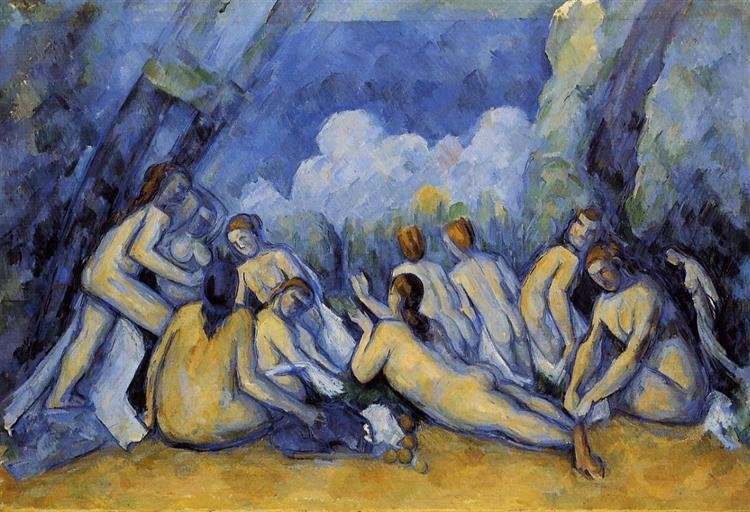
In this painting, Cézanne is reinterpreting a iconic Western motif of the female nude, but in an exceptionally radical way. The size of the painting is monumental, confronting the viewer directly with simplified forms that resolve into the nude bodies of his models.
It is part of a series of very human nudes, nothing of Greek or Roman nymphs or satyrs, they are arranged in various positions, like still-life objects, under the pointed arch formed by the intersection of trees and skies.