Louis Anquetin: Biography and Works
Louis Anquetin: A French painter born in 1861 in Étrépagny, France, and died in 1932 in Paris.
Louis Anquetin was a French painter born in 1861 in Étrépagny, France, and died in 1932 in Paris.
He was one of the main artists associated with the artistic movement known as Pointillism, along with Georges Seurat and Paul Signac.
Anquetin was also a prominent member of the group Les Nabis, a collective of post-impressionist artists seeking new forms of artistic expression.
Louis Anquetin was a French painter associated with the post-impressionist movement, and was best known for capturing scenes of Paris at night.
Louis Anquetin: BIOGRAPHY
Louis Anquetin was born in Etrepagny, France, on January 26, 1861.
He was the son of George Anquetin, a wealthy butcher, and Rose-Felicite Chauvet.
As the only child of a wealthy family, he was very spoiled.
His parents encouraged him to start drawing, and he quickly became fascinated by it.
In 1872, at the age of 11, he was enrolled in the Lycée Pierre Corneille in Rouen, from which he graduated in 1880.
In school, he befriended Edouard Dujardin, who would later become a renowned poet.
In the same year, he joined the military service in the Dragoons Regiment in Chartres.
After completing his service, he decided to pursue a career as an artist and, after convincing his parents, moved to Paris in 1882.
There, he joined the studio of Leon Bonnat, where he met and became friends with Henri de Toulouse-Lautrec.
The following year, when Leon was appointed professor at the Academy of Arts, the two young artists joined the workshop of the painter Fernand Cormon.
He was a very promising student and Cormon considered him his successor.
In 1884, he worked in a workshop with Emile Bernard, who was only 16 years old at the time.
Louis Anquetin discovered Impressionism after meeting Claude Monet in 1885.
This style allowed him to clarify his range of paintings.
However, later, he and his friends sought to go beyond 'impressionism' and create a modern style.
With Émile Bernard, Louis begins to paint in the style of Divisionism.
Later, he adopted a new style called Cloisonism, which was partially inspired by Japanese woodblock prints and stained glass.
The term was coined by the art critic Edouard Dujardin after seeing his work in 1888, in a review.
The new style was also inspired by the Japanese prints of Vincent van Gogh.
The main characteristic of this style is the use of strong black outlines and flat areas of color.
In 1889, he moved his studio from Montmartre to the Rue de Rome, and began to paint mysterious women at night, with the best example being the painting Nighttime Woman in the Champs-Elysées.
In 1891, he held a major exhibition at the Salon of Independents with ten of his best works.
All the paintings were highly praised by the critics.
In 1894, together with Toulouse-Lautrec and Joseph Albert, they traveled to Belgium and the Netherlands.
There, he saw works by earlier masters, such as Peter Paul Rubens, Rembrandt van Rijn, and Franz Hals, and was greatly influenced by them.
He noted that the paintings of the masters were fluid and bright, while his own works seemed opaque.
He also had long discussions about painting technique with Auguste Renoir, and they both agreed that there was something missing in their works.
Thus, their paintings would become more classical.
From 1894 to 1896, he studied anatomy in the laboratory of Professor Arroux in Clamart, as he believed that the great masters had perfect knowledge of human anatomy, which gave them the freedom to paint figures without the need for any model.
He also began to experiment with oil techniques, trying to discover the methods of the old masters.
In 1906, Louis married Berthe Coquinot, who was a widow of an officer.
After the marriage, the couple settled in Vine Street, in a magnificent house designed by Charles Blanche.
During this period, he also began to teach painting techniques.
In 1914, he organized monthly debates at the restaurant La Perouse and also acted as a lecturer.
His book "Rubens" was published in 1924.
Louis died in Paris at the age of 71, on August 9, 1932.
Louis Anquetin: GALLERY
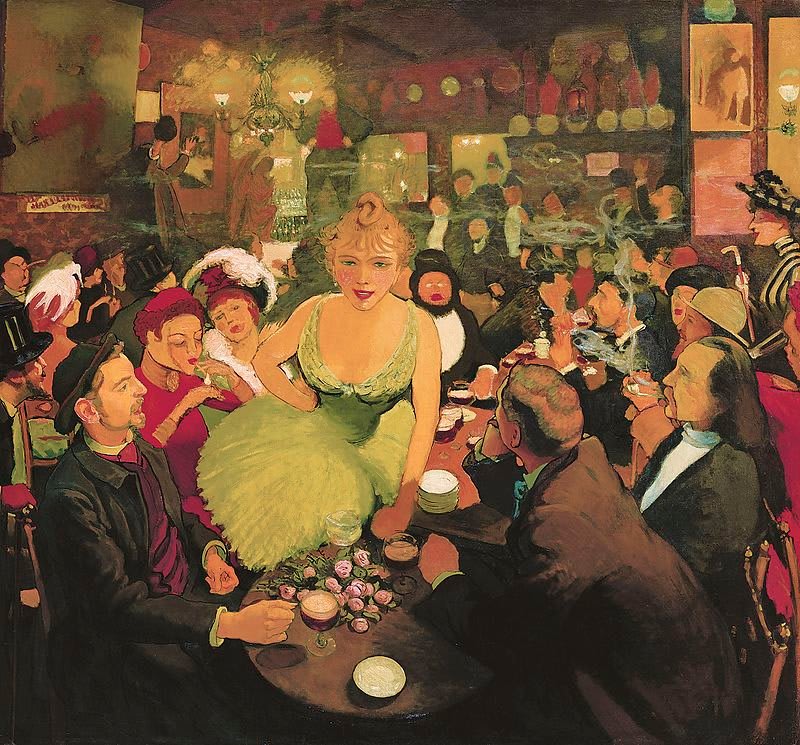
Inside of Bruant’s Mirliton. Louis Anquetin. 1886
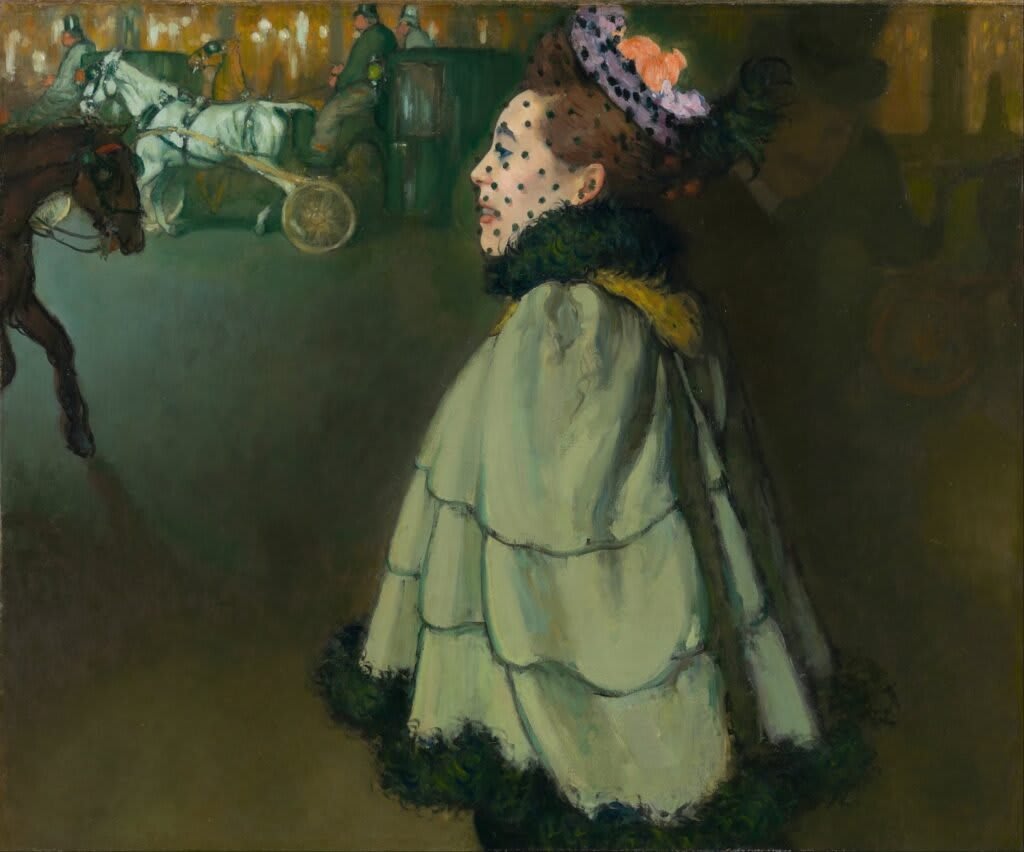
Nighttime Woman in the Champs-Elysées. Louis Anquetin. 1890
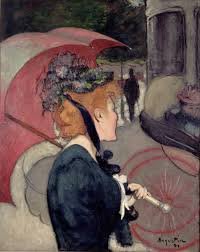
Young Woman with Umbrella. Louis Anquetim. 1891
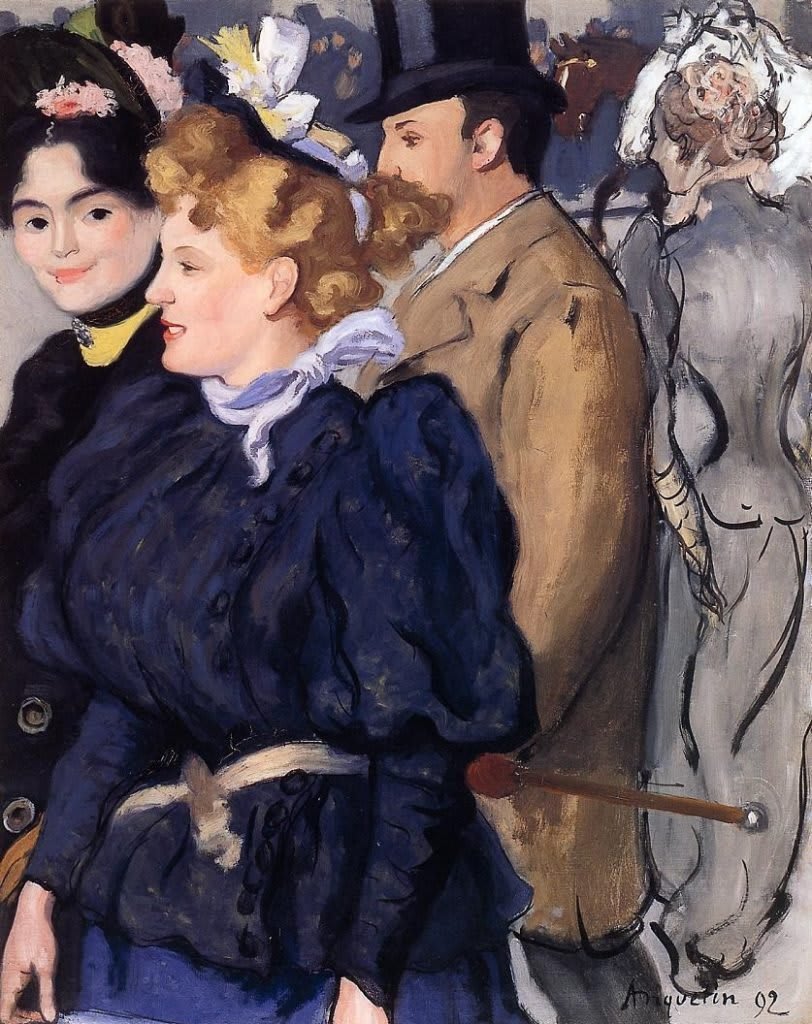
Promenade. Louis Anquetin 1892
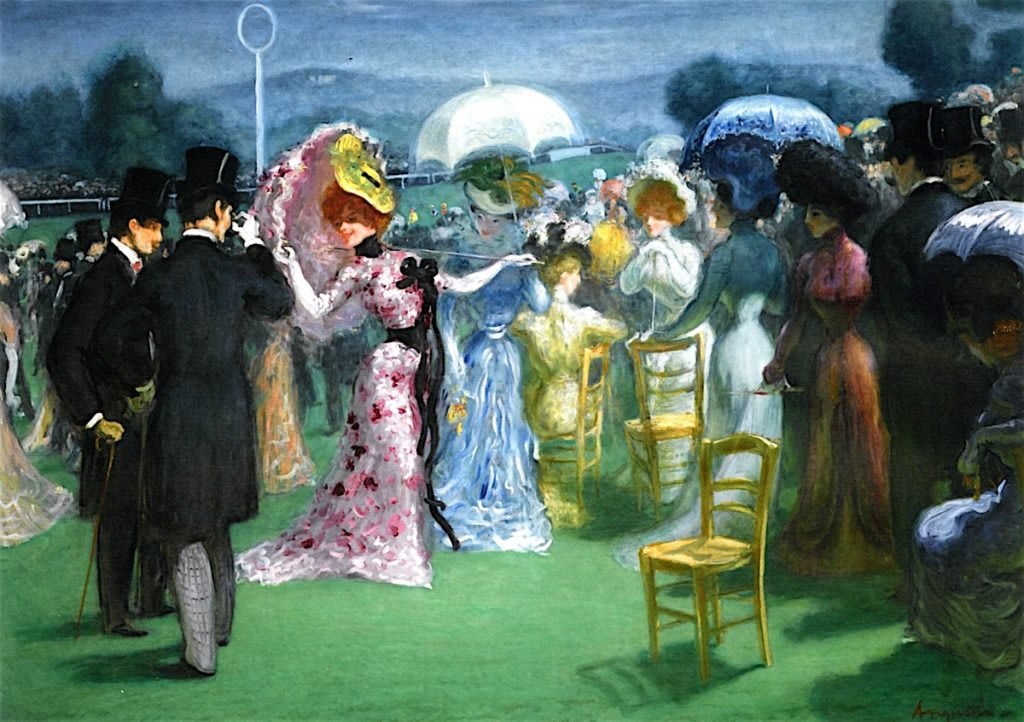
At the Jockey Club. Louis Anquetin . 1893
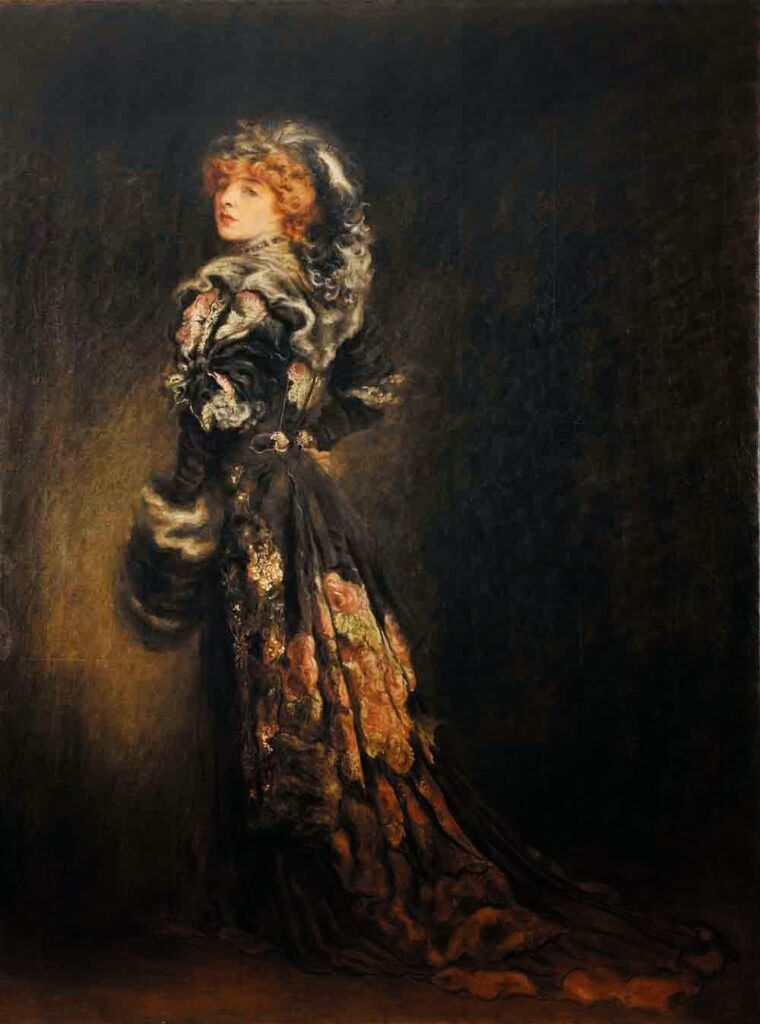
ArtsViewer.com
COMMENTED WORK
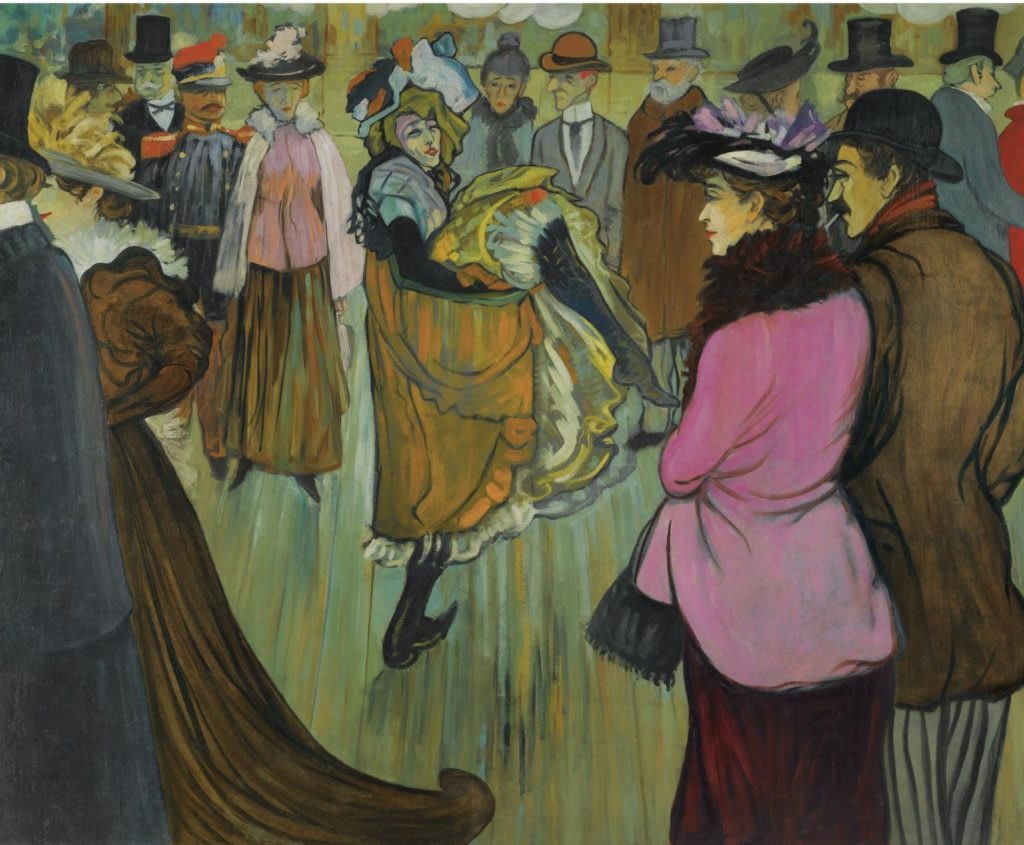
The Moulin Rouge is a large-scale representation of the world-famous cabaret that captures the bohemian and daring atmosphere of the concert café in a vibrant and modernist style.
Anquetin began to frequent the Moulin Rouge shortly after its inauguration in 1889 and, along with his fellow artists Henri de Toulouse-Lautrec and Emile Bernard, became a regular visitor to the cabaret in the years that followed.
This work is the largest and most complex composition by Anquetin on this theme and is also one of the final works of the distinct Cloisonist phase of his artistic development.