
Salvador Dalí - Biography and Works: Analysis of the Most Famous Paintings and His Legacy
Explore the life and works of Salvador Dalí, one of the most iconic and influential artists of the 20th century.
Salvador Dalí was one of the most famous and provocative painters of the 20th century. With extraordinary skill in drawing, he also explored sculpture, engraving, costume design for film, theater, and dance. Check out:
- Author Portrait with Rafael's Neck
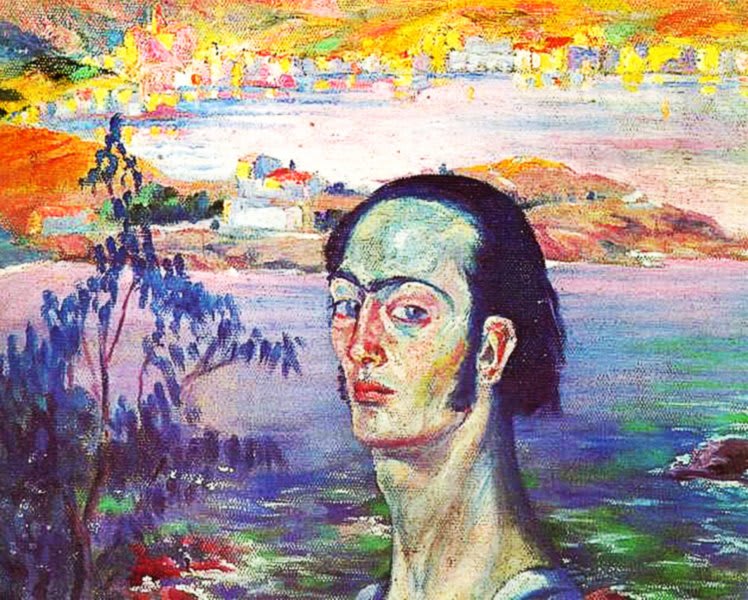
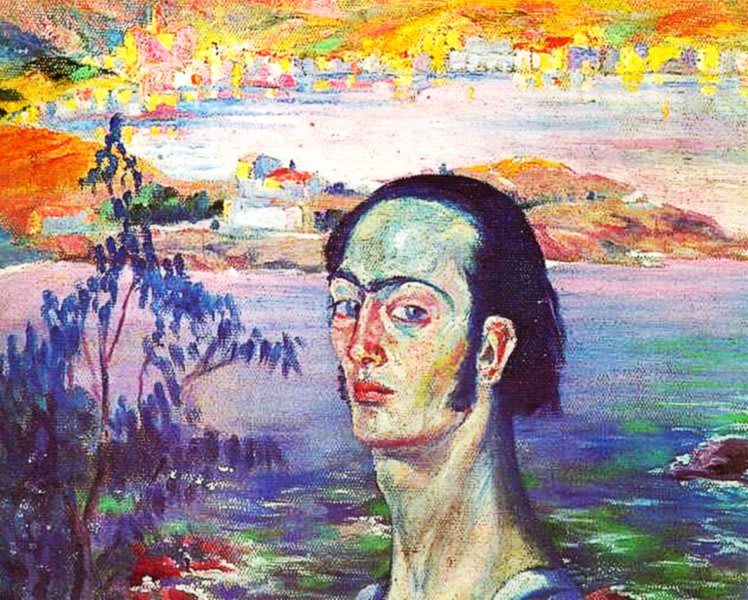
This painting is a tribute to Rafael Sanzio, one of his favorite painters. The painting reflects the influence of impressionism and shows his concern with light and color.
Dalí’s early fascination with the interplay of light and color was shared by other masters of the era. Woman with Parasol (The Passeio) – Claude Monet
- Figure at a Window
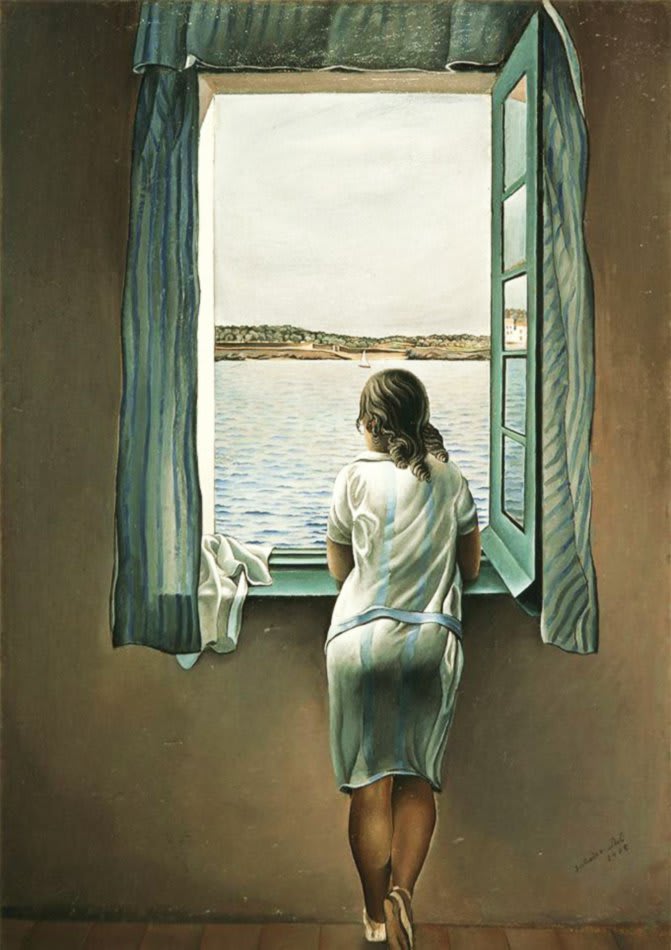
By framing his sister Ana Maria in front of a window, the painter reflected the daily life of women at the time, limited to a world "from the door to the inside": the house, their domestic chores, and their children. The world of men, work, and entertainment is "from the door to the outside" and women only reached it through contemplation. The room where Ana Maria is in the painting represented for Dalí the memory of a constant childhood vision.
- The Great Masturbator
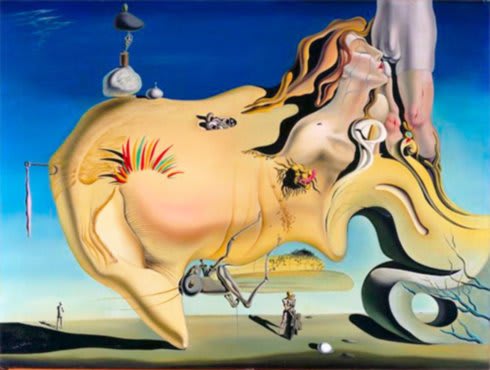
This is one of the most representative works of the surrealist movement. It is a testament to the artist's first encounter with Gala and the state in which she left him. This encounter, which would mark the artist's life and work, is followed by one of the greatest artistic deliriums of Dalí. It is a kind of self-portrait, which the artist repeated in several other works, and represents the state of ecstasy he said he only experienced after meeting his muse.
Examining how artists project their inner worlds through self-depiction is a recurring theme in art history. Van Gogh's Self-Portraits
- Telephone-Lobster
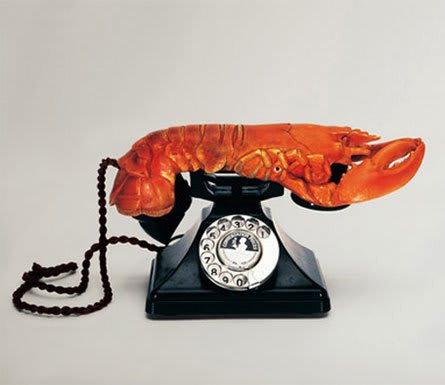
For Dalí, telephones and lobsters carried a sexual connotation between food and sex. Despite the uselessness of surreal objects, collector Edward James commissioned four devices for his country house that worked perfectly.
- Mae West as Surrealist Apartment
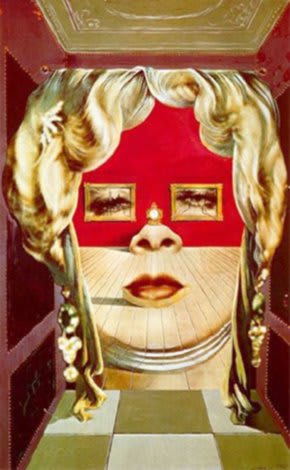
When he came into contact with Hollywood, Dali met actress Mae West, one of the provocative divas of the time, loaded with "sex symbol," who left conservatives and puritans red with shame with her lines like "When I'm good, I'm good, but when I'm bad, I'm better still."
The long, blonde, and curly hair of the actress is used as the curtain that gives access to the room. In the center of the room is the sofa, which is nothing more than her closed mouth. The nostrils, attached to the red wall, have become the fireplace, which has a large pendulum clock above it. The eyes have become frames with similar moldings, hung on the wall.
- The Sleep
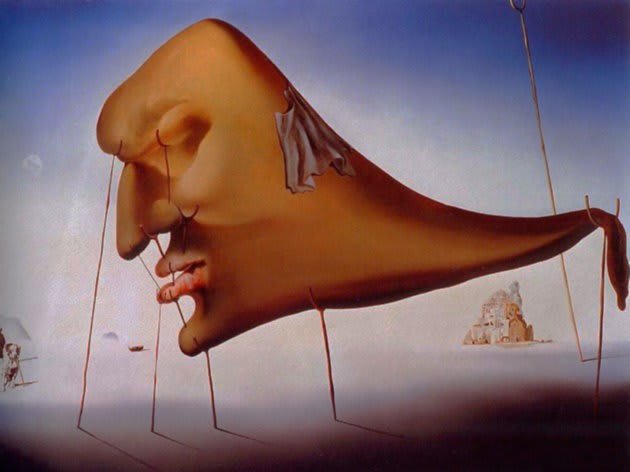
This is one of the most emblematic paintings of the surrealist artist. The painting illustrates a soft head and no body, supported by crutches during rest. For surrealists, the period of sleep was very important because it was during these brief moments that they had access to dreams and the unconscious.
The eleven main crutches represent visually the collapse of the body during sleep. Considering the surrealist idea, when we sleep, we only have control of the unconscious through dreams. The crutches give delicate balance to the figure and indicate that it can wake up in the absence of one of them, of the eleven that support it. This shows our fragility during the sleep state.
This focus on the raw, psychological aspects of the human experience was also central to the work of other prominent 20th-century figures. Egon Schiele: Maturity, Conflicts, and Lasting Expressionist Legacy
- The Enigma of Hitler
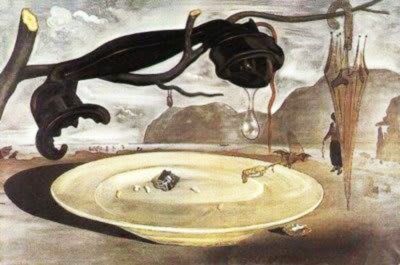
Dalí used the image of Hitler, as a collage or painting, in several paintings of the 1930s, which always brought complaints from surrealists. This, certainly, was the most polemical, although the painter defended that these paintings did not contain fascist connotation, because he considered politics an episode of history. However, he recognized that he saw in Hitler's life a surrealist phenomenon.
- Sculture
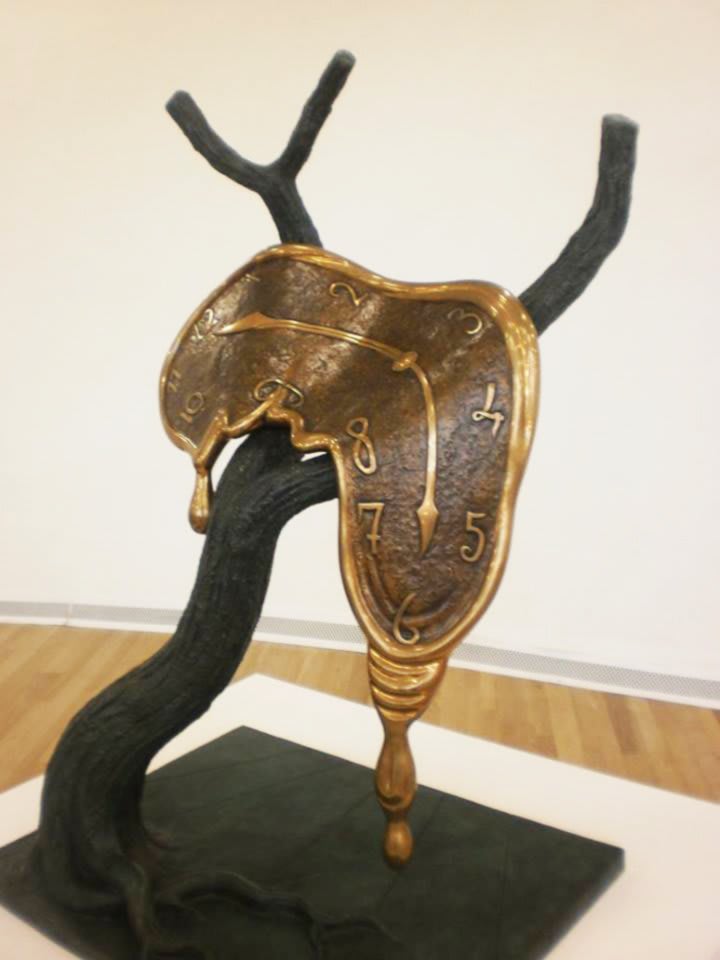
Salvador Dali's sculpture (1943), which reminds us of a detail of his famous painting. Click and learn more about his most famous painting: The Persistence of Memory
- Galarina
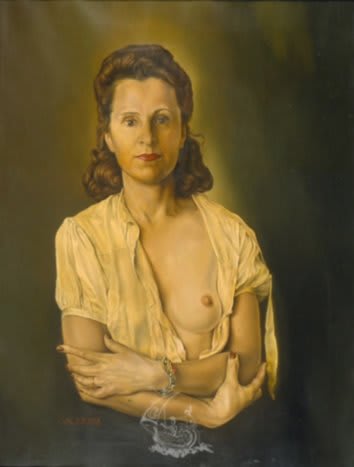
Constant presence in his work, Gala introduced him to the Parisian art world and controlled the family's finances. Dali was not only passionate but completely dependent on her. This reflected in his work and this is one of the many paintings under the same theme. Like painter Rafael, Dalí painted his Galarina. In the picture, she represents a victorious Eve, who has already dominated the snake and carries it, domesticated, on her arm. She is also, by the position of her arms, the "basket of bread". Her bare breast represents the tip of a piece of bread.
- Christ of Saint John of the Cross
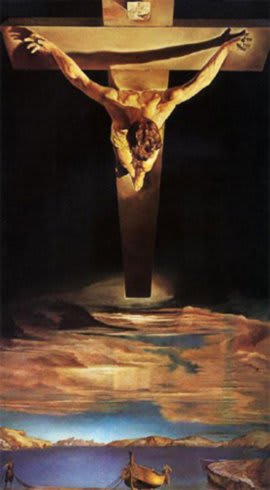
This is one of the most famous, emblematic, and acclaimed works of the Catalan painter. For Dalí, the composition summarizes all his previous experiments. Thus, once again, the line of the horizon marks two worlds: the upper, corresponding to the divine; and the lower linked to the earth. The perspective is of enormous depth, evaluated by the pictorial treatment of Christ on the cross that refers to the works of another master: Velázquez, whom Dali admired since he saw his paintings in the Museo del Prado, in Madrid.
- Dalí painting Gala
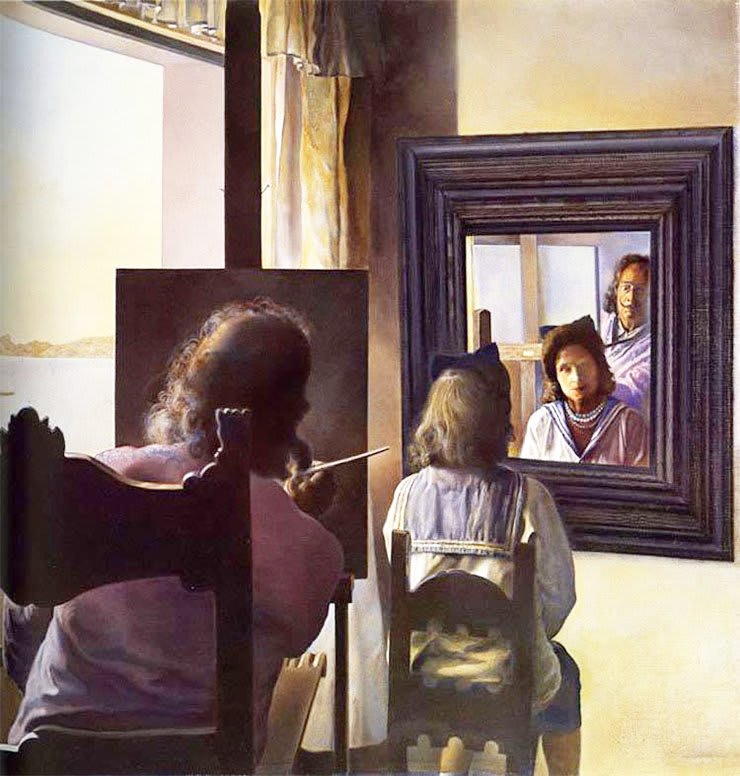
If one trait characterized Dalí's work was his eternal search for new creative challenges. In the early 1970s, the painter experimented with holograms to capture the illusion of a three-dimensional painting. The technical limitations and dependence on photography, however, led him to abandon them in favor of the stereoscope.


