
The Circus - Georges Seurat
The Circus - Georges Seurat
The Circus is one of the most important paintings by the French artist Georges Seurat and is notably known as his final work before his death in March 1891.
The theme used is a presence that increased significantly at the end of the 19th century.
Although the painting was unfinished, it was still exhibited at the 7th Salon des Independents and sparked a great controversy due to its similarity to posters by the French painter Jules Chéret and many accused the painter of plagiarism.
The circuses in France in the 19th century, were a spectacle to be seen and their collection of artists inspired the Impressionists.
These artists often included giants, elephants riding bicycles and daring acrobatic acts.
The difference between the circus artists in other European cities is that in Paris they were rewarded with much more respect.
This respect led many of their scenes to be portrayed in famous paintings and stories.
The Circus Fernando located in Montmartre, was one of the most popular circuses of the time and that Seurat probably frequented, was famous for attracting poets and painters.
This circus offered a level of intimacy to its performance that could not be reproduced anywhere else, a measure of its steep seating plan and small arena.
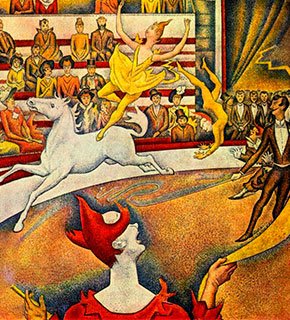
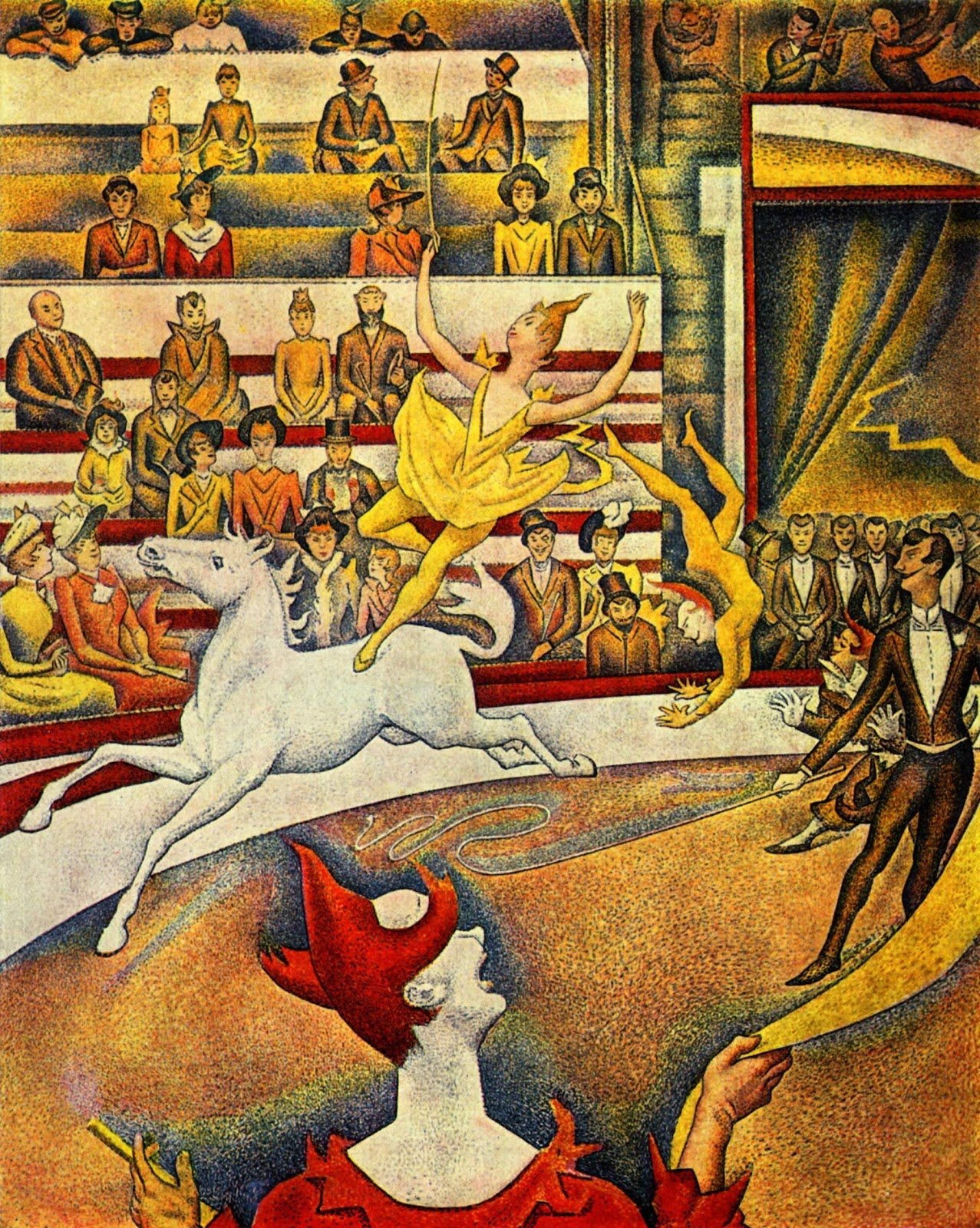
Thus Seurat interpreted in his famous circus, although unfinished, the painting captures the emotion and movement of a part of the circus scene that is full of ascending traits towards the front of the painting, where most of the action takes place.
The clown in front of the piece stands out with the white-painted skin against the hair and red dress.
The ringmaster elegantly dressed to the right is placed in front of a menagerie of clowns and an acrobat jumping in front of him.
The main figure in his work is focused on the young woman who courageously rides the white wild horse in the center to the left of the screen.
The painter Georges Seurat himself did not live to see his work during the exhibition, but the fact that it was exhibited even in its incomplete form, was a great honor made in his memory along with his fellow Impressionists.
But the story holds a bizarre detail: as proof of this, the Circus is currently on display at one of the most prestigious museums in France, the Musee d'Orsay, in Paris.
As the final work of a very talented painter, The Circus sparks great interest from the critics who seek to analyze the growth of an artistic movement that would reverberate in the decades to come.


