The Spring, Masterpiece by Sandro Botticelli
The Spring, Masterpiece by Sandro Botticelli
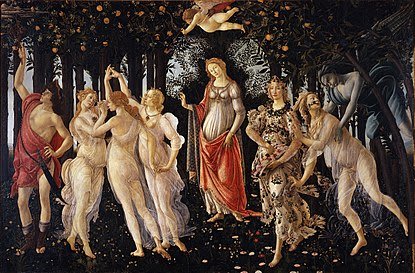
Considered one of the greatest works of the Renaissance, The Spring is among the largest paintings in the Uffizi Gallery in Florence and among the most famous in Western art.
The work depicts a series of figures from classical mythology, and was probably created for the wedding of the relative of one of the most powerful men of the Italian Renaissance, the Lorenzo De Medici.
The painting, also known as The Allegory of Spring, features a group of people in a forest where all the figures are on the same plane.
The artist did not apply linear perspective, a technique that was already used by other artists who was created in the Renaissance in which the painters used to give the illusion of depth, so they started to use it frequently from the 15th century.
Although the exact meaning of the painting is unclear, we know the identity of many of the figures shown in the composition.
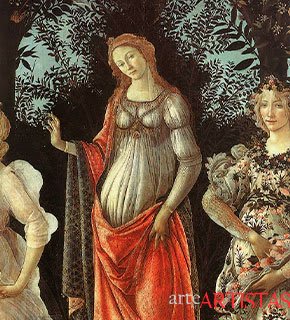
At the center is the Roman goddess, Venus. Her presence is a reflection of the humanist interest in the classical world that was popular in Florence at the time.
They are represented with light and transparent clothing.
The setting in an orange grove is also noteworthy, as the Medici family adopted the orange tree as a symbol of the family.
The painting would have been placed in the couple's bedroom as a gift, so the presence of Cupid gazing at the Three Graces with his arrow takes on a particular meaning in the light of conjugal love.
Thus, the painting is a testament to the humanist interests in classical themes of the Renaissance.
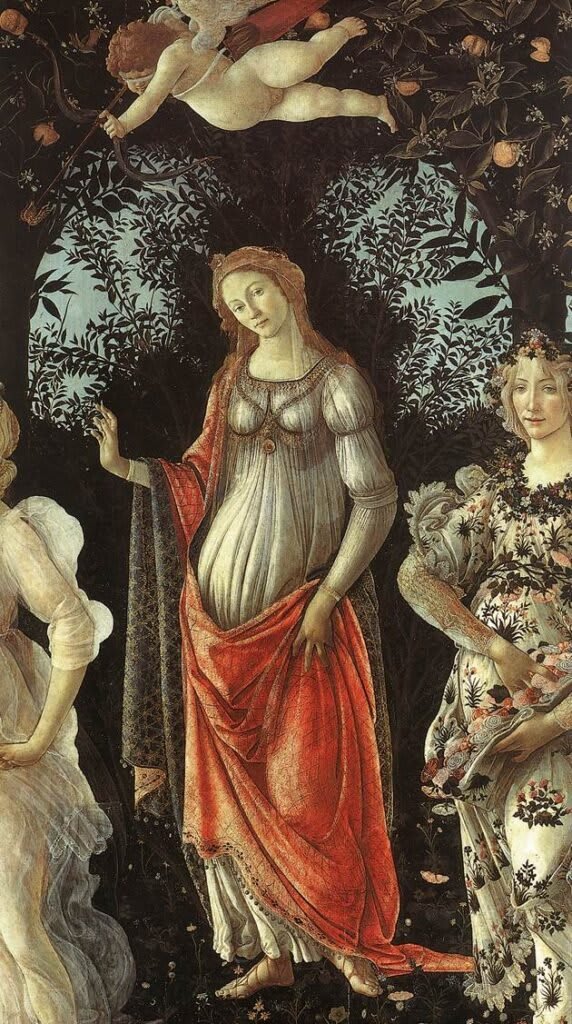
Located to the left, we find Mercury who is represented with a staff that may be using to chase away the winter clouds.
To his right, are three important female figures.
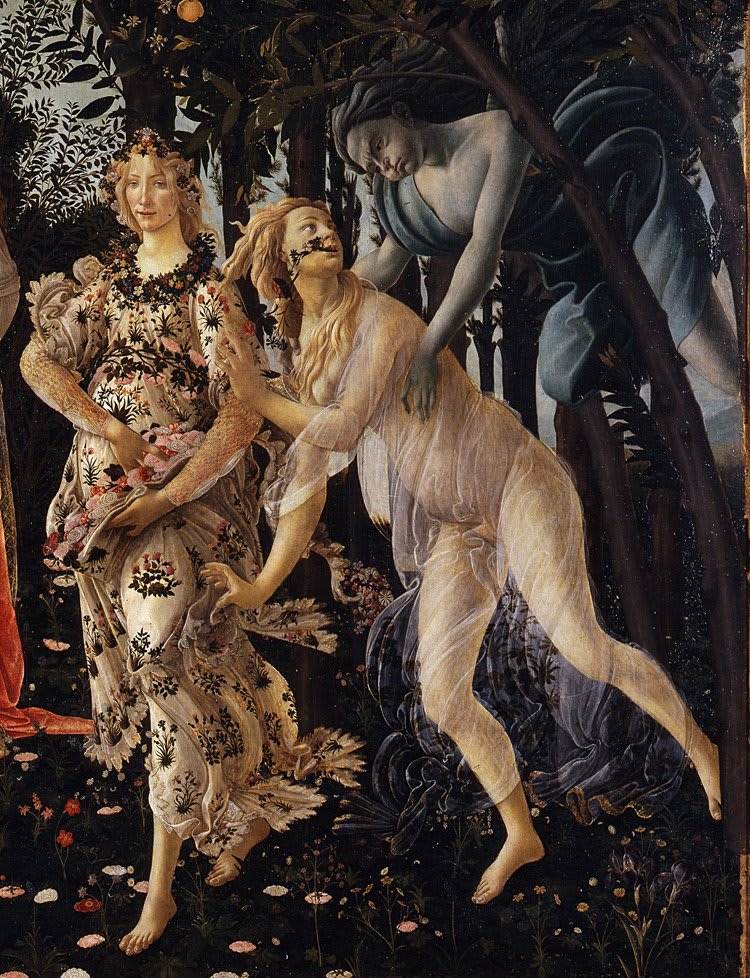
These women, who seem to be involved in some kind of dance, were modeled by Botticelli from an ancient representation of the Three Graces: Chloris, the goddess of flowers, before she transformed into Flora, echoing a myth described in Ovid.
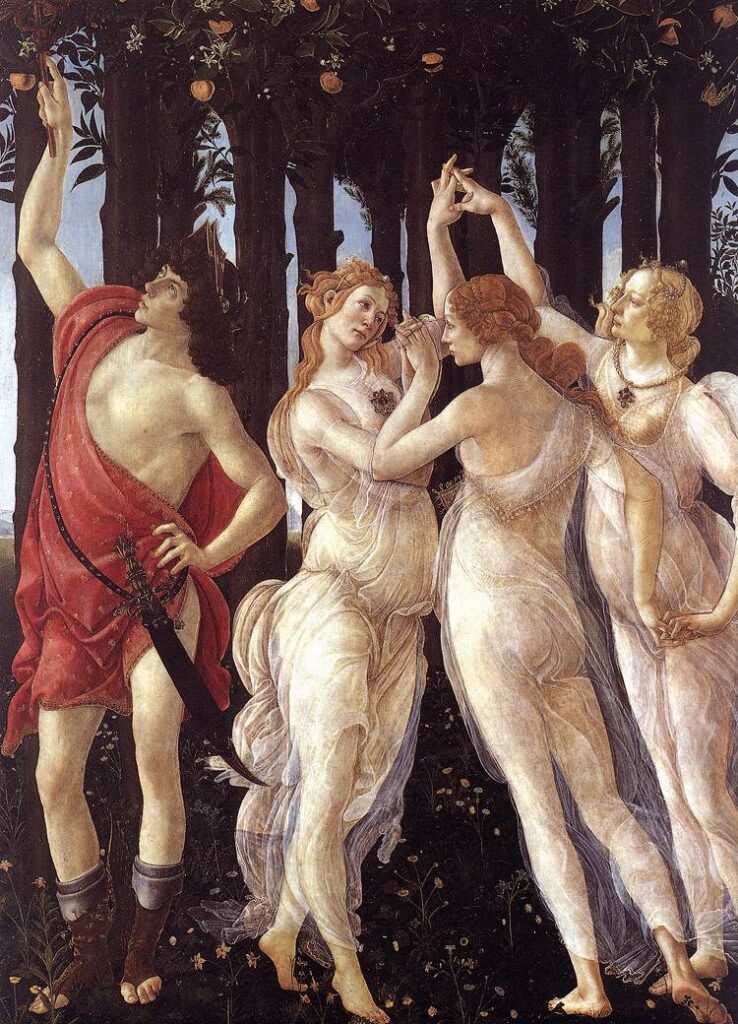
To the right, we see another group of figures that includes the god Zephyrus, about to take the nymph Chloris.
After he manages to take her for himself, they get married and the nymph transforms into Flora, the goddess of Spring.
Here, Flora is depicted scattering flowers that were gathered in her dress.
The painting is a testament to the humanist interests in classical themes of the Renaissance.