
The Waltz - Camille Claudel
The Waltz - Camille Claudel
Article Index
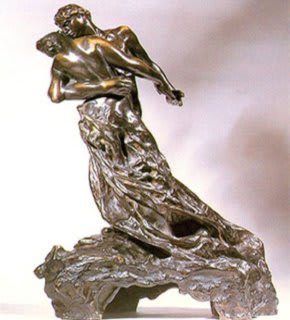
I invite you to contemplate The Waltz by Camille Claudel, one of the most sensitive and dynamic sculptures by the French artist. Created in 1891, this work captures a couple in a moment of passionate dance, their bodies intertwined and in motion, sculpted with an impressive delicacy and realism.
Claudel uses bronze to express the fluidity and emotion of dance, transforming a simple act into a powerful expression of love and connection. Upon observing The Waltz, you will be transported to a world where art immortalizes the ephemeral beauty of human movement and sentiment.
The sculpture is not only a work of art, but also a testament to Claudel's technical skill and artistic sensitivity.
One of the most important works by the French artist
This is undoubtedly one of the most important works and the most famous sculpture by the renowned French artist Camille Claudel. Some art critics consider this piece to be the first bridge to the Art Nouveau movement, highlighting its innovation and originality.
The sculpture not only reflects Claudel's technical skill and artistic sensitivity, but also represents a significant milestone in the evolution of modern art.
Her ability to capture emotions and movements with such precision made this work an icon, revered by many and studied by specialists over the years.
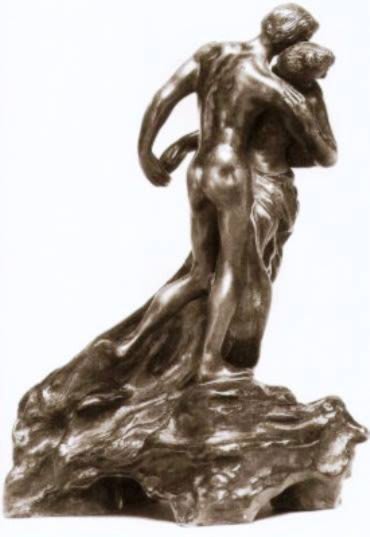
The sculpture represents a passionate couple dancing in a meditative state, as if it were a prize for everything Camille dreamed would happen in life, but which remained only an illusion.
By bringing the bodies together in this delicate and romantic way, despite being able to grasp the fury of the moment in which it was made, Camille abandons herself in time, lost in the arms of a palpitating imagination, utopian vision of the spirit.

“The rhythm, harmony, and intoxication of the waltz are there, but also the passion and concordance of the bodies. Both are tormented energy and fine nervousness. It is a man and a woman swaying in the passion that unites them in impetuous sensuality. The Waltz is a poem of a mad intoxication: the two bodies are no longer than one, the prestigious whirlwind maddens them, the dancer dies of voluptuousness”
Louis Vauxcelles (influential French art critic – 1870-1943)
The first version of this work, the dancers were naked, but the Ministry of Fine Arts was scandalized by this, demanding that the artist dress them. The sculptor resolved the issue by enveloping the couple in a large fabric, adding a hood in the style of Art Nouveau. Later, not satisfied with the result, Camille undressed the woman to the waist, using the fabric as a counterbalance to the couple's unstable equilibrium.


