
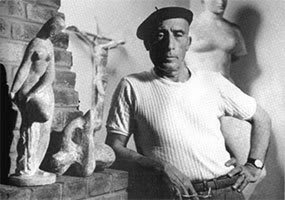
Victor Brecheret: Life and Work
Victor Brecheret: Life and Work
Article Index
Victor Brecheret was one of the first Brazilian modernist artists to achieve success and largely responsible for introducing modernism to Brazilian sculpture. He lived through Art Deco and Art Nouveau, yet above all, he maintained his own distinctive style, so much so that for those familiar with his work, his pieces are unmistakable, possessing a personal, unique touch.
Biography of Victor Brecheret
Vittorio Brecheret was born in Farnese, Italy, on December 15, 1894. Son of Augusto Breheret and Paolina Nanni, his mother passed away when little Vittorio was just six years old. He was then taken in by his maternal uncle Enrico Nanni's family, and together they emigrated to Brazil when he was ten, settling in São Paulo.
He adopted the name Victor Brecheret in Brazil and, at thirty years old, sought legal action to belatedly register his birth certificate at the Civil Registry of Jardim América, a neighborhood in São Paulo. This act allowed the artist to also affirm his Brazilian nationality, thus acquiring dual citizenship.
In 1912, he enrolled at the Liceu de Artes e Ofício (School of Arts and Crafts) in São Paulo to learn drawing and modeling. The following year, he traveled to Rome to refine his sculpture skills. He remained in Italy for five years, where he connected with avant-garde artists and worked with Italian sculptor Arturo Dazzi.
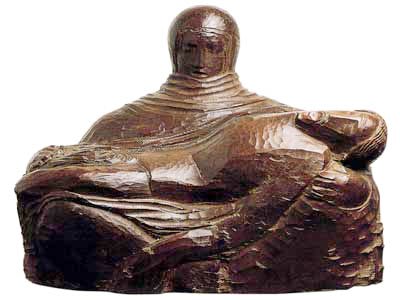
Back in Brazil in 1919, he set up his studio in the Palácio das Indústrias (Palace of Industries), in a space provided by architect Ramos de Azevedo. The following year, he connected with Anita Malfatti, Di Cavalcanti, Oswald de Andrade, Mário de Andrade, and Menotti Del Picchia, all prominent artists of the modernist movement.
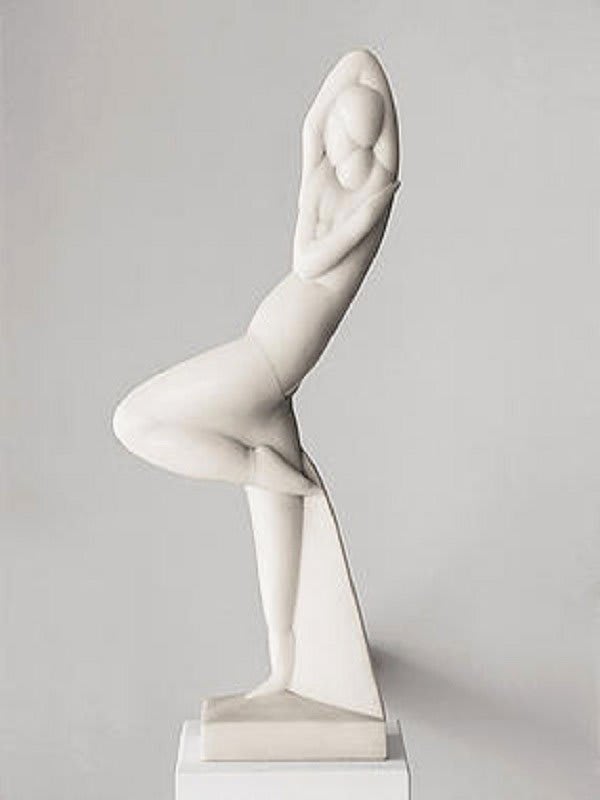
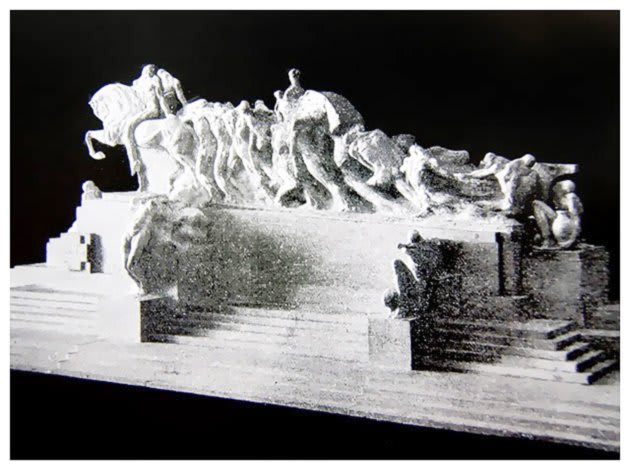
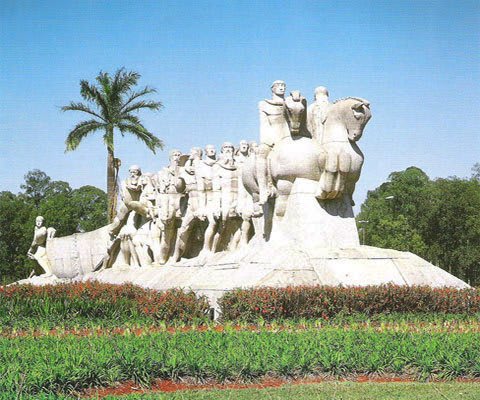
In 1921, he created one of his most important and popular works, the Monumento às Bandeiras (Monument to the Bandeiras), commissioned from the sculptor by the Government of the State of São Paulo. It is located in Ibirapuera Park.
In 1922, he traveled to Paris to refine his skills and learn new techniques, studying with sculptor Brancusi. He participated indirectly in the Semana de Arte Moderna (Modern Art Week); although not physically present during the celebration period, he contributed twenty selected sculptures which were displayed throughout the Municipal Theater of São Paulo.
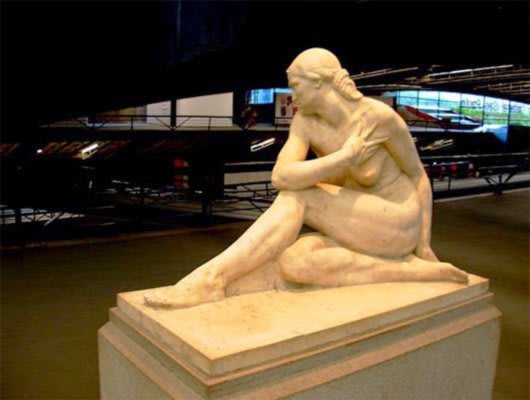
Still in Europe, he held numerous national and international exhibitions, receiving several awards, including an Honorable Mention from the Société des Artistes Français (Society of French Artists) in 1925. Back in São Paulo in 1932, he became a founding member of the Sociedade Pró Arte Moderna (SPAM) (Society for Modern Art). The following year, the French government acquired his work “O Grupo” (The Group) for the Jeu de Paume Museum, currently in La Roche-sur-Yon. The artist was awarded the Croix de la Légion d'Honneur (Cross of the Legion of Honor), as a title for Fine Arts, at the rank of Chevalier.
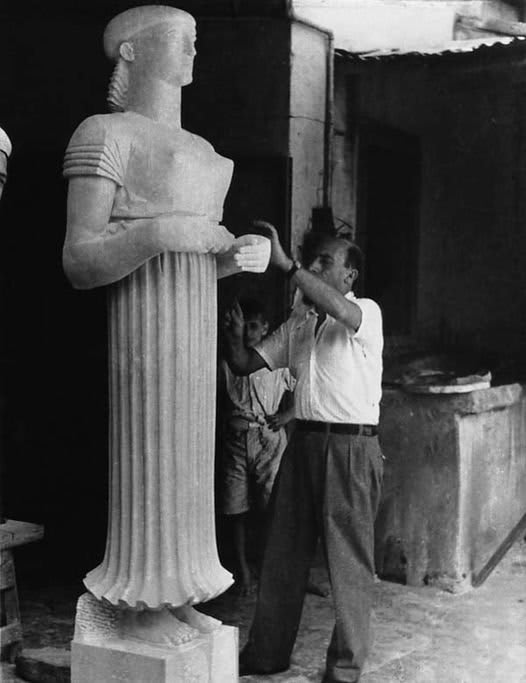
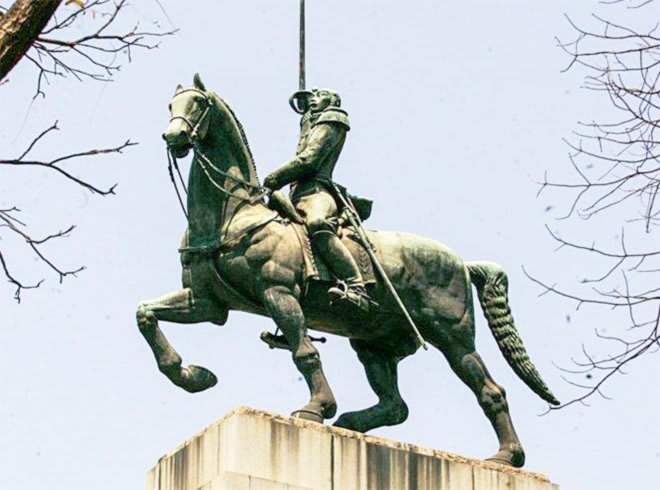
In 1941, he won the international maquette competition for the Monumento a Duque de Caxias (Monument to Duke of Caxias). Alongside the maquette competition, an intense fundraising campaign for the monument was organized. Initially focused in the state capital of São Paulo, the campaign soon involved the entire state, with donations arriving from cities like Campinas, Guarulhos, Jundiaí, among others.
In 1946, he sculpted the “Via Crúcis” (Stations of the Cross) for the chapel of the Hospital das Clínicas. In 1951, he was awarded at the I Bienal de São Paulo (1st São Paulo Biennial) as the best national sculptor. On January 25, 1953, the “Monumento às Bandeiras” (Monument to the Bandeiras) was inaugurated in São Paulo. This significant work was unveiled in 1954, along with Ibirapuera Park, as part of the celebrations for the IV Centenary of the city of São Paulo.
In 1955, Brecheret participated in the II Bienal de São Paulo (2nd São Paulo Biennial), exhibiting “Bartira.” He also took part in the “Artistes Brésiliens” exhibition in Paris, represented by the Museums of Modern Art of Rio de Janeiro and São Paulo.
Victor Brecheret passed away in São Paulo, São Paulo, on December 17, 1955. He was honored at the São Paulo Biennial in 1957 with a special room dedicated to the artist, featuring approximately 61 sculptures and 20 drawings.


