Victor Meirelles and His Notable Works
Victor Meirelles and His Notable Works
Article Index
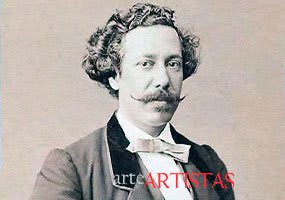
Victor Meirelles was a renowned Brazilian painter and professor of the 19th century. He is known for his historical and landscape works, many of which played a significant role in shaping the artistic identity of Brazil.
Victor Meirelles de Lima was born in Nossa Senhora do Desterro (now Florianópolis), Santa Catarina, Brazil, on August 18, 1832. From a young age, he demonstrated a talent for art.
Meirelles studied at the Imperial Academy of Fine Arts in Rio de Janeiro, where he excelled as a student. During his studies, he received support from Emperor Dom Pedro II, which allowed him to improve his artistic skills.
In 1861, he created one of his most famous works, The First Mass in Brazil. The painting depicts the historical scene of the first mass celebrated by the Portuguese in Brazilian territory, which took place in 1500. The work is known for its detailed composition and careful execution, as well as its historical and cultural commitment.
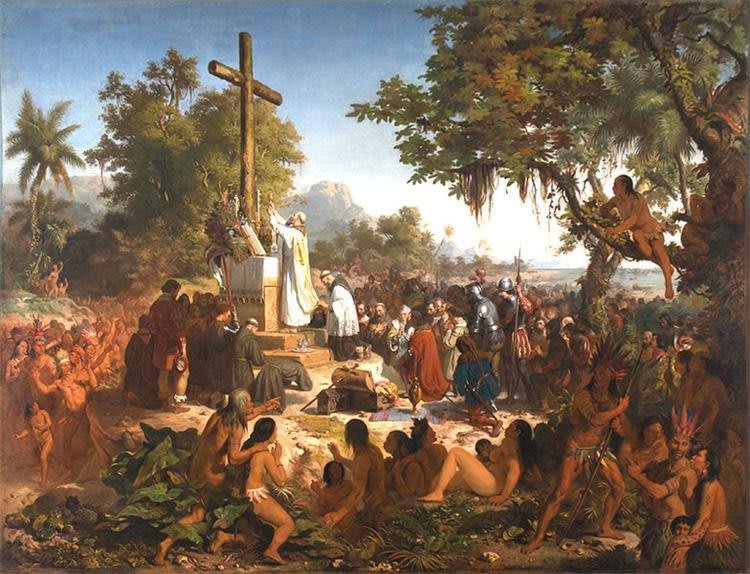
The first mass in Brazil. Victor Meirelles. 1861 - Oil on canvas (268 x 356cm) - Location: National Museum of Fine Arts
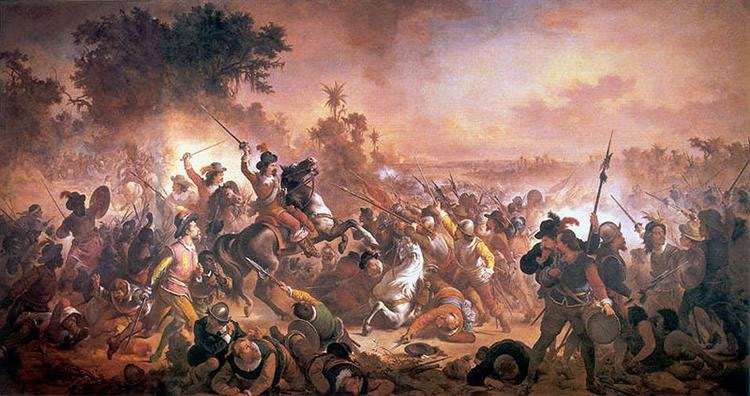
In 1879, the artist created another significant work. In it, Meirelles portrays a crucial moment in the History of Brazil, the Battle of Guararapes, which took place during the struggle against Dutch domination in the 17th century. The work demonstrates his mastery of battle scene representation and his ability to convey emotion and drama.
Throughout his career, Meirelles also painted a series of landscapes and portraits that reveal his technical skill and versatility. He gained international recognition for his works and received several awards in art exhibitions in Europe and the Americas.
Victor Meirelles passed away on February 22, 1903, in Rio de Janeiro. He left an important legacy for Brazilian art history. His historical paintings and portraits contributed to the construction of Brazil's cultural identity, depicting important events and figures in the country's history. His work is still admired today for its visual narrative and technical mastery.
GALLERY
ART WORK INTERPRETATION
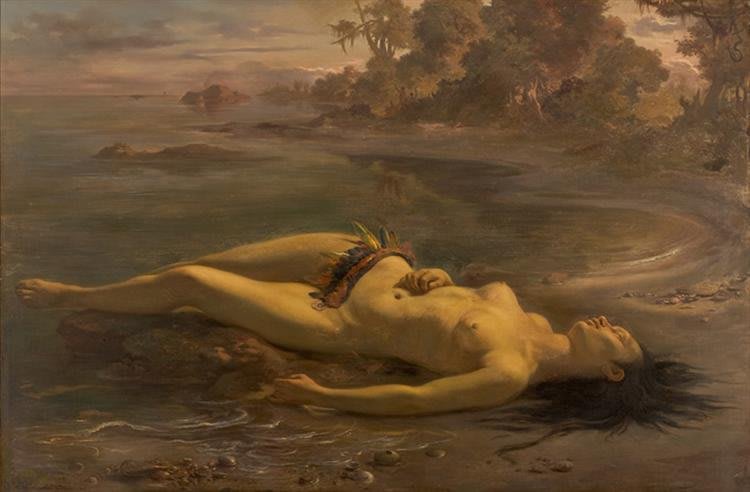
The canvas Moema, considered one of his most controversial works, shows the dead Indian on the beach, almost completely naked. The painting has a reddish tone, with a light that envelops the body of the Indian, modeling it and emphasizing its beauty and sensuality. The artist was inspired by the sixth canto of the epic poem Caramuru, written in 1781, by Frei José de Santa Rita Durão.
The painting represents the history of the myth, the Brazilian Indian Moema, who fell in love with Diogo Álvares Correia, a Portuguese castaway who received the nickname of Caramuru from the Indians. Upon returning to Europe on a French ship, Caramuru deceived Moema, who was left abandoned by her lover. Upon learning of her departure, Moema threw herself into the sea, swimming behind the French ship that carried Caramuru. During the swim, Moema dies of exhaustion and her body is carried to the beach by the tide, where it is found.