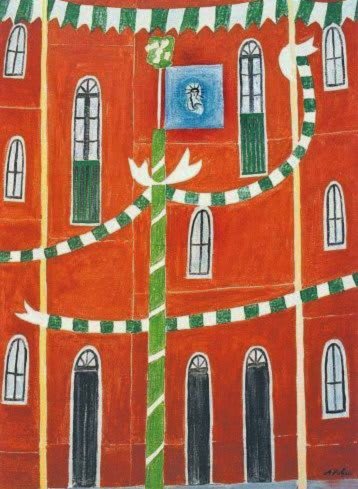

Alfredo Volpi: Biography and Work
Alfredo Volpi: A Life of Art and Passion
Alfredo Volpi was born in Lucca, Italy, on April 14, 1896.
He was a prominent painter considered by critics as one of the most important artists of the second generation of modernism.
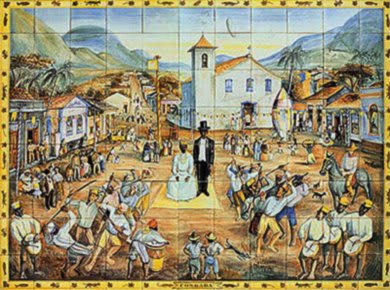
In 1897, he moved with his family to Brazil.
His parents were humble working-class people.
Since he couldn't afford to buy painting materials, Volpi began painting on cigar boxes.
He studied at the Escola Profissional Masculina do Brás.
Later, he worked as a carpenter, woodcarver, and bookbinder.
At just 16 years old, he started working as an apprentice and wall decorator, which made him an expert in painting friezes, florals, and panels for homes.
During this period, he began painting on wooden supports and canvases.
Very interested in art, Volpi started attending various exhibitions.
The polemical Anita Malfatti Painting Exhibition of Modern Art in 1917 was a landmark of modernism in Brazil.
In 1925, Volpi held his first collective exhibition at the Palácio das Indústrias in São Paulo.
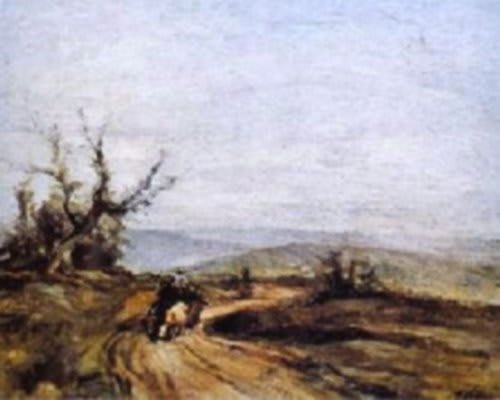
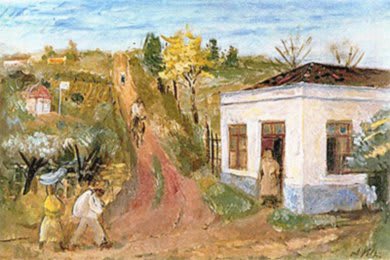
During this period, he focused on portraits and landscapes.
In 1927, he met Benedita da Conceição, nicknamed Judith, with whom he became a couple.
In 1940, they officially got married.
They had only one daughter, whom they named Eugênia.
In the 1930s, he met Mario Zanini, and they became friends. It was through him that Volpi joined the Grupo Santa Helena with various artists, including Francisco Rebolo, among others.
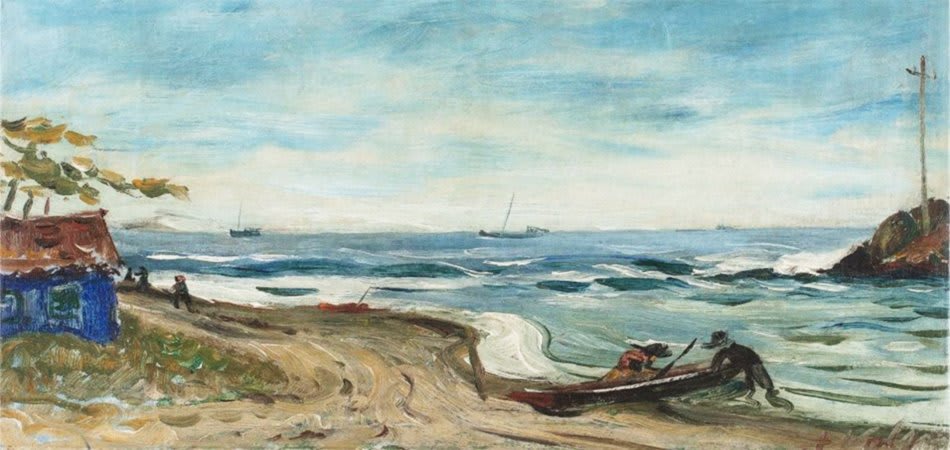
Between 1939 and 1941, Volpi moved to Itanhaém, São Paulo's coast, to accompany Judith's health treatment.
It was while watching the sea that he found inspiration to paint the series of marinas.
In 1940, he won the contest promoted by IPHAN, with a series of paintings of monuments in the cities of São Miguel and Embu.
In 1944, he held his first individual exhibition in São Paulo at the Itá Gallery.
In 1950, he traveled to Europe with Rossi Osir and Mario Zanini.
He visited various art museums and was impressed by pre-Renaissance works and the frescoes of Italian churches.
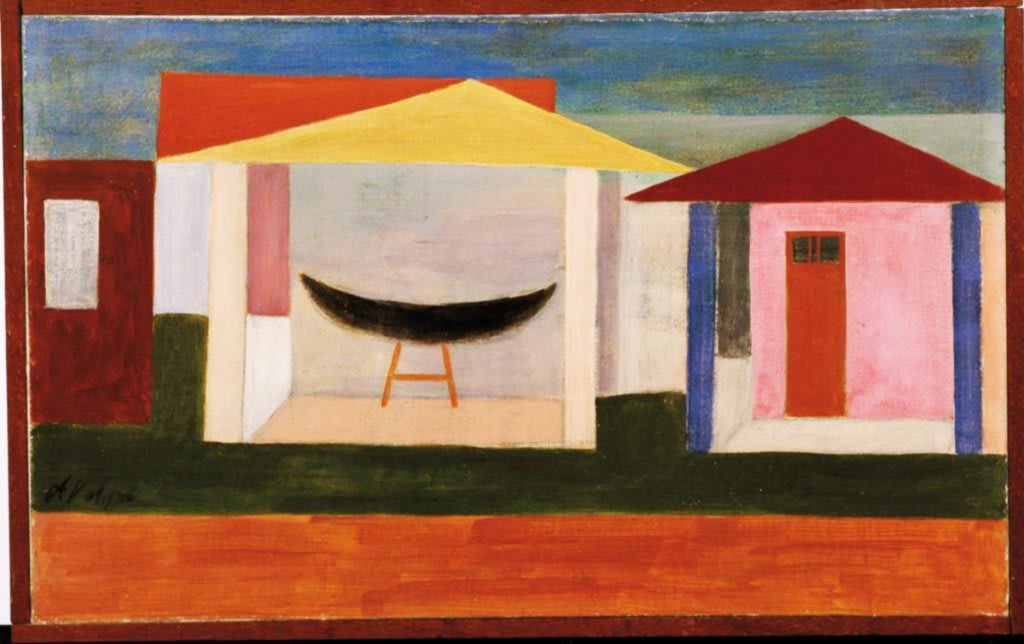
From the 1950s onwards, Volpi executed compositions that gradually moved towards abstraction.
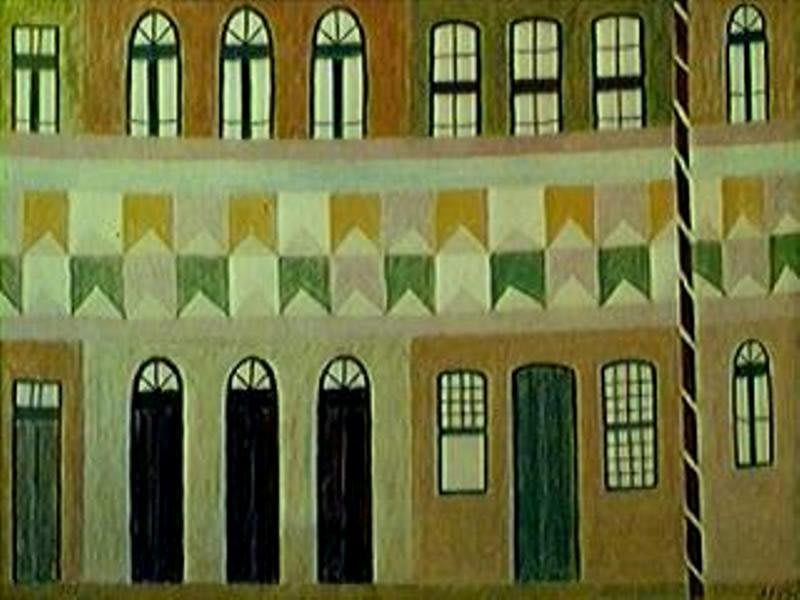
He painted magnificent series called marinas, facades, and bandeirinhas.
For his famous bandeirinhas, he directly addressed the theme of Junina festivals, as we can see in the detail of this painting:
Among other awards, he received the Best National Painter award at the 1953 São Paulo International Biennial, along with Di Cavalcanti.
In 1958, he created the frescoes for the Capela de Nossa Senhora de Fátima in Brasília and religious-themed canvases.
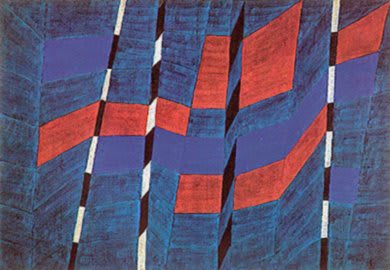
In the 1960s and 1970s, with the intention of adding more rhythm to his work, Volpi began incorporating masts into his bandeirinhas compositions.
The option for tempera on canvas became a constant, making his work unique and personal, as we can see in this painting:
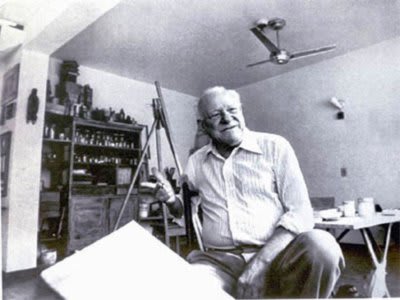
Volpi spent the last years of his life painting in the tranquility of his atelier.
As the night fell, he wouldn't skip a good garlic soup.
Occasionally, he played patience, a solo game where the cards are arranged geometrically, perhaps parodying his own art...
Volpi passed away in São Paulo on May 28, 1988, leaving behind his famous 'bandeirinhas' and his work, immortalized in the history of universal art.
He had a life too common for someone who was as uncommon as few.
Alfredo Volpi, one of the greatest painters of Brazilian art, ended up being known as 'the master of bandeirinhas'.
For him, the bandeirinhas were abstract symbols that allowed the geometrization of forms, just like any other element of the visual composition.
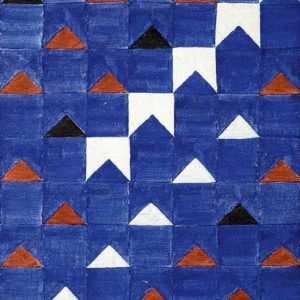
Volpi's painting is hot, rhythmic, dynamic, dancing, both in colors and in the composition of forms.
Only the essential appears on the canvas.
And to reach this synthesis, Volpi worked tirelessly.
His formation is entirely self-taught, yet the artist made sure to stay informed about the artistic currents of his time, although he didn't explicitly adhere to any of them.
All this made Alfredo Volpi singular, making him later one of the most important modernist artists.