Lasar Segall and His Work
Lasar Segall and His Work
Lasar Segall was a renowned artist of Jewish origin, one of the representatives of modernism in Brazil. Born in the city of Vilna, Lithuania, on July 21, 1891.
Painter, engraver, sculptor, and draftsman, Segall was born in a time that belonged to the Russian Empire, he lived through many wars and destruction, which directly reflected in his work. Thus, the painter received a strong influence from expressionism, the pain and human suffering lived in his time, are present in his work.
In 1905, he begins his art studies in his hometown where he receives lessons from the mestre Antokolski, in the Academy of Drawing
In 1906, he moves to Germany, in the city of Berlin. He enrolls in the Applied Arts School and also in the Imperial Academy of Fine Arts. In the same year, he attends the Academy of Fine Arts in Dresden.
In 1910, he holds his first solo exhibition at the Galeria Gurlitt and at the end of 1912, he comes to Brazil from Germany, where he was influenced by the work of Max Liebermann and the artistic environment of Dresden, cradle of German expressionism. Segall obtains the support of Senator Freitas Valle to exhibit his works in Brazil in 1913 in two exhibitions: the first in the capital of São Paulo and the second in the city of Campinas.
Mario de Andrade, 30 years after the exhibition, writes that "the Brazil did not see Segall in 1913." Brazilian art was still living through academicism, it did not perceive at the time the presence of his modernity brought from Europe. It cannot be denied that these exhibitions constituted the first two modern art exhibitions in Brazil.
From 1914, he begins to have contact with impressionist and expressionist paintings, he is very interested in the latter style, and begins to apply it in his work in the 1917 exhibition.
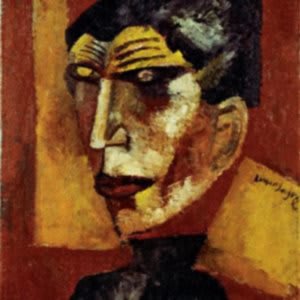
In 1919, in Dresden, he founds with Otto Dix, Conrad Felixmüller, Otto Lange and other artists, the Dresdner Sezession Gruppe 1919, a group that brings together expressionist artists from the city.
In 1923, he returns to Brazil, where he settles in São Paulo. Considered the only representative of the european vanguards, Lasar Segall is a highlight in this scenario lacking modern art in the country.
In 1925, he paints the canvas Paisagem brasileira . In June of the same year, Lasar Segall marries Jenny Klabin and the couple travels to Europe in December. There, they stay for a year and Maurício, their first son, is born in Berlin. During this period, the artist exhibits in Berlin, his paintings produced in Brazil between 1924 and 26. In October, Segall returns to Brazil with his family.
In 1926, he exhibits works produced in Brazil between 1924 and 1926, at the Galeria Neumann-Nierendorf, in Berlin and at the Galeria Neue Kunst Fides, in Dresden. In October, the family returns to Brazil.
In 1927, the artist creates the work titled Bananal, which is considered his masterpiece and one of the main paintings of the modernist movement.

In December 1928, he returns to Europe, residing for four years in Paris, where he begins to sculpt. In February, Oscar, his second son, is born.
In April 1932, he returns to Brazil, settling in São Paulo, at Rua Afonso Celso in Vila Mariana.
He died on August 2, 1957, in São Paulo, due to heart disease.
In 1967, Jenny Klabin Segall, the artist's widow, begins the work of authenticating non-signed works, at the same time as she takes care of the conservation of the artist's collection, with the objective of creating a museum.
On September 21, 1967, the Museu Lasar Segall is officially inaugurated, located in the former residence of the couple in São Paulo.
Lasar Segall: GALLERY and READING OF SOME WORKS
Encontro - This is the artist's self-portrait with Margarete, to record the day of his wedding in the city of Dresden, Germany.
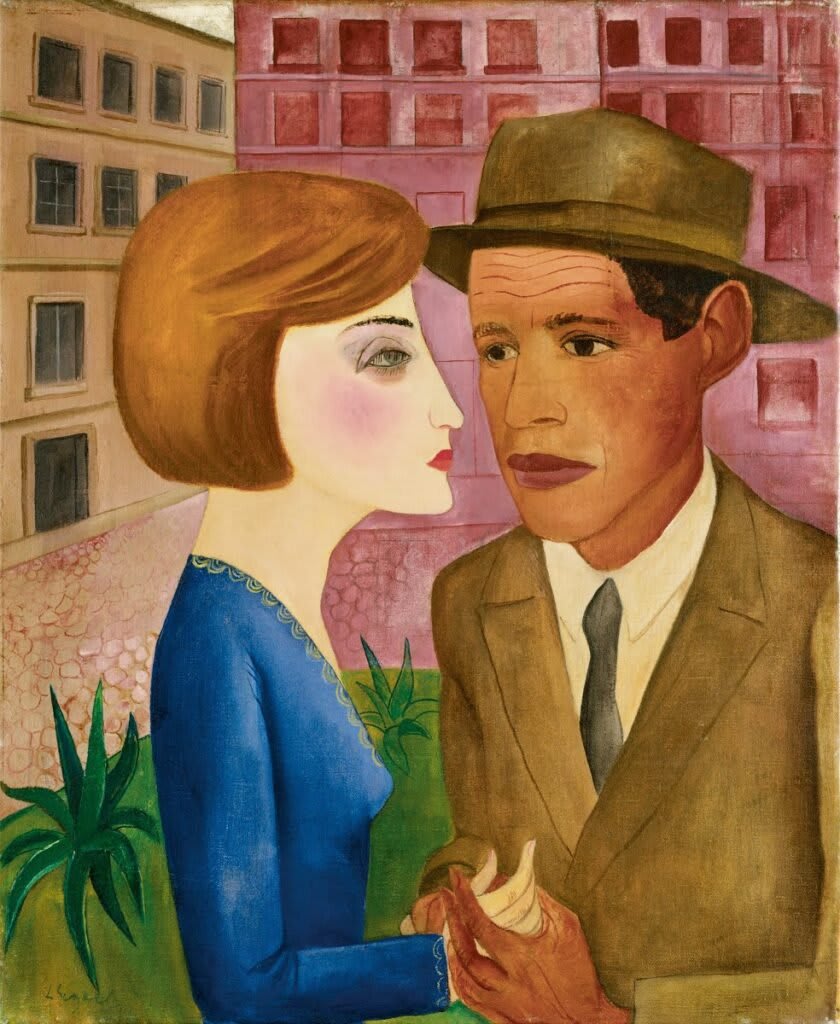
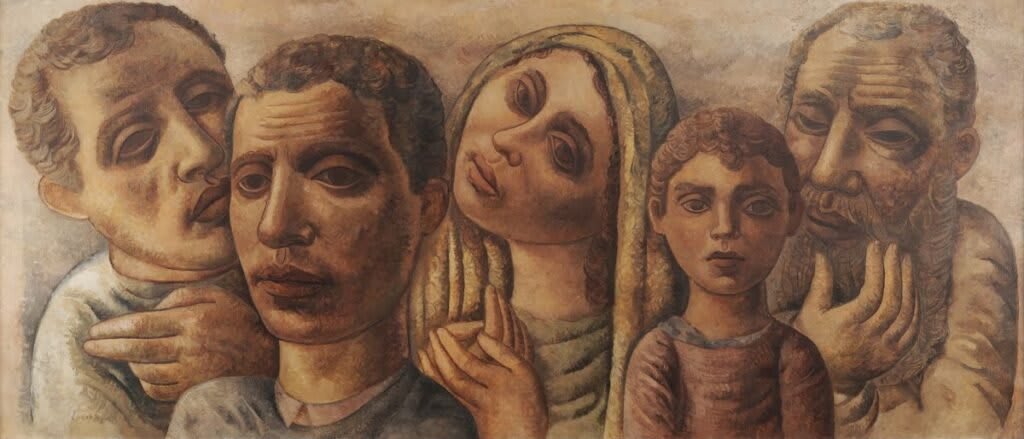
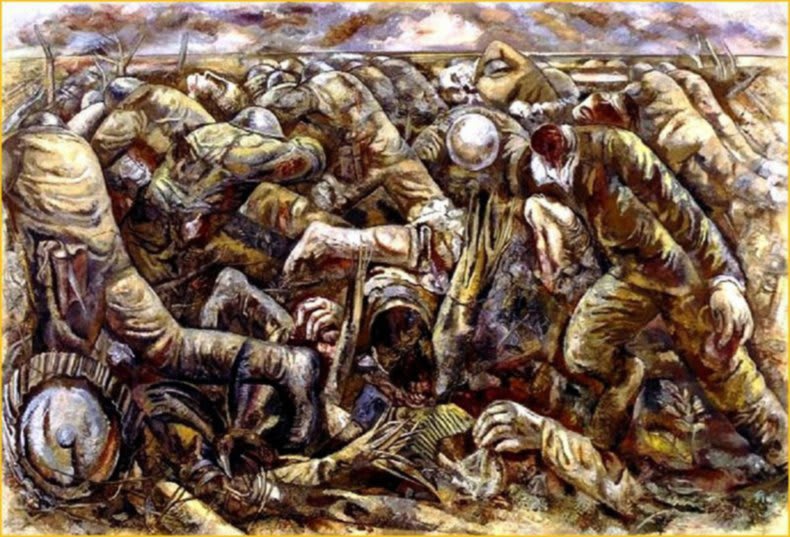
Lasar Segall was always concerned with social issues. He left as a distinctive mark in his work, human emotions, especially the suffering caused by war or the persecutions suffered by his people, the Jews.
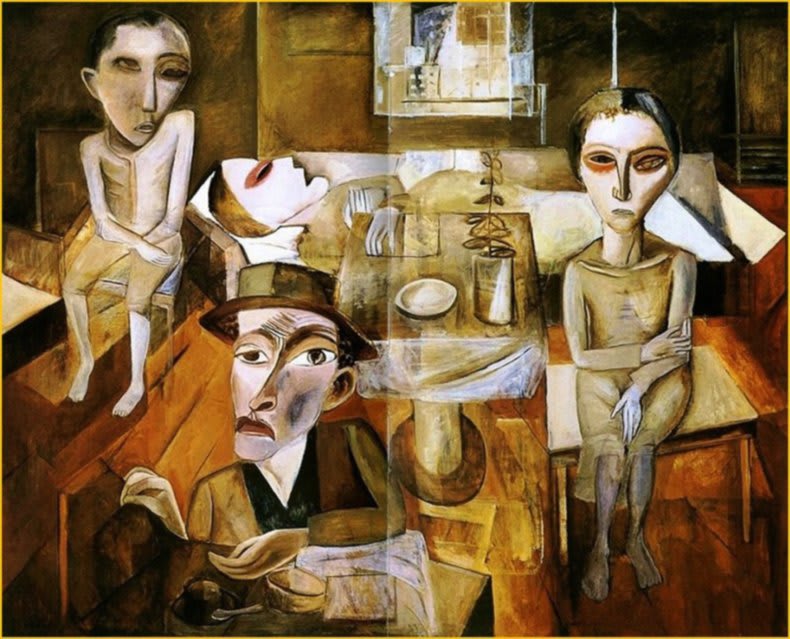
In “Interior de pobres”, the artist possibly relates a ‘funeral ritual’, obscure. In this work, Segall situates the characters in a space that, despite all the circumspection and detachment from the traditional rules of representation, unfolds in planes that lead the observer's gaze to penetrate all the meanders of the scene. In it, we find strong characteristics of expressionism, a movement to which Segall belongs.
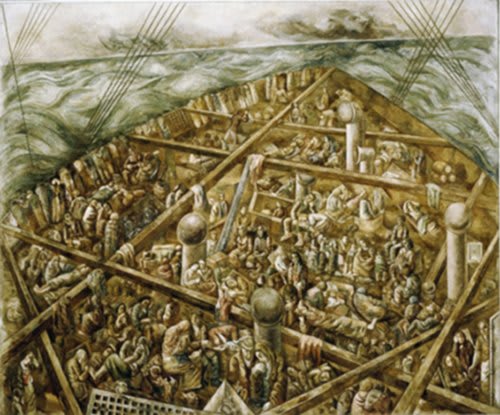
In Navio de Emigrantes, there are some peculiar and interesting aspects to be observed: see how all the characters portrayed in the work are looking in the opposite direction of where the ship is going: some with a lost look, others looking down or sleeping, with a look of desolation, or even those who are ill. Everyone, without exception, turns their backs to their destination.
Observing this painting, we notice that the ship was not fully represented. The artist's intention was to integrate the observer into the painting, as if he were part of the work.
Mário de Andrade lived among many artists of his time, among whom stand out Lasar Segall, Anita Malfatti and Candido Portinari.
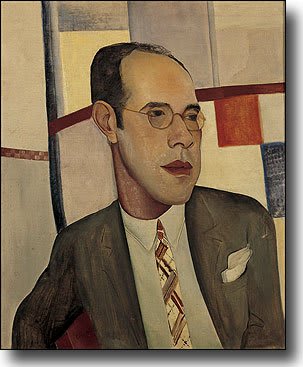
In the Brazilian art scene, the Modernist Movement, of which Mário de Andrade was one of the builders, represented a moment when national geniuses were forged and pointed out as responsible for the crystallization of a national imagery. Mário sought a paladin for the present and found him, first, in Lasar Segall, a European painter who immigrated to Brazil in the 1920s, bringing his significant plastic maturity, with the consequence of intensifying extraordinarily the artistic life among us.
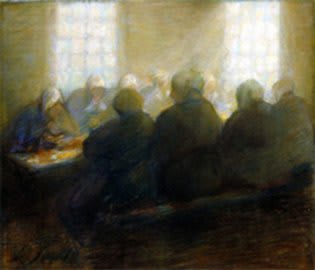
This painting is part of one of his first works, from the period when the artist had a brief passage through impressionism.
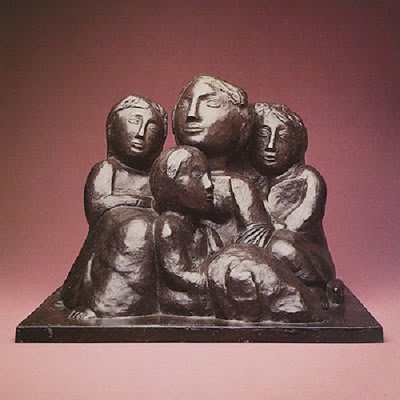
An example of his sculpture is this small piece dedicated to the family...