
Auguste Rodin: Birth, Struggle, and Early Notable Works (Chapter 1/3)
Auguste Rodin: Birth, Struggle, and Early Notable Works (Chapter 1/3)
Auguste Rodin was a French sculptor whose work revolutionized 19th-century art. Born in 1840, Rodin studied the arts in Paris and began his career as a decorative artisan before dedicating himself to sculpture. His work is known for its realistic and emotive representation of the human body, as well as its ability to capture movement and expression. Rodin challenged the artistic conventions of his time, creating pieces that were both controversial and innovative.
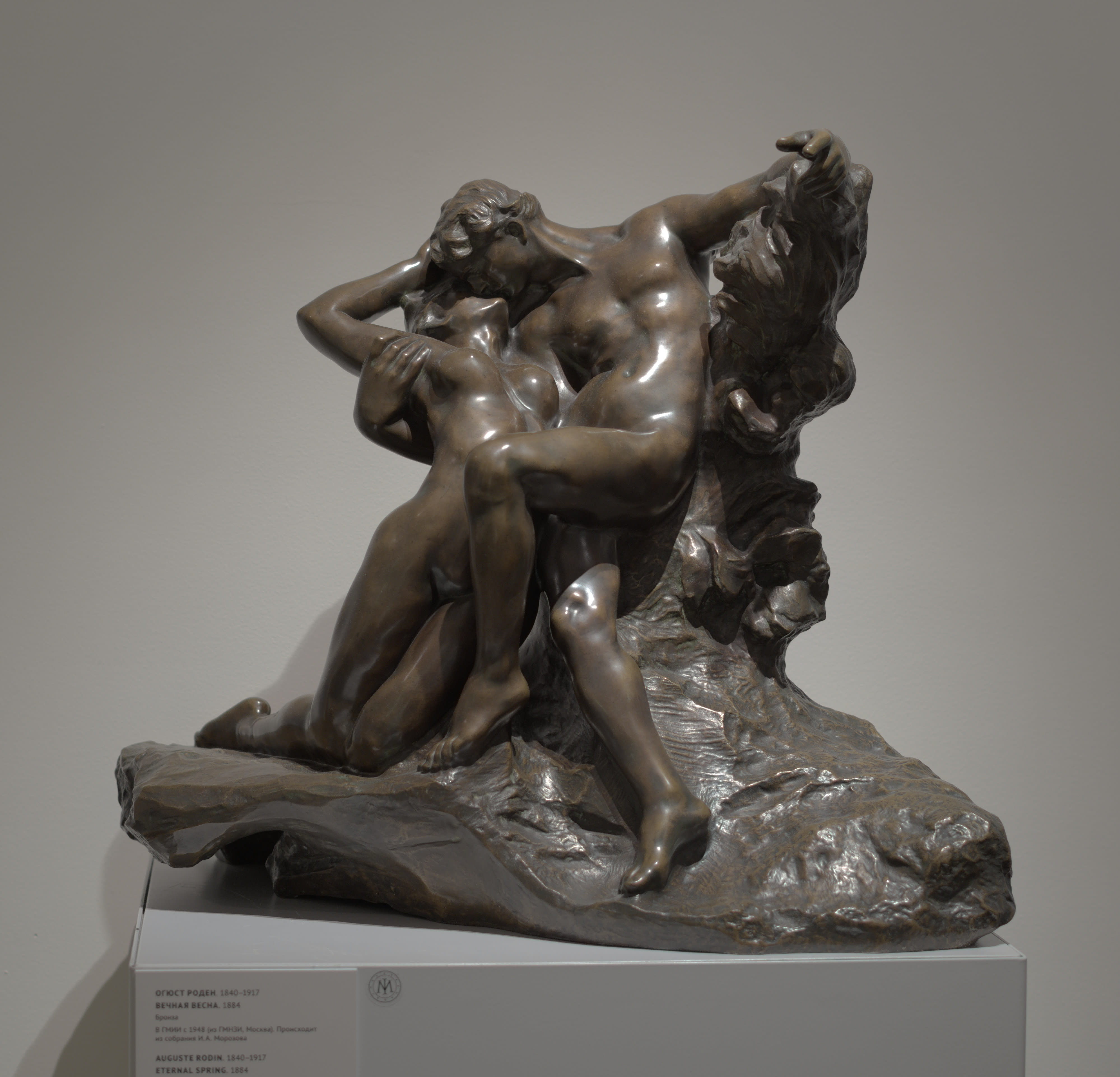
Unlike many famous artists, he only became recognized and acclaimed after his 40s. His most famous sculptures include The Thinker, "The Kiss", and The Burghers of Calais. Rodin died in 1917, leaving behind a lasting legacy that influenced generations of artists and continues to be celebrated today as one of the great masters of sculpture.
Auguste Rodin: BIOGRAPHY
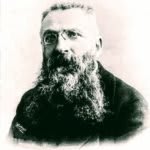
The renowned sculptor Auguste Rodin, born François-Auguste-René Rodin on November 12, 1840, in Paris, France, was the son of Marie Cheffer and his father Jean-Baptiste Rodin, a police inspector. He had an older sister, Maria.
Due to his poor eyesight, Rodin had to learn to cope with the condition from a young age. Attending the Petite École, he struggled to see figures and words on the blackboard and later found it difficult to understand complex math and science lessons. Disheartened, he found motivation in drawing - an activity that allowed the young man to clearly see his progress as he practiced observation drawings (he was nearsighted). Soon, the artist began to draw frequently, wherever he could, and whatever he saw or imagined.
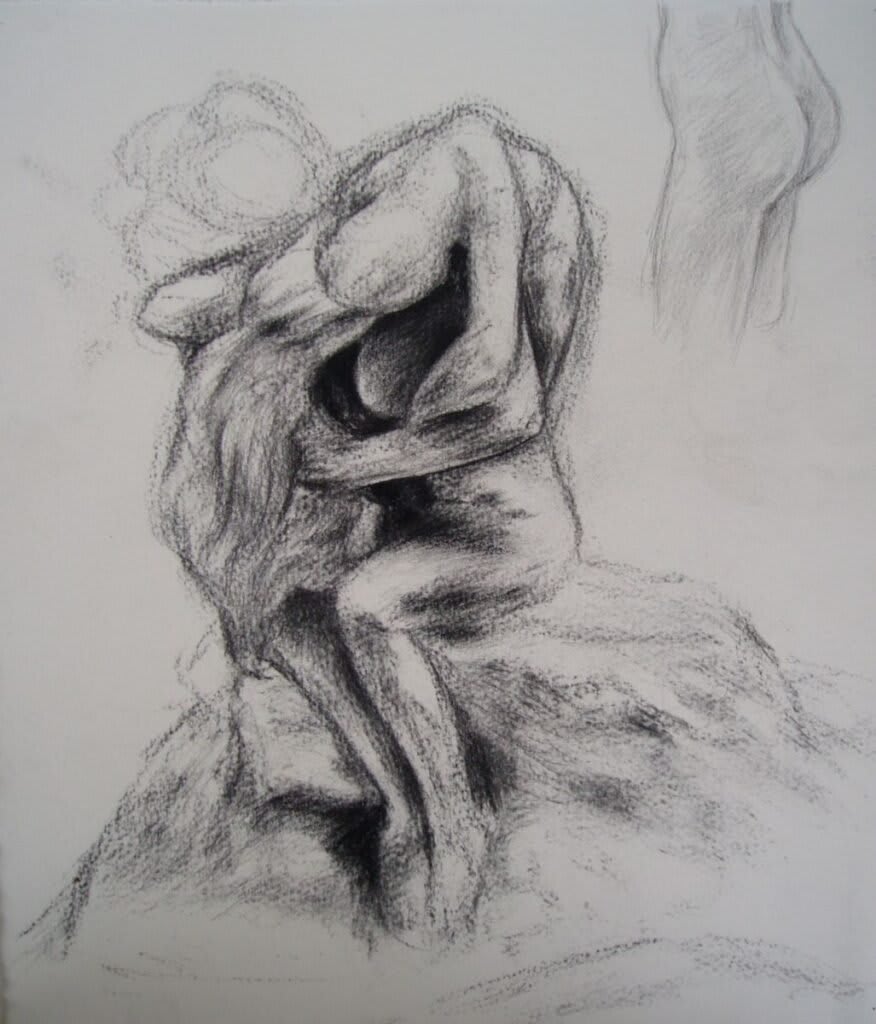
At 13, Rodin showed obvious skills as an artist and soon began taking courses to improve his knowledge. However, while completing his studies, the aspiring young artist began to doubt himself, receiving little encouragement from his teachers and peers. Four years later, at 17, he enrolled in the prestigious École des Beaux-Arts in Paris. He was severely disappointed when the school rejected his application, with his request being turned down twice.
As his hometown was undergoing urban renewal, Rodin created some decorative artworks, working on public monuments. The sculptor also joined a Catholic order for a short period, mourning the death of his sister in 1862, but eventually decided to pursue his career as a sculptor. In the same year, he met Rose Beuret, a woman older than him, a dressmaker's apprentice with whom he became sentimentally involved for the rest of his life, although he only married her on the eve of his death in 1917.
In the mid-1860s, he completed what he would later describe as his first major work, "The Mask of the Man with a Broken Nose" (1863-64). The piece was rejected twice by the Paris Salon due to the realism of the portrait.
In 1870, Rodin was forced to wear the uniform of a war corporal in the National Guard and submit to military discipline during the war between France and Prussia. He didn't go far, being discharged the same year due to his visual impairment.
In 1875, he traveled to Italy, where he came into contact with some of Michelangelo's works, which further sparked his interest in becoming a sculptor, clarifying new types of possibilities. He returned to Paris inspired to design and create.
In 1876, during an 18-month stay in Brussels, Rodin completed his piece "The Age of Bronze", which was first exhibited in 1877 under the title "The Conquered". Upon presenting the work, he faced accusations that the sculpture seemed so realistic that it was molded directly from the body of the living model. An investigation was needed, which even involved the Ministry of Fine Arts, to put an end to the commission that declared the author was not only a great artist but also a "great sculptor".
In the following decade, when Rodin entered his 40s, he was able to establish his distinct artistic style even further with an acclaimed list of works. With a large team helping him with the final casting of sculptures, we can mention among his assistants, the young Camille Claudel, which is a "chapter" that we reserve for the end of this post. Rodin thus began to create a series of famous works, including "The Burghers of Calais", a public monument made of bronze that depicts the Hundred Years' War between France and England that took place in 1347. Rodin started working on the monument in 1884.
To understand the rest of this journey, continue to our next article: Auguste Rodin: The Artistic Apogee and Personal Turbulence (Chapter 2/3).


