Bernini: Biography and Works: The Legacy of His Sculptures and Architecture
Bernini: Biography and Works: The Legacy of His Sculptures and Architecture
Article Index
- Bernini's Sculptural Genius: Drama in Marble
- Early Works: The Genesis of a Master
- Dramatic Contrasts: Blessed Soul and Damned Soul
- The Legend of the Hermaphrodite and Bernini's Touch
- Youthful Masterpieces: Movement and Emotion
- The Magnificence of St. Peter's Baldacchino
- Portraits and Figures: The Soul in Marble
- The Fountains of Rome: Public Sculptures and Power
- Spirituality in Marble: Ecstasy and Devotion
Bernini's Sculptural Genius: Drama in Marble
Gian Lorenzo Bernini's sculptures are immediately recognizable for their gripping drama, dynamism, and palpable tension. He imbued his works with unparalleled texture and naturalism.
No one else managed to make stone convey the softness of skin, the curls of hair, or the lightness of crumpled fabrics quite like Bernini. He elevated sculpture to an entirely new level.
His creations also stand out for their meticulous attention to the effects of light and shadow. Such elements, traditionally more explored by painters, come alive in his sculptures.
Bernini distinguished himself from earlier artists by his unique ability to capture fleeting moments in the stillness of stone. It's both a technical and artistic feat.
Often, his figures appear to be mid-speech or mid-cry. Observers, upon seeing them, feel as though they've stumbled upon an intimate, fleeting moment.
"Those who never dare to break the rules never surpass them" - Bernini
Early Works: The Genesis of a Master
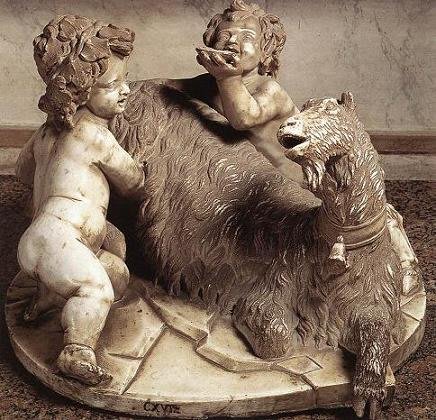
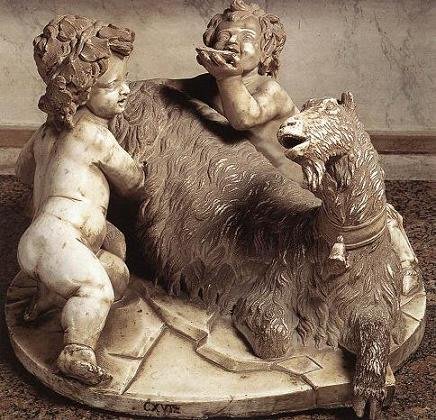
The Goat Amalthea with the Infant Jupiter and a Faun marks the beginning of Gian Lorenzo Bernini's artistic journey.
This is, in fact, the earliest cataloged work by the Italian sculptor. It was produced between 1609 and 1615, when Bernini was still a promising teenager.
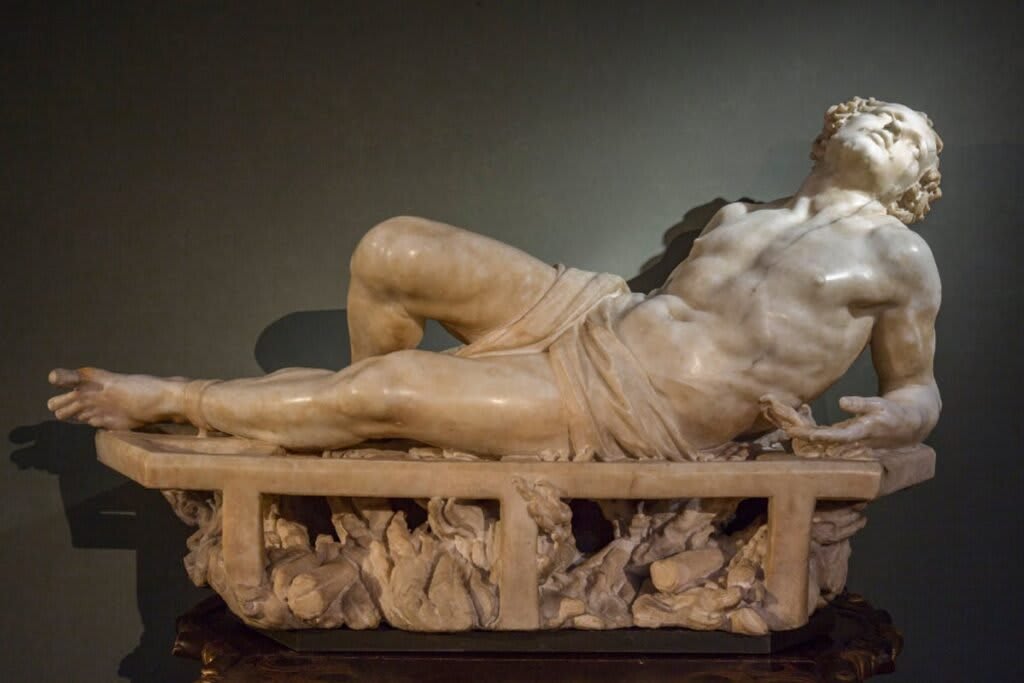
Another early work of great impact is the Martyrdom of Saint Lawrence. Bernini demonstrates his precocious talent in portraying the saint.
The sculpture captures the agonizing moment when Saint Lawrence was being burned, with a dramatic intensity characteristic of the artist.
Dramatic Contrasts: Blessed Soul and Damned Soul
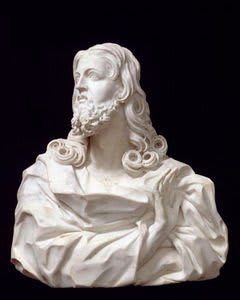
The work Blessed Soul, or Anima Beata, in Latin, is a remarkable bust by Bernini. It serves as a complementary piece to another creation by the artist.
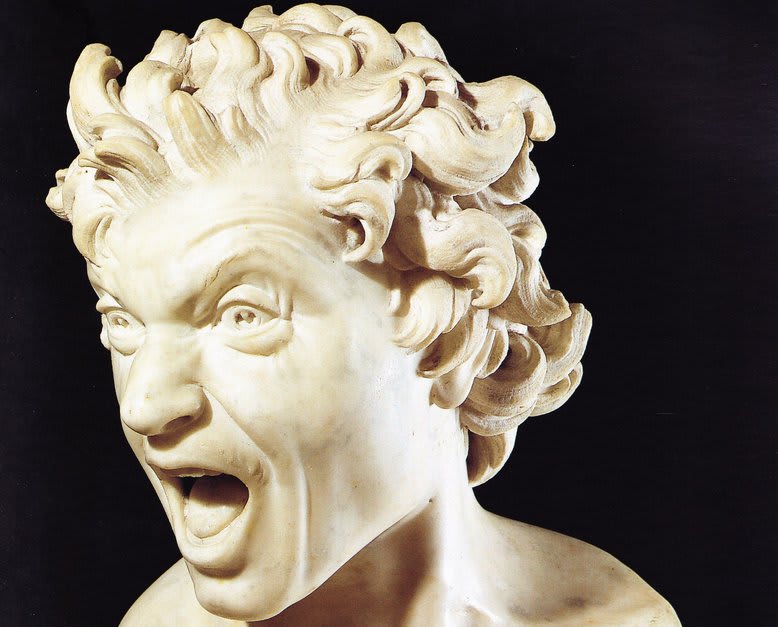
This counterpart is known as Damned Soul, or Anima Dannata. The two works explore extremes of the human condition.
In the Blessed Soul, Bernini portrays a redeemed figure. The head is raised and the eyes turn skyward in a gesture of pure devotion.
The expression on the sculpture's face is a clear indicator. It symbolizes a soul that has found divine grace, radiating inner beauty and profound peace.
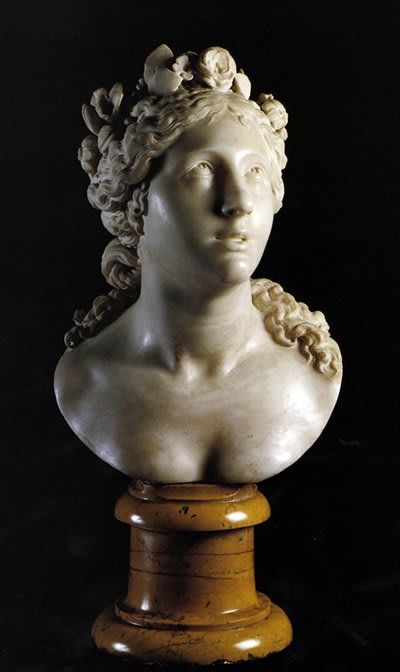
The Damned Soul, in turn, displays intense suffering. The two sculptures, together, form a powerful diptych on the soul's destiny.
The Legend of the Hermaphrodite and Bernini's Touch
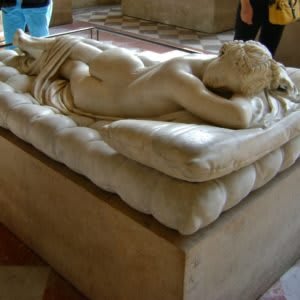
The sculpture Sleeping Hermaphroditus narrates a fascinating legend from Greek mythology. Hermaphroditus, son of Hermes and Aphrodite, rejected the love of the nymph Salmacis.
In her pain, Salmacis pleaded with Zeus to fuse their bodies. Thus, both became a bisexual being, with masculine and feminine attributes in a single form.
The figure of Hermaphroditus, by an unknown author, was rediscovered in the 17th century. But the story holds a bizarre detail:
Bernini, the great master, was responsible for sculpting the mattress where the Hermaphroditus now rests. An unusual collaboration between an ancient creator and the Baroque genius.
The contorted pose of the body and the tension in the slightly raised left foot suggest a state of deep sleep. The work invites contemplation of duality.
Youthful Masterpieces: Movement and Emotion
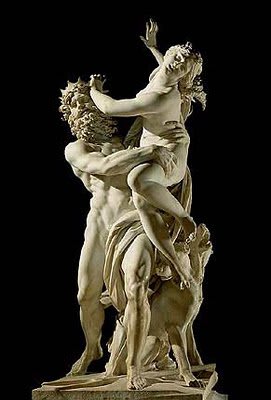
Among Bernini's most striking creations is The Rape of Proserpina. A work that perfectly encapsulates Baroque drama and narrative.
Click here to learn more about this sculpture.
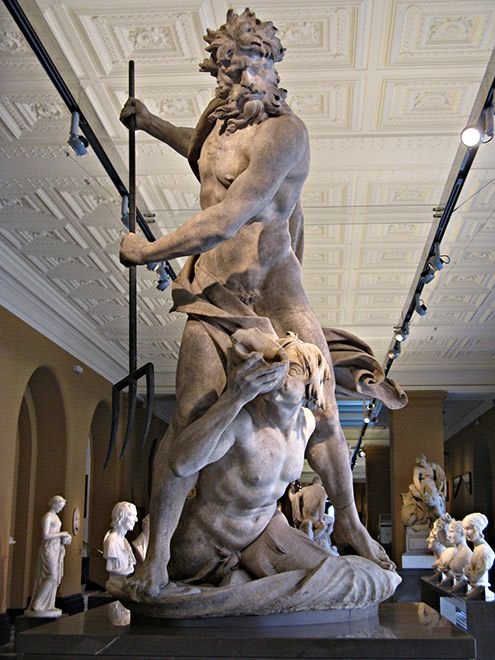
Bernini was just twenty-four years old when he sculpted Neptune and Triton. A testament to his precocity and technical mastery.
In this monumental marble piece, the life-sized figure of Neptune (Poseidon) wields his trident in a gesture of absolute command. He is mounted on his son Triton.
Triton, in turn, blows his conch, echoing his father's power across the four corners of the world. The two figures, together, dominate the surrounding space.
They compel us to imagine the surrounding sea waters, solidifying the impression of their dominion over the elements.
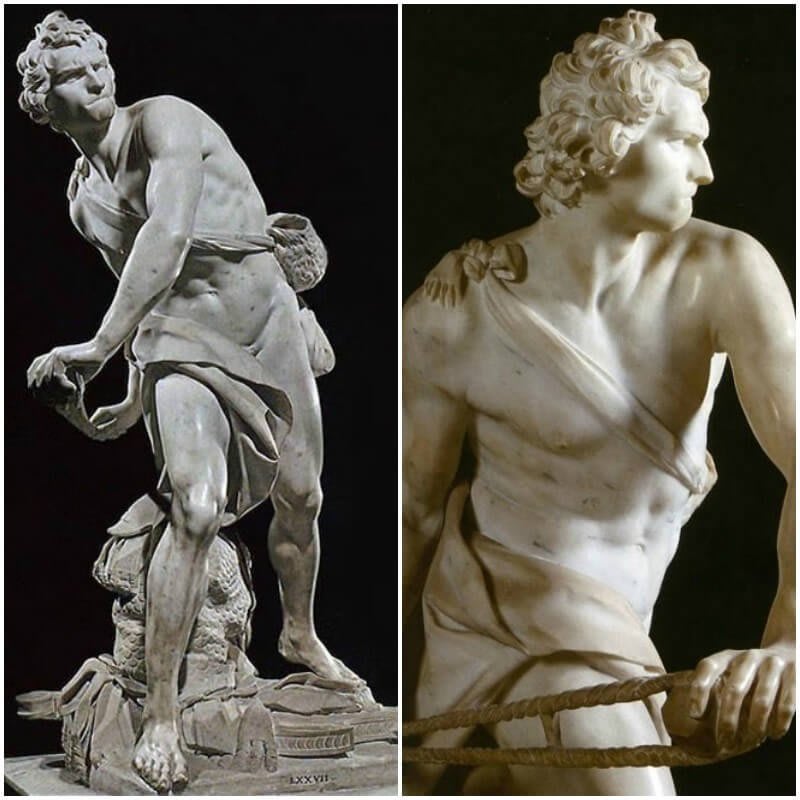
Bernini's sculpture of DAVID demands that the viewer move. It challenges static contemplation, revealing new nuances from every angle.
Unlike Michelangelo's David, which is static and introspective, Bernini's pulses with action. He frowns and bites his lower lip, immersed in the moment.
The body bends to the side, in full motion to hurl the stone at Goliath. Bernini captures the exact instant of tension before impact.
In this quintessential example of the Baroque, Bernini imbues the scene with incomparable emotion, seeking to immortalize the climax of the biblical story.
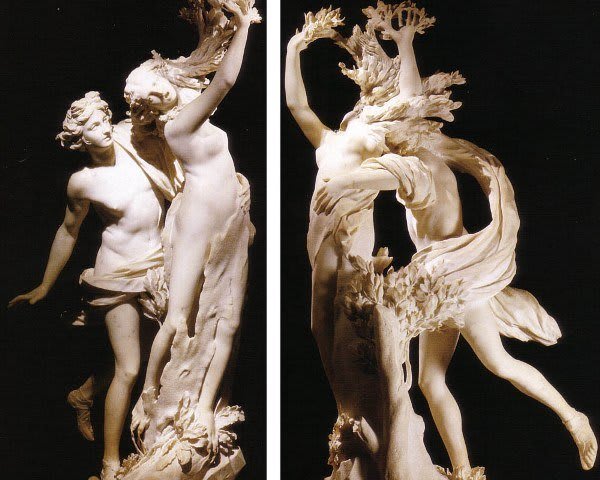
The sculpture Apollo and Daphne was the work that truly solidified the young artist's international fame for its breathtaking beauty and innovative composition.
As in The Rape of Proserpina, Bernini chooses to portray the most dramatic moment of the mythical narrative.
In a feat of sculptural virtuosity, he shows Daphne in full metamorphosis. Her legs fuse into roots, while leaves and branches sprout from her fingertips—an instant of pure transformation.
The Magnificence of St. Peter's Baldacchino
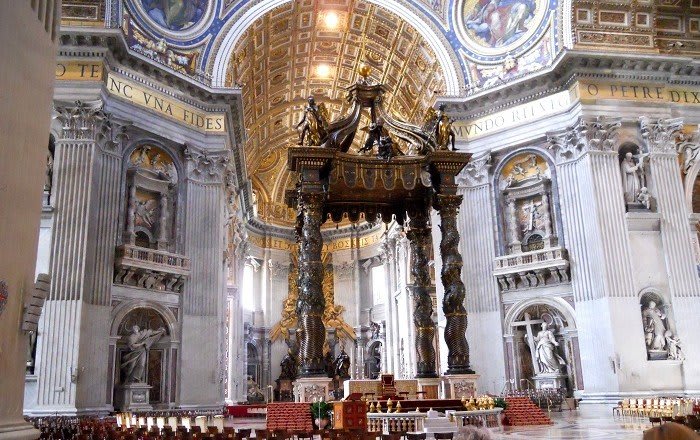
The heart of St. Peter's Basilica beats around the Papal Altar, the only place where the Pope can celebrate Mass. And it is there that one of Bernini's greatest glories rises.
Above the altar, the monumental Baldacchino imposes itself. This was Bernini's first major work executed for St. Peter's Basilica, an architectural and sculptural triumph.
Just below the altar, protected by centuries of history, rests the ancient tomb of St. Peter. A reverence to the first apostle.
Bernini dedicated nine years of his life to the creation of the Baldacchino. To build it, an impressive 6,200 kilograms of metal were used, an engineering feat of its time.
The monument is a vivid example of 17th-century Baroque style. It rises upon four richly adorned marble pedestals.
On these pedestals, papal shields reveal a marvelous sequence of themes, all under the heraldry of the Barberini. This was the family to which Pope Urban VIII belonged.
It was Pope Urban VIII himself who, in 1624, entrusted Bernini with the grandiose task of conceiving and executing this monumental work. A landmark in his career.
Portraits and Figures: The Soul in Marble
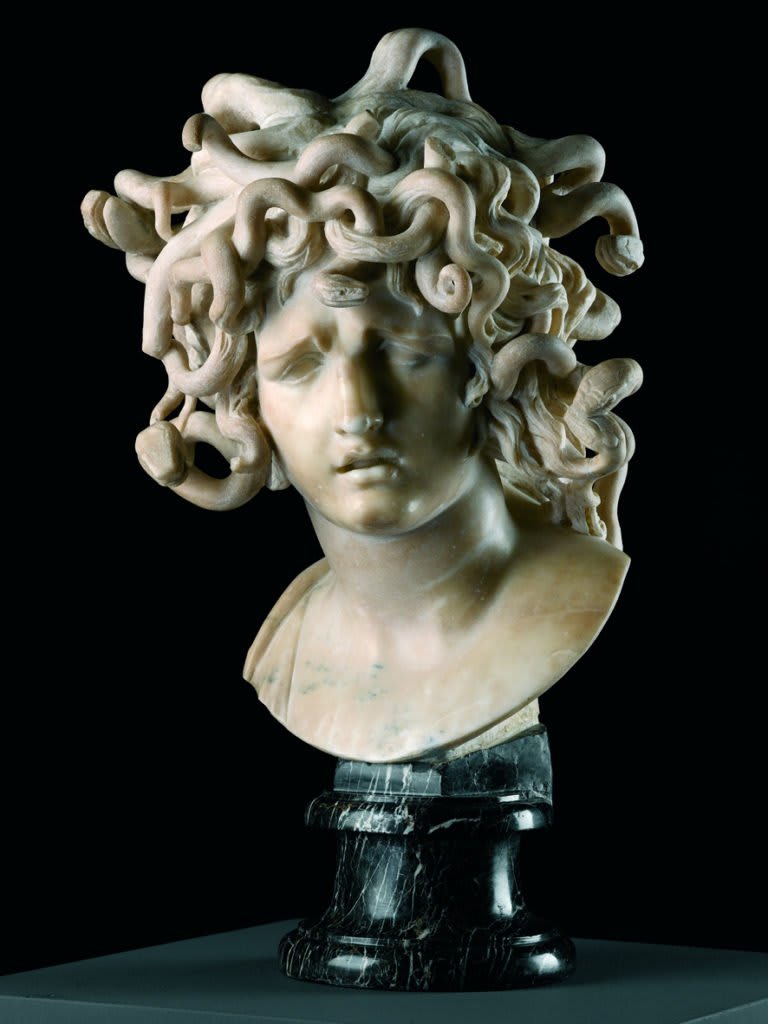
The bust of Medusa, sculpted by Bernini, breaks with traditional representations of the Gorgon. He captures her in a moment of self-discovery.
Bernini portrays her at the instant she sees herself in an imaginary mirror. Her anguish is evident as she realizes the terrible transformation befalling her.
The metamorphosis is painful: the beautiful strands of her hair twist and transform into serpents. A powerful image of despair.
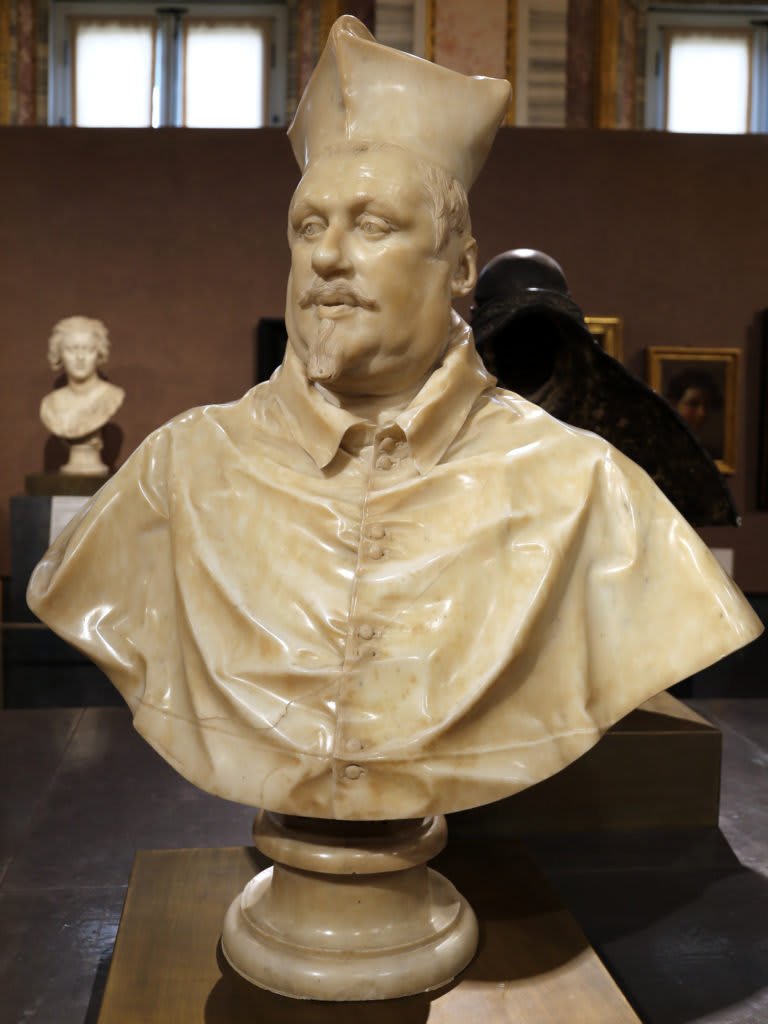
In the Bust of Scipione Borghese, Bernini achieves surprising realism. The cardinal's cheeks and neck are portrayed with volume and authenticity.
The eyelids and eyebrows, full of intrigue, give the work a vivacity that allows us to almost feel the cardinal's presence. A psychological portrait in stone.
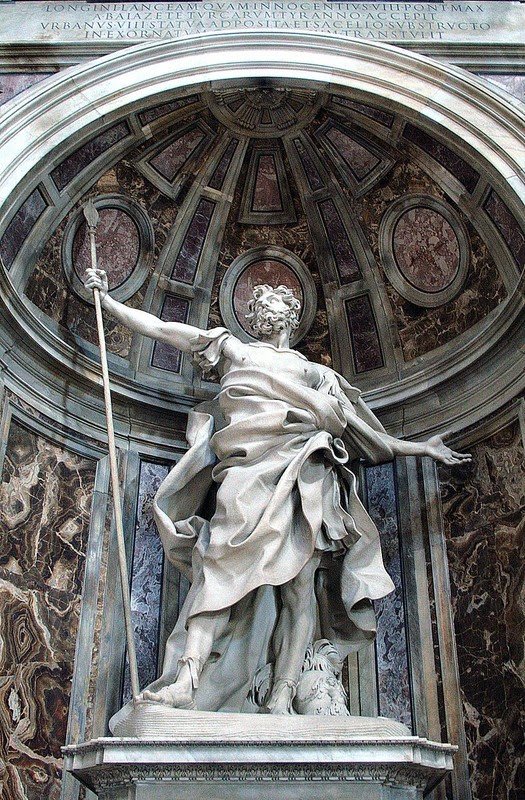
The imposing sculpture of Saint Longinus, or Longinus, is located in St. Peter's Basilica, in the Vatican City. It is protected under the majestic dome.
It is one of the most admired works by the thousands of visitors who annually pilgrimage to the site. Its presence dominates the space.
The Fountains of Rome: Public Sculptures and Power
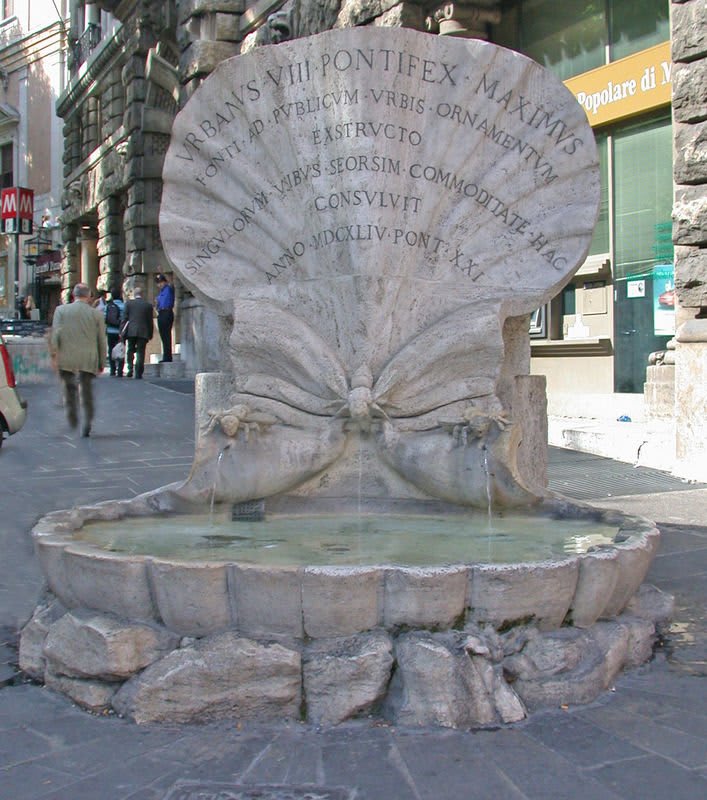
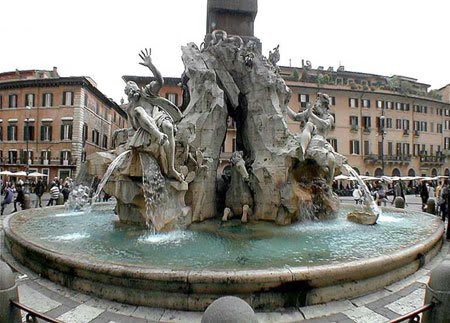
The Fountain of Four Rivers is, without doubt, the most celebrated of Bernini's Roman fountains. A true public spectacle in marble and water.
Bernini created a "theater in the round" with dramatic jets and sensational sculptural details. This work continues to captivate audiences centuries after its construction.
Located in the grandiose Piazza Navona, in Rome, the fountain had a vital function. Before indoor plumbing, it was an important source of drinking water for residents.
However, its purpose went far beyond utility. It was a grandiose monument, erected to celebrate the power and glory of the pope and his family.
The sculptures surrounding it represent the four major rivers of the then-known continents. Each figure embodies a mystery, a distant place.
With the Fountain of Four Rivers, Bernini once again constructed an unprecedented monument. He redefined public art.
But what was the immediate reaction to this grandiose innovation?
Writers of the time recorded the theatrical and triumphant inauguration of the monument. The public's astonishment at the natural, lifelike figures was universal.
Spirituality in Marble: Ecstasy and Devotion
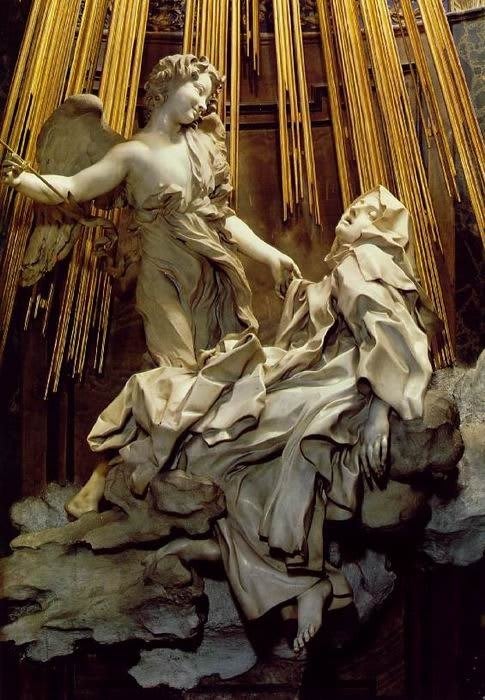
In The Ecstasy of Saint Teresa, Bernini elevates the principles of the Baroque—drama, emotion, and theatricality—to never-before-seen levels. A work that transcends matter.
In this sculpture, it's crucial to observe the emphasis on light, which accentuates the dramatic qualities. The swirling drapery, sculpted with virtuosity, creates a fantastic and ethereal mass.
Another work of profound devotion is the Salvator Mundi. A sublime representation of Christ the Savior.