
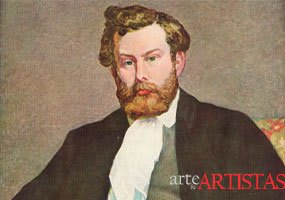
Biography of Alfred Sisley
Biography of Alfred Sisley
Alfred Sisley was a prominent French artist who carved out his own niche in Impressionism; he foreshadowed many of the new painting styles that would emerge in Europe after the turn of the 20th century.
Unlike many of his contemporaries, who focused on urban life, industrialization, and people, Sisley was almost exclusively a landscape painter, a theme he rarely deviated from.
Furthermore, there is a distinct temperament and color palette in his works that suggest an influence from earlier periods of English and French art, particularly the Barbizon School.
BIOGRAPHY
Alfred Sisley was born in Paris on October 30, 1839. He was the son of wealthy British deportees. His mother, Felicia Sell, was a musician, and his father, William Sisley, was the owner of a lucrative flower export business.
His mother and father were first cousins, descendants of a long line of English smugglers and merchants. Alfred was one of four children, one of whom - the eldest brother - died young.
There is little record of his adolescence, before being sent to London in 1857 to study and pursue a career in commerce.
While living in London, he spent much of his time visiting exhibitions at the National Gallery of John Constable and William Turner.
In 1860, he returned to Paris, where he enrolled in the École des Beaux-Arts.
In Paris, he met the artists Frédéric Bazille, Pierre-Auguste Renoir, Claude Monet and James Whistler while studying at the atelier of Charles Gleyre, who taught his students to draw from memory and study nature, emphasizing the importance of originality.
Sisley became close friends with Renoir during his training at Gleyre's studio.
Renoir often spoke of his pleasant and charming disposition, saying to his son that the friend was an enchanting human being... only for Sisley to suddenly disappear.
In 1866, Sisley met a florist named Marie-Louise Adelaide Lescouezec.
In 1870, following the outbreak of the Franco-Prussian War, Sisley's finances became unstable.
After his father's death, Sisley dedicated himself to painting, having to rely on his art to financially support his family for the first time.
It was during this same period that his style matured.
He began to exhibit his true potential as a colorist, as well as his ability to capture nature through loose brushstrokes.
Sisley's paintings from this period represent an impressive range of tones, while his ability to complete the complex visual effects of light brings his landscapes to life.
In the 1870s, while remaining dedicated to the Impressionist movement, Sisley's failure to sell his paintings led him back to exhibiting at the Paris Salon.
Unable to exhibit his work in an academic environment, he exhibited his paintings at the first Impressionist exhibition.
GALLERY
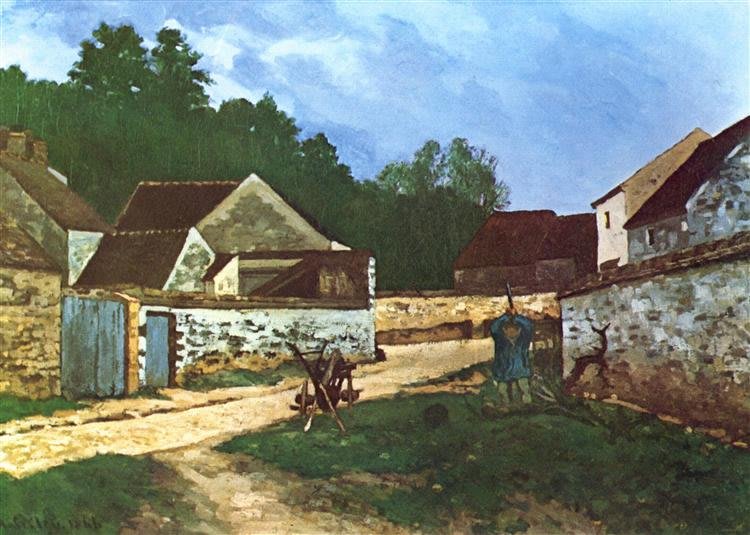
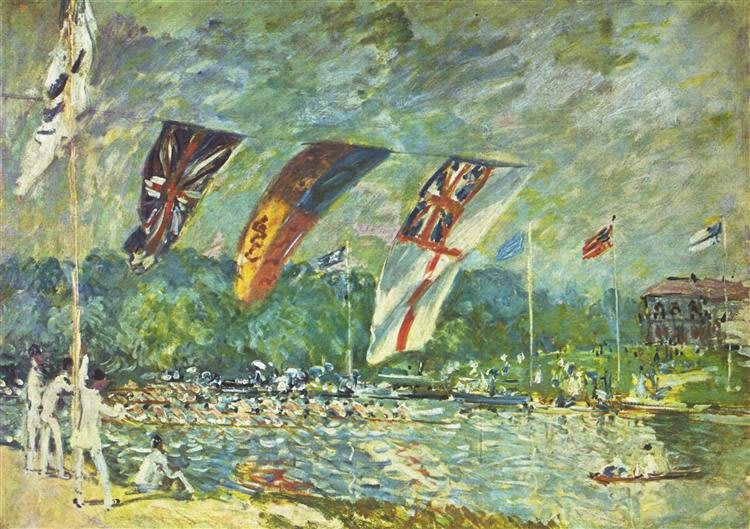
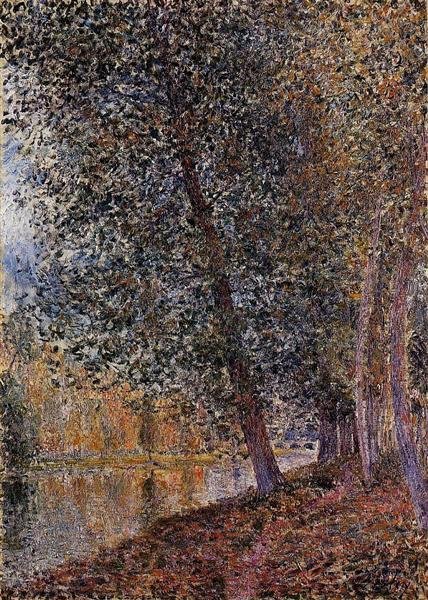
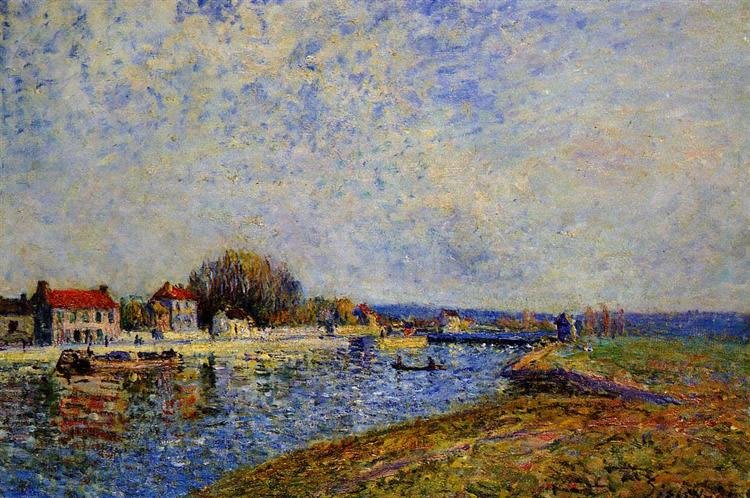
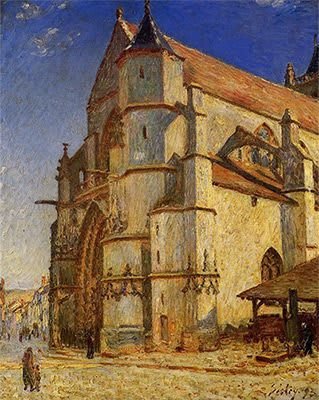
In 1897, Sisley officially married Marie, as they had been living together for several years, unfortunately, the following year she died of cancer shortly after returning to France from Wales.
In January 1899, the artist began to experience health problems.
He invited his good friend Claude Monet to visit him, and while Monet was there, he asked him to take care of his children if he were to pass away.
Alfred Sisley died a week later from throat cancer on January 29, 1899, in Paris.
In May 1899, Monet requested that the dealer Georges Petit hold an auction to raise money for Sisley's children.
Petit managed to sell twenty-seven of his paintings, raising around 150,000 francs.
Despite the popularity of Impressionism, Sisley received little recognition and success during his lifetime and is still relatively understudied compared to his contemporaries.
The lack of academic consideration is often seen as a result of his ambiguous identity.
The artist maintained British citizenship throughout his life, although he twice applied for French citizenship and was denied.
Nevertheless, he was a founding member of the French Impressionist movement, carrying out the original philosophy of the movement throughout his career.
The painter and critic Eugène Fromentin considered Sisley as talented as Renoir, Monet, and Pissarro.
He declared: "He conveys without fail those sudden moments of perception in which a scene is removed from its surroundings and plunged into an indefinable emotion. He has the power to transcribe such scenes as if he were always searching for them, and yet he reveals them with an air of distrust that disarms while captivating. He expands our perception of Impressionist painting and joins the ranks of the great European landscape painters."


